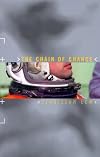
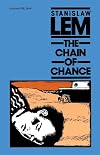
The Chain of Chance
by Stanisław Lem
On This Page
Description
A former astronaut turned private detective is dispatched to Naples to discover the pattern in a mysterious series of deaths and disappearances occurring at a seaside spa. A Helen and Kurt Wolff Book.Tags
Recommendations





















Member Reviews
El primer libro de Lem que leo, y la verdad no me dejó decepcionado. Esta novela es de ese tipo de obras a las que uno debe acercarse sin expectativas de ningún tipo, porque Lem dedica la totalidad de sus casi doscientas páginas para destrozar toda expectativa. Aunque es muy breve (dos días de lectura es más que suficiente) a veces resulta densa, pero me parece que esa es la idea: el lector siente la misma confusión de los encargados de investigar las extrañas muertes de una docena de extranjeros en un balneario en Nápoles, muertes que no parecen tener nada que las relacione.
Novela a caballo entre la ciencia ficción y la novela detectivesca, hace que nos preguntemos, en más de una ocasión, la pregunta que seguramente le quita show more el sueño a más de un novelista: ¿Y qué tal si todo esto no tiene una razón última, si todo es causa del azar? show less
Novela a caballo entre la ciencia ficción y la novela detectivesca, hace que nos preguntemos, en más de una ocasión, la pregunta que seguramente le quita show more el sueño a más de un novelista: ¿Y qué tal si todo esto no tiene una razón última, si todo es causa del azar? show less
This was my first Stanislaw Lem, and I picked it up "by chance" as it were, at a used book sale a few months ago. I don't usually read "speculative" fiction, but Lem is considered to be one of the genre's great masters, perhaps best known for "Solaris" which has twice been made into a film.
"The Chain of Chance" also riffs on the detective genre, featuring as its main character a paunchy middle-aged American former astronaut who is seeking to "solve" a series of unexplained and mysterious deaths of paunchy middle-aged men. I don't want to say more than that.
The story-telling in the book is somewhat "clunky" at times - it was annoying how much of the narrative was "unloaded" all at once in a long section in the middle of the book. show more (Another reviewer appropriately calls it a "data dump.") That flaw notwithstanding, there's no doubt the Lem is a masterful storyteller, the plot is quite clever, and I was truly riveted by the last 25 pages. I thought that the ending was "a real corker"!
But what really makes "The Chain of Chance" a notable book is Lem's authorial voice - he is a bona fide twentieth century European intellectual, a survivor of World War II in Poland, a witness to the political, scientific and technological revolutions of modernity. The novel was originally published in 1975, and is saturated with a mid to late 20th century weariness, reminiscent of Camus or Boll, perhaps. (No coincidence that the action of the novel takes place amidst the great faded glories of Naples, Rome and Paris.) There's an atmosphere of unease, almost dread, a kind of bleak acceptance of the uncertainties of the present. There's no doubt that this is "literature," if you know what I mean.
"Nonchalantly, the conversation turned to the tribulations of the world. Not nonchalantly, really, but in a mood of surrender now that Europe's eternal mission had come to an end. . . . Europe had survived, but only in an economic sense. Prosperity had been restored, but not the feeling of self-confidence. It was not the cancer patient's fear of malignancy, but the awareness that the spirit of history had moved on, and that if it ever returned it would not be here. . . . McLuhan's prophecies were coming true, but in an inverse sort of way, as prophecies have a habit of doing. His global village was already here, but split into two halves. The poorer half was suffering, while the wealthier half was importing that suffering via television and commiserating at a distance. That it couldn't go on like this was everwhere taken for granted, but it went on just the same." show less
"The Chain of Chance" also riffs on the detective genre, featuring as its main character a paunchy middle-aged American former astronaut who is seeking to "solve" a series of unexplained and mysterious deaths of paunchy middle-aged men. I don't want to say more than that.
The story-telling in the book is somewhat "clunky" at times - it was annoying how much of the narrative was "unloaded" all at once in a long section in the middle of the book. show more (Another reviewer appropriately calls it a "data dump.") That flaw notwithstanding, there's no doubt the Lem is a masterful storyteller, the plot is quite clever, and I was truly riveted by the last 25 pages. I thought that the ending was "a real corker"!
But what really makes "The Chain of Chance" a notable book is Lem's authorial voice - he is a bona fide twentieth century European intellectual, a survivor of World War II in Poland, a witness to the political, scientific and technological revolutions of modernity. The novel was originally published in 1975, and is saturated with a mid to late 20th century weariness, reminiscent of Camus or Boll, perhaps. (No coincidence that the action of the novel takes place amidst the great faded glories of Naples, Rome and Paris.) There's an atmosphere of unease, almost dread, a kind of bleak acceptance of the uncertainties of the present. There's no doubt that this is "literature," if you know what I mean.
"Nonchalantly, the conversation turned to the tribulations of the world. Not nonchalantly, really, but in a mood of surrender now that Europe's eternal mission had come to an end. . . . Europe had survived, but only in an economic sense. Prosperity had been restored, but not the feeling of self-confidence. It was not the cancer patient's fear of malignancy, but the awareness that the spirit of history had moved on, and that if it ever returned it would not be here. . . . McLuhan's prophecies were coming true, but in an inverse sort of way, as prophecies have a habit of doing. His global village was already here, but split into two halves. The poorer half was suffering, while the wealthier half was importing that suffering via television and commiserating at a distance. That it couldn't go on like this was everwhere taken for granted, but it went on just the same." show less
Captures Lem's obsession with statistic, chance, evidence. All of these are a means for him to get at what really counts as unusual or supernatural in this world. And the boundaries of what fall within the realm of the natural for him would clearly be in the realm of the bizarre, the weird, the supernatural, the disturbing.... I am not sure if Lem actually views the world in this way, or whether he exploits this to open the space to write works that feel like speculative fiction that he pulls out from under the reader. This is certainly a way for him to locate a safe space--safe from censors--to write about Poland and its system during the Cold War.
As for this specific book, it is not a very good one. It is more the painstaking show more execution of an idea to arrive at a very specific point made by Monsieur Saussure in the closing moments of the novel when he gives an analogy to show that what looks like extraordinary marksmanship, is not at all if one simply floods the zone with an endless barrage of shots making the impossible, inevitable.
Interestingly, I would have guessed this work preceded Lem's The Investigation which an exploration of the same idea, but a work in which the idea does not straggle the story. But The Investigation was a fairly early work and The Chain of Chance was written mid-career. show less
As for this specific book, it is not a very good one. It is more the painstaking show more execution of an idea to arrive at a very specific point made by Monsieur Saussure in the closing moments of the novel when he gives an analogy to show that what looks like extraordinary marksmanship, is not at all if one simply floods the zone with an endless barrage of shots making the impossible, inevitable.
Interestingly, I would have guessed this work preceded Lem's The Investigation which an exploration of the same idea, but a work in which the idea does not straggle the story. But The Investigation was a fairly early work and The Chain of Chance was written mid-career. show less
I loved the Cyberiad. I haven't really liked anything else of Lem's. This one, if I recall correctly, was a mystery **SPOILER** a crime that had no criminal, being the result of an improbable - but possible - chain of chance circumstances **END SPOILER** but I don't remember caring about the people or even the events. Of course I understand the philosophical point: we see patterns where we need them, even when they don't exist. I just didn't find that so profound an observation.
Combination of environmental pollution, food and cosmetic additives etc. makes peole sick. This is a story of a man who, in order to solve the mystery of several suicides, decides to try the lethal combination of some popular chemicals. He discovers that we are constantly exposed to, one by one, those substances which together can bring one to mental disease ended by spectacular suicide. A clever sci-fi book!
Very unusual type of mystery, with philosophical and scientific isues involved. Original title "Katar"
El protagonista, un astronauta retirado y reconvertido en peculiar investigador secreto, se ve inmerso durante el transcurso de su trabajo en un cúmulo de circunstancias deudoras de Kafka y primas hermanas del mejor Dick, cuestionándose continuamente la realidad de los acontecimientos que se suceden a su alrededor, y mostrando de qué forma increíble cada pequeño detalle de nuestro devenir cotidiano es una pieza clave en los caminos y sucesos que acabarán confluyendo de la manera menos esperada. Asfixia y horror cotidiano se dan cita en esta novela trascendente que nos refleja.
Jan 11, 2023Spanish
Members
- Recently Added By
Lists

Survey of Mysteries and Crime Fiction
96 works; 17 members

Paranormal investigators and space detectives
274 works; 9 members
Author Information

Polish science fiction writer Stanislaw Lem was born on September 12, 1921. A medical graduate of Cracow University, he is at home both in the sciences and in philosophy, and this broad erudition gives his writings genuine depth. He has published extensively, not only fiction, but also theoretical studies. His books have been translated into 41 show more languages and sold over 27 million copies. He gained international acclaim for The Cyberiad, a series of short stories, which was first published in 1974. A trend toward increasingly serious philosophical speculation is found in his later works, such as Solaris (1961), which was made into a Soviet film by Russian director Andrei Tarkovsky in 1972 and remade by Steven Soderbergh in 2002. He died on March 27, 2006 in Krakow at the age of 84. (Bowker Author Biography) show less
Some Editions
Awards and Honors
Series
Belongs to Publisher Series
サンリオSF文庫 (28-A)
Work Relationships
Is contained in
Has the adaptation
Has as a commentary on the text
Common Knowledge
- Canonical title*
- Szénanátha
- Original title
- Katar
- Alternate titles
- The Chain of Chance
- Original publication date
- 1975 (Katar) (Katar); 1978 (The Chain of Chance) (The Chain of Chance)
- People/Characters*
- John; Dr. Philip Barth; Dr. Stella; Randy Loers
- Important places
- Naples, Campania, Italy; Rome, Italy; Paris, France
- First words
- The last day was by far the longest and most drawn out.
- Last words
- (Click to show. Warning: May contain spoilers.)And if that's so, then regardless of the publisher or author, the publication of this book was also a mathematical certainty."
- Publisher's editor*
- Gimes, Románia
- Blurbers
- Vonnegut, Kurt; Updike, John
- Original language*
- Polish
*Some information comes from Common Knowledge in other languages. Click "Edit" for more information.
Classifications
- Genres
- Fiction and Literature, Science Fiction, Mystery
- DDC/MDS
- 891.8 — Literature & rhetoric Literatures of other languages East Indo-European and Celtic literatures West and South Slavic languages (Bulgarian, Slovene, Polish, Czech, Slovak, Serbo-Croatian, and Macedonian)
- LCC
- PG7158 .L39 .K313 — Language and Literature Slavic languages and literatures. Baltic languages. Albanian language Slavic. Baltic. Albanian Slavic Polish
- BISAC
Statistics
- Members
- 735
- Popularity
- 38,554
- Reviews
- 10
- Rating
- (3.65)
- Languages
- 14 — Czech, Dutch, English, Finnish, French, German, Hungarian, Japanese, Polish, Romanian, Russian, Spanish, Swedish, Turkish
- Media
- Paper, Ebook
- ISBNs
- 40
- ASINs
- 17