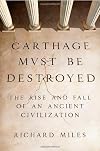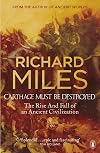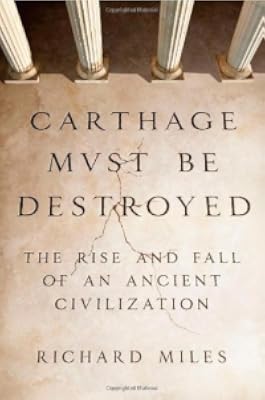
Carthage Must Be Destroyed: The Rise and Fall of an Ancient Civilization
by Richard Miles
On This Page
Description
An epic history of a doomed civilization and a lost empire. The devastating struggle to the death between the Carthaginians and the Romans was one of the defining dramas of the ancient world. In an epic series of land and sea battles, both sides came close to victory before the Carthaginians finally succumbed and their capital city, history, and culture were almost utterly erased. Drawing on a wealth of new archaeological research, Richard Miles vividly brings to life this lost empire-from show more its origins among the Phoenician settlements of Lebanon to its apotheosis as the greatest seapower in the Mediterranean. And at the heart of the history of Carthage lies the extraordinary figure of Hannibal-the scourge of Rome and one of the greatest military leaders, but a man who also unwittingly led his people to catastrophe. The first full-scale history of Carthage in decades, Carthage Must Be Destroyed reintroduces modern listeners to the larger-than-life historical players and the ancient glory of this almost forgotten civilization. show lessTags
Recommendations

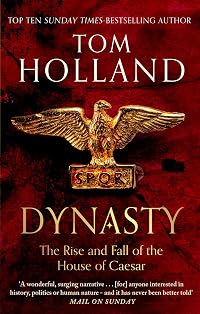
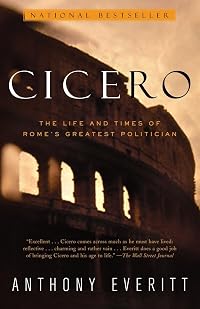
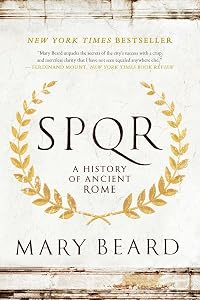
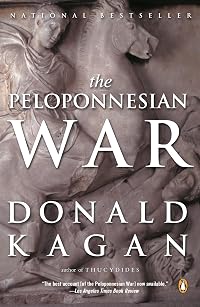



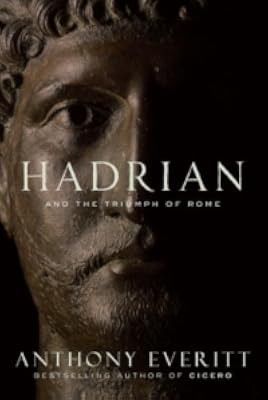
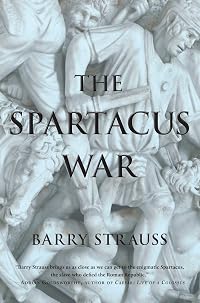
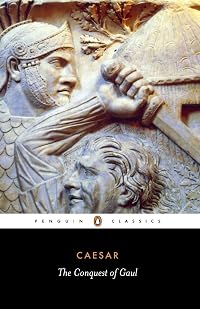
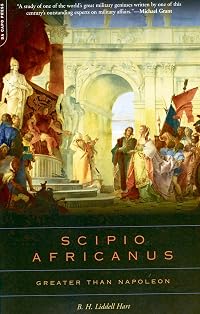


Member Recommendations
Member Reviews
For Rome to be great, Carthage had to be a legendary villain. Excellent and engaging look at the Punic Wars with Miles paying special attention to the propaganda war constantly being waged by all parties. The cult of Heracles as well as the issuing and debasement of coinage are unique touchstones throughout that drive home the long game both empires played for material power as well as historiographical sympathy.
Dr. Miles has produced a very readable book. It has a relatively new approach to the relationship between Rome, Syracuse and Carthage, the triumvirate of the Central Meditterranean. He also follows the idea that the emphasis that the ancients placed on the provision of temples to their gods has a political slant, that does illuminate some of the mental space that ancient peoples employed to organize their views of the world. Post Rennaissance minds have not found it easy to accommodate this facet of ancient life. There was more parallel and complementary involvement that the simple analysis of Greece and Rome being the best polities expressed in the past allows for. Therefore the title involves a pun, for one of the things to be show more destroyed is the heavily Hellenistic view of the role of Carthage, and thus a new interpretation of the evolution of the central Medditterranean powers is called for. Bravo! show less
I find some nonfiction books difficult to break in to, but once I’m invested I’m usually hooked for the rest of the book. This history of Carthage presented almost the opposite problem for me. Opening the book with the final sack of the city by Roman forces is riveting history and also makes for a great hook in the introduction. I was enthralled from page one. After that however, the author lost me for a bit and didn’t really recapture my full attention until the Punic Wars (even the best non-fiction writers can only make ancient commerce and mercenary contracts just so interesting). That being said, the author does a difficult job (writing the history of ancient civilization based on archeology and almost exclusively hostile show more primary sources) well and history fans will find everything they’re looking for. I particularly enjoyed Miles’ willingness to tackle historical prejudices that have been passed along as fact; Hannibal crossing the Alps was not as crazy an idea as it may seem, the Romans and Carthaginians were not mortal enemies from their inception, etc.
One final, quibbling point: you could make a party game out of this book by having your guests take a drink every time the author mentions the Heracles/Hercules myths, everyone would be on the floor by the end of the second chapter, but you could do it. I don’t disagree with Richard Miles’ case that the Herculean legends were important in Greek colonization and in Carthage in particular, but the extent to which he revisits this topic over and over again felt…labored. show less
One final, quibbling point: you could make a party game out of this book by having your guests take a drink every time the author mentions the Heracles/Hercules myths, everyone would be on the floor by the end of the second chapter, but you could do it. I don’t disagree with Richard Miles’ case that the Herculean legends were important in Greek colonization and in Carthage in particular, but the extent to which he revisits this topic over and over again felt…labored. show less
Half this book is essentially devoted to the Punic Wars but it's the other half that is most interesting, as Miles examines how Carthage came to be, how (despite the Graeco-Roman portrayal of the Carthaginians as being alien outsiders) their culture partook of & contributed to the mosaic of the wider Hellenistic world and how (despite the culture's wealth) the Carthaginian state lack the staying power to prevail over Rome. There is much emphasis on religious belief & practice as cultural tool and ideology.
• Carthage Must Be Destroyed is a nearly perfect book for the history buff. I am no scholar and although I have a fairly recent master’s degree in history I haven’t taken a course in ancient history since my undergraduate days 45 years ago. I rarely read about ancient history but I was curious to learn about Carthage after reading a review of this book. Although I normally read ten to fifteen history books a year, since becoming bogged down in The Sleepwalkers: How Europe Went to War in 1914 last year I’ve been concentrating on historical novels. Carthage has renewed my confidence that serious historical scholarship can be fun to read. Richard Miles has done a masterful job in writing an eminently readable account in which his show more sources are summarized, analyzed and sometimes criticized in a most helpful way. This is a scholarly work – the voluminous notes testify to that. His account of Carthage, which naturally is highly dependent on Roman sources, also refreshed my recollection of the rise of Rome. My only criticism is that I did not understand the economic underpinnings of Carthage prior to the end of the second Punic War. Miles describes the economy of Carthage in its final years rather well at the close of the book, but it only underlined the need to explain it more fully at earlier stages. Miles is careful to not use analogies, but I gather, for lack of clear alternatives, that Carthage’s economy was similar to medieval Venice’s. But Venice had things to export as well as being master traders, so perhaps Carthage did as well? Nevertheless, the other elements of Carthage’s growth and destruction are well explained, including the religious and military aspects of its history. It’s a great book. show less
Very decent book on Carthage – a state whose history we largely know in an amount that the victorious Romans considered enough for us to know. The author, Richard Miles, is an authoritative expert in the field of Ancient History, who looks at Carthage’s impressive history from various points of view, striving as much as possible to unrevel true, unblemished face of this Rome’s worthy adversary. Strongly recommend. It reads very ironically at times, and scary too. In particular, the moments about Rome’s attempts to disguise its purely aggressive politics with noble ideas and double standards. Story of the Third Punic War is a real tragedy…
There's probably not much point in describing the content of this book, as this information is readily available, so I'll concentrate on what I think of how it was delivered:
This book is truely a great read. It's remarkable that this amount of analysis and historiography has been combined with the basic narrative and yet the end product is still so engaging. Of particular interest to me was the coverage of how the Romans saw and spun the justification for their actions in wiping out Carthage, and the evolution of this over time. Ultimately, in reading CMBD I wanted to understand 'all about' ancient Carthage and the Punic wars - now I do and I thoroughly enjoyed the experience.
In my opinion, Richard Miles style is as easy to follow as show more the much acclaimed Tom Holland, albeit with less humour. I'll be pre-ordering his next title 'Ancient Worlds' on the strength of this. show less
This book is truely a great read. It's remarkable that this amount of analysis and historiography has been combined with the basic narrative and yet the end product is still so engaging. Of particular interest to me was the coverage of how the Romans saw and spun the justification for their actions in wiping out Carthage, and the evolution of this over time. Ultimately, in reading CMBD I wanted to understand 'all about' ancient Carthage and the Punic wars - now I do and I thoroughly enjoyed the experience.
In my opinion, Richard Miles style is as easy to follow as show more the much acclaimed Tom Holland, albeit with less humour. I'll be pre-ordering his next title 'Ancient Worlds' on the strength of this. show less
Members
- Recently Added By
Published Reviews
ThingScore 92
"An ambitious scholarly work spanning eight centuries, from 150 years before the founding of Carthage by Phoenicians to its obliteration by the Romans in 146 BCE."
added by bookfitz
"Drawing deeply upon fresh archeological evidence, Miles dynamically recreates daily life in ancient Carthage by examining the numerous inscriptions and monuments that bring to life the religious and public rituals of the city's inhabitants."
added by bookfitz
Bertolt Brecht found in Carthage a metaphor for German hubris: "Great Carthage drove three wars. After the first one it was still powerful. After the second one it was still inhabitable. After the third one it was no longer possible to find her." Luckily, Miles has found more than enough of her in this fascinating read.
added by leigonj
Lists

THE WAR ROOM
813 works; 24 members

Kindle Non-Fiction
221 works; 1 member
Author Information
8+ Works 1,137 Members
Richard Miles is Associate Professor in the Department of Classic and Ancient History and Head of the School of Philosophical and Historical Inquiry at the University of Sydney.
Some Editions
Common Knowledge
- Canonical title
- Carthage Must Be Destroyed: The Rise and Fall of an Ancient Civilization
- Original title
- Carthage Must Be Destroyed: The Rise and Fall of an Ancient Civilization
- Original publication date
- 2010-03-25
- People/Characters
- Hannibal Barca; Scipio Africanus; Scipio Aemilianus; Cato the Elder; Hamilcar Barca
- Important places
- Carthage; Rome, Roman Empire; Spain; Sicily
- Important events
- Punic Wars
- Dedication
- For my mother, Julie Miles
- First words
- Carthage had been under siege for nearly three years, when one day during the spring of 146 BC the Roman commander, Scipio Aemilianus, ordered the final assault on the stricken city and it increasingly desperate inhabitants.
- Last words
- (Click to show. Warning: May contain spoilers.)As long as the Romans needed proof of their greatness, the memory of Carthage would never die.
- Blurbers
- Jones, Peter.; Parker, Philip.; Cartledge, Paul.
- Original language
- English
Classifications
- Genres
- History, Nonfiction, General Nonfiction
- DDC/MDS
- 939.73 — History & geography History of ancient world (to ca. 499) Other parts of ancient world Minor African Countries Africa Propria, Carthage
- LCC
- DT269 .C35 .M55 — History of Europe, Asia, Africa and Oceania Africa History of Africa Maghrib. Barbary States Tunisia (Tunis) Local history and description
- BISAC
Statistics
- Members
- 979
- Popularity
- 26,779
- Reviews
- 22
- Rating
- (3.83)
- Languages
- Dutch, English, Italian
- Media
- Paper, Audiobook, Ebook
- ISBNs
- 11
- ASINs
- 9