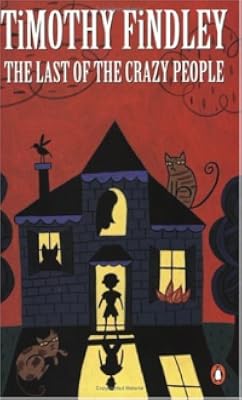
The Last of the Crazy People
by Timothy Findley
On This Page
Description
Timothy Findley (1930-2002) was one of Canada's most compelling and best-loved writers. He is the author of The Wars, which won the Governor General's Award and established him as one of Canada's leading writers, as well as Pilgrim and The Piano Man's Daughter, both finalists for The Giller Prize. His other novels, Headhunter, The Telling of Lies, The Last of the Crazy People, The Butterfly Plague, Famous Last Words, Not Wanted on the Voyage, and Spadework; his novella, You Went Away; and show more his short fiction, Dinner Along the Amazon, Stones, and Dust to Dust, have won numerous awards and are well loved both in Canada and internationally. Elizabeth Rex won the Governor General's Award for Drama and The Stillborn Lover won a Chalmers Award. His works of non-fiction include Inside Memory and From Stone Orchard. Timothy Findley was made an Officer of the Order of Canada and a Chevalier de l'Ordre des Arts et des Lettres. if (SYM == "BIO") {{ document.writeln(" "); }} else {{ document.writeln(""); }} show lessTags
Recommendations











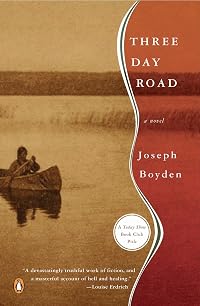
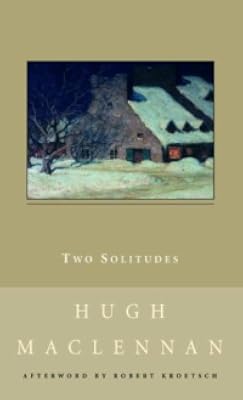


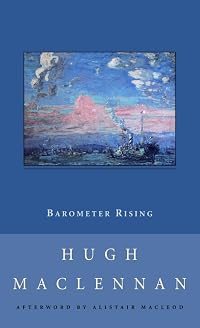
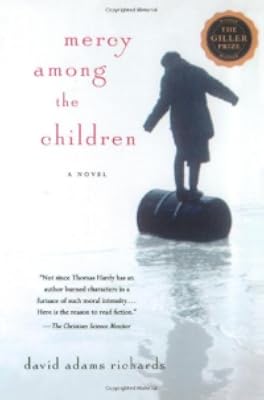




Member Recommendations
Member Reviews
When exploring human relationships and families in particular, Findley does not just pick at stabs, he plunges a deep knife to reveal hurt, misunderstanding, incompetency and inertia. He does this with a great deal of precision and economy of words, layering the words and emotions until the reader is completely immersed into these deeply dysfunctional worlds.
This novel carries very much the construction of a play: events culminating into a dramatic, unavoidable tragedy. The disadvantages are heavy-handed symbolism and foreshadowing, sometimes a sketchy decor and very minor characters that ebb in and out in the periphery. The advantages are a build-up of palpable pressure and an intensely emotional, draining involvement on the part of show more the reader: it is impossible to be indifferent to the events and characters; dropping the book feels like physically walking away.
This book is best read in one sitting so that the reader can feel the flow and inner logic of the dramatic movement. It is, in my opinion, the best way to understand the characters and their seemingly erratic actions.
A gem within Findley's works that will leave a lasting impression. show less
This novel carries very much the construction of a play: events culminating into a dramatic, unavoidable tragedy. The disadvantages are heavy-handed symbolism and foreshadowing, sometimes a sketchy decor and very minor characters that ebb in and out in the periphery. The advantages are a build-up of palpable pressure and an intensely emotional, draining involvement on the part of show more the reader: it is impossible to be indifferent to the events and characters; dropping the book feels like physically walking away.
This book is best read in one sitting so that the reader can feel the flow and inner logic of the dramatic movement. It is, in my opinion, the best way to understand the characters and their seemingly erratic actions.
A gem within Findley's works that will leave a lasting impression. show less
An incredible look at human nature in dysfunctional families: Much of Findley's work revolves around upscale families with problems. The Last of the Crazy People is no exception. As seen through the eyes of the youngest child in the family, who is really the only one not yet corrupted by loss of innocence, the story is told with the accuracy that only a child's perception will grant. Beautifully written, this is yet another book by Timothy Findley that i have loved.
I've read this novel twice. It is a remarkable first novel; Findley lived up to this beginning and then some during his lifetime. The main character is both hero and victim even while he victimizes. The novel is so finely crafted that even though the cover hints at the end and the reader is probably aware at some level of what will happen, I found myself hoping against hope that the end would turn out differently. I'm sure I will read [The Last of the Crazy People] again.
From the cover - "[The Last of the Crazy People] is Timothy Findley's first novel, the compelling story of an eleven-year-old boy's private world of bewilderment and conflict."
From the cover - "[The Last of the Crazy People] is Timothy Findley's first novel, the compelling story of an eleven-year-old boy's private world of bewilderment and conflict."
Set in the summer months of 1964, the story is about a well-to-do family of breeding residing in a wealthy neighborhood in Ontario. 11-year old Hooker Winslow is surrounded by his family, a family that is falling apart at the seams. The fateful summer sees Hooker, the youngest member of the family, struggling to make sense of his family and events that occur around him: his mother Jessica's erratic, reclusive behavior and abandonment of her children and motherhood after giving birth to a stillborn the previous year, his older brother Gilbert's drunken and disorderly behavior after dropping out of prep school, his spinster aunt Rosetta who has taken over running the household and his father Nicholas' continual silence and decision to show more leave the Winslow household to continue as it is. Surrounded by his cats, Hooker's only human companion is Iris, the family servant that has been with the family for thirty years.
This is a fascinating dark story about a family that implodes in on itself, slowly at first and then with frightening speed as Hooker scrambles to try and understand what is happening to his family. Iris, and at times Gilbert, try to answer Hooker's questions but the truth continues to elude him. Snippets of overheard conversations lead Hooker to jump to conclusions that turn what should have been a summer of carefree fun for a young boy into one of worry, concern and a frightening plunge for young Hooker into the realities of the world around him.
An excellent powerfully told story and one I highly recommend! show less
This is a fascinating dark story about a family that implodes in on itself, slowly at first and then with frightening speed as Hooker scrambles to try and understand what is happening to his family. Iris, and at times Gilbert, try to answer Hooker's questions but the truth continues to elude him. Snippets of overheard conversations lead Hooker to jump to conclusions that turn what should have been a summer of carefree fun for a young boy into one of worry, concern and a frightening plunge for young Hooker into the realities of the world around him.
An excellent powerfully told story and one I highly recommend! show less
Extraordinary.
Ratings
Members
- Recently Added By
Author Information

Timothy Findley was born in 1930. A native of Toronto, Canada, novelist and playwright Timothy Findley initially embarked upon an acting career. Findley worked for the Canadian Stratford Festival and later, after study at London's Central School of Speech and Drama, he toured Britain, Europe, and the United States as a contract player. While show more performing in The Matchmaker by Thornton Wilder, Findley was encouraged by the playwright to write fiction. Influenced by film techniques, Findley's first novel, The Last of the Crazy People (1967) is a penetrating look at a family of "emotional cripples" from a child's perspective. With his character Hooker, Findley captures the irrational logic of a child's mind without treating childhood sentimentally.The Butterfly Plague followed in 1969. The Wars (1978), Findley's most successful novel, has been translated into numerous languages and was made into a film. The Wars uses the device of a story-within-a-story to illustrate how a personality transcends elemental forces even while being destroyed by them. In 1981 Famous Last Words was published. This fictionalization of Hugh Selwyn Mauberley by Ezra Pound, a work that was already a "fictional fact," examines fascism. In Not Wanted on the Voyage (1984), Findley rewrites the story of Noah's Ark by giving voices to women, children, workers, animals, and folklore creatures, all of whom question Noah's authority. The novel turns into a parable that seems to challenge imperialism, eugenics, fascism, and any other force that endangers human survival. Again repeating an earlier text, Findley turns to Thomas Mann's Death in Venice to write The Telling of Lies (1986). This novel draws parallels between World War II atrocities and contemporary North America, which Findley sees as a metaphoric concentration camp. Findley died on June 20, 2002 in Provence, France (Bowker Author Biography) show less
Some Editions
Series
Belongs to Publisher Series
Laurentian Library (56)
Common Knowledge
- Original publication date
- 1967
- People/Characters
- Hooker Winslow; Hook Winslow; Iris Browne; Gilbert Hugo Winslow ('Gillie'); Gilbert Winslow; Jessie Winslow (show all 12); Jessica Winslow; Nick Winslow; Nicholas Winslow ('Nick'); Rosetta Winslow ('Rose'); Alberta Perkins; Harry Jarman
- Important places
- Ontario, Canada
- Dedication
- For William Whitehead
- First words
- All night long, Hooker Winslow's eyes were open.
- Quotations
- "Family," she said to John Harris. "It's come to be the worst word I know, now."
"I have been left without any men to take care of me." - Last words
- (Click to show. Warning: May contain spoilers.)The field and its welcome would always be there.
Classifications
Statistics
- Members
- 259
- Popularity
- 125,879
- Reviews
- 5
- Rating
- (3.77)
- Languages
- English, French
- Media
- Paper
- ISBNs
- 12
- ASINs
- 7