On This Page
Description
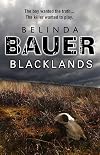
Eighteen years ago, Billy Peters disappeared, and everyone in town believed he was murdered by serial killer Arnold Avery who admitted to killing six other children and burying them on the same desolate moor that surrounded Billy's village. But Billy's mother is convinced he's still alive, and her twelve-year-old grandson, Steven is determined to heal the cracks that gape between his nan, his mother, his brother and himself by bringing the family closure even if it means personally finding show more his uncle's corpse himself. show lessTags
Recommendations








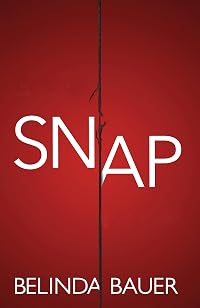









Member Recommendations
terran A young boy searches for the body of a relative and is involved in finding the killer.
Member Reviews
If I had noticed any tags for this book it would have put me off reading it. I'm glad that didn't happen because it was a gripping story of a boy who wanted to find the site where his long dead uncle was buried by a pedophile. This would improve his status at home and make his Nan happy. In the course of the story, the boy contacts the killer in prison hoping to trick him into identifying the spot. Instead he inadvertently identifies himself. Bauer is successful at getting inside the head of the most repellant character without being graphic, as well as creating a believable twelve-year-old boy.
This was Bauer's debut, gripping and chilling, a story that doesn't flag on the suspense throughout. I will definitely be reading more by this show more author. show less
This was Bauer's debut, gripping and chilling, a story that doesn't flag on the suspense throughout. I will definitely be reading more by this show more author. show less
When I started reading Blacklands I had no idea it was Bauer’s first published novel and, now that I’m finished, I still wouldn't know if I hadn’t found it out from another review. This is an outstanding debut that has all the things in it I like in her later books - suspense, grim humor, and the little touch of absurdity that keep the tension from going too far outside of my comfort zone. In addition, the book's desolate moorland setting gave every page a sense of foreboding that made it hard to put down. I’ll definitely be going on to the next one in the series.
Blacklands by Susan Bauer is to put it simply a bloody good read. Extremely atmospheric, this original twist on a serial killer story was simple, straight forward and compelling. Part mystery, part coming-of-age story, part psychological drama, I found this book very addictive.
The story centers around Steven Lamb, an eleven year old boy, who lives with his grandmother, mother and younger brother in the village of Shipcott on the edge of Exmoor. Nineteen years ago, his Uncle Billy was taken and murdered by serial killer, pedophile Arnold Avery. Avery buried his victims on Exmoor and a few of the bodies were never recovered. Billy’s was one. Steven’s family life is bleak and he becomes fixated on the idea that if he could recover show more Billy’s body, his dysfunctional family would come together and be healed. After digging countless holes, he realizes the only way to get the information he needs is to write to the source. This in turn awakens a power and need in the serial killer.
The images of Exmoor that the author gives us in this book absolutely resounded in me. Never having been there, I went to Google Earth and placed myself in the area and “drove” all around. A beautiful yet isolated place that I could see a serial killer desecrating all too easily. I should mention that although this is a book about a child killer, the details given are not graphic, nonetheless still manage to chill you to the bone.
I highly recommend Blacklands. The action is gradual and builds slowly, you can see where the story is taking you, but the ride is truly arresting, and as the dread rises along with your pulse, you can buckle yourself in for a exciting climax. show less
The story centers around Steven Lamb, an eleven year old boy, who lives with his grandmother, mother and younger brother in the village of Shipcott on the edge of Exmoor. Nineteen years ago, his Uncle Billy was taken and murdered by serial killer, pedophile Arnold Avery. Avery buried his victims on Exmoor and a few of the bodies were never recovered. Billy’s was one. Steven’s family life is bleak and he becomes fixated on the idea that if he could recover show more Billy’s body, his dysfunctional family would come together and be healed. After digging countless holes, he realizes the only way to get the information he needs is to write to the source. This in turn awakens a power and need in the serial killer.
The images of Exmoor that the author gives us in this book absolutely resounded in me. Never having been there, I went to Google Earth and placed myself in the area and “drove” all around. A beautiful yet isolated place that I could see a serial killer desecrating all too easily. I should mention that although this is a book about a child killer, the details given are not graphic, nonetheless still manage to chill you to the bone.
I highly recommend Blacklands. The action is gradual and builds slowly, you can see where the story is taking you, but the ride is truly arresting, and as the dread rises along with your pulse, you can buckle yourself in for a exciting climax. show less
This review first appeared on criminolly.wordpress.com
‘Blacklands’ is a gripping crime novel with a simple, effective concept - a boy on the cusp of adolescence tries to find the corpse of his uncle who has killed years before by a child murderer. It’s more than that though, author Belinda Bauer’s first book is also moving, humorous and often insightful in its examination of family relationships.
Bauer has been getting a lot of attention recently after her latest novel ‘Snap’ was long-listed for the Booker prize. I’ve read ‘Snap’ and really enjoyed its mix of mystery and humour, but for me ‘Blacklands’ is more deserving of critical praise. It’s one of the most convincing crime novels I’ve read this year, and show more that sense of realism comes largely from the great work Bauer has done in creating her two central characters.
Twelve-year-old Steven is heartbreakingly sympathetic. An unhappy, uncomfortable boy who just wants to make things right for his bereaved grandmother. He’s wonderfully written, his determination utterly engrossing and the pain he feels horribly real. I’m not sure I’ve rooted for a protagonist quite as earnestly as I did for him in quite a while.
On the flipside, the book’s villain Arnold Avery is despicable but just as credible. Bauer has done a brilliant job of getting into the mind of a psychopath, making his motivations believable without ever giving the reader any reason to feel anything other than hatred for him. Plenty of fictional lunatics end up being grotesque cartoons, but Avery is chillingly real.
It is the interplay between these two that makes the book so effective and enjoyable. The plot progresses inexorably, fuelled by both characters’ broken psyches, pulling the reader along like an unwitting observer to something unspeakable. The narrative is quite linear, but the tension is beautifully done and the ending satisfying. Throughout, Bauer eschews over the top theatrics in favour of realism and the book is all the stronger for her restraint. There is one deus ex machina moment in the second half which felt both bizarre and unnecessary, but it’s so beautifully written I forgave it.
The parallels between Avery’s crimes and those of the Moors Murderers are obvious, but the book never feels exploitative or cheap. Bauer apparently started it as a short story examining the effects of murder on the lives of the victim’s families. That theme comes over beautifully and the book is a thoughtful examination of grief as well as a touching coming of age story. Taken as a whole the book is quite an achievement and one I wouldn’t hesitate to recommend. It’s thrilling, chilling, convincing and touching and I enjoyed every page. show less
‘Blacklands’ is a gripping crime novel with a simple, effective concept - a boy on the cusp of adolescence tries to find the corpse of his uncle who has killed years before by a child murderer. It’s more than that though, author Belinda Bauer’s first book is also moving, humorous and often insightful in its examination of family relationships.
Bauer has been getting a lot of attention recently after her latest novel ‘Snap’ was long-listed for the Booker prize. I’ve read ‘Snap’ and really enjoyed its mix of mystery and humour, but for me ‘Blacklands’ is more deserving of critical praise. It’s one of the most convincing crime novels I’ve read this year, and show more that sense of realism comes largely from the great work Bauer has done in creating her two central characters.
Twelve-year-old Steven is heartbreakingly sympathetic. An unhappy, uncomfortable boy who just wants to make things right for his bereaved grandmother. He’s wonderfully written, his determination utterly engrossing and the pain he feels horribly real. I’m not sure I’ve rooted for a protagonist quite as earnestly as I did for him in quite a while.
On the flipside, the book’s villain Arnold Avery is despicable but just as credible. Bauer has done a brilliant job of getting into the mind of a psychopath, making his motivations believable without ever giving the reader any reason to feel anything other than hatred for him. Plenty of fictional lunatics end up being grotesque cartoons, but Avery is chillingly real.
It is the interplay between these two that makes the book so effective and enjoyable. The plot progresses inexorably, fuelled by both characters’ broken psyches, pulling the reader along like an unwitting observer to something unspeakable. The narrative is quite linear, but the tension is beautifully done and the ending satisfying. Throughout, Bauer eschews over the top theatrics in favour of realism and the book is all the stronger for her restraint. There is one deus ex machina moment in the second half which felt both bizarre and unnecessary, but it’s so beautifully written I forgave it.
The parallels between Avery’s crimes and those of the Moors Murderers are obvious, but the book never feels exploitative or cheap. Bauer apparently started it as a short story examining the effects of murder on the lives of the victim’s families. That theme comes over beautifully and the book is a thoughtful examination of grief as well as a touching coming of age story. Taken as a whole the book is quite an achievement and one I wouldn’t hesitate to recommend. It’s thrilling, chilling, convincing and touching and I enjoyed every page. show less
This book will not be for everyone, but I really enjoyed it. It's creepy, really creepy, but in a good way. First off, let me say that normally if you told me about a book that involved a serial killer who is a pedophile, that would be enough for me to say, "I'm out." I do not like to read stories where children are victims - it keeps me up at night; it gets under my skin and makes me sad and angry and leaves me feeling desolate and disturbed.
This book is different because it is a psychological thriller. The serial killer has already been arrested and sentenced to life in prison, his victims have been dead for almost twenty years, and there is no gore, no vivid descriptions of the crimes - just an intriguing premise. One of those show more victims was Billy Peters, and if he had lived he would have been the uncle of our protagonist, twelve year old Steven Lamb. Steven's mom was Billy's older sister, and all these years later the family is still reeling from Billy's loss because his body was never found. Steven's life is far from perfect: he, his little brother, and his mom live with their grandma in the same house that Billy used to live in. His bedroom is still undisturbed, frozen in time. Steven's Nan still waits at the window and watches for a child that will never return. His mom is a struggling single mother who favors the younger brother and lives with the memory that her younger brother was the favored child too. For years Steven has been thinking that if he could just locate Billy's grave, then things could finally move forward and Nan could let Billy rest and stop being haunted by possibility.
Steven started by obtaining a map and systematically digging holes across the moor, but now it has been three years and he is seeing the futility of his approach. Maybe there is a better way. That's when Steven decides to write to Arnold Avery, the jailed murderer, and ask where Billy's body is buried. He is good at writing letters - even his teacher said so. And a bored serial killer sees this new opportunity to correspond as a mental sport, a sort of chess game that will relieve his boredom while giving him a chance to relive his crimes. And then Avery discovers that Steven is no mere opponent - he is a child opponent.
This book is well written with a fully developed plot, three dimensional characters, and excellent pacing. Like a good Alfred Hitchcock movie, it will have you on the edge of your seat until the very end. At only 221 pages, it's a fast and thrilling ride that does not disappoint. What's really amazing is that it was the author's first novel.
"Avery did not place any great faith in his own plans. He understood that disappointment was proportionate to the gulf between expectation and realization. He didn't like to hope - didn't even like the word, which implied some sort of helpless kowtowing to the vagaries of fate. He preferred to call what he had "options" and, as his desire to escape grew into a burning need, he took pains to leave no option unexplored." show less
This book is different because it is a psychological thriller. The serial killer has already been arrested and sentenced to life in prison, his victims have been dead for almost twenty years, and there is no gore, no vivid descriptions of the crimes - just an intriguing premise. One of those show more victims was Billy Peters, and if he had lived he would have been the uncle of our protagonist, twelve year old Steven Lamb. Steven's mom was Billy's older sister, and all these years later the family is still reeling from Billy's loss because his body was never found. Steven's life is far from perfect: he, his little brother, and his mom live with their grandma in the same house that Billy used to live in. His bedroom is still undisturbed, frozen in time. Steven's Nan still waits at the window and watches for a child that will never return. His mom is a struggling single mother who favors the younger brother and lives with the memory that her younger brother was the favored child too. For years Steven has been thinking that if he could just locate Billy's grave, then things could finally move forward and Nan could let Billy rest and stop being haunted by possibility.
Steven started by obtaining a map and systematically digging holes across the moor, but now it has been three years and he is seeing the futility of his approach. Maybe there is a better way. That's when Steven decides to write to Arnold Avery, the jailed murderer, and ask where Billy's body is buried. He is good at writing letters - even his teacher said so. And a bored serial killer sees this new opportunity to correspond as a mental sport, a sort of chess game that will relieve his boredom while giving him a chance to relive his crimes. And then Avery discovers that Steven is no mere opponent - he is a child opponent.
This book is well written with a fully developed plot, three dimensional characters, and excellent pacing. Like a good Alfred Hitchcock movie, it will have you on the edge of your seat until the very end. At only 221 pages, it's a fast and thrilling ride that does not disappoint. What's really amazing is that it was the author's first novel.
"Avery did not place any great faith in his own plans. He understood that disappointment was proportionate to the gulf between expectation and realization. He didn't like to hope - didn't even like the word, which implied some sort of helpless kowtowing to the vagaries of fate. He preferred to call what he had "options" and, as his desire to escape grew into a burning need, he took pains to leave no option unexplored." show less
The image of an animal’s skull on the cover promised mystery and death. Add that to a recommendation by Val McDermid and I was quite happy to read Bauer’s debut crime novel.
The idea: writing to a serial killer
Bullied at school, ignored by teachers and overlooked at home, Steven Lamb is not enjoying his childhood. His mum, Lettie, is miserable and his Nan spends all day staring out of the living room window, waiting for his uncle to return home after twenty years spent missing. Uncle Billy is presumed dead, courtesy of local serial killer Arnold Avery. Steven feels sure that producing the bones of his long-dead uncle will somehow make life better; unfortunately, Avery has never even admitted to killing Billy, let alone revealed the show more location of the body. When digging on the moor reveals nothing but dead cows, Steven tries a new tactic: writing to his uncle’s killer.
The result: letters from a child murderer
Steven’s innocent earnestness is contrasted with Avery’s sly and manipulative nature in a story which becomes gradually darker. As Steven’s life unfolds in realistic but saddening scenes he becomes an intensely sympathetic character. Simultaneously, Avery becomes a more threatening figure, especially when he realises just who he’s writing to…
My thoughts: a gripping story
Bauer creates an appealing character in Steven who does not seem to deserve the alternately brutal and passive responses he receives from other characters. I was interested in his plight from the beginning when Bauer reveals him digging doggedly on Exmoor in the pouring rain. After this atmospheric beginning, his life is gradually revealed in a way that accepts his situation without judging. The school bullies are barely individuated and, although Steven seeks to avoid them, they are really just another problem he has to deal with. The inevitable labelling of Billy’s Nan as ‘poor Mrs Peters’ is established early on and feels both horrible and ‘right’ given the small town setting. The bullies are not evil; the town’s whispers are not horrible; both situations just exist and Steven copes as best he can. I felt that he was a very realistic character as a result of this. His grotesque but innocent ambition to heal his family by presenting them with the bones of his uncle’s corpse felt convincing and the whole ‘set up’ of the story felt very natural.
Similarly, Avery is quickly established as a deeply unappealing character. His conviction that a would-be victim was responsible for ‘ruining everything’ leads to an act of brutality that he is unmoved by. He does, however, learn to keep his thoughts inside. Bauer builds up evidence of Avery’s cunning so that his later actions seem plausible, even inevitable. I found his character both awful and convincing. What makes the story so frustrating is the desire to warn Steven just what he is dealing with.
Although the story focuses primarily on Steven and Avery’s characters, the third person narration means that Steven’s mum and his Nan also become sympathetic figures. Lettie burns with injustice. Gloria simply waits and snipes. The focus on generational suffering is deliberate and acute. ‘Blacklands’ was inspired when Bauer saw the mother of a long-murdered child on TV and considered the impact of this sort of crime on families years after from the event. She was careful not to include specific references to the case that first led her to this topic as she did not wish to cause more distress to the family, or to write about a particular case. Fortunately, I have no personal experience in this area, but the disintegration of a family after such a deeply traumatic experience felt convincing.
The plot held together credibly throughout and the ending was dramatic and gave a sense of closure. I like endings where there is a definite sense of closure, so this appealed to me. I felt quite satisfied when I closed the book.
One of McDermid’s comments was that this was a very ‘atmospheric’ book and I certainly agree. From the opening pages Exmoor is vividly evoked, as is the sheer violence of the weather Steven frequently faces there. I particularly liked this aspect of the book as I felt that I was able to visualise the places in the story.
Killer coincidence?
Two aspects of the story have come in for criticism. One relates to an incident to do with the prison and seems unjustified as Bauer is able to recount a real-life incident with notable similarities. I find the other criticism far harder to dislodge. Towards the end of the story, Bauer sets up a completely unnecessary and (in my view) unjustified coincidence involving a minor character in the story. When I first read the relevant passage, I actually didn’t really notice the coincidence: in fact, I was simply a little confused by the abrupt switch in perspective and detailed build-up. I don’t think I actually noticed the coincidence until Bauer mentioned it during an author visit at my local library. It seems daft, then, that such a minor detail would in any way detract from my overall experience of the book…but it has. I feel that plausibility was sacrificed for a neat link and a cheap laugh in what was otherwise a serious crime novel. Bauer’s defence is that coincidences happen all the time in real life, which is true, and yet…it irks me.
An adult novel?
Something else that was mentioned during the book group session was the intended audience of the novel. When I was reading the book I felt quite strongly that it was a book for teens or YA readers. However, it has been marketed as an adult crime fiction novel. I do not feel that it is a criticism to say that this was a sentiment echoed by a few other members of the audience at the library session. (Many books for YA readers are superb – check out the Carnegie Award for examples.) Interestingly, Bauer herself agreed that she had felt it could be seen as a YA book, but said that her publishers had felt that it was too dark for younger readers. The themes are dark, certainly, but they are handled with a certain naivety and a distinct lack of gore or (as one reviewer put it “torture porn”) and I would be happy to recommend this to YA readers.
Conclusions
This is a chilling read which is atmospheric and gripping. It has sympathetic characters and an interesting central concept. Perhaps the second half of the book is a little predictable, but not in an ‘oh, here we go…’ way at all, more like an ‘OMG I bet that – ’ way. I enjoyed reading it and feel that it is suited to a wide audience as it is psychological horror rather than a gore-fest. One irksome coincidence aside, it was a good read. Normally I’d follow up a conclusion this good by stating that I intend to read the author’s latest books – of which there are two, but, sadly, I hear that they aren’t as good. Bauer has spent much of her career in screenwriting, not especially successfully, so it could be the case that she only has one decent book in her. Then again, she was delightful in person, so maybe I would be inspired to try another book on those grounds! show less
The idea: writing to a serial killer
Bullied at school, ignored by teachers and overlooked at home, Steven Lamb is not enjoying his childhood. His mum, Lettie, is miserable and his Nan spends all day staring out of the living room window, waiting for his uncle to return home after twenty years spent missing. Uncle Billy is presumed dead, courtesy of local serial killer Arnold Avery. Steven feels sure that producing the bones of his long-dead uncle will somehow make life better; unfortunately, Avery has never even admitted to killing Billy, let alone revealed the show more location of the body. When digging on the moor reveals nothing but dead cows, Steven tries a new tactic: writing to his uncle’s killer.
The result: letters from a child murderer
Steven’s innocent earnestness is contrasted with Avery’s sly and manipulative nature in a story which becomes gradually darker. As Steven’s life unfolds in realistic but saddening scenes he becomes an intensely sympathetic character. Simultaneously, Avery becomes a more threatening figure, especially when he realises just who he’s writing to…
My thoughts: a gripping story
Bauer creates an appealing character in Steven who does not seem to deserve the alternately brutal and passive responses he receives from other characters. I was interested in his plight from the beginning when Bauer reveals him digging doggedly on Exmoor in the pouring rain. After this atmospheric beginning, his life is gradually revealed in a way that accepts his situation without judging. The school bullies are barely individuated and, although Steven seeks to avoid them, they are really just another problem he has to deal with. The inevitable labelling of Billy’s Nan as ‘poor Mrs Peters’ is established early on and feels both horrible and ‘right’ given the small town setting. The bullies are not evil; the town’s whispers are not horrible; both situations just exist and Steven copes as best he can. I felt that he was a very realistic character as a result of this. His grotesque but innocent ambition to heal his family by presenting them with the bones of his uncle’s corpse felt convincing and the whole ‘set up’ of the story felt very natural.
Similarly, Avery is quickly established as a deeply unappealing character. His conviction that a would-be victim was responsible for ‘ruining everything’ leads to an act of brutality that he is unmoved by. He does, however, learn to keep his thoughts inside. Bauer builds up evidence of Avery’s cunning so that his later actions seem plausible, even inevitable. I found his character both awful and convincing. What makes the story so frustrating is the desire to warn Steven just what he is dealing with.
Although the story focuses primarily on Steven and Avery’s characters, the third person narration means that Steven’s mum and his Nan also become sympathetic figures. Lettie burns with injustice. Gloria simply waits and snipes. The focus on generational suffering is deliberate and acute. ‘Blacklands’ was inspired when Bauer saw the mother of a long-murdered child on TV and considered the impact of this sort of crime on families years after from the event. She was careful not to include specific references to the case that first led her to this topic as she did not wish to cause more distress to the family, or to write about a particular case. Fortunately, I have no personal experience in this area, but the disintegration of a family after such a deeply traumatic experience felt convincing.
The plot held together credibly throughout and the ending was dramatic and gave a sense of closure. I like endings where there is a definite sense of closure, so this appealed to me. I felt quite satisfied when I closed the book.
One of McDermid’s comments was that this was a very ‘atmospheric’ book and I certainly agree. From the opening pages Exmoor is vividly evoked, as is the sheer violence of the weather Steven frequently faces there. I particularly liked this aspect of the book as I felt that I was able to visualise the places in the story.
Killer coincidence?
Two aspects of the story have come in for criticism. One relates to an incident to do with the prison and seems unjustified as Bauer is able to recount a real-life incident with notable similarities. I find the other criticism far harder to dislodge. Towards the end of the story, Bauer sets up a completely unnecessary and (in my view) unjustified coincidence involving a minor character in the story. When I first read the relevant passage, I actually didn’t really notice the coincidence: in fact, I was simply a little confused by the abrupt switch in perspective and detailed build-up. I don’t think I actually noticed the coincidence until Bauer mentioned it during an author visit at my local library. It seems daft, then, that such a minor detail would in any way detract from my overall experience of the book…but it has. I feel that plausibility was sacrificed for a neat link and a cheap laugh in what was otherwise a serious crime novel. Bauer’s defence is that coincidences happen all the time in real life, which is true, and yet…it irks me.
An adult novel?
Something else that was mentioned during the book group session was the intended audience of the novel. When I was reading the book I felt quite strongly that it was a book for teens or YA readers. However, it has been marketed as an adult crime fiction novel. I do not feel that it is a criticism to say that this was a sentiment echoed by a few other members of the audience at the library session. (Many books for YA readers are superb – check out the Carnegie Award for examples.) Interestingly, Bauer herself agreed that she had felt it could be seen as a YA book, but said that her publishers had felt that it was too dark for younger readers. The themes are dark, certainly, but they are handled with a certain naivety and a distinct lack of gore or (as one reviewer put it “torture porn”) and I would be happy to recommend this to YA readers.
Conclusions
This is a chilling read which is atmospheric and gripping. It has sympathetic characters and an interesting central concept. Perhaps the second half of the book is a little predictable, but not in an ‘oh, here we go…’ way at all, more like an ‘OMG I bet that – ’ way. I enjoyed reading it and feel that it is suited to a wide audience as it is psychological horror rather than a gore-fest. One irksome coincidence aside, it was a good read. Normally I’d follow up a conclusion this good by stating that I intend to read the author’s latest books – of which there are two, but, sadly, I hear that they aren’t as good. Bauer has spent much of her career in screenwriting, not especially successfully, so it could be the case that she only has one decent book in her. Then again, she was delightful in person, so maybe I would be inspired to try another book on those grounds! show less
"Blacklands" is the first novel by Belinda Bauer and is both a tale of a broken, dysfunctional family and a journey into the mind of a child-murdering serial killer. The story revolves around Steven Lamb, a 12 year old lad from a poor background, whose uncle Billy was a victim of the child killer Arnold Avery. Although Billy disappeared before Steven was born the shadow of his uncle's death has cast a pall over the family – his Nan is bitterly obsessive, standing at the window, day-in, day-out in expectation of Billy's return, while his mother shows only the most basic interest in Steven. Steven begins to develop the idea that he can "mend" his family if he can discover the fate of Billy and he begins digging on nearby Exmoor in the show more hope of discovering his uncle's bones. When his search proves fruitless he decides to write to Avery in jail in the hope of eliciting some information to assist him in his quest. The depraved Avery sees in the letter a way to wallow in his fantasies and begins a subtly dangerous and ultimately deadly communication with Steven. "Blacklands" is a good read that provides a nice mix of crime, thriller and coming of age drama, some elements of which work better than others. The best element is Steven and his home life, both of which are drawn with subtlety and sensitivity. Steven is a nicely developed character, unpopular and bullied at school, unnoticed by his teachers (possibly due to his smelling of mildew) and ignored if not disliked by his family, but with an active and thoughtful inner life. His motivations for digging on the moor and writing to a notorious killer, in order to break out of his circumstances are cleverly constructed and nicely developed. Arnold Avery also makes for a fascinating, if despicably ugly character, and Bauer does well in her presentation of him. If anything she makes Avery an overly fascinating a character, painting him a bit too much in the intellectually brilliant Hannibal Lecter mode. Some of his actions don't quite ring true and some of the odd coincidences (Avery being shot on the moor for example) are a just bit too pat for comfort. Despite all that "Blacklands" is a gripping read that is uncomfortable at times and highly evocative and atmospheric throughout. show less
Members
- Recently Added By
Published Reviews
ThingScore 75
De beste misdaadroman van het jaar? Volgens de Britse Crime Writers’ Association (CWA) is dat 'Rusteloos land' van Belinda Bauer.
Dat de jury van de CWA een debuut bekroont is uitzonderlijk. Vooral als je weet dat George Pelecanos en S.J. Bolton, beiden sterke namen toch, ook op de shortlist stonden. Maar laat het meteen gezegd zijn: Belinda Bauer schreef met ‘Blacklands’ – in het show more Nederlands vertaald als ‘Rusteloos land’ - een schitterend debuut. Met de woorden van de jury: ‘beklijvende psychologische spanning die je in één ruk uitleest.’ Centraal in de roman staat Steven, een jongen van twaalf van wie twintig jaar geleden de kind-oom Billy verdween. Wellicht werd hij vermoord door een pedofiel. Stevens grootmoeder, de moeder van Billy, heeft het verlies nooit verwerkt, vit constant op haar dochter die haar frustraties dan weer afreageert op haar zoon Steven. Die wil koste wat het kost het lijk van Billy vinden en tracht ten einde raad in contact te komen met de vermoedelijke moordenaar. Het is er Steven vooral om te doen nog iets te maken van zijn leven als tiener en zijn moeder en grootmoeder met de verdwijning te verzoenen. ‘Rusteloos land’ is zowel het pakkende verhaal van een arme, disfunctionele familie als een fijngevoelige bildungsroman. show less
Dat de jury van de CWA een debuut bekroont is uitzonderlijk. Vooral als je weet dat George Pelecanos en S.J. Bolton, beiden sterke namen toch, ook op de shortlist stonden. Maar laat het meteen gezegd zijn: Belinda Bauer schreef met ‘Blacklands’ – in het show more Nederlands vertaald als ‘Rusteloos land’ - een schitterend debuut. Met de woorden van de jury: ‘beklijvende psychologische spanning die je in één ruk uitleest.’ Centraal in de roman staat Steven, een jongen van twaalf van wie twintig jaar geleden de kind-oom Billy verdween. Wellicht werd hij vermoord door een pedofiel. Stevens grootmoeder, de moeder van Billy, heeft het verlies nooit verwerkt, vit constant op haar dochter die haar frustraties dan weer afreageert op haar zoon Steven. Die wil koste wat het kost het lijk van Billy vinden en tracht ten einde raad in contact te komen met de vermoedelijke moordenaar. Het is er Steven vooral om te doen nog iets te maken van zijn leven als tiener en zijn moeder en grootmoeder met de verdwijning te verzoenen. ‘Rusteloos land’ is zowel het pakkende verhaal van een arme, disfunctionele familie als een fijngevoelige bildungsroman. show less
added by PGCM
Lists

A Rainbow of Books: Colors in the Title
570 works; 24 members

Books Read in 2018
4,360 works; 110 members

The 100 Best Crime Novels and Thrillers since 1945
100 works; 6 members

Top Five Books of 2019
387 works; 111 members
Talk Discussions
Past Discussions
boy writes to pedophile in prision in Name that Book (May 2011)
Author Information

12+ Works 4,307 Members
Some Editions
Awards and Honors
Awards
Distinctions
Series

Common Knowledge
- Canonical title*
- Hautanummi
- Original title
- Blacklands
- Original publication date
- 2010-01
- People/Characters*
- Glora Peters; Lettie; Steven; Davey; Lewis; Arnold Avery
- Important places*
- Shipcott, Somerset, England, UK
- Dedication
- To my mother, who gave us everything and never thought it was enough.
- First words
- Exmoor dripped with dirty bracken, rough, colourless grass, prickly gorse and last year's heather, so black it looked as if wet fire had swept across the landscape, taking the trees with it and leaving the moor cold and expos... (show all)ed to face the winter unprotected.
- Quotations*
- Hij had geen waargebeurde herinneringen aan zachte witte handdoeken of stoofpot, of aan zijn moeder die haar veilige warme armen om hem heen sloeg wanneer hij nat en koud was. Hij had wel talloze herinneringen aan haar terwij... (show all)l ze zijn natte sokken ruw van zijn voeten stroopte, tekeerging over de viezigheid in de wasmand of zijn haar veel te wild afdroogde met een van hun nergens bij passende, dunne versleten handdoeken die 's avonds werden uitgehangen, maar de volgende ochtend altijd nog vochtig waren. Dat deed hem denken aan het smoezelige vloerkleed in de badkamer dat 's winters achter de wc altijd een vruchtbare bodem vormde voor enorme roodachtige schimmelbegroeiingen, alsof de buitenwereld langzaam hun huis binnensloop en het vulde met koude kruipende dingen.
- Last words
- (Click to show. Warning: May contain spoilers.)"You get better," she said. "That's the important thing."
- Blurbers
- McDermid, Val
*Some information comes from Common Knowledge in other languages. Click "Edit" for more information.
Classifications
Statistics
- Members
- 965
- Popularity
- 27,391
- Reviews
- 63
- Rating
- (3.61)
- Languages
- 12 — Chinese, Danish, Dutch, English, Finnish, French, German, Italian, Polish, Portuguese, Spanish, Swedish
- Media
- Paper, Audiobook, Ebook
- ISBNs
- 50
- ASINs
- 11