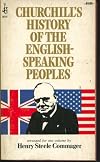
A History of the English-Speaking Peoples {abridged: Commager}
by Winston S. Churchill
On This Page
Description
Four volumes condensed into a single inclusive volume. Text is accompanied by more than 50 illustrations, maps and genealogical tables.Tags
Recommendations



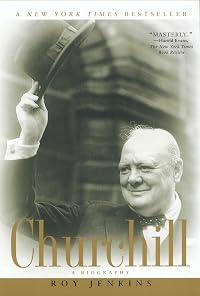
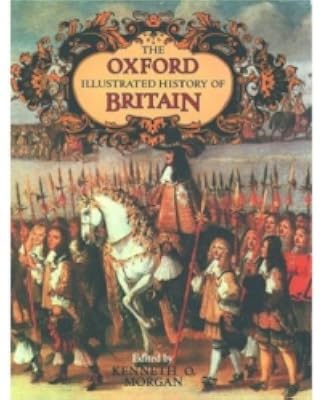
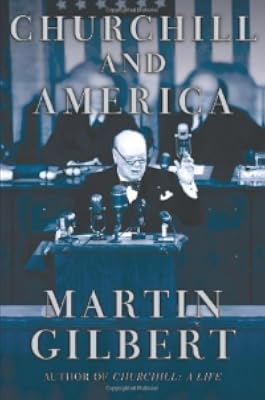
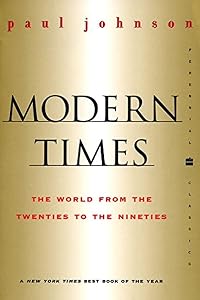






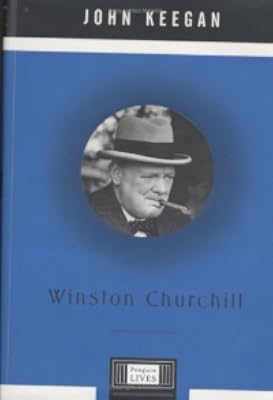

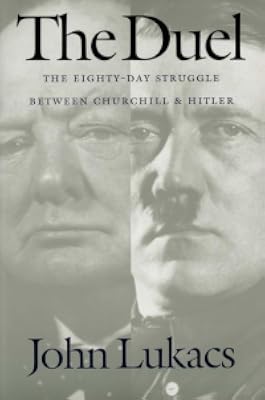
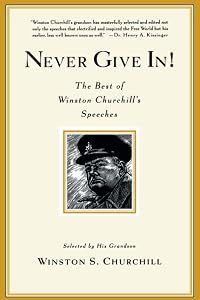


Member Recommendations
by anonymous user
by anonymous user
Member Reviews
I did not love reading Churchill’s History of the English-Speaking Peoples, although I don’t know whose fault that is: Churchill’s or the abridger’s. I do know I’m glad I didn’t attempt the 2000 page version; 470 pages of Churchill’s assessment of military strategies and medieval politics from 1939’s perspective was enough.
Don’t get me wrong: I’m glad I read it. However, I wouldn’t call Churchill’s tome a scholarly history. Even after finishing, I’m still not all that comfortable with English history.
In places it simply felt like stories and traditions from the history, told in an interesting way and with plenty of opinion. There were few footnotes. Churchill’s writing is detailed, informative, and show more overarching (Churchill made connections between kings, patterns, and eras). But I felt academic heft was missing. Despite that, I still got rather bogged down in the explanation of military strategies: I don’t care to know the details of each battle, but rather the outcomes and the effects of the battles (and this book had an extensive section on the American Civil War). I did really enjoy the first half of the book, which was about the settlement of England and the kings of England.
In the end, Churchill certainly has an interesting political perspective. But this wasn’t the best for a first look at English history.
More thoughts on my blog show less
Don’t get me wrong: I’m glad I read it. However, I wouldn’t call Churchill’s tome a scholarly history. Even after finishing, I’m still not all that comfortable with English history.
In places it simply felt like stories and traditions from the history, told in an interesting way and with plenty of opinion. There were few footnotes. Churchill’s writing is detailed, informative, and show more overarching (Churchill made connections between kings, patterns, and eras). But I felt academic heft was missing. Despite that, I still got rather bogged down in the explanation of military strategies: I don’t care to know the details of each battle, but rather the outcomes and the effects of the battles (and this book had an extensive section on the American Civil War). I did really enjoy the first half of the book, which was about the settlement of England and the kings of England.
In the end, Churchill certainly has an interesting political perspective. But this wasn’t the best for a first look at English history.
More thoughts on my blog show less
In the time period, one of the finest books on the history of Europe and its colonies; Churchill has a tremendous vocabulary that he puts in play in this book. Wonderful secondary source for world history teachers.
Ratings
Members
- Recently Added By
Author Information

561+ Works 34,715 Members
Sir Winston S. Churchill (1874-1965) was Prime Minister of the United Kingdom on two occasions, from 1940-1945 and again from 1951 to 1955. Celebrated as one of the greatest leaders of the twentieth century, he was also a gifted orator, statesman and historian. The author of more than 40 books, he was awarded the Nobel Prize for Literature in 1953 show more and in 1963 was made an honorary citizen of the United States. show less
All Editions
Work Relationships
Is an abridged version of
Common Knowledge
- Canonical title
- A History of the English-Speaking Peoples {abridged: Commager}
- Original language
- English
Classifications
Statistics
- Members
- 574
- Popularity
- 51,204
- Reviews
- 4
- Rating
- (4.23)
- Languages
- English
- Media
- Paper
- ISBNs
- 5
- ASINs
- 10