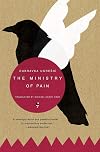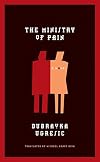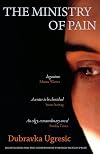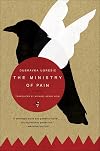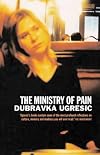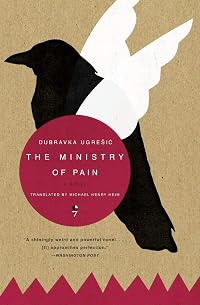
The Ministry of Pain
by Dubravka Ugrešić
On This Page
Description
Having fled the violent breakup of Yugoslavia, Tanja Lucic is now a professor of literature at the University of Amsterdam, where she teaches a class filled with other young Yugoslav exiles, most of whom earn meager wages assembling leather and rubber S&M clothing at a sweatshop they call the "Ministry." Abandoning literature, Tanja encourages her students to indulge their "Yugonostalgia" in essays about their personal experiences during their homeland's cultural and physical disintegration. show more But Tanja's act of academic rebellion incites the rage of one renegade member of her class-and pulls her dangerously close to another-which, in turn, exacerbates the tensions of a life in exile that has now begun to spiral seriously out of control. show lessTags
Recommendations










Member Reviews
Croatia (Yugoslavia)
The protagonist, Tanja, a literature professor, has fled the breakup of Yugoslavia, as have the students she now teaches in Amsterdam. Since the students all actually know the language (and are taking the class for a variety of other reasons), she uses her time with them to engage in "Yugonostalgia," an invocation or alchemical recreation of their memories of their former country. However, as is also the case for their fragmented nation(s), she and the students understand their relationship, purposes, and ties to their origins differently. The Ministry of Pain works well as a novel of longing for a romanticized past, of exile and dislocation, and of existential loneliness. It is occasionally derailed by abstract show more socio-political passages that read more like mini-manifestos than anything else, though one could argue that they are exactly how Tanja would think under these circumstances. Quite aside from its cultural content, this is a fun read for academics for reasons similar to those found in Smiley's Moo. show less
The protagonist, Tanja, a literature professor, has fled the breakup of Yugoslavia, as have the students she now teaches in Amsterdam. Since the students all actually know the language (and are taking the class for a variety of other reasons), she uses her time with them to engage in "Yugonostalgia," an invocation or alchemical recreation of their memories of their former country. However, as is also the case for their fragmented nation(s), she and the students understand their relationship, purposes, and ties to their origins differently. The Ministry of Pain works well as a novel of longing for a romanticized past, of exile and dislocation, and of existential loneliness. It is occasionally derailed by abstract show more socio-political passages that read more like mini-manifestos than anything else, though one could argue that they are exactly how Tanja would think under these circumstances. Quite aside from its cultural content, this is a fun read for academics for reasons similar to those found in Smiley's Moo. show less
An intelligent, witty and sometimes very moving examination of the condition of exile: what it means to come from a country that no longer exists, to have been brought up in a culture that has been split apart by nationalism and war, to find that you have become a refugee, living on sufferance in someone else's country.
Ugrešić's narrator, Tanja, gets a job at Amsterdam University teaching Serbo-Croatian literature. Her students are all exiles like herself (Serbs, Croatians, Bosnians,...), who find it convenient to have student status. She tries the experiment of teaching "Yugonostalgia", getting the students to remember the pre-war Yugoslav culture that has been erased or devalued by nationalism, but finds that there are no easy show more answers, and that her own job at the university is in danger. show less
Ugrešić's narrator, Tanja, gets a job at Amsterdam University teaching Serbo-Croatian literature. Her students are all exiles like herself (Serbs, Croatians, Bosnians,...), who find it convenient to have student status. She tries the experiment of teaching "Yugonostalgia", getting the students to remember the pre-war Yugoslav culture that has been erased or devalued by nationalism, but finds that there are no easy show more answers, and that her own job at the university is in danger. show less
Teaching a group of students from the former Yugoslavia, a doctor in Yugoslavian language and literatures wonders what her job means as Croatians, Bosnians, Serbians work to try and make their languages as different as possible, deny the common stories and prop up nationalistic ambition. This is the second book I've read by Ugresic and in both she led the reader quite gently at first and then the last act takes the reader into the wilds. So long as you don't mind that, a great read.
At one point a student says to the teacher that they moved to the Netherlands, as how could anyone live in a country where the curses are so macabre. As if to underline the point, the book ends with two pages filled with one-liner curses.
At one point a student says to the teacher that they moved to the Netherlands, as how could anyone live in a country where the curses are so macabre. As if to underline the point, the book ends with two pages filled with one-liner curses.
From Mishima's "The Sailor Who Fell from Grace with the Sea" to Kafka to "Winesburg, Ohio," the themes of alienation and exile have pervaded world literature in the twentieth century so much as to almost become a cliché. The various political disintegrations in Europe of the 1980s and 1990s gave need to another wave of this type of literature, and is whence Dubravka Ugresic's wonderful novel "The Ministry of Pain" comes. Reading it, I was reminded a lot of Kundera's novels from the same time period, though Ugresic takes herself less seriously and is a much more successful ironist. While renovating an apartment she is taking in, the main character pops in a random video, and it just happens to be the film version of "The Unbearable show more Lightness of Being."
The novel follows Tanja Lucic after the breakup of the former Yugoslavia from Zagreb to Amsterdam to take up a position teaching language, mostly to students who (like her) have left Yugoslavia and are now living in Amsterdam waiting for their papers. Living near the red light district, the name of the novel derives from the store where many of Tanja's students make ends meet constructing sex toys and other leather goods for sex-play. With a highly unorthodox approach to teaching, Tanja chooses to probe her students' "Yugonostalgia" - memories of family, language, belonging, friends, and anything else that struck them as important about a place that, technically speaking, no longer exists. Tanja figures that her students' experiences can provide an anodyne for the traumatic displacements their lives have been forced to take on. When an anonymous student reports her for not being academically rigorous enough, she is forced to engage in another teaching style (exiled from her old one?), leaving both her students and herself completely bewildered. But her teaching is really only one of the many parallel stories and musings that go on, taking the novel away from traditional, linear storytelling. Much of the novel takes place through interior monologue where she delivers poignant, sad, and sometimes witty remarks about the brokenness of language, modern culture, her thoughts about her students' writing, and even one of their suicides.
Unlike in times past when the enlightened citizen-philosopher was offered in literature as the non plus ultra in relation to the modern state, Ugresic suggests that it is the exile whose fragmentation, psychic and geographic, provides new ground for understanding the self through literature. As she puts it in "Thank You for Not Reading," "The exile, like it or not, tests the basic concepts around which everyone's life revolves: concepts of home, homeland, family, love, friendship, profession, personal biography. Having completed the long and arduous journey of battling with the bureaucracy of the country where he has ended up, having finally acquired papers, the exile forgets the secret knowledge he has acquired on his journey, in the name of life which must go on." After all, exile is just another form of homecoming. show less
The novel follows Tanja Lucic after the breakup of the former Yugoslavia from Zagreb to Amsterdam to take up a position teaching language, mostly to students who (like her) have left Yugoslavia and are now living in Amsterdam waiting for their papers. Living near the red light district, the name of the novel derives from the store where many of Tanja's students make ends meet constructing sex toys and other leather goods for sex-play. With a highly unorthodox approach to teaching, Tanja chooses to probe her students' "Yugonostalgia" - memories of family, language, belonging, friends, and anything else that struck them as important about a place that, technically speaking, no longer exists. Tanja figures that her students' experiences can provide an anodyne for the traumatic displacements their lives have been forced to take on. When an anonymous student reports her for not being academically rigorous enough, she is forced to engage in another teaching style (exiled from her old one?), leaving both her students and herself completely bewildered. But her teaching is really only one of the many parallel stories and musings that go on, taking the novel away from traditional, linear storytelling. Much of the novel takes place through interior monologue where she delivers poignant, sad, and sometimes witty remarks about the brokenness of language, modern culture, her thoughts about her students' writing, and even one of their suicides.
Unlike in times past when the enlightened citizen-philosopher was offered in literature as the non plus ultra in relation to the modern state, Ugresic suggests that it is the exile whose fragmentation, psychic and geographic, provides new ground for understanding the self through literature. As she puts it in "Thank You for Not Reading," "The exile, like it or not, tests the basic concepts around which everyone's life revolves: concepts of home, homeland, family, love, friendship, profession, personal biography. Having completed the long and arduous journey of battling with the bureaucracy of the country where he has ended up, having finally acquired papers, the exile forgets the secret knowledge he has acquired on his journey, in the name of life which must go on." After all, exile is just another form of homecoming. show less
I have never been in danger of losing my heritage. The US existed long before I was born, and will in all likelihood still be standing long after I'm gone. English is not going to split itself up into a hydra construction anytime soon, barring a disturbance of apocalyptic magnitude. And even if this language chimera did phase into being, there's little chance of the different strains hating each other to the point of genocide. I take this intrinsic stability for granted. You'd be hard pressed to find a citizen of the US who doesn't.
For all those who share my sentiments, and cannot comprehend in the slightest what it means to have your native country pulled from under your feet, your language dismembered into warring partisans, and your show more people spread to the farthest corners of the globe. This book is for you. Well, if you have an interest in that kind of thing, that is.
The book does a very good job of plunging you into a world without absolutes, reflecting the mindset of one of the many refugees from the recently disintegrated Yugoslavia. There's so much confusion regarding language, memory, past, present, all slickly pulling and pushing together like so many snails on the streets of Amsterdam. It's a fantastic read, and does an excellent job of immersing you in the uneasy existence of one ripped away from all that one knows. You may find yourself taking lots of breaks between pages, though, as it's easy to feel increasingly disturbed by the toy comparisons and saliva metaphors that the author loves to use. Disturbing or not, if I had just come to a new country after the destruction of my homeland, I'd definitely be extremely off balance in my current reality. Distrust of reality, as well as nausea, are givens. show less
For all those who share my sentiments, and cannot comprehend in the slightest what it means to have your native country pulled from under your feet, your language dismembered into warring partisans, and your show more people spread to the farthest corners of the globe. This book is for you. Well, if you have an interest in that kind of thing, that is.
The book does a very good job of plunging you into a world without absolutes, reflecting the mindset of one of the many refugees from the recently disintegrated Yugoslavia. There's so much confusion regarding language, memory, past, present, all slickly pulling and pushing together like so many snails on the streets of Amsterdam. It's a fantastic read, and does an excellent job of immersing you in the uneasy existence of one ripped away from all that one knows. You may find yourself taking lots of breaks between pages, though, as it's easy to feel increasingly disturbed by the toy comparisons and saliva metaphors that the author loves to use. Disturbing or not, if I had just come to a new country after the destruction of my homeland, I'd definitely be extremely off balance in my current reality. Distrust of reality, as well as nausea, are givens. show less
In this thought-provoking novel, Ugrešić explores what it means not only to be an exile and not only to be an exile from a country that no longer exists, but also to be an exile from a country that has been shattered, by war and what we learned to call "ethnic cleansing," into multiple smaller nations. The protagonist, a native of Zagreb now living in Amsterdam, has been hired to teach a two-semester course in the literature of the former Yugoslavia at the University; her students come from all over the former Yugoslavia and have enrolled in the university largely because of the advantage of having a student visa. The title of the book comes from the nickname the students give the factory at which many of them work, a factory that show more makes S&M clothing and paraphernalia and which in turn is named after an S&M club. However, the "ministry of pain" is really a metaphor for the various kinds of pain the protagonist and the students experience, from "Yugonostalgia" to much deeper traumas.
The best parts of the book come early, as the protagonist engages with the students and delves into the meaning of exile, her feelings about "home," and the complexity of language. As she notes about Croatian, Serbian, and Bosnian, which apparently differ mostly in a few words, the students "knew that "our" languages were backed by actual troops, that "our" languages were used to curse, humiliate, kill, rape, and expel. They were languages that had gone to war in the belief that they were incompatible, precisely because they were inseparable." In the second part, she goes home for a visit to her mother and her former parents-in-law, and that visit too is interesting. After she returns to Amsterdam, she begins to spiral downwards, changes the way she teaches the students, visits the war crimes tribunal in The Hague, loses her job, and moves into a new apartment. For me the book then became less compelling. I admire what Ugrešić is trying to do, but in an intellectual way, rather than being truly absorbed in the story. I do think this book makes brilliant use of language, and paints a stunning portrait of dislocation. show less
The best parts of the book come early, as the protagonist engages with the students and delves into the meaning of exile, her feelings about "home," and the complexity of language. As she notes about Croatian, Serbian, and Bosnian, which apparently differ mostly in a few words, the students "knew that "our" languages were backed by actual troops, that "our" languages were used to curse, humiliate, kill, rape, and expel. They were languages that had gone to war in the belief that they were incompatible, precisely because they were inseparable." In the second part, she goes home for a visit to her mother and her former parents-in-law, and that visit too is interesting. After she returns to Amsterdam, she begins to spiral downwards, changes the way she teaches the students, visits the war crimes tribunal in The Hague, loses her job, and moves into a new apartment. For me the book then became less compelling. I admire what Ugrešić is trying to do, but in an intellectual way, rather than being truly absorbed in the story. I do think this book makes brilliant use of language, and paints a stunning portrait of dislocation. show less
It is a story of Serbians, Croatians and Bosnians who are refugees/exiles from the former Yugoslavia. Before the war in Bosnia, there was much mingling and intermarriage between all the ethnic and religious groups in Yugoslavia.
The exiles struggle in Amsterdam to find housing, work, passports, living quarters, and a way to either emigrate again, or begin their life anew.
They work for a manufacturer of sado/masochistic clothes for a Porno shop called the Ministry of Pain. The narrator and heroine is their teacher of the Serbo/Croatian language at the University. (A haven and refuge for the dispossessed).
As one of the bittter fallouts of the war,In the divided country, the people of mixed families have no homeland. Macedonians, Albanians, show more Gypsies (ROMA), Jews, Muslims, Orthodox Christians, Catholics, Protestants, Bosnians, Serbians, Croatians have memories of rape, murder, displacement and many have lost their homes multiple times. Some moved in the country two or three times only to have their homes destroyed from under them. Many were in the wrong segment, or had no segment of their own (The Roma, the Jews).
The book is well written so far as you can tell from a translation. show less
The exiles struggle in Amsterdam to find housing, work, passports, living quarters, and a way to either emigrate again, or begin their life anew.
They work for a manufacturer of sado/masochistic clothes for a Porno shop called the Ministry of Pain. The narrator and heroine is their teacher of the Serbo/Croatian language at the University. (A haven and refuge for the dispossessed).
As one of the bittter fallouts of the war,In the divided country, the people of mixed families have no homeland. Macedonians, Albanians, show more Gypsies (ROMA), Jews, Muslims, Orthodox Christians, Catholics, Protestants, Bosnians, Serbians, Croatians have memories of rape, murder, displacement and many have lost their homes multiple times. Some moved in the country two or three times only to have their homes destroyed from under them. Many were in the wrong segment, or had no segment of their own (The Roma, the Jews).
The book is well written so far as you can tell from a translation. show less
Members
- Recently Added By
Published Reviews
ThingScore 75
It’s as if the very structure of the novel is asking, "What do individual relationships matter in the face of disaster?” Characters are introduced and then disappear. With apparently small provocation, central characters move from a flirtatious friendship into attempts to do each other real harm. In the epilogue, though, they’re domestic partners, with only a brief summary to hint at show more whatever emotional transitions happened offstage. show less
added by paradoxosalpha
Above all, Ugresic maps our ability to survive and to tell the stories of our survival, even when scarred and deprived by war and banishment of those myths we once claimed as signifiers of our identity.
added by lkernagh
But despite the breadth and depth of its political and literary ambitions, The Ministry of Pain is possessed of a wonderful, clear simplicity. There are very pure pleasures in Ugresic's honesty, her lightsome, moving prose, her ability to dance in a flash from outrage to satire to a heartfelt exposition of beauty.
added by lkernagh
Lists

EU Fiction: 1950-2022
223 works; 70 members
Author Information

30+ Works 2,602 Members
Dubravka Ugresic was born and raised in what used to be Yugoslavia. In 1993, she left Croatia for political reasons. She has taught in several American and European universities and been awarded many international prizes for her writing
Some Editions
Awards and Honors
Awards
Distinctions
Series
Belongs to Publisher Series
Impedimenta (281)
Common Knowledge
- Canonical title
- The Ministry of Pain
- Original title
- Ministarstvo boli
- Original publication date
- 2005 (original Croatian) (original Croatian); 2006 (English: Heim) (English: Heim)
- People/Characters
- Tanja Lucic; Nevena; Boban; Ante; Meliha; Johanneke (show all 12); Selim; Darko; Mario; Igor; Uros; Ana
- Important places
- Amsterdam, North Holland, Netherlands; Zagreb, Croatia; Croatia; Serbia; Bosnia and Herzegovina; Yugoslavia
- First words
- I don't remember when I first noticed it.
- Last words
- (Click to show. Warning: May contain spoilers.)The Dutch horizontals are good: they are like the school blotters of yesteryear: they absorb everything.
Classifications
- Genres
- General Fiction, Fiction and Literature
- DDC/MDS
- 813 — Literature & rhetoric American literature in English American fiction in English
- LCC
- PG1619.31 .G7 .M5613 — Language and Literature Slavic languages and literatures. Baltic languages. Albanian language Slavic. Baltic. Albanian Serbo-Croatian
- BISAC
Statistics
- Members
- 455
- Popularity
- 67,467
- Reviews
- 9
- Rating
- (3.71)
- Languages
- 15 — Danish, Dutch, English, Finnish, French, German, Hungarian, Norwegian (Bokmål), Polish, Romanian, Serbian, Croatian, Spanish, Swedish, Turkish
- Media
- Paper, Ebook
- ISBNs
- 26
- ASINs
- 5