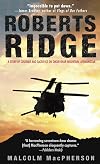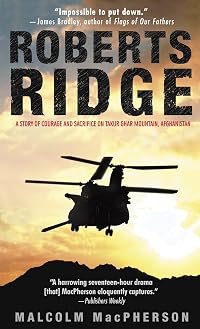
Roberts Ridge: A Story of Courage and Sacrifice on Takur Ghar Mountain, Afghanistan
by Malcolm MacPherson
On This Page
Description
In this gripping you-are-there account based on stunning eyewitness testimony and painstaking research, journalist Malcolm MacPherson thrusts us into a drama of rescue, tragedy, and valor from the war in Afghanistan. For an elite team of SEALs, the mission seemed straightforward enough: to take control of a towering 10,240-foot mountain peak called Takur Ghar, a key post in their plan to smash Taliban al Qaeda in eastern Afghanistan. But the enemy was waiting, and when the Special Forces show more chopper was shredded by enemy fire, a red-haired SEAL named Neil Roberts was thrown from the aircraft. Roberts's fellow SEALs were determined to bring him out-no matter what the cost. This harrowing true account captures in dramatic detail their seventeen-hour battle, fought against near-impossible odds, to save one of their own. show lessTags
Recommendations
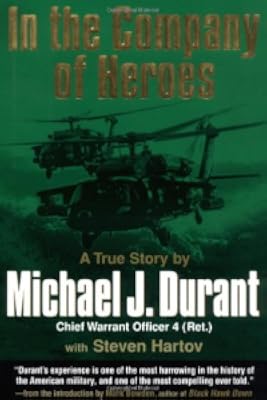
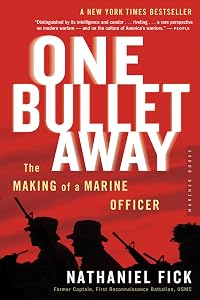
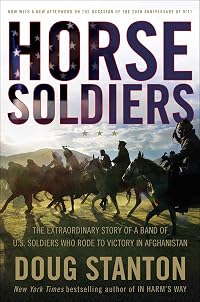
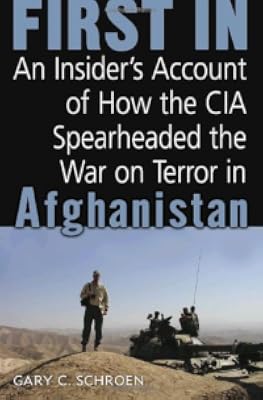



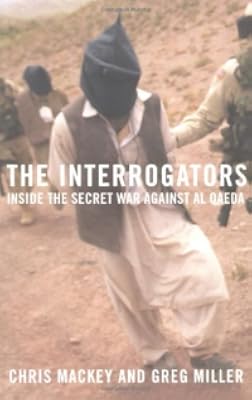
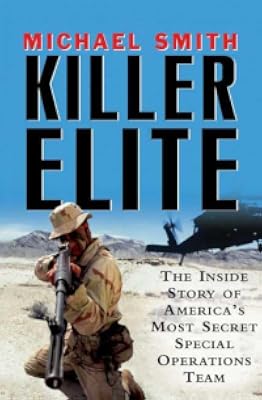
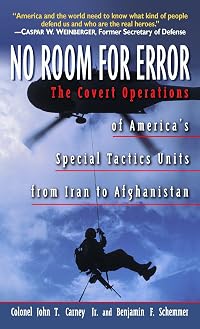
Member Recommendations
Member Reviews
3.5 stars. Although I was already familiar with these events from some other books, this one adds other perspectives and is fairly well done, if dated. There some aspects of the telling - mostly his take on Tech Sgt Chapman’s actions - that are no longer considered accurate in view of Chapman’s MoH award and supporting footage, and I recommend further, later scholarship on that. Still, at this writing this was included in the Audible Plus catalog for no extra charge and it was a welcome listen.
I read this book while in Iraq, and like many of the other books I read about soldiers serving in the War on Terror, inspired me to keep my head about me and keep a good perspective on my situation.It is well written; there were many times I myself felt the frustration and exhaustion of fighting clueless bureaucrats in the rear, the daring of the soldiers involved, the fatigue from fighting at 14,000 feet, and the exhilaration of the rescue depicted. An outstanding story of courage, adventure, and daring.
This is an account of the events that took place on “Roberts Ridge” as part of Operation ANACONDA in Afghanistan in March 2002. An extremely brief summary follows:
The battle began with a failed attempt to land a small SEAL team on a mountaintop, who would then call in fires on Al Qaeda elements in the valley below as a supporting part of the broader campaign. Due to some initially minor mishaps, the SEALs had to be inserted directly onto the mountaintop via helicopter as dawn was breaking. Unfortunately, the landing zone had not been properly surveilled and a dozen or two Chechens had a small bunker complex right there. The helicopter was ambushed as it was landing, one SEAL fell off the back ramp and was left behind, while the show more shot-up helicopter limped away. The remnants of the SEAL team went back to rescue the fallen SEAL and were promptly trapped there as well. The SEALs took heavy casualties and the survivors started limping down the mountainside. A Ranger quick reaction force was sent to the same landing zone with virtually no information, and became pinned there with heavy casualties. Eventually more Rangers were sent to relieve the first batch and helped fight off a brief counterattack, but then none of them could be extracted until nightfall. It was a horrendously bad operation from start to finish.
It would probably be both unproductive and inappropriate to “Monday Morning Quarterback” the decisions made throughout the operation, so I won’t do that here, but I will say that the operation can provide insights into some of the problems experienced in modern combat. For example:
* The relentlessly “can-do” attitude adopted by most US soldiers and officers can have disastrous consequences -- commanders must afford subordinates the ability to say “sorry, sir, it can’t be done given my resources and constraints;”
* Overly complicated command, control, and communications arrangements can also cause serious problems;
* Murphy’s Law (call it Clausewitzian “friction” at the tactical level if you must) is alive and well, and still fully capable of wreaking havoc on the advanced technologies used by US troops;
* The effects of this friction can be at least partially mitigated by proper intelligence preparation of the battlespace (which did not occur in this instance);
* Technology is wonderful when it works, and disastrous when it doesn’t (but then again, any computer user has already learned that lesson many times over).
So are these problems unavaoidable? Are they simply an inevitable consequence of the “American way of war” (if such a thing exists)? I’m not sure, and ROBERTS RIDGE provides no real set of lessons learned, just a cautionary tale of what happens when things go very badly. It is also a tale of unimaginable bravery on the part of most of the US combatants, and, I think, a tale of moral cowardice by some of their military commanders, who failed the men on that mountaintop very badly.
So: it’s a good book. It’s not without its flaws though. I would have liked to have a better sense of the operational context for the events described in ROBERTS RIDGE. Here I am thinking something along the lines of how Mark Bowden began BLACK HAWK DOWN: a brief description of the overall campaign, followed by a narrative that provides an overview of Operation ANACONDA. Readers will have to find that elsewhere, as the book plunges into the action as the first helicopter loaded with SEALs is about to take off. While that immediate jump into the action provides an engaging way to start the book, as the various rescue operations unfold, it rapidly becomes clear that the reader needs a better sense of what else was going on simultaneously and why the resources that were allocated to rescue and relief operations were so constrained. Without this information, the reader can only ask why were the combatants so ill-prepared, and why were they allowed to suffer for so long before there were exfiltrated. Better maps would also have helped, as would a list of the individuals and callsigns involved in the operation. The author has provided a brief annotated bibliography that is useful.
The official DoD “executive summary” account of the battle is reprinted as an appendix in the book, but is also available online: http://www.defenselink.mil/news/May2002/d20020524takurghar.pdf
The book was a quick-read, no real analysis, just a factual account of a small operation that went very, very badly, interspersed with characterizations and backgrounds of many of the key players. Recommended if you are interested in accounts of recent combat operations in Afghanistan.
Review copyright 2009 J. Andrew Byers show less
The battle began with a failed attempt to land a small SEAL team on a mountaintop, who would then call in fires on Al Qaeda elements in the valley below as a supporting part of the broader campaign. Due to some initially minor mishaps, the SEALs had to be inserted directly onto the mountaintop via helicopter as dawn was breaking. Unfortunately, the landing zone had not been properly surveilled and a dozen or two Chechens had a small bunker complex right there. The helicopter was ambushed as it was landing, one SEAL fell off the back ramp and was left behind, while the show more shot-up helicopter limped away. The remnants of the SEAL team went back to rescue the fallen SEAL and were promptly trapped there as well. The SEALs took heavy casualties and the survivors started limping down the mountainside. A Ranger quick reaction force was sent to the same landing zone with virtually no information, and became pinned there with heavy casualties. Eventually more Rangers were sent to relieve the first batch and helped fight off a brief counterattack, but then none of them could be extracted until nightfall. It was a horrendously bad operation from start to finish.
It would probably be both unproductive and inappropriate to “Monday Morning Quarterback” the decisions made throughout the operation, so I won’t do that here, but I will say that the operation can provide insights into some of the problems experienced in modern combat. For example:
* The relentlessly “can-do” attitude adopted by most US soldiers and officers can have disastrous consequences -- commanders must afford subordinates the ability to say “sorry, sir, it can’t be done given my resources and constraints;”
* Overly complicated command, control, and communications arrangements can also cause serious problems;
* Murphy’s Law (call it Clausewitzian “friction” at the tactical level if you must) is alive and well, and still fully capable of wreaking havoc on the advanced technologies used by US troops;
* The effects of this friction can be at least partially mitigated by proper intelligence preparation of the battlespace (which did not occur in this instance);
* Technology is wonderful when it works, and disastrous when it doesn’t (but then again, any computer user has already learned that lesson many times over).
So are these problems unavaoidable? Are they simply an inevitable consequence of the “American way of war” (if such a thing exists)? I’m not sure, and ROBERTS RIDGE provides no real set of lessons learned, just a cautionary tale of what happens when things go very badly. It is also a tale of unimaginable bravery on the part of most of the US combatants, and, I think, a tale of moral cowardice by some of their military commanders, who failed the men on that mountaintop very badly.
So: it’s a good book. It’s not without its flaws though. I would have liked to have a better sense of the operational context for the events described in ROBERTS RIDGE. Here I am thinking something along the lines of how Mark Bowden began BLACK HAWK DOWN: a brief description of the overall campaign, followed by a narrative that provides an overview of Operation ANACONDA. Readers will have to find that elsewhere, as the book plunges into the action as the first helicopter loaded with SEALs is about to take off. While that immediate jump into the action provides an engaging way to start the book, as the various rescue operations unfold, it rapidly becomes clear that the reader needs a better sense of what else was going on simultaneously and why the resources that were allocated to rescue and relief operations were so constrained. Without this information, the reader can only ask why were the combatants so ill-prepared, and why were they allowed to suffer for so long before there were exfiltrated. Better maps would also have helped, as would a list of the individuals and callsigns involved in the operation. The author has provided a brief annotated bibliography that is useful.
The official DoD “executive summary” account of the battle is reprinted as an appendix in the book, but is also available online: http://www.defenselink.mil/news/May2002/d20020524takurghar.pdf
The book was a quick-read, no real analysis, just a factual account of a small operation that went very, very badly, interspersed with characterizations and backgrounds of many of the key players. Recommended if you are interested in accounts of recent combat operations in Afghanistan.
Review copyright 2009 J. Andrew Byers show less
Afghanistan, March 2002. In the early morning darkness on a frigid mountaintop, a U.S. soldier is stranded, alone, surrounded by fanatical al Qaeda fighters. For the man’s fellow Navy SEALs, and for waiting teams of Army Rangers, there was only one rule now: leave no one behind. In this gripping you-are-there account–based on stunning eyewitness testimony and painstaking research–journalist Malcolm MacPherson thrusts us into a drama of rescue, tragedy, and valor in a place that would be known as.. ROBERTS RIDGE. the taking of Takur Ghar
Ratings
Members
- Recently Added By
Author Information
13 Works 948 Members
Journalist and author Malcolm MacPherson was born in Bridgeport, Connecticut. At 11, he survived a car accident that killed his parents and was raised by relatives. He graduated from Trinity College in 1965 and served in the Marine Corps. He became a correspondent for Newsweek, where he covered numerous wars and conflicts including the invasion of show more Cyprus by Turkey and the Arab-Israeli war of 1973. He left the magazine in 1978 in order to become a full-time author. He wrote both fiction and non-fiction books including The Lucifer Key (1981), The Blood of His Servants (1984), In Cahoots (1994), Roberts Ridge (2005), and Hocus Potus (2007). He also did free-lance work for Time magazine. He died of a heart attack on January 17, 2009 at the age of 65. (Bowker Author Biography) show less
Common Knowledge
- Important places
- Afghanistan
Classifications
Statistics
- Members
- 260
- Popularity
- 125,176
- Reviews
- 4
- Rating
- (3.87)
- Languages
- English
- Media
- Paper, Audiobook, Ebook
- ISBNs
- 13
- ASINs
- 3