
What the Dog Saw and Other Adventures
by Malcolm Gladwell
On This Page
Description
Brings together, for the first time, the best of Gladwell's writing from The New Yorker in the past decade, including: the bittersweet tale of the inventor of the birth control pill; the dazzling inventions of the pasta sauce pioneer Howard Moscowitz; spotlighting Ron Popeil, the king of the American kitchen; and the secrets of Cesar Millan, the "dog whisperer." Gladwell also explores intelligence tests, ethnic profiling and "hindsight bias," and why it was that everyone in Silicon Valley show more once tripped over themselves to hire the same college graduate. show lessTags
Recommendations
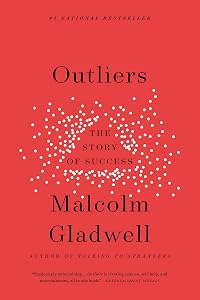
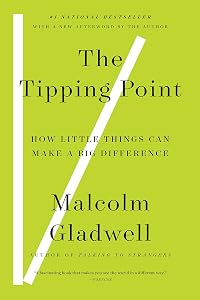
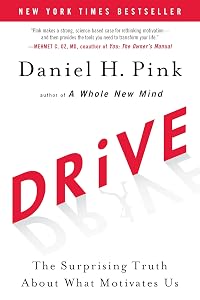
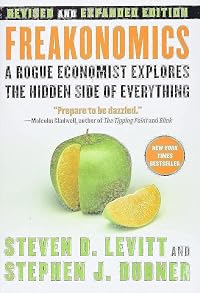
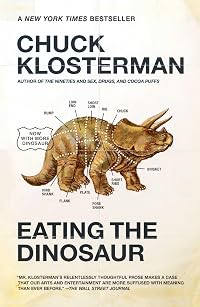
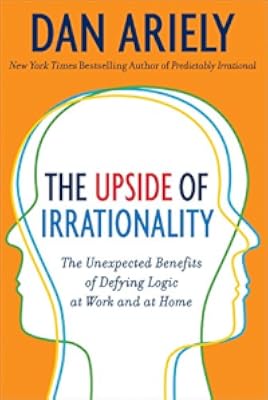
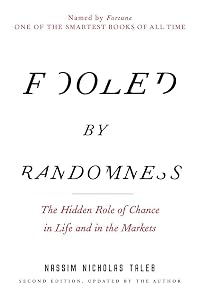
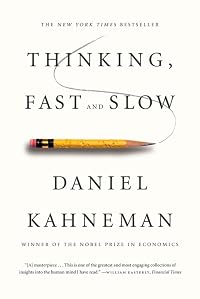

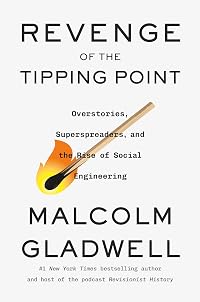
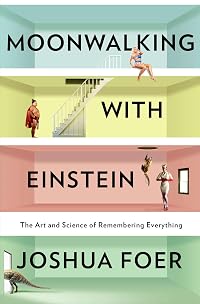
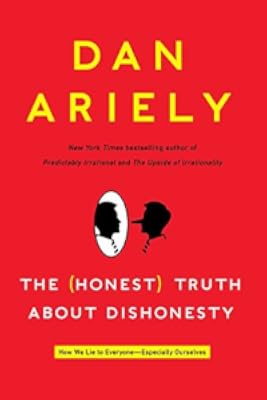
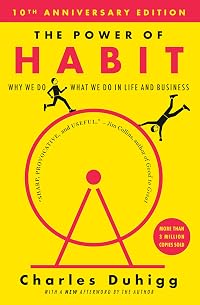
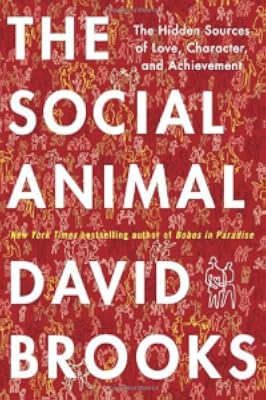
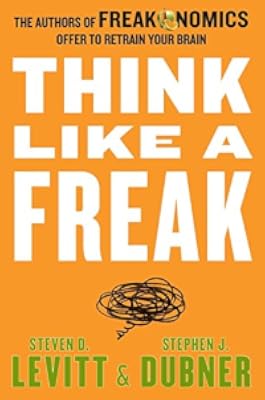
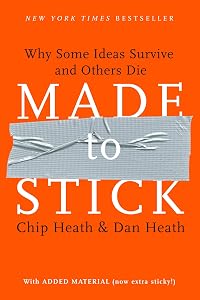
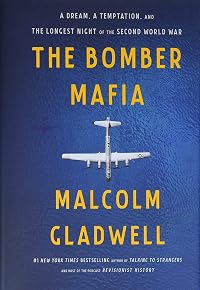
Member Recommendations
The Full Facts Book of Cold Reading: A Comprehensive Guide to the Most Persuasive Psychological Manipulation Technique in the World by Ian Rowland
anonymous user If you've read Cold Reading or What the Dog Saw, you're likely to be interested in human nature and how people affect other people. Both reveal stunning insights in both these domains.
Member Reviews
Malcolm Gladwell would be an interesting dinner companion I think. I must remember him for the next time I'm asked one of those questions about 5 people living or dead you would most like to talk to (or have dinner with). I always learn something interesting when I read (or listen to as in this case) one of his books.
This book compiles 19 articles that Gladwell wrote for The New Yorker and he says they are his favourite articles. They are grouped into three categories: Obsessives, Pioneers, and Other Varieties of Minor Genius; Theories, Predictions, and Diagnoses; Personality, Character, and Intelligence. The title story comes in the first section and chronicles the life of Cesar Millan, the famous dog whisperer. One of the most show more interesting articles, to me, is in the second section. It is called Million-Dollar Murray: Why Problems Like Homelessness May be Easier to Solve than Manage. A homeless man in Reno called Murray is picked up by the police so often during a twenty-year period that it is estimated he has cost the government over a million dollars. In other cities in the USA a different approach has been taken to homelessness. The chronically homeless (one of the other facts Gladwell throws in is that most people who are homeless for a while find accommodation after a few months) are provided with an apartment and a team of social workers check on them regularly, making sure they are eating, taking medication, getting treatment etc. This costs much less per year than the cost of picking them up from the street regularly and taking them to a hospital or jail. Another controversial article had me reexamine my own beliefs. Troublemakers: What Pit Bulls Can Teach Us About Crime talks about whether pit bulls are inherently dangerous and thus lawmakers are justified in banning them in some jurisdictions or if they have been unjustly targeted. His arguments almost have me convinced that it is wrong to target particular breeds. In fact, it is more likely the owners that should be banned.
And there are lots and lots more fascinating tidbits. show less
This book compiles 19 articles that Gladwell wrote for The New Yorker and he says they are his favourite articles. They are grouped into three categories: Obsessives, Pioneers, and Other Varieties of Minor Genius; Theories, Predictions, and Diagnoses; Personality, Character, and Intelligence. The title story comes in the first section and chronicles the life of Cesar Millan, the famous dog whisperer. One of the most show more interesting articles, to me, is in the second section. It is called Million-Dollar Murray: Why Problems Like Homelessness May be Easier to Solve than Manage. A homeless man in Reno called Murray is picked up by the police so often during a twenty-year period that it is estimated he has cost the government over a million dollars. In other cities in the USA a different approach has been taken to homelessness. The chronically homeless (one of the other facts Gladwell throws in is that most people who are homeless for a while find accommodation after a few months) are provided with an apartment and a team of social workers check on them regularly, making sure they are eating, taking medication, getting treatment etc. This costs much less per year than the cost of picking them up from the street regularly and taking them to a hospital or jail. Another controversial article had me reexamine my own beliefs. Troublemakers: What Pit Bulls Can Teach Us About Crime talks about whether pit bulls are inherently dangerous and thus lawmakers are justified in banning them in some jurisdictions or if they have been unjustly targeted. His arguments almost have me convinced that it is wrong to target particular breeds. In fact, it is more likely the owners that should be banned.
And there are lots and lots more fascinating tidbits. show less
A collection of the author's essays and reflections on cabbages and kings, things trivial and significant, and on the nature of rational and irrational knowledge and understanding. The collection starts of on a rather unpromising note, with a piece on the salesmanship involved in developing and selling kitchen implements, that is so entrenched in America, that it is almost incomprehensible to readers from other parts of the world.It gets more interesting toward the middle of the book, dealing with the nature of understanding and problem solving in various fields. An engrossing and enlightening read.
What the Dog Saw is a compendium of nineteen essays by Gladwell that were previously published in The New Yorker. There are three categories of stories: biographies about “minor geniuses,” the hazards of particular theories of interpretation, and the shortcomings of the art of prediction.
Part I demonstrates Gladwell’s main strength: his ability as a raconteur to tell a good, entertaining story. He profiles the inventor of the Vego-matic, the ad exec who came up with the Clairol slogans, and a gourmet ketchup entrepreneur, inter alia. These stories are fascinating, and delightful.
One wishes Gladwell would just stay away from science, but he can’t seem to resist. In Part II, his stories involve studies: cancer research, brain show more research, economic research, etc. Before you know it, he’s slipping back into his tendencies to cherry-pick data, conflate correlation with causation, and use anecdotal observations to confirm his theories.
He continues this trend in Part III, with an overview of how difficult it is to predict success in fields ranging from football to teaching to the identification of serial killers. The essay on serial killers is perhaps the most amusing in a meta sense, because he criticizes so-called “experts” in crime profiling by using many of the same arguments one could use against his own forays into science. He mentions, for example, that profilers choose data selectively to fit theories, use generalizations, squeeze case studies into narrow conceptual boxes, ignore counterfactual examples, cite anecdotes as definitive proof, don’t use representative samples, and overstate their conclusions. Except for this particular essay, I’m afraid one could say the same about him!
I found “The Talent Myth - are smart people over-rated?” to be particularly bizarre. Could the collapse of Enron really be attributed to its having hiring too many smart people and giving them the freedom to innovate? Should we therefore expect similar meltdowns at IBM or Google? The essay “Blowup - who can be blamed for a disaster like the Challenger explosion?” is a recapitulation of the arguments of Boston College sociologist Diane Vaughan from her book The Challenger Launch Decision, which Gladwell calls "the first truly definitive analysis of the events leading up to January 28, 1986." Considering that Vaughan's conclusions are contrary to those of Nobel laureate Richard Feynman's rather definitive (but apparently not "truly" definitive) analysis of the Challenger disaster in Feynman's book, What Do You Care What Other People Think?, one would think Gladwell would at least mention it, but he does not. (In fact, in his one sentence about Feynman, strictly limited to Feynman's testimony before the investigating committee, Gladwell implies Feynman thought O-Rings were the only problem, which was not the case at all.) In “Most Likely to Succeed - How do we hire when we can't tell who's right for the job?,” Gladwell spends a lot of time expatiating on the story of one football player to establish that there is no correlation between being the best college football quarterback and making it as a pro. Nor, he says, can interviews reveal who will or will not make a great teacher. His conclusion is that we should therefore lower our standards:
"If college performance doesn't tell us anything, why shouldn't we value someone who hasn't had the chance to play [football] as highly as someone who plays as well as anyone in the land?”
And as for teachers:
"Teaching should be open to anyone with a pulse and a college degree—and teachers should be judged after they have started their jobs, not before.”
...I'll just be checking my pulse, and then I'm off for a job interview! ... or a football game; I haven't quite decided!
Evaluation: The essays that stick to facts and Gladwell’s own experiences are very enjoyable. There is no doubt he writes well and is rarely dull. However, I advise anyone who reads or listens to this book to “cherry-pick” from amongst the essays, and take the scientific allegations with a grain of salt.
Rating: 3.5/5 show less
Part I demonstrates Gladwell’s main strength: his ability as a raconteur to tell a good, entertaining story. He profiles the inventor of the Vego-matic, the ad exec who came up with the Clairol slogans, and a gourmet ketchup entrepreneur, inter alia. These stories are fascinating, and delightful.
One wishes Gladwell would just stay away from science, but he can’t seem to resist. In Part II, his stories involve studies: cancer research, brain show more research, economic research, etc. Before you know it, he’s slipping back into his tendencies to cherry-pick data, conflate correlation with causation, and use anecdotal observations to confirm his theories.
He continues this trend in Part III, with an overview of how difficult it is to predict success in fields ranging from football to teaching to the identification of serial killers. The essay on serial killers is perhaps the most amusing in a meta sense, because he criticizes so-called “experts” in crime profiling by using many of the same arguments one could use against his own forays into science. He mentions, for example, that profilers choose data selectively to fit theories, use generalizations, squeeze case studies into narrow conceptual boxes, ignore counterfactual examples, cite anecdotes as definitive proof, don’t use representative samples, and overstate their conclusions. Except for this particular essay, I’m afraid one could say the same about him!
I found “The Talent Myth - are smart people over-rated?” to be particularly bizarre. Could the collapse of Enron really be attributed to its having hiring too many smart people and giving them the freedom to innovate? Should we therefore expect similar meltdowns at IBM or Google? The essay “Blowup - who can be blamed for a disaster like the Challenger explosion?” is a recapitulation of the arguments of Boston College sociologist Diane Vaughan from her book The Challenger Launch Decision, which Gladwell calls "the first truly definitive analysis of the events leading up to January 28, 1986." Considering that Vaughan's conclusions are contrary to those of Nobel laureate Richard Feynman's rather definitive (but apparently not "truly" definitive) analysis of the Challenger disaster in Feynman's book, What Do You Care What Other People Think?, one would think Gladwell would at least mention it, but he does not. (In fact, in his one sentence about Feynman, strictly limited to Feynman's testimony before the investigating committee, Gladwell implies Feynman thought O-Rings were the only problem, which was not the case at all.) In “Most Likely to Succeed - How do we hire when we can't tell who's right for the job?,” Gladwell spends a lot of time expatiating on the story of one football player to establish that there is no correlation between being the best college football quarterback and making it as a pro. Nor, he says, can interviews reveal who will or will not make a great teacher. His conclusion is that we should therefore lower our standards:
"If college performance doesn't tell us anything, why shouldn't we value someone who hasn't had the chance to play [football] as highly as someone who plays as well as anyone in the land?”
And as for teachers:
"Teaching should be open to anyone with a pulse and a college degree—and teachers should be judged after they have started their jobs, not before.”
...I'll just be checking my pulse, and then I'm off for a job interview! ... or a football game; I haven't quite decided!
Evaluation: The essays that stick to facts and Gladwell’s own experiences are very enjoyable. There is no doubt he writes well and is rarely dull. However, I advise anyone who reads or listens to this book to “cherry-pick” from amongst the essays, and take the scientific allegations with a grain of salt.
Rating: 3.5/5 show less
Why do we have several types of mustard but only one type of ketchup? What is the difference between a ‘mystery’ and a ‘puzzle’ and how does that impact the way we think about information processing? Can great teachers be identified in advance? How did advertising for hair color products reflect and impact the women’s movement of the last fifty years? In hiring new talent at a corporation, is the strategy of getting the smartest people overrated? In athletic performance, what is the difference between choking and panicking? How did the Catholic Church influence the way in which the birth control pill was developed? Does the profiling of serial killer or terrorist suspects really help in law enforcement? What do dogs see and show more think about when they are being trained?
By nature, Malcolm Gladwell is a curious person. In What the Dog Saw, a collection of articles he wrote for The New Yorker magazine over the span of about a decade, he asks and tentatively answers these questions, along with several others of an equally interesting and diverse nature. For those familiar with Gladwell’s longer works (e.g., Outliers, The Tipping Point), the narrative pattern in these essays follows a similar approach: posing an intriguing premise that focuses on a particular “case study” and then addressing that proposition with an amalgamation of research from myriad areas in the social and natural sciences, including psychology, economics, sociology, journalism, statistics, and biology. The difference, of course, is that each topic in this volume is examined in 20-25 pages instead of over the length of an entire book.
Although some of the topics seemed a little dated (e.g., the profile of master pitchman Ron Popeil) and somewhat conflicting (e.g., the various views of what went wrong at Enron), I found this collection of essays to be quite stimulating and I enjoyed reading it very much. I have heard criticisms of Gladwell’s work that he engages in pseudo (or “junk”) science to support his analysis, but I think this assertion is unfair and really misses the point of what the author is trying to accomplish. As someone who has produced primary research in my own field of expertise (i.e., financial economics) for more than three decades, I found that Gladwell’s efforts to summarize this area for a wider audience (e.g., his profile of Nassim Taleb’s “Black Swan” work) to be both appropriate and enlightening. This is a book that will stimulate the reader to think a lot about a number of compelling ideas, even if he or she ends up disagreeing with the author’s conclusions. show less
By nature, Malcolm Gladwell is a curious person. In What the Dog Saw, a collection of articles he wrote for The New Yorker magazine over the span of about a decade, he asks and tentatively answers these questions, along with several others of an equally interesting and diverse nature. For those familiar with Gladwell’s longer works (e.g., Outliers, The Tipping Point), the narrative pattern in these essays follows a similar approach: posing an intriguing premise that focuses on a particular “case study” and then addressing that proposition with an amalgamation of research from myriad areas in the social and natural sciences, including psychology, economics, sociology, journalism, statistics, and biology. The difference, of course, is that each topic in this volume is examined in 20-25 pages instead of over the length of an entire book.
Although some of the topics seemed a little dated (e.g., the profile of master pitchman Ron Popeil) and somewhat conflicting (e.g., the various views of what went wrong at Enron), I found this collection of essays to be quite stimulating and I enjoyed reading it very much. I have heard criticisms of Gladwell’s work that he engages in pseudo (or “junk”) science to support his analysis, but I think this assertion is unfair and really misses the point of what the author is trying to accomplish. As someone who has produced primary research in my own field of expertise (i.e., financial economics) for more than three decades, I found that Gladwell’s efforts to summarize this area for a wider audience (e.g., his profile of Nassim Taleb’s “Black Swan” work) to be both appropriate and enlightening. This is a book that will stimulate the reader to think a lot about a number of compelling ideas, even if he or she ends up disagreeing with the author’s conclusions. show less
I found "What the Dog Saw" in the rotating collection of books on my brother's bathroom counter. I am not usually compelled by non-fiction, but a short read of the inside flap while I brushed my teeth had me flipping to the introduction on my way to bed. I finished the introduction at 2am, well past my bedtime, and forced myself not to begin chapter 1 until the next day.
The book continued to interest me, more or less, through it's entirety. Gladwell covers a wide range of socio-political topics with his selection of articles, some of which I found fascinating (Blowup: Who Can be Blamed for a Disaster like the Challenger Explosion? No One, and we'd Better Get Used to It, Open
Secrets: Enron, Intelligence, and the Perils of Too Much show more Information, Something Borrowed: Should a Charge of Plagiarism Ruin Your Life?, Dangerous Minds: Criminal Profiling Made Easy), others which were completely out of my realm, but interesting none-the-less, and one that made me skip to the next chapter (Blowing Up: How Nassim Taleb Turned the Inevitability of Disaster into an Investment Strategy). But only one. I didn't expect to read this book cover to cover, but aside from that one story, I did.
Besides how well it held my attention, I found that this book opened my mind to things I hadn't really thought through thoroughly. For example, the title piece "What the Dog Saw" is about Casar Millan, the Dog Whisperer. I had been told by a dog trainer that his theories are bunk and that they make no sense in the domestic environment, but reading this story gave me a perspective on his work that I would have written off, and I'm glad for it. Another interesting tid bit that floats through my mind, though the book is long finished, is that there is a difference between choking and panicking. Oh! And I learned about first impressions, and how biased they might be. I like a book that changes me by giving me a new perspective on things I thought I had figured out!
And so, I gave it a 4. It's not a perfect fit for me, or a book that I would read over and over, but it opened my mind and interested me in topics I would usually gloss over. Start with the inside flap and the introduction, and if they compel you at all to keep reading, I think you'll enjoy this book. show less
The book continued to interest me, more or less, through it's entirety. Gladwell covers a wide range of socio-political topics with his selection of articles, some of which I found fascinating (Blowup: Who Can be Blamed for a Disaster like the Challenger Explosion? No One, and we'd Better Get Used to It, Open
Secrets: Enron, Intelligence, and the Perils of Too Much show more Information, Something Borrowed: Should a Charge of Plagiarism Ruin Your Life?, Dangerous Minds: Criminal Profiling Made Easy), others which were completely out of my realm, but interesting none-the-less, and one that made me skip to the next chapter (Blowing Up: How Nassim Taleb Turned the Inevitability of Disaster into an Investment Strategy). But only one. I didn't expect to read this book cover to cover, but aside from that one story, I did.
Besides how well it held my attention, I found that this book opened my mind to things I hadn't really thought through thoroughly. For example, the title piece "What the Dog Saw" is about Casar Millan, the Dog Whisperer. I had been told by a dog trainer that his theories are bunk and that they make no sense in the domestic environment, but reading this story gave me a perspective on his work that I would have written off, and I'm glad for it. Another interesting tid bit that floats through my mind, though the book is long finished, is that there is a difference between choking and panicking. Oh! And I learned about first impressions, and how biased they might be. I like a book that changes me by giving me a new perspective on things I thought I had figured out!
And so, I gave it a 4. It's not a perfect fit for me, or a book that I would read over and over, but it opened my mind and interested me in topics I would usually gloss over. Start with the inside flap and the introduction, and if they compel you at all to keep reading, I think you'll enjoy this book. show less
Malcolm Gladwell seems to have a knack for making a lot out of a little. Take, for instance, his book "Blink," the thesis of which is: First impressions are usually right. What I said in five words, he stretches out to several hundred pages. Yet they are fascinating pages that don't just state and restate his initial thought but dig deep into the hows and whys of the matter.
In "What the Dog Saw and Other Adventures," Gladwell holds himself back, giving us shorter reflections on a variety of intriguing questions you may have never thought to ask but, upon reading this book, you are glad somebody did. The book collects 19 articles originally published in The New Yorker.
Among the questions Gladwell asks and then answers are:
Who's the guy show more in all those Veg-O-Matic and Showtime Rotisserie infomercials?
If there are so many varieties of mustard, why is all ketchup pretty much the same?
Should a charge of plagiarism ruin a person's life?
Is someone always to blame for major disasters like the Challenger explosion?
Why do we equate genius with precocity?
Are smart people overrated?
What do job interviews really tell us?
The answers to these and other questions are almost always surprising and, like "Blink," utterly fascinating. In his introduction Gladwell states his belief that anything can be interesting if the writer does his job and makes it interesting. In fact, a reader might wish Gladwell would stretch each of these pieces into a book. show less
In "What the Dog Saw and Other Adventures," Gladwell holds himself back, giving us shorter reflections on a variety of intriguing questions you may have never thought to ask but, upon reading this book, you are glad somebody did. The book collects 19 articles originally published in The New Yorker.
Among the questions Gladwell asks and then answers are:
Who's the guy show more in all those Veg-O-Matic and Showtime Rotisserie infomercials?
If there are so many varieties of mustard, why is all ketchup pretty much the same?
Should a charge of plagiarism ruin a person's life?
Is someone always to blame for major disasters like the Challenger explosion?
Why do we equate genius with precocity?
Are smart people overrated?
What do job interviews really tell us?
The answers to these and other questions are almost always surprising and, like "Blink," utterly fascinating. In his introduction Gladwell states his belief that anything can be interesting if the writer does his job and makes it interesting. In fact, a reader might wish Gladwell would stretch each of these pieces into a book. show less
Gladwell works with great material, every chapter a different subject plus he has a real knack for approaching his material from oblique angles. Lots of food for thought here. Jan 2010
Members
- Recently Added By
Published Reviews
ThingScore 67
The themes of the collection are a good way to characterize Gladwell himself: a minor genius who unwittingly demonstrates the hazards of statistical reasoning and who occasionally blunders into spectacular failures.
added by Shortride
This book full of short conversation pieces is a collection that plays to the author’s strengths. It underscores his way of finding suitably quirky subjects (the history of women’s hair-dye advertisements; the secret of Heinz’s unbeatable ketchup; even the effects of women’s changing career patterns on the number of menstrual periods they experience in their lifetimes) and using each show more as gateway to some larger meaning. It illustrates how often he sets up one premise (i.e. that crime profiling helps track down serial killers) only to destroy it. show less
added by Shortride
Gladwell has divided his book into three sections. The first deals with what he calls obsessives and minor geniuses; the second with flawed ways of thinking. The third focuses on how we make predictions about people: will they make a good employee, are they capable of great works of art, or are they the local serial killer?
added by mikeg2
Lists

The Enlightened Economist
107 works; 1 member

Mind Expanding Books by hackerkid
581 works; 8 members

Shaykh Hamza's Book Recommendations
439 works; 3 members
Author Information

In 2005, Time named Malcolm Gladwell one of its 100 most influential people. He is the author of three books, each of which reached number one on the New York Times Best Seller list. They are: The Tipping Point, Blink, and Outliers. His fourth book, What the Dog Saw and Other Adventures was published in 2009. He is a is a British-born Canadian show more journalist and author. Gladwell was a reporter for the Washington Post from 1987 to 1996, working first as a science writer and then as New York City bureau chief. Since 1996, he has been a staff writer for The New Yorker. He graduated with a degree in history from the University of Toronto's Trinity College in 1984. (Publisher Provided) show less
Some Editions
Awards and Honors
Distinctions
Work Relationships
Is contained in
Common Knowledge
- Canonical title
- What the Dog Saw and Other Adventures
- Original title
- What the Dog Saw: And Other Adventures
- Original publication date
- 2009
- Dedication
- For Henry and David
- First words
- [Preface] When I was a small child, I used to sneak into my father's study and leaf through the papers on his desk.
The extraordinary story of the Ronco Showtime Rotisserie & BBQ begins with Nathan Morris, the son of the shoemaker and cantor Kidders Morris, who came over from the Old Country in the 1880s, and settled in Asbury Park, New Je... (show all)rsey. - Last words
- (Click to show. Warning: May contain spoilers.)It's always easier just to ban the breed.
Classifications
Statistics
- Members
- 6,030
- Popularity
- 2,119
- Reviews
- 139
- Rating
- (3.79)
- Languages
- 13 — Dutch, English, German, Hungarian, Indonesian, Italian, Japanese, Polish, Portuguese, Russian, Spanish, Swedish, Turkish
- Media
- Paper, Audiobook, Ebook
- ISBNs
- 44
- UPCs
- 1
- ASINs
- 31