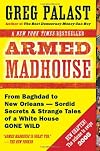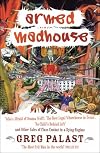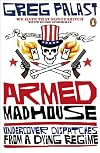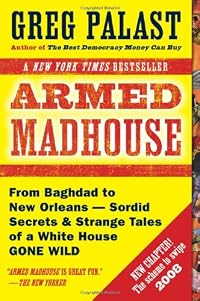
Armed Madhouse: From Baghdad to New Orleans--Sordid Secrets and Strange Tales of a White House Gone Wild
by Greg Palast
On This Page
Description
The "top undercover journalist in America and the funniest" (Randi Rhodes, Air America), hangs out the dirty underpants of the "armed and dangerous clowns that rule us." Feared from corporate suites to Osama's cave, Palast's old-style gumshoe detective work to dig out the info on the War on Terror, greed-dripping schemes to seize little nations with lots of oil, the hidden program to steal the 2008 election, and the media biases that keep it unreported are the meat and bones of this BBC show more television reporter's new book, is illustrated with dozens of documents marked "secret" and "confidential" that have walked out of file cabinets and fallen into Palast's hands.--From publisher description. show lessTags
Recommendations

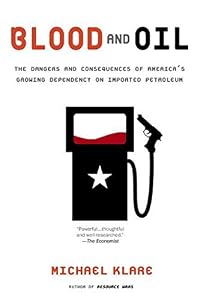
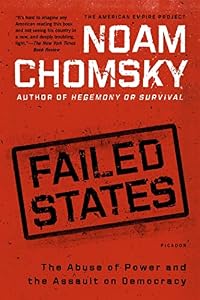
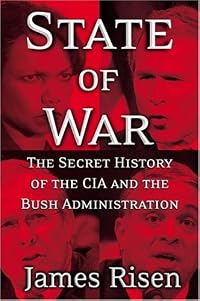
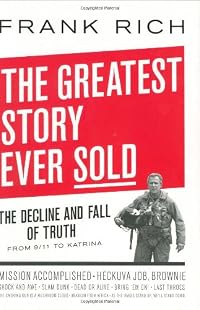
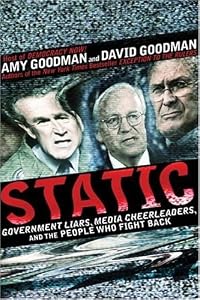
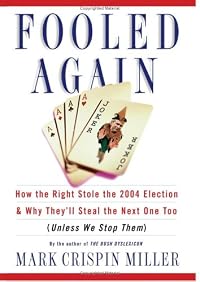
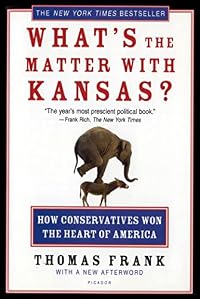
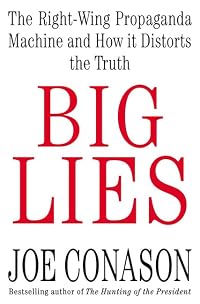


Member Recommendations
Member Reviews
Here is another compendium of political and corporate con men who would sell your future and your children's future to the highest bidder (or give it away to their political friends).
Everyone thinks that George Bush had a secret plan to seize Iraq's oil. Actually, there were 2 secret plans. The neo-con/Pentagon plan involved privatizing, or selling off, Iraq's vast oil reserves to foreign companies. When all those oil wells start pumping, ignoring their OPEC quota (insurgency? what insurgency?), the world market would be flooded with oil, causing the price to plummet. OPEC would be forced out of business, and, coincidentally, Saudi Arabia, the real target, would be forced to its financial knees. A problem with this is the assumption show more that the oil fields would remain undamaged in an American invasion. Also, it would be silly to think that Saudi Arabia would sit back and let this happen. Whenever other OPEC countries have ignored their quota, the Saudis have opened their oil spigots, flooding the market and causing the price to drop, forcing the offending country into bankruptcy. Also, the major oil companies made it very clear that privatizing Iraqi oil would not be acceptable. But they had no problem with the privatizing of the rest of Iraq, including the sale of banks and water companies, big tax cuts for wealthy Iraqis, a complete elimination of tariffs and new copyright laws protecting American companies.
The State Department/Council on Foreign Relations plan involved keeping the Iraqi government as is, especially the state oil monopoly. It also envisioned the removal of Saddam Hussein as taking no more than THREE DAYS. Hussein would be overthrown, some Iraqi general dismissed by Hussein in the 1980s (it didn't matter who) would come in by parachute, he would be given the keys to Iraq's political and security apparatus, and snap elections would be held in 90 days to legitimize everything. Simple, no? Once the Pentagon got wind of it, the three-day part didn't last very long.
Saddam Hussein's "crime," the reason he was removed from power, had nothing to do with being a tyrant, or WMD, or gassing the Kurds of Halabja. When it came to oil production, one week he would suddenly decide to support the Palestinian cause, and not pump any oil at all. The next week, he would forget about the Palestinians, and pump right up to the Oil for Food limit. Singlehandedly turning the world oil market into a yo-yo upset Big Oil and the Council on Foreign Relations, among others. It's all about control of the oil market, and Hussein was not cooperating.
This book is about much more than just Iraq. Palast goes into great detail about how the 2000 and 2004 elections were stolen by the Republicans. Any number of methods have come to life, from using supposed lists of felons, to sending not enough machines to black districts, to machines in those same districts that miscount or don't count votes at a much greater rate than in white districts, to uncounted paper ballots in the tens of thousands. In Native American districts in the Southwest, if one accepts the "official" results, many Native Americans would drive miles and miles to the polling place, and specifically NOT vote for President. What are Democrats doing about this, if only to be sure that it never happens again? Little or nothing. This book also covers subjects like globalization, New Orleans, No Child Left Behind and Enron.
By themselves, any of the chapters in this book are worth the price of the book. Put them together, and this book easily reaches the level of Wow. It's an extraordinary piece of journalism, and is extremely highly recommended. show less
Everyone thinks that George Bush had a secret plan to seize Iraq's oil. Actually, there were 2 secret plans. The neo-con/Pentagon plan involved privatizing, or selling off, Iraq's vast oil reserves to foreign companies. When all those oil wells start pumping, ignoring their OPEC quota (insurgency? what insurgency?), the world market would be flooded with oil, causing the price to plummet. OPEC would be forced out of business, and, coincidentally, Saudi Arabia, the real target, would be forced to its financial knees. A problem with this is the assumption show more that the oil fields would remain undamaged in an American invasion. Also, it would be silly to think that Saudi Arabia would sit back and let this happen. Whenever other OPEC countries have ignored their quota, the Saudis have opened their oil spigots, flooding the market and causing the price to drop, forcing the offending country into bankruptcy. Also, the major oil companies made it very clear that privatizing Iraqi oil would not be acceptable. But they had no problem with the privatizing of the rest of Iraq, including the sale of banks and water companies, big tax cuts for wealthy Iraqis, a complete elimination of tariffs and new copyright laws protecting American companies.
The State Department/Council on Foreign Relations plan involved keeping the Iraqi government as is, especially the state oil monopoly. It also envisioned the removal of Saddam Hussein as taking no more than THREE DAYS. Hussein would be overthrown, some Iraqi general dismissed by Hussein in the 1980s (it didn't matter who) would come in by parachute, he would be given the keys to Iraq's political and security apparatus, and snap elections would be held in 90 days to legitimize everything. Simple, no? Once the Pentagon got wind of it, the three-day part didn't last very long.
Saddam Hussein's "crime," the reason he was removed from power, had nothing to do with being a tyrant, or WMD, or gassing the Kurds of Halabja. When it came to oil production, one week he would suddenly decide to support the Palestinian cause, and not pump any oil at all. The next week, he would forget about the Palestinians, and pump right up to the Oil for Food limit. Singlehandedly turning the world oil market into a yo-yo upset Big Oil and the Council on Foreign Relations, among others. It's all about control of the oil market, and Hussein was not cooperating.
This book is about much more than just Iraq. Palast goes into great detail about how the 2000 and 2004 elections were stolen by the Republicans. Any number of methods have come to life, from using supposed lists of felons, to sending not enough machines to black districts, to machines in those same districts that miscount or don't count votes at a much greater rate than in white districts, to uncounted paper ballots in the tens of thousands. In Native American districts in the Southwest, if one accepts the "official" results, many Native Americans would drive miles and miles to the polling place, and specifically NOT vote for President. What are Democrats doing about this, if only to be sure that it never happens again? Little or nothing. This book also covers subjects like globalization, New Orleans, No Child Left Behind and Enron.
By themselves, any of the chapters in this book are worth the price of the book. Put them together, and this book easily reaches the level of Wow. It's an extraordinary piece of journalism, and is extremely highly recommended. show less
I started this book somewhat sceptical about both its tone (snarky attempts at humour can often be plain irritating) and its content (was there really going to be anything substantially new here or just rehashing well known info with a good dollop of outrage?) But ultimately I was blown away by both the quality of research and the writing. First off Palast has finally made sense of the cause and conduct of the Iraq war from a U.S. policy point of view. It was such an absurd war, and so badly managed that despite reading a mass of insider books about it one could never quiet figure it out. Palast offers an explanation that finally fits the pieces together. Secondly his look at the ever-growing practice of manipulating voting in U.S. show more elections by using various methods to essentially deny voters the right to vote in the 2000 and 2004 elections are prophetic as they seem to have really come in to their own in recent months in the lead up to the 2012 elections. show less
Palast is a fairly amazing representative of a nearly dead breed; in fact he may well be the last real investigative reporter with a USA beat working today. Read with your sense of humor cranked way up, though, or the depressing implication of Palast's research will make you cry.
Like Franken's book, very funny but also much more caustic and full of facts (enough to get me lost at times.) I'm very glad I did not read the chapters on the stolen 2000 and 2004 elections before this current election because I might have stayed at home cowering in a corner at the futility of it all. Thought provoking and angry making and also taught me my new favourite word; mendacious.
Palast (The Best Democracy Money can Buy) is a refreshing, fearless witness to the American political landscape-and he doesn't really care whether or not you like him for it: "I am not a nice man. You want something heartwarming ... buy a puppy." Though Palast comes right out and calls George Bush II un-American ("'Greg, you have no respect for the office of the President.' No, I don't. Not one iota."), the author is not another TV or radio personality with an axe to grind. A former corporate fraud and racketeering investigator, Palast is an economist and investigative journalist, and his arguments are based on research and fact. At once scary, infuriating, fascinating and frustrating, this book covers almost all the controversial show more political territory of the new century (see the subtitle), including Hurricane Katrina. Palast believes that this crucial period has put every working citizen's rights at stake-"from the Wage and Hour Law's 40-hour week to the Clayton Antitrust Law"-and his well-reasoned outrage makes a convincing case. Unfortunately, Palast is short on solutions; the only actions he advocates are signing up at his web site and voting the bums out-even though, as Palast points out, Bush already "lost the election. TWICE show less
This really is not a bad book. Part of the reason I gave it only two stars is because I am pretty much satiated when it comes to books about politics and the Bush administration (i.e. I don't need yet another person to tell me how bad Bush & Co. are, since it only reminds me of the many bozos out there who voted for him not once, but twice, but I disgress).
Having gotten that out of the way, if you have to read one of these books that document the many foibles and outright outrageous acts of this administration, this is definitely a pretty good one. Palast adds a sense of humor to what can be a pretty depressing topic. The book is very well informed, pretty good documentation overall too. The nice thing is that the book's chapters are show more organized into small segments, which means you can pick up and read sections here and there. The book does invite some browsing as well. So, if you have to read yet another book about current politics, this may be it. If like me, you are already tired of them, just skip it, and do try to skip the whole genre for a while. I know I will; this will probably be the last book on the topic I read. show less
Having gotten that out of the way, if you have to read one of these books that document the many foibles and outright outrageous acts of this administration, this is definitely a pretty good one. Palast adds a sense of humor to what can be a pretty depressing topic. The book is very well informed, pretty good documentation overall too. The nice thing is that the book's chapters are show more organized into small segments, which means you can pick up and read sections here and there. The book does invite some browsing as well. So, if you have to read yet another book about current politics, this may be it. If like me, you are already tired of them, just skip it, and do try to skip the whole genre for a while. I know I will; this will probably be the last book on the topic I read. show less
Massively well-informed in a gossipy kind of way. I hadn't come across Palast before and didn't know he was working on Newsnight. He is the kind of investigative journalist whose work can form the basis for activism - he leaves no stone unturned and no name uncalled. Good for links to other activist sites.
Members
- Recently Added By
Author Information

19+ Works 2,126 Members
Greg Palast's undercover reports and his "Inside Corporate America" column in the Observer have won him Britain's top prizes for investigative and business journalism as well as the Financial Times David Thomas Prize. Salon.com chose his scandal-busting report on the presidential race in Florida "Political Story of the Year" and his writings have show more appeared in the Washington Post, Harper's and The Nation. Greg Palast divides his time between New York and London. show less
Awards and Honors
Distinctions
Common Knowledge
- Epigraph
- At the age of 25 most people were finished. A whole god-damned nation of assholes driving automobiles, eating, having babies, doing everything is the worst way possible, like voting for the presidential candidate who remind... (show all)ed them most of themselves. --Charles Bukowski
- Dedication
- To Gil and Gladys Palast. The Originals.
- First words
- President Jeb Bush declared his reelection victory early, in August, before the machines were fully programmed, bu the results were nevertheless assured.
- Last words
- (Click to show. Warning: May contain spoilers.)Get the petroleum needles out of our veins and we get the extra bonus of watching Citibank go through agonizing petro-dollar withdrawal.
- Blurbers
- Perkins, John; Chomsky, Noam; Rossi, Melissa; Rhodes, Randi
- Canonical DDC/MDS
- 973.931
- Canonical LCC
- E902
Classifications
- Genres
- Nonfiction, General Nonfiction, Politics and Government, History
- DDC/MDS
- 973.931 — History & geography History of North America United States 1901- New Millennium, Post 9/11 (2001-Present) George W. Bush (2001-2009) Sept 11 Attacks, Iraq War, Patriot Act
- LCC
- E902 — History of the United States George W. Bush's administrations, 2001-2009
- BISAC
Statistics
- Members
- 666
- Popularity
- 42,948
- Reviews
- 10
- Rating
- (3.93)
- Languages
- English, French, Hungarian
- Media
- Paper, Audiobook, Ebook
- ISBNs
- 13
- ASINs
- 9