On This Page
Description
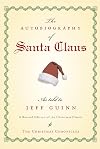
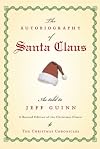
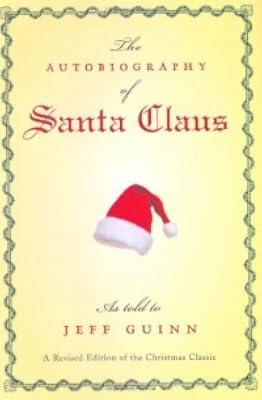
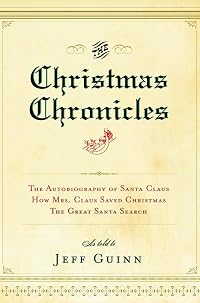
A journalist recounts his personal interview with Santa Claus at the North Pole after St. Nick himself refuted points in a Christmas paper the author was writing, during which his subject shared the actual story of his life, in a tale written to be read during the weeks before Christmas and based on legendary beliefs as well as historical information. It all started when Jeff Guinn was assigned to write a piece full of little-known facts about Christmas for his paper, The Fort Worth show more Star-Telegram. A few months later, he received a call from a gentleman who told him that he showed the story to an important friend who didn't think much of it. And who might that be? asked Jeff. The next thing he knew, he was whisked off to the North Pole to meet with this very important friend, and the rest is, well, as they say, history. An enchanting holiday treasure, The Autobiography of Santa Claus combines solid historical fact with legend to deliver the definitive story of Santa Claus. And who better to lead us through seventeen centuries of Christmas magic than good ol Saint Nick himself? Families will delight in each chapter of this new Christmas classic; one chapter per each cold December night leading up to Christmas! show lessTags
Recommendations










Member Reviews
Guinn wrote a children’s book. that’s all i can think. it’s simplified and sanitized and very simply plotted, no nuance.
i guess i was hoping for a wry tale, full of quirk and possibly some darkness laced with satirical notes. what i’m getting is a biography fleshed out from some successful old journalistic piece on the historical origins of christmas. it’s flat and nearly featureless. Santa is supposed to be an Oversized Person, not only in body but in mind and spirit. he is very old and supposedly very wise. the person telling this tale, so far, does not seem to be any of those things. Tim Allen’s Santa had more of a knowing twinkle in his eye. charm is what Guinn’s Santa wants and thinks he has but lacks in abundance.
the show more history of the christmas holiday as we know it is one that is largely NOT linked with that of christianity. the trappings and symbols surrounding christmas demonstrably come from pagan sources. even the concept of gift-giving around the holiday has nothing, really, to do with christmas or St. Nicholas. it’s a common practice around the world through many times and cultures to give gifts during times of celebration. Guinn makes it seem as if St. Nicholas invented this practice. rubbish.
he’s using historical facts to frame his story. which is fine even if he doesn’t accurately piece together the history of christmas. tying it to christianity is fine, too, especially if he’s going to use St. Nicholas as his kernel. however, the story is very christian-centric and lots of his little asides and comments bear witness to this bias. my own research shows that the concept of Father Christmas has more to do with the Green Man or Wild Man of the forest found throughout European cultures than anything to do with an obscure middle-eastern saint.
Guinn’s hamfisted understanding of history demonstrates his journalistic roots. he follows the mainstream view of so much of the history it makes me wonder if he truly did any original research or just read books that he liked. for instance, calling the middle ages the “dark ages” indicates a profound ignorance about that period of European history. he does his best to toe the line with expounding upon the depression and violence and ignorance and struggle of those times. he used the word “primitive” at least once to describe the situation. historians of medieval history understand that this attitude arises from the commonly held view of Roman times and civilization as more enlightened. this bias often comes from the belief that being more organized on the battlefield, being able and willing to build roads and other “public” works, and recording everything in written words makes one more enlightened. this is debatable and largely held to be false in the realm of historians. Guinn failed to do his homework or, if he did, then he stands prejudiced against those times and those peoples and actually believes in “barbarians.” his treatment of Christopher Columbus was frankly abhorrent. it was immediately obvious that Guinn either hasn’t touched Columbus’s journal or skipped over 90% of it and his history. Columbus was a deluded tyrant not a confused but benevolent explorer seeking to make the world a better, more diverse place.
Guinn also seems woefully ignorant of basic geography. the North Pole has no land and yet Santa builds a redoubt there. His treatment of Amelia Earhart and how she came to be part of his crew was again ham-fisted. How about Santa or one of his people rescuing a crashed and injured Earhart instead of the contrived narrative of her partially finishing her world tour? It's ridiculous.
let’s try to pull back and look at this thing as though it was being written outside christian hegemony. linking Santa to a god isn’t a bad idea. the magic of his longevity and swift travel around the world has to be explained somehow. why not make him some kind of demigod or uber-cleric (ala Dungeons & Dragons) who receives his gifts from a god or gods? otherwise, how is he able to do these things?
the christian slant i saw at the beginning is proving true. Guinn seems to have dug only to rudimentary levels of history in order to get at the origins of christmas always with the center being the birth of jesus. his ignorance of the robustness of oral culture and christian syncretism is astounding. he certainly sees christianity as the wise benefactor from which all things flow. he does acknowledge the greenery and outward trappings of modern day christmas coming from pagan sources but attributes them to more modern (ca. 1700-1800) German customs. he does not say that those customs and traditions were already in place for sometimes centuries before christianity claimed them as its own.
as for the story itself, here’s another book attempting to be Forest Gump. it took me some time but it does seem that Guinn is trying to be funny. i’m still not certain of it though. he writes with such childlike notions of how life is and how immortals would be that i have to wonder if he didn’t write this as some kind of uber fantasy where a sideline symbol of christianity for him (ie Santa Claus) befriends and converts major icons from history like Atilla the Hun and King Arthur. pulling back, the story itself is ridiculous and laughable but when you’re in the trenches of the words on the page, it doesn’t seem like his tongue is in his cheek. it just seems like he’s telling a Tall Tale for his kids at night, pulling random things out of his backside. for instance, all of a sudden, hundreds of years into their rambling around Europe and the Middle East, camping they decide to make toys! the idea never occurred to them. and, once again, Guinn’s ignorance of history shines brightly when he claims children had little to no toys. he thinks because they had no formally made items designated as “toys” children, especially those living during the dreaded “dark ages,” did not play. i roll my eyes at you, sir.
i also question the believability of two men over 100 years old suddenly running out of money and realizing they need to do something to earn more. they managed their money so badly that they spent their last “dime” on an apple that Nicholas’s (he wouldn’t be called “Santa” for a very long time) companion Felix ate too fast. was this Guinn trying to be funny? maybe. i can’t tell. but it certainly makes Nicholas and Felix look like idiots.
what a muddle. the plots and story make this a great book for young kids. a roaring Tall Tale about Santa. but it isn’t written that way. the prose is too adult with the whimsy and humor (if that’s what it be) suffused so far into historical surroundings as to demonstrate subtlety on a deep level. however, i would not recommend this book for young children because i think it grossly misrepresents many things: christmas, christianity, the middle ages, the Roman empire, immortality, etc., etc. i also think that they ease with which these major historical figures pick up and go with Nicholas is ridiculous. if Guinn was able to convey the kind of abstract, fantastical humour he seems to be striving for, i would have no problem with it because i would recognize it for what it is: a romp, a excursion into silliness, a far-fetched hoot. something Forrest Gump and other books have succeeded at.
this review is turning into a full-blown rebuttal thesis. i will end on this: i found Guinn’s book to be dull in its assumed role but interesting in its myriad prejudices. some might argue that he meant this to be funny in the Forrest Gump sense. i’m really not sure about that. he has written a faux historical document from a fully christian viewpoint- unbeknownst to him, i think. like so many people in the US, he does not realize that his culture -which he does not even realize he has- is not the central and only one. of course christianity is at the heart of “christmas,” don’t you see the word “christ” right there? show less
i guess i was hoping for a wry tale, full of quirk and possibly some darkness laced with satirical notes. what i’m getting is a biography fleshed out from some successful old journalistic piece on the historical origins of christmas. it’s flat and nearly featureless. Santa is supposed to be an Oversized Person, not only in body but in mind and spirit. he is very old and supposedly very wise. the person telling this tale, so far, does not seem to be any of those things. Tim Allen’s Santa had more of a knowing twinkle in his eye. charm is what Guinn’s Santa wants and thinks he has but lacks in abundance.
the show more history of the christmas holiday as we know it is one that is largely NOT linked with that of christianity. the trappings and symbols surrounding christmas demonstrably come from pagan sources. even the concept of gift-giving around the holiday has nothing, really, to do with christmas or St. Nicholas. it’s a common practice around the world through many times and cultures to give gifts during times of celebration. Guinn makes it seem as if St. Nicholas invented this practice. rubbish.
he’s using historical facts to frame his story. which is fine even if he doesn’t accurately piece together the history of christmas. tying it to christianity is fine, too, especially if he’s going to use St. Nicholas as his kernel. however, the story is very christian-centric and lots of his little asides and comments bear witness to this bias. my own research shows that the concept of Father Christmas has more to do with the Green Man or Wild Man of the forest found throughout European cultures than anything to do with an obscure middle-eastern saint.
Guinn’s hamfisted understanding of history demonstrates his journalistic roots. he follows the mainstream view of so much of the history it makes me wonder if he truly did any original research or just read books that he liked. for instance, calling the middle ages the “dark ages” indicates a profound ignorance about that period of European history. he does his best to toe the line with expounding upon the depression and violence and ignorance and struggle of those times. he used the word “primitive” at least once to describe the situation. historians of medieval history understand that this attitude arises from the commonly held view of Roman times and civilization as more enlightened. this bias often comes from the belief that being more organized on the battlefield, being able and willing to build roads and other “public” works, and recording everything in written words makes one more enlightened. this is debatable and largely held to be false in the realm of historians. Guinn failed to do his homework or, if he did, then he stands prejudiced against those times and those peoples and actually believes in “barbarians.” his treatment of Christopher Columbus was frankly abhorrent. it was immediately obvious that Guinn either hasn’t touched Columbus’s journal or skipped over 90% of it and his history. Columbus was a deluded tyrant not a confused but benevolent explorer seeking to make the world a better, more diverse place.
Guinn also seems woefully ignorant of basic geography. the North Pole has no land and yet Santa builds a redoubt there. His treatment of Amelia Earhart and how she came to be part of his crew was again ham-fisted. How about Santa or one of his people rescuing a crashed and injured Earhart instead of the contrived narrative of her partially finishing her world tour? It's ridiculous.
let’s try to pull back and look at this thing as though it was being written outside christian hegemony. linking Santa to a god isn’t a bad idea. the magic of his longevity and swift travel around the world has to be explained somehow. why not make him some kind of demigod or uber-cleric (ala Dungeons & Dragons) who receives his gifts from a god or gods? otherwise, how is he able to do these things?
the christian slant i saw at the beginning is proving true. Guinn seems to have dug only to rudimentary levels of history in order to get at the origins of christmas always with the center being the birth of jesus. his ignorance of the robustness of oral culture and christian syncretism is astounding. he certainly sees christianity as the wise benefactor from which all things flow. he does acknowledge the greenery and outward trappings of modern day christmas coming from pagan sources but attributes them to more modern (ca. 1700-1800) German customs. he does not say that those customs and traditions were already in place for sometimes centuries before christianity claimed them as its own.
as for the story itself, here’s another book attempting to be Forest Gump. it took me some time but it does seem that Guinn is trying to be funny. i’m still not certain of it though. he writes with such childlike notions of how life is and how immortals would be that i have to wonder if he didn’t write this as some kind of uber fantasy where a sideline symbol of christianity for him (ie Santa Claus) befriends and converts major icons from history like Atilla the Hun and King Arthur. pulling back, the story itself is ridiculous and laughable but when you’re in the trenches of the words on the page, it doesn’t seem like his tongue is in his cheek. it just seems like he’s telling a Tall Tale for his kids at night, pulling random things out of his backside. for instance, all of a sudden, hundreds of years into their rambling around Europe and the Middle East, camping they decide to make toys! the idea never occurred to them. and, once again, Guinn’s ignorance of history shines brightly when he claims children had little to no toys. he thinks because they had no formally made items designated as “toys” children, especially those living during the dreaded “dark ages,” did not play. i roll my eyes at you, sir.
i also question the believability of two men over 100 years old suddenly running out of money and realizing they need to do something to earn more. they managed their money so badly that they spent their last “dime” on an apple that Nicholas’s (he wouldn’t be called “Santa” for a very long time) companion Felix ate too fast. was this Guinn trying to be funny? maybe. i can’t tell. but it certainly makes Nicholas and Felix look like idiots.
what a muddle. the plots and story make this a great book for young kids. a roaring Tall Tale about Santa. but it isn’t written that way. the prose is too adult with the whimsy and humor (if that’s what it be) suffused so far into historical surroundings as to demonstrate subtlety on a deep level. however, i would not recommend this book for young children because i think it grossly misrepresents many things: christmas, christianity, the middle ages, the Roman empire, immortality, etc., etc. i also think that they ease with which these major historical figures pick up and go with Nicholas is ridiculous. if Guinn was able to convey the kind of abstract, fantastical humour he seems to be striving for, i would have no problem with it because i would recognize it for what it is: a romp, a excursion into silliness, a far-fetched hoot. something Forrest Gump and other books have succeeded at.
this review is turning into a full-blown rebuttal thesis. i will end on this: i found Guinn’s book to be dull in its assumed role but interesting in its myriad prejudices. some might argue that he meant this to be funny in the Forrest Gump sense. i’m really not sure about that. he has written a faux historical document from a fully christian viewpoint- unbeknownst to him, i think. like so many people in the US, he does not realize that his culture -which he does not even realize he has- is not the central and only one. of course christianity is at the heart of “christmas,” don’t you see the word “christ” right there? show less
Pure Christmas Fun :) I loved the use of historical figures, Leonardo Da Vinci was of course my absolute favorite! I also loved that the story focused on kindness and generosity more so than religion. Can't wait to read the sequels!
This story of how Santa Claus came to be is a combination of historical fact, historical figures, legend, and fantasy. It's told in 24 chapters that can be read one at a time during December. Perhaps if I had read it that way I would have liked it more. In general I found it to be ponderous and sometimes boring.
This imaginative tale of Saint Nicholas combines history with a health dose of whimsy and fantasy. Readers will learn some facts, tempered with a load of fiction. Saint Nicholas was noted for many wonderful acts, but living for centuries, having flying reindeer, and residing and working at the North Pole are not among them. Neither did he partner with Attila the Hun, King Arthur, Ben Franklin, Leonardo da Vinci, and Felix, among others. Still, many of the aspects now associated with the modern day Santa Claus are “explained” in this book. We see how Clement Moore’s poem and Virginia’s letter influenced the Santa legend. It’s quite a tale, enjoyable for both the history that the author adhered to and the fantasy that he wove show more around the truth. show less
I read another copy of this several years ago and loved it---and I enjoyed it again this time around, all the more. This year, our family has begun attending a Torah Pursuant fellowship and most of the people don't celebrate Christmas. God hasn't really shown us clearly that we should do anything much differently than we normally do at Christmas so we are going ahead with our normal. However, it has been a bit of a bummer not to be able to have much community with friends --- (between that and Covid keeping the Christmas-practicing churches from doing much in the way of celebrating). It was fun to read this part history, part fantasy of the original St. Nicholas through to the current figure of Santa Claus. I loved how the book had so show more many fun nods to history and historical figures who had something significant happen (usually their deaths, honestly, but used in a way that brought a happy ending) on one of the traditional Christmas gifting days. I also really loved how the author continuously pointed back to the fact that Christmas was originally, and still usually is, dedicated to the celebration of the coming of Christ. I don't think I could have enjoyed this had that not been the central theme and I just appreciate the respect of this author, whether or not he is actually a believer. show less
This was the best use of 9 hours we've spent in a long time...I'll preface with the fact my daughter, 10 years old, has dyslexia. I wasn't sure if this would bore her, but it held us BOTH spellbound. Each time we got in the car, we couldn't wait to put it on. It's structured that you can do 1 chapter each night, Dec 1-24, but we couldn't wait. It wrapped in history, folklore and the explanations for everything about Santa was enough to make me believe again! I think we bought at least another year of believing for our daughter with this set!
I tried really hard to get into this book. I found the premise entertaining, uncovering who is this man Santa Claus and what his background. This is the first book that I couldn't get into and actually gave up on. There was a ton of history, with a multitude of characters, and a very choppy story. I tried for 60 pages and when it didn't work for me, I decided this would be the first book that I wouldn't force myself to finish. The feeling of not "having" to finish a book that I wasn't enjoying is rather empowering and I only wish I made this decision earlier this summer with "Sexing the Cherry". Life is too short to read books that I can't connect with.
Members
- Recently Added By
Author Information

26 Works 4,735 Members
Jeff Guinn is the bestselling author of several books of fiction and nonfiction, including Manson: The Life and Times of Charles Manson, The Last Gunfight and Go Down Together, which was a finalist for an Edgar Award in 2010. Guinn is formerly an award-winning investigative journalist and now a frequent guest on national radio and TV programs. show more (Bowker Author Biography) show less
Series

Common Knowledge
- Canonical title
- The Autobiography of Santa Claus
- Original publication date
- 2004-09
- People/Characters
- Santa Claus
- Important places
- North Pole
- Important events
- Christmas
- First words
- Preface: I wrote a book with Santa Claus.
- Quotations
- The most real things in the world are things that people can't see.
- Last words
- (Click to show. Warning: May contain spoilers.)"Happy Christmas to all, and to all a good night."
Classifications
Statistics
- Members
- 736
- Popularity
- 38,324
- Reviews
- 31
- Rating
- (3.58)
- Languages
- English
- Media
- Paper, Audiobook, Ebook
- ISBNs
- 15
- UPCs
- 4
- ASINs
- 14