The Book of the New Sun
by Gene Wolfe
Solar Cycle (Collections and Selections — Omnibus 01-04), The Book of the New Sun (Collections and Selections — Omnibus 1-4)
On This Page
Description
Severian is a torturer, born to the guild and with an exceptionally promising career ahead of him . . . until he falls in love with one of his victims, a beautiful young noblewoman. Out of love, Severian helps her commit suicide and escape her fate - no more unforgivable act for a torturer. He is exiled from the guild and his home city to the distant metropolis of Thrax with little more than Terminus Est, a fabled sword, to his name. Along the way he has to learn to survive in a wider world show more without the guild - a world in which he has already made both allies and enemies. And a strange gem is about to fall into his possession, which will make his enemies pursue him with ever more determination . . . Welcome to a world in which nothing is quite as it seems; to an unreliable narrator; to extraordinary, vivid and evocative writing; to one of the greatest genre classics of all time. show lessTags
Recommendations






Member Recommendations
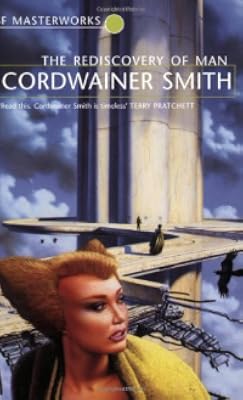
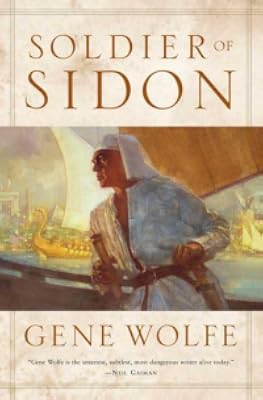
meika McAuley's work is a homage to Gene Wolf's ouevre.

Member Reviews
I first read this book (in the four individual volumes) many decades ago in my early teens. In 2007, I picked up this omnibus edition with the intention to re-read it, and quickly acquired most of the other volumes in the larger Solar Cycle, which resulted in a large prospective reading project on which I procrastinated until the thick of the 2020 coronavirus pandemic. Given my intention to re-read it, I had had a favorable impression of it on my initial read, but I really felt I had not fully understood or appreciated it then. I was correct.
In fact, I am such a different reader now, and so much more capable of grasping what Wolfe has presented here, that most of this book seemed entirely new to me. I remembered the largest plot arc, by show more which the apprentice torturer ascends to the office of Autarch--and it's no spoiler to say so, since that framing is well established early on--but I had forgotten the smaller twists, if I ever really appreciated them, and many of the features of the setting seemed entirely new to me on this read.
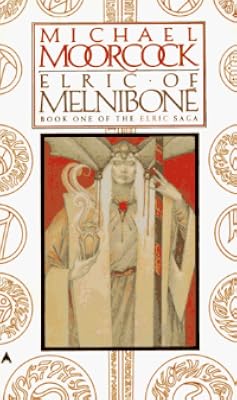
There is a great contrast in the two literary backgrounds that informed each of my reads. On my initial approach, I came to the work with what I thought was the compatible experience of The Lord of the Rings and perhaps Michael Moorcock's Elric saga. I did appreciate that the described Urth was in our far future, and I had already encountered this sort of conceit in The Sword of Shannara, a highly conventional epic fantasy with various clues to indicate that it was set in a future after our civilization had been effaced by catastrophic warfare. To be fair to my younger self, I think this approach to Wolfe's books was perfectly in keeping with the publisher's packaging and expectations, and to some degree I had simply fallen for the author's intentional misdirection.
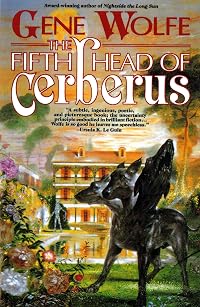
On this recent read, I was far more informed by the reading experiences I had gathered from other works in the "dying Earth" subgenre, especially the Viriconium stories of M. John Harrison and The City and the Stars of Arthur C. Clarke. And I was further prepared by reading Wolfe's own Fifth Head of Cerberus, which offers the sort of elliptical presentation that occurs throughout The Book of the New Sun, without the "epic" framing or red-herring fantasy tropes of the latter.
Wolfe personally adhered to the Roman Catholic confession, and critics have sometimes highlighted this fact as if it supplied a privileged interpretive viewpoint for the work. I remember being a little put off by the possible significance of "religious" elements in my first read--having been burned by the Sunday School allegory of Narnia and the rather dim messianism of Donaldson's Thomas Covenant books. But on this recent read, I thought the better comparandum would be the religions, cults, and mysticism of Herbert's Dune, using the grist of historical religion in the mill of speculative worldbuilding--with some genuine metaphysical rumination. For what it's worth, Wolfe's Severian is a lot more diffident about the miracles of his story than Paul Atreides was. The "Claw of the Conciliator" relic that supplies the title of the second book is present through all four, and its demystification in the fourth has the paradoxical effect of enhancing its numinosity. The "One Ring" it is not.
Some other comparisons that failed to occur to me on my initial read:
The relationship of the hierodule extraterrestrials to the humanity of Urth was like that of Childhood's End--with some additional wrinkles--and considering also the kinship of the plot to The City and the Stars I wonder if Wolfe was an active fan of Clarke. Abaia and his titanic kin seemed to be more than a little bit like Cthulhu.
The diction of this work is notable for its baroque qualities, archaicisms, and neologisms in an archaic manner. There is a rationale for these stylistic features, which are nevertheless alienating for the reader. Also alienating is the unsympathetic protagonist, who narrates the entire story on the basis of his professedly impeccable memory. A reader might (and I'm sure I once did) miss key details while simply trying to avoid getting stuck on these matters. Wolfe deliberately uses ambiguous language in his nautical and astronautical references. Spacefarers are simply "sailors."
There are wonderful uses of form and metafictional structure. I especially enjoyed the central play-within-the-play of "Eschatology and Genesis" in the second book, and the Canterbury Tales concatenation of stories told by the convalescing soldiers in the lazaret of the fourth. Despite appearances, these are not digressions from the main work, and they can be understood in part as instruction in how to read the larger text. There is a very rigorous pattern governing the whole, with a strong sense of cyclic completion. The "Citadel of the Autarch" in the title of the fourth book is the place where the first book begins, but its identification with the Autarch is the result of the events of the tale.
The titles of the four component volumes highlight the riddles posed throughout. What is the shadow of the torturer Severian?Is it perhaps the Chatelaine Thecla whose suicide he assists to his own dishonor, and whose consciousness is joined to his by the alzabo? What is the Claw of the Conciliator? The relic is despoiled by Agia, desecrated by Baldanders, and then devalued by the Pelerines who had been its guardians. What is the value of Severian's sword? Agia and Agilus would have killed Severian to obtain it. Its Latin name Terminus Est is oddly translated in the text to mean, "This is the line of division" (101)--and while it also means "It is the end," the sword itself doesn't endure to the end of the story. And what is the Autarch? At first presented as the shadowy and remote political executive of the Commonwealth, he later comes to figure as an epopt or Ipsissimus, and ultimately as perhaps the custodian of Urth. And yet some of his attendants address him as "Legion" (857, cf. Mark 5:9), and the old Autarch tells Severian, "I stand ... as you will stand ... for so much that is wrong" (889).
Reading The Book of the New Sun is not like watching a Hollywood movie or even reading a mystery novel. If you let it carry you along, you will be left wondering why you bothered. But there are amazing rewards for the reader who is alert to the increasingly distant voice of the narrator and who works to recognize the features of the story that are left tacit. Not only do I hold this work in high regard for its own sake as a literary accomplishment, it has taught me about reading and storytelling. show less
In fact, I am such a different reader now, and so much more capable of grasping what Wolfe has presented here, that most of this book seemed entirely new to me. I remembered the largest plot arc, by show more which the apprentice torturer ascends to the office of Autarch--and it's no spoiler to say so, since that framing is well established early on--but I had forgotten the smaller twists, if I ever really appreciated them, and many of the features of the setting seemed entirely new to me on this read.
There is a great contrast in the two literary backgrounds that informed each of my reads. On my initial approach, I came to the work with what I thought was the compatible experience of The Lord of the Rings and perhaps Michael Moorcock's Elric saga. I did appreciate that the described Urth was in our far future, and I had already encountered this sort of conceit in The Sword of Shannara, a highly conventional epic fantasy with various clues to indicate that it was set in a future after our civilization had been effaced by catastrophic warfare. To be fair to my younger self, I think this approach to Wolfe's books was perfectly in keeping with the publisher's packaging and expectations, and to some degree I had simply fallen for the author's intentional misdirection.
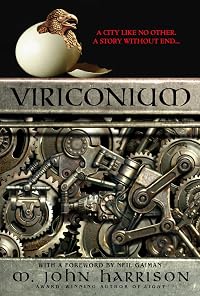
On this recent read, I was far more informed by the reading experiences I had gathered from other works in the "dying Earth" subgenre, especially the Viriconium stories of M. John Harrison and The City and the Stars of Arthur C. Clarke. And I was further prepared by reading Wolfe's own Fifth Head of Cerberus, which offers the sort of elliptical presentation that occurs throughout The Book of the New Sun, without the "epic" framing or red-herring fantasy tropes of the latter.
Wolfe personally adhered to the Roman Catholic confession, and critics have sometimes highlighted this fact as if it supplied a privileged interpretive viewpoint for the work. I remember being a little put off by the possible significance of "religious" elements in my first read--having been burned by the Sunday School allegory of Narnia and the rather dim messianism of Donaldson's Thomas Covenant books. But on this recent read, I thought the better comparandum would be the religions, cults, and mysticism of Herbert's Dune, using the grist of historical religion in the mill of speculative worldbuilding--with some genuine metaphysical rumination. For what it's worth, Wolfe's Severian is a lot more diffident about the miracles of his story than Paul Atreides was. The "Claw of the Conciliator" relic that supplies the title of the second book is present through all four, and its demystification in the fourth has the paradoxical effect of enhancing its numinosity. The "One Ring" it is not.
Some other comparisons that failed to occur to me on my initial read:
The diction of this work is notable for its baroque qualities, archaicisms, and neologisms in an archaic manner. There is a rationale for these stylistic features, which are nevertheless alienating for the reader. Also alienating is the unsympathetic protagonist, who narrates the entire story on the basis of his professedly impeccable memory. A reader might (and I'm sure I once did) miss key details while simply trying to avoid getting stuck on these matters. Wolfe deliberately uses ambiguous language in his nautical and astronautical references. Spacefarers are simply "sailors."
There are wonderful uses of form and metafictional structure. I especially enjoyed the central play-within-the-play of "Eschatology and Genesis" in the second book, and the Canterbury Tales concatenation of stories told by the convalescing soldiers in the lazaret of the fourth. Despite appearances, these are not digressions from the main work, and they can be understood in part as instruction in how to read the larger text. There is a very rigorous pattern governing the whole, with a strong sense of cyclic completion. The "Citadel of the Autarch" in the title of the fourth book is the place where the first book begins, but its identification with the Autarch is the result of the events of the tale.
The titles of the four component volumes highlight the riddles posed throughout. What is the shadow of the torturer Severian?
Reading The Book of the New Sun is not like watching a Hollywood movie or even reading a mystery novel. If you let it carry you along, you will be left wondering why you bothered. But there are amazing rewards for the reader who is alert to the increasingly distant voice of the narrator and who works to recognize the features of the story that are left tacit. Not only do I hold this work in high regard for its own sake as a literary accomplishment, it has taught me about reading and storytelling. show less
(Review for both volumes)
A masterpiece of an anachronistic future, Wolfe's seminal work combines so many elements of philosophical musings, epic storytelling styles, unfocused wanderings of prose, literary and mythological references and high concept science fiction, that I doubt I could do justice to it - nor could perhaps anyone.
I can't say 'Severian' was a character I enjoyed following at all times (his many love arcs along with other things that happen, are not for modern sensibilities) and his conflicting musings and conversations often gave a contradictory layer to the story which served (deliberately I am sure) only to obfuscate things it had already seemed to clear up. His development was interesting though, with a unique twist show more I wont spoil here and who he is at the end versus how he started is such steady and subtle development you rarely see in literature. His supporting cast - whether human, sword (damn I loved Terminus Est as a weapon) or "other" - are the ones that provide the true emotion and tragedy to the story and there are some I admit attachments to and sadness at their own story's terminus.
I loved the style of breaking it into informal Acts and set pieces and he keeps the same structure through all four books. I loved the references to other literary works (H G Wells' Morlocks in volume one for example). I loved the anachronisms of the antique fantasy settings and the archaic nomenclature against the backdrop of a farflung future - especially given the information we are provided with by the end, some of which is mind blowing. I especially enjoyed his stories within stories - of which there are many throughout both volumes. Whilst some have analogous links to the narrative, others feel like a cheeky wink to critics of his style - especially after what happens after a particular sequence of three.
Not everything is concluded or explained acceptably for my mind, but I feel the true takeaway from the book is going to be individual for the reader, especially given so much imagery is open to interpretation and the formation of my own theories I have attributed to certain things seem to differ with others (I have yet to order all my thoughts fully on it and probably wont at least until I read it again someday). There will be people who will break down and analyse every chapter and sentence or hang on the beautiful prose that occasions some sections of the story. Fine I guess, but I'm not really a big proponent of that, although I acknowledge the craftmanship in the writing is exemplary. There is also a lot made of Severian as unreliable and a liar. I acknowledge the former, but the latter should be regarded as less clear cut. He doesn't always give the full truth at each point, but he controls it until it's time to reveal details that were missing.
Is it the greatest literary epic since Lord of the Rings? Maybe, I'm not sure. But there are breathtaking bits that as are noteworthy for the surreal mundanity in which they are conveyed as much as their concept. It will reward the patient reader, but there's a lot to take in and points seemingly meaningless and forgotten early on are referred to later - so it is wise to read the entire 1200 odd pages without too much of a gap.
It deserves its masterpiece status, but it's not always a good book. Make of that what you will. show less
A masterpiece of an anachronistic future, Wolfe's seminal work combines so many elements of philosophical musings, epic storytelling styles, unfocused wanderings of prose, literary and mythological references and high concept science fiction, that I doubt I could do justice to it - nor could perhaps anyone.
I can't say 'Severian' was a character I enjoyed following at all times (his many love arcs along with other things that happen, are not for modern sensibilities) and his conflicting musings and conversations often gave a contradictory layer to the story which served (deliberately I am sure) only to obfuscate things it had already seemed to clear up. His development was interesting though, with a unique twist show more I wont spoil here and who he is at the end versus how he started is such steady and subtle development you rarely see in literature. His supporting cast - whether human, sword (damn I loved Terminus Est as a weapon) or "other" - are the ones that provide the true emotion and tragedy to the story and there are some I admit attachments to and sadness at their own story's terminus.
I loved the style of breaking it into informal Acts and set pieces and he keeps the same structure through all four books. I loved the references to other literary works (H G Wells' Morlocks in volume one for example). I loved the anachronisms of the antique fantasy settings and the archaic nomenclature against the backdrop of a farflung future - especially given the information we are provided with by the end, some of which is mind blowing. I especially enjoyed his stories within stories - of which there are many throughout both volumes. Whilst some have analogous links to the narrative, others feel like a cheeky wink to critics of his style - especially after what happens after a particular sequence of three.
Not everything is concluded or explained acceptably for my mind, but I feel the true takeaway from the book is going to be individual for the reader, especially given so much imagery is open to interpretation and the formation of my own theories I have attributed to certain things seem to differ with others (I have yet to order all my thoughts fully on it and probably wont at least until I read it again someday). There will be people who will break down and analyse every chapter and sentence or hang on the beautiful prose that occasions some sections of the story. Fine I guess, but I'm not really a big proponent of that, although I acknowledge the craftmanship in the writing is exemplary. There is also a lot made of Severian as unreliable and a liar. I acknowledge the former, but the latter should be regarded as less clear cut. He doesn't always give the full truth at each point, but he controls it until it's time to reveal details that were missing.
Is it the greatest literary epic since Lord of the Rings? Maybe, I'm not sure. But there are breathtaking bits that as are noteworthy for the surreal mundanity in which they are conveyed as much as their concept. It will reward the patient reader, but there's a lot to take in and points seemingly meaningless and forgotten early on are referred to later - so it is wise to read the entire 1200 odd pages without too much of a gap.
It deserves its masterpiece status, but it's not always a good book. Make of that what you will. show less
Um...wow? I have now read this book twice in the past year, and am looking forward to regular rereads every December.
I had heard lots of fantastic things about Gene Wolfe, and this series in particular, so I figured this was the best place to start. The first time through, I thought it was good. A little slow in parts, and other times it was difficult to keep up with what was going on, but overall? Very enjoyable. I rated it a modest 3.5 stars, figuring I'd revise my rating up after subsequent rereads. A couple months later, I was still thinking about TBotNS, so I revised my rating to 4 stars.
Then some random impulse possessed me (I, who give little time to rereads, and had already done one this year) to do a reread in December, a year show more removed from my first reading. As anticipated, it was even better; but I was surprised by just how much better it was. As expected, much of the book made more sense, puzzle-pieces fit together more readily, and "good" parts from my first read felt like old friends. But many of the "slow" parts now raced by, and the handful of short stories retold by the narrator Severian—which before had mostly bored me—I now savored. I found myself moved (and rendered misty-eyed) by unexpected passages. It was, in a word, MAGICAL.
My new rating was to be 4.5 stars, but it wouldn't stop there. For throughout much of the book, I felt almost like I was studying a religious text—which indeed, it is, at least in-story. There's a depth to Wolfe's book that invites scrutiny and searches for meaning. Not being much of a critical reader myself, I'm fine with the realization that I'll never grasp 90% of the true substance of TBotNS; but just as someone like myself can be absolutely terrible at Go, yet appreciate the profound brilliance of the game, so too can I recognize the genius of Wolfe's masterpiece. 5 stars it is.
This review tells nothing about the actual story of the book, and I will not apologize for that. Rather, I think that that is the way TBotNS is best approached; know that it ostensibly takes place millions of years in the future, and go from there. Be warned that though the first time through may confuse, it will also reward, and subsequent visits bring yet greater rewards. As for me, I'm looking forward to many years of rewards. show less
I had heard lots of fantastic things about Gene Wolfe, and this series in particular, so I figured this was the best place to start. The first time through, I thought it was good. A little slow in parts, and other times it was difficult to keep up with what was going on, but overall? Very enjoyable. I rated it a modest 3.5 stars, figuring I'd revise my rating up after subsequent rereads. A couple months later, I was still thinking about TBotNS, so I revised my rating to 4 stars.
Then some random impulse possessed me (I, who give little time to rereads, and had already done one this year) to do a reread in December, a year show more removed from my first reading. As anticipated, it was even better; but I was surprised by just how much better it was. As expected, much of the book made more sense, puzzle-pieces fit together more readily, and "good" parts from my first read felt like old friends. But many of the "slow" parts now raced by, and the handful of short stories retold by the narrator Severian—which before had mostly bored me—I now savored. I found myself moved (and rendered misty-eyed) by unexpected passages. It was, in a word, MAGICAL.
My new rating was to be 4.5 stars, but it wouldn't stop there. For throughout much of the book, I felt almost like I was studying a religious text—which indeed, it is, at least in-story. There's a depth to Wolfe's book that invites scrutiny and searches for meaning. Not being much of a critical reader myself, I'm fine with the realization that I'll never grasp 90% of the true substance of TBotNS; but just as someone like myself can be absolutely terrible at Go, yet appreciate the profound brilliance of the game, so too can I recognize the genius of Wolfe's masterpiece. 5 stars it is.
This review tells nothing about the actual story of the book, and I will not apologize for that. Rather, I think that that is the way TBotNS is best approached; know that it ostensibly takes place millions of years in the future, and go from there. Be warned that though the first time through may confuse, it will also reward, and subsequent visits bring yet greater rewards. As for me, I'm looking forward to many years of rewards. show less
This book is, as someone else said, at the same time brilliant and infuriating. It seems aimless, especially the latter half of the first book, and the third book in almost its entirety. It is as if the author substitutes character arcs (the motivation to move a story forward) for scenes that are difficult to know if they're nonsensical or allegorical, or both at the same time. Severian does change, but his changes are more evident in his actions than in any speech he makes, and in allegory (the breaking of his sword, his outward appearance).
I loved and hated the book. Somehow I had enough patience to finish the book, though in the sluggish parts I wanted to let go of it. I didn't mainly because of the beautiful prose and the show more imagination of the author, and it really left me wondering at the finer points of the plot, though some of the "mysteries" were pretty obvious and others were obscure in such a way that didn't make me want to bust my brains trying to figure them out (like the whole Abaia/Erebus/"Cthulish" gods), I just took them at face value, because they didn't seem important to the overall story.
I'll surely reread it at some point, since it might be better the second time. show less
I loved and hated the book. Somehow I had enough patience to finish the book, though in the sluggish parts I wanted to let go of it. I didn't mainly because of the beautiful prose and the show more imagination of the author, and it really left me wondering at the finer points of the plot, though some of the "mysteries" were pretty obvious and others were obscure in such a way that didn't make me want to bust my brains trying to figure them out (like the whole Abaia/Erebus/"Cthulish" gods), I just took them at face value, because they didn't seem important to the overall story.
I'll surely reread it at some point, since it might be better the second time. show less
This is generally considered to be Gene Wolfe's magnum opus, and i can't say that i disagree. The writing is beautiful and mysterious, the characters and the world they inhabit deep and multifaceted.
As a boy (13 or so) i picked up the first volume The Shadow of the Torturer because of the cool cover (it had a sword on it and was about a torturer). I was, at the time, disappointed. Despite the sword, this is not "high fantasy". At that time, i couldn't get past the fact that Wolfe never spells everything out either.
A few years later, i picked up Shadow of the Torturer again, read it, but couldn't find the last 3 books in the series. I completely forgot all about Wolfe, and Severian, and the ancient, dying earth until i chanced to glance show more on this omnibus volume at a used bookstore in 2001. I bought it instantly and devoured it.
The story in brief (ha, if you think that's possible, you don't know Wolfe!): the young torturer Sevarian is expelled from his guild for violating one of their most sacred laws. He must make his way through the world... our world a million or more years in the future. The sun is dying, the moon is green (due to forrestation?), and rats are at least semi-intelligent. Along his way, he meets several people of mysterious nature, mysterious past, mysterious future (because the past and the future sometimes get confused... maybe). The story is about Severian's journey and his destiny, woven about with a cast of characters who enter and leave his life, only to enter again.
The story is told in the first person, by Severian, and is a classic example of the use of an unreliable narrator (of which Wolfe is a master). Severian might be insane, or a liar (he says as much at various points in the book) or he might be witnessing events that he is unable to adequately explain based on his limited expirience. The story is highly subjective, open to interpretation and discussion.
Wolfe leaves as much hidden as he tells, making "imaginative fiction" more than just an author telling his readers about what he imagines. The reader imagines too.
I fear even with all my words i haven't managed to convey the majesty, the greatness of this story. If you like fantasy, science fiction, or a good story in general, do yourself a huge favour and read some edition of this book as soon as you possibly can show less
As a boy (13 or so) i picked up the first volume The Shadow of the Torturer because of the cool cover (it had a sword on it and was about a torturer). I was, at the time, disappointed. Despite the sword, this is not "high fantasy". At that time, i couldn't get past the fact that Wolfe never spells everything out either.
A few years later, i picked up Shadow of the Torturer again, read it, but couldn't find the last 3 books in the series. I completely forgot all about Wolfe, and Severian, and the ancient, dying earth until i chanced to glance show more on this omnibus volume at a used bookstore in 2001. I bought it instantly and devoured it.
The story in brief (ha, if you think that's possible, you don't know Wolfe!): the young torturer Sevarian is expelled from his guild for violating one of their most sacred laws. He must make his way through the world... our world a million or more years in the future. The sun is dying, the moon is green (due to forrestation?), and rats are at least semi-intelligent. Along his way, he meets several people of mysterious nature, mysterious past, mysterious future (because the past and the future sometimes get confused... maybe). The story is about Severian's journey and his destiny, woven about with a cast of characters who enter and leave his life, only to enter again.
The story is told in the first person, by Severian, and is a classic example of the use of an unreliable narrator (of which Wolfe is a master). Severian might be insane, or a liar (he says as much at various points in the book) or he might be witnessing events that he is unable to adequately explain based on his limited expirience. The story is highly subjective, open to interpretation and discussion.
Wolfe leaves as much hidden as he tells, making "imaginative fiction" more than just an author telling his readers about what he imagines. The reader imagines too.
I fear even with all my words i haven't managed to convey the majesty, the greatness of this story. If you like fantasy, science fiction, or a good story in general, do yourself a huge favour and read some edition of this book as soon as you possibly can show less
Neil Gaiman wrote a very laudatory introduction to this work, citing the unusual words and calling it science fiction instead of fantasy. I noted that I had to look up many terms, mostly antique weapons and extinct ice age creatures, but the science fiction aspects (the citadel structures are repurposed space ships, and there are anti-gravity flyers) are limited. The usual fantasy elements of medieval taverns, battles, horse back riding, and sailing ships are the main settings for the action, and there is a magic stone, spells and potions aplenty. The protagonist, Severian, is a young man exiled from the Guild of the Torturers for showing mercy to a victim, and has too make his way in the world as a headsman, then a soldier, and finally show more the Autarch, a character who has fused with all the prior Autarchs and therefore knows all the secrets and words of command. Severian had a brief fling with a gypsy thief, who steals a gemlike artifact that heals, and even restores life. She hid it in Severian's bag, and he spends most of the book on a quest to restore it to a religious order. He falls in bed and love with practically every woman he meets.
The author meanders through his imaginary world, so the story twists around many characters, with chance meetings and reunions. He is also fond of interrupting the narrative with stories that have some moral in the plot. His descriptive powers are considerable, but the pace of the story is slowed by the unfamiliar terms. I spent 3 weeks reading through the four novels, collected in two volumes in this Folio edition. show less
The author meanders through his imaginary world, so the story twists around many characters, with chance meetings and reunions. He is also fond of interrupting the narrative with stories that have some moral in the plot. His descriptive powers are considerable, but the pace of the story is slowed by the unfamiliar terms. I spent 3 weeks reading through the four novels, collected in two volumes in this Folio edition. show less
I wish I had begun reading each book on its own; if I had, I wouldn't have bothered finishing either of the last two books. As it is, I'm giving the entire book an awkward "average" of the ratings. It's hard to extract each book's feel, but here are the ratings I believe I'd give each part:
The Shadow of the Torturer - *****
The Claw of the Conciliator - ****
The Sword of the Lictor - ***
The Citadel of the Autarch - **
While the later books continue to do a fantastical job of world-building, the plot felt like it lost momentum and became schizophrenic, pointless, and dead. Shadow and Claw at least felt cohesive (even if they weren't), and any distractions felt worthwhile. By the end of the book, the distractions felt worthwhile only because show more they served to obscure the plot and characters, which had become tired, obnoxious, and fickle. Conventions of syntax from the beginning of the book wore thin by the end, and Wolfe's obsession with obscure (and invented) nouns by the fourth book were just a hair south of infuriating. I would recommend the entire tetralogy only to the most dedicated of readers. show less
The Shadow of the Torturer - *****
The Claw of the Conciliator - ****
The Sword of the Lictor - ***
The Citadel of the Autarch - **
While the later books continue to do a fantastical job of world-building, the plot felt like it lost momentum and became schizophrenic, pointless, and dead. Shadow and Claw at least felt cohesive (even if they weren't), and any distractions felt worthwhile. By the end of the book, the distractions felt worthwhile only because show more they served to obscure the plot and characters, which had become tired, obnoxious, and fickle. Conventions of syntax from the beginning of the book wore thin by the end, and Wolfe's obsession with obscure (and invented) nouns by the fourth book were just a hair south of infuriating. I would recommend the entire tetralogy only to the most dedicated of readers. show less
Members
- Recently Added By
Lists

The Guardian's 1000 Novels Everyone Must Read
1,005 works; 547 members

Best Dystopias
280 works; 271 members

NPRs your picks: top 100 Sci-Fi/Fantasy books
297 works; 80 members

David Pringle's Science Fiction: The 100 Best Novels
101 works; 9 members

Larry McCaffery's 20th Century Greatest Hits: 100 English-Language Books
103 works; 12 members
Top 100 to Read before you Die
109 works; 7 members

Greatest Books
40 works; 3 members

Reading Glasses Podcast
410 works; 3 members

Favorite Science Fiction
456 works; 218 members

Folio Society
831 works; 53 members

50 Tough Books for Extreme Readers
71 works; 40 members

Best Fantasy Novels
821 works; 361 members
Books We Love to Reread
688 works; 296 members

Most difficult novels
68 works; 27 members

Recommended Science-Fiction Books
40 works; 3 members

The Hive Recommends
62 works; 2 members

Dying Earth Stories
8 works; 2 members

Recommended - Get back into reading
17 works; 1 member
Talk Discussions
Past Discussions
The Book of the New Sun - Final Thoughts in Group Reads - Sci-Fi (October 2008)
Author Information

313+ Works 43,569 Members
Gene Wolfe was born in New York City on May 7, 1931. He dropped out of Texas A&M University during his junior year and was drafted into the Army to fight in the Korean War. After the war, he received a degree in mechanical engineering from the University of Houston. He worked as an industrial engineer for Procter and Gamble, where he developed the show more machine that cooks the dough used to make Pringles potato chips. He was an editor of the trade journal Plant Engineering from 1972 to 1984 before retiring to become a full-time writer. He wrote more than 30 books during his lifetime including The Fifth Head of Cerberus, Peace, The Book of the New Sun, and The Land Across. He received the Campbell Memorial Award, the Edward E. Smith Memorial Award, the Locus Award four times, and the Nebula Award and the World Fantasy Award two times each. In 1996, he was given the World Fantasy Award for Lifetime Achievement. He was inducted into the Science Fiction Hall of Fame in 2007 and was named a Grand Master by the Science Fiction and Fantasy Writers of America in 2012. He died after a long battle with heart disease on April 14, 2019 at the age of 87. (Bowker Author Biography) show less
Some Editions
Awards and Honors
Distinctions
Notable Lists
Series

Solar Cycle
12 works (Collections and Selections — Omnibus 01-04)

The Book of the New Sun
4 works (Collections and Selections — Omnibus 1-4)
Belongs to Publisher Series
Science Fiction Book Club (18097)
Work Relationships
Is contained in
Contains
Has the adaptation
Was inspired by
Has as a reference guide/companion
Common Knowledge
- Canonical title
- The Book of the New Sun
- Original publication date
- 1998-06 (omnibus) (omnibus); 1980-05 (The Shadow of the Torturer) (The Shadow of the Torturer); 1981-03 (The Claw of the Conciliator) (The Claw of the Conciliator); 1982-01 (The Sword of the Lictor) (The Sword of the Lictor); 1983-01 (The Citadel of the Autarch) (The Citadel of the Autarch)
- People/Characters
- Severian; Roche; Drotte; Eata; Master Gurloes; Master Palaemon (show all 19); Master Malrubius; Thecla; Vodalus; Thea; Baldanders; Dr. Talos; Dorcas; Agia; Jolenta; Jonas; The Autarch; Typhon; Little Severian
- Important places
- Urth; Nessus; Citadel; Thrax
- First words
- It is possible I already had some presentiment of my future.
- Quotations
- That we are capable only of being what we are remains our unforgivable sin.
The body is a colony of cells... Divided into two major parts, it perishes. But there is no reason to mourn the destruction of a colony of cells: such a colony dies each time a loaf of bread goes into the oven. If a man is no... (show all) more than such a colony, a man is nothing; but we know instinctively that a man is more. What happens, then, to that part that is more?
If I had seen one miracle fail, I had witnessed another; and even a seemingly purposeless miracle is an inexhaustible source of hope, because it proves to us that since we do not understand everything, our defeats—so mu... (show all)ch more numerous than our few and empty victories—may be equally specious. - Last words
- (Click to show. Warning: May contain spoilers.)To this account, I, Severian the Lame, Autarch, do set my hand in what shall be called the last year of the old sun.
(Click to show. Warning: May contain spoilers.)It is possible that from the beginning Severian had some presentiment of his future. - Publisher's editor
- Hartwell, David G.
Classifications
Statistics
- Members
- 752
- Popularity
- 37,353
- Reviews
- 11
- Rating
- (4.25)
- Languages
- English, Swedish
- Media
- Paper
- ISBNs
- 3
- ASINs
- 5