From Mountains of Ice
by Lorina Stephens 
On This Page
Tags
Recommendations


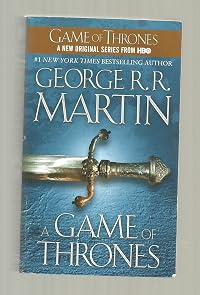
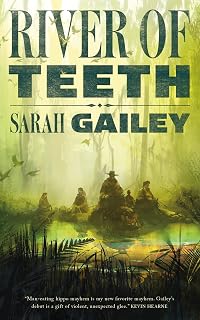

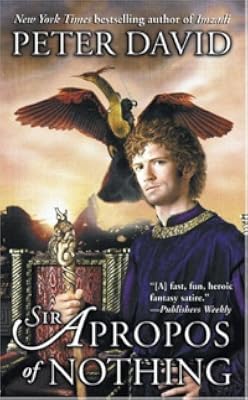
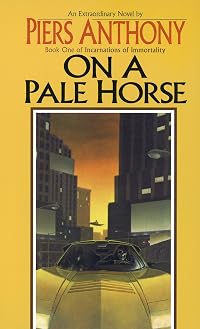

Member Recommendations
Member Reviews
Sylvio di Danuto was banished from Simare's court a decade ago. Now, stripped of all lands and titles, he lives quietly with his wife in Danuto where he makes bows from the bones of their ancestors. When he gets a summons to return to court, he knows something is wrong. He suspects the young prince is insane and may have killed his father. Now Sylvio must make choices which will effect not only himself but the entire country.
From Mountains of ice is set in a world that resembles the Italian Renaissance. It is a fantasy novel about love in its many forms: the love between a man and his wife, the love of family and country, the love of friends and ancestors, and about what happens when love and hate become entangled. It is also about show more honour and sacrifice, justice and the need to make hard choices in terrible times.
I enjoyed this book a lot. However, I did have one problem with it. Occasionally, Stephens introduces a modern word which seems out of place in this world. I don't know if they played soccer in the renaissance (maybe they did) but I found it jarring in an otherwise beautifully written narrative. Fortunately, this did not happen often and certainly not often enough to keep me from recommending this book highly to lovers of fantasy or anyone who just likes a good book. show less
From Mountains of ice is set in a world that resembles the Italian Renaissance. It is a fantasy novel about love in its many forms: the love between a man and his wife, the love of family and country, the love of friends and ancestors, and about what happens when love and hate become entangled. It is also about show more honour and sacrifice, justice and the need to make hard choices in terrible times.
I enjoyed this book a lot. However, I did have one problem with it. Occasionally, Stephens introduces a modern word which seems out of place in this world. I don't know if they played soccer in the renaissance (maybe they did) but I found it jarring in an otherwise beautifully written narrative. Fortunately, this did not happen often and certainly not often enough to keep me from recommending this book highly to lovers of fantasy or anyone who just likes a good book. show less
I received an Early Reviewer copy of this book but am sorry to report that I can't get past the first chapter. The prologue was quite promising, but the first chapter dumps such a load of arcane matter, unexplained politics and undeveloped characters on the reader that even after several tries I had no desire to continue further. It was almost if this book was the second in a series, and I should have read the first one to know what was going on in this one. It may be that these issues are resolved in subsequent chapters. If so, my apologies. Usually I am quite patient in allowing a fantasy world to unfold, but not this time.
 This review was written for LibraryThing Early Reviewers.
In the afterward, Lorina Stephens tells us how this book, her first in 16 years, made it to digital print. The wonderful thing about digital publishing is you don't need to be a pedigreed writer just to get consideration. The bad...nearly anyone can do it.
This is the third ebook I've read this year that was published by a small digital publishing company. All have one thing in common: terrible editing! Do the majors have a lock on good editors? Or, and I suspect this is more the case, does these small publishers see editing as an obstacle to getting large volumes of content quickly to the market?
From Mountains of Ice is set in a fictional analog to medieval Italy. Having a fictional world with a real-world ethnic analog didn't work for show more me; I found it distracting. I remember advice from long ago that unless you are really really good at it, don't try writing accents. It's not that Stephens writes a lot of accents, but it naturally seems so with so many ethnic Italian names.
The second major problem I had was a reliance of narrative to move the story forward and define character relations in some cases. The narrator should not play such a prominent role...we should know by the action of the story and dialog between character what the emotional relationship between characters are. Here, we are told that simply that two characters have tension after long months of working together -- well, their story lines during these months were omitted altogether! So when they confront each other, it is without prior foreshadowing. These kind of issues compounded as the book wore on. In the end, you had the narrator telling us how deeply torn and emotional the characters were, but there was no precedence for this outburst. Character actions were largely contrived and baffling throughout the book.
There are also fantasy elements in the story that seemed forced an employed as a crutch as needed. The village truthsayer, Aletta, can always tell when someone is lying. t seems dead ancestors serve in an advisory role. Her husband, Sylvio, exiled brother of the prince, is a bowyer who crafts unique bows containing bones of the dead. Those dead speak to him as well. When Sylvio is summoned to his brother's court, he encounters a child prostitute who he enlists on a mission to Aletta, with instructions that Aletta is to look after her. Surprise surprise, the dead talk to her too, and she becomes a protege of Aletta. By the end of the story, we find that it appears to be a special talent of anyone born with a genetic lineage to the country, much to the chagrin of would-be neighboring conquerors.
From Mountains of Ice wants to be an epic tale, Stephens fails on all fronts when it comes to developing that tale. Characters have no dimension. The history of this created world is undeveloped. Fantastical aspects are created and employed as convenience, not because they add to the story are inconsistently employed. I felt as if there was originally a much bigger story, and the author took it upon her self to cut it down to an arbitrary length. An author who knows the motives of the characters is not the best person to do such massive edits -- the end product still makes sense to the author, but not so much for other readers. show less
This is the third ebook I've read this year that was published by a small digital publishing company. All have one thing in common: terrible editing! Do the majors have a lock on good editors? Or, and I suspect this is more the case, does these small publishers see editing as an obstacle to getting large volumes of content quickly to the market?
From Mountains of Ice is set in a fictional analog to medieval Italy. Having a fictional world with a real-world ethnic analog didn't work for show more me; I found it distracting. I remember advice from long ago that unless you are really really good at it, don't try writing accents. It's not that Stephens writes a lot of accents, but it naturally seems so with so many ethnic Italian names.
The second major problem I had was a reliance of narrative to move the story forward and define character relations in some cases. The narrator should not play such a prominent role...we should know by the action of the story and dialog between character what the emotional relationship between characters are. Here, we are told that simply that two characters have tension after long months of working together -- well, their story lines during these months were omitted altogether! So when they confront each other, it is without prior foreshadowing. These kind of issues compounded as the book wore on. In the end, you had the narrator telling us how deeply torn and emotional the characters were, but there was no precedence for this outburst. Character actions were largely contrived and baffling throughout the book.
There are also fantasy elements in the story that seemed forced an employed as a crutch as needed. The village truthsayer, Aletta, can always tell when someone is lying. t seems dead ancestors serve in an advisory role. Her husband, Sylvio, exiled brother of the prince, is a bowyer who crafts unique bows containing bones of the dead. Those dead speak to him as well. When Sylvio is summoned to his brother's court, he encounters a child prostitute who he enlists on a mission to Aletta, with instructions that Aletta is to look after her. Surprise surprise, the dead talk to her too, and she becomes a protege of Aletta. By the end of the story, we find that it appears to be a special talent of anyone born with a genetic lineage to the country, much to the chagrin of would-be neighboring conquerors.
From Mountains of Ice wants to be an epic tale, Stephens fails on all fronts when it comes to developing that tale. Characters have no dimension. The history of this created world is undeveloped. Fantastical aspects are created and employed as convenience, not because they add to the story are inconsistently employed. I felt as if there was originally a much bigger story, and the author took it upon her self to cut it down to an arbitrary length. An author who knows the motives of the characters is not the best person to do such massive edits -- the end product still makes sense to the author, but not so much for other readers. show less
This review was written for LibraryThing Early Reviewers.I received a copy of this book through LT early reviewers. The following review is spoiler free.
First, a technical note. The ebook copy I downloaded didn't work quite properly on iBooks on my iPad - there were no breaks between chapters (not that there are many), resulting in a chapter list that simply stated "FMI". Also some dialogue, which I assume was supposed to be intended (or maybe written in cursive?) mostly just looked like normal paragraphs - not that it was too difficult to figure out when something wasn't spoken aloud. However, together with a few other minor details (the weird capitalisation "From Mountains of ice" at the top of each page and the lack of cover art) it didn't give a good first impression about the show more publisher.
The story however, once it properly starts, kept me captivated to the last page. Although it starts out in a very general setting and at first seems to mostly concern politics and economies of imaginary countries that try to find balance between power struggles and trade, it also introduces a world that feels both familiar (with clear references to Mediterranean cultures) and fantastical (communing with death ancestors through their bones). Descriptions were vivid and although some outcomes were quite predictable, there was never a really dull moment. Actually I would have wished to know a bit more about the world and the cultures that seemed to be hovering on the edge on modernity, having discovered antibiotics but apparently not firearms. The other thing I would have wanted to read more about was Carmelo, whose viewpoint we only see at the very beginning of the book. As far as I could gather, there was nothing unusual about his behaviour at this point, and I think the scene should have continued a bit further to better explain the crucial change in him that is only described by other characters later on and which is the basis for everything that happens. I also wished there had been a map, even though the geography wasn't too complex. I just like maps. ;) Another minor gripe was the constant "kneeing" of horses to run or turn - this would be like driving a car with your elbows!
I also have to mention two things that I really appreciated: first - there are real physical and emotional consequences to the characters who suffer physical trauma. Secondly, the book was easy and quick to read and didn't require me to reference a long character list or delve into the lives of characters of no consequence to the plot, like so much of the genre today - refreshing.
All in all a good and entertaining read. show less
First, a technical note. The ebook copy I downloaded didn't work quite properly on iBooks on my iPad - there were no breaks between chapters (not that there are many), resulting in a chapter list that simply stated "FMI". Also some dialogue, which I assume was supposed to be intended (or maybe written in cursive?) mostly just looked like normal paragraphs - not that it was too difficult to figure out when something wasn't spoken aloud. However, together with a few other minor details (the weird capitalisation "From Mountains of ice" at the top of each page and the lack of cover art) it didn't give a good first impression about the show more publisher.
The story however, once it properly starts, kept me captivated to the last page. Although it starts out in a very general setting and at first seems to mostly concern politics and economies of imaginary countries that try to find balance between power struggles and trade, it also introduces a world that feels both familiar (with clear references to Mediterranean cultures) and fantastical (communing with death ancestors through their bones). Descriptions were vivid and although some outcomes were quite predictable, there was never a really dull moment. Actually I would have wished to know a bit more about the world and the cultures that seemed to be hovering on the edge on modernity, having discovered antibiotics but apparently not firearms. The other thing I would have wanted to read more about was Carmelo, whose viewpoint we only see at the very beginning of the book. As far as I could gather, there was nothing unusual about his behaviour at this point, and I think the scene should have continued a bit further to better explain the crucial change in him that is only described by other characters later on and which is the basis for everything that happens. I also wished there had been a map, even though the geography wasn't too complex. I just like maps. ;) Another minor gripe was the constant "kneeing" of horses to run or turn - this would be like driving a car with your elbows!
I also have to mention two things that I really appreciated: first - there are real physical and emotional consequences to the characters who suffer physical trauma. Secondly, the book was easy and quick to read and didn't require me to reference a long character list or delve into the lives of characters of no consequence to the plot, like so much of the genre today - refreshing.
All in all a good and entertaining read. show less
This review was written for LibraryThing Early Reviewers.In From Mountains of Ice we meet Sylvio. He is a bowyer and a bonespeaker (a person who can speak to the dead through the bones of the deceased). Ten years ago Sylvio got banished from the court of Simare by Prince Carmelo. Now the same Prince has asked Sylvio to attend the yearly marked in Breena, the capitol of Simare. Has this someting to do with the rumors of unrest near the borders? Or is it somthing else completely?
After finishing the book I was not entirely sure what it was all about. Both the story and the characters suffered from a lack of debth. I want more meat on the bone, more juicy details to sink my teeth into. The world of Simare felt like a light mix of Italy, France and Spain in a medievalish setting. Again, no debth show more and no history despite that a major part of the plot was connected to the ancestery of the Simarians.
Sadly it is the same story with the characters. Even when Sylvio is on the brink of death all I get to know about him is that he treats the people around him worse than they deserve (why he does this we never get to know). What makes him behave the way he does? Why does he never show his gratitude to people? Why does.... I could go on forever but you know where I'm going.
All in all it was an OK story, but the lack of bacground, of history, of a "meaty" plot makes it hard to connect with the story and its characters. It ends up being a bit too superficial. show less
After finishing the book I was not entirely sure what it was all about. Both the story and the characters suffered from a lack of debth. I want more meat on the bone, more juicy details to sink my teeth into. The world of Simare felt like a light mix of Italy, France and Spain in a medievalish setting. Again, no debth show more and no history despite that a major part of the plot was connected to the ancestery of the Simarians.
Sadly it is the same story with the characters. Even when Sylvio is on the brink of death all I get to know about him is that he treats the people around him worse than they deserve (why he does this we never get to know). What makes him behave the way he does? Why does he never show his gratitude to people? Why does.... I could go on forever but you know where I'm going.
All in all it was an OK story, but the lack of bacground, of history, of a "meaty" plot makes it hard to connect with the story and its characters. It ends up being a bit too superficial. show less
This review was written for LibraryThing Early Reviewers.Silvio di Danuto has been banished from the court of Simare for the past decade. For some reason, his prince now wants him back and Silvio has a good reason to suspect that something strange is going on. He has no other option but to travel to the capital and in the process sets in motion a chain of events that will change Simare for ever.
I have rather mixed emotions about this book. On the good side I would say, that the concept (once you realize what it is) is rather fascinating and well thought out. The world building has the potential to be very good, if it was a bit better fleshed out and explained to the reader.
On the other hand the story just seems to drag on. There's a lot of descriptive scenes and a lot of times not much is show more happening. The beginning in particular seems to take forever and you find yourself wishing something would happen. There's a lot of characters that you're not very sure of who they actually are and it took about half the book to finally realize which country is which and what relations they have to each other. Rather confusing.
So, the book had some very interesting ideas, but the execution was a bit lacking. As an aside, the ebook editing was rather poor. Especially the beginning of the book was an awful mess and I had the feeling no one had really checked how the book comes out in digital form. show less
I have rather mixed emotions about this book. On the good side I would say, that the concept (once you realize what it is) is rather fascinating and well thought out. The world building has the potential to be very good, if it was a bit better fleshed out and explained to the reader.
On the other hand the story just seems to drag on. There's a lot of descriptive scenes and a lot of times not much is show more happening. The beginning in particular seems to take forever and you find yourself wishing something would happen. There's a lot of characters that you're not very sure of who they actually are and it took about half the book to finally realize which country is which and what relations they have to each other. Rather confusing.
So, the book had some very interesting ideas, but the execution was a bit lacking. As an aside, the ebook editing was rather poor. Especially the beginning of the book was an awful mess and I had the feeling no one had really checked how the book comes out in digital form. show less
This review was written for LibraryThing Early Reviewers.This is another book that I have to give a very mixed review to, mostly because the writing was kind of poor, when the concept was strong and interesting. I used to think that all I needed was a good idea to write about and I too could become an author. Books like this make me realize that a good idea isn't enough if you don't have the writing chops to back it up.
What drew me to this novel was the idea of a fantasy setting that was very similar to a real time and place in our world, in this case Renaissance Italy. My favourite Canadian author Guy Gavriel Kay does this so well; I really wanted to find another author who could pull off this tricky setting. Stephens doesn't really draw me into the setting and as a result the world seems show more confused and complicated, with little to ground you in the story. I often thought that something as simple as a map illustration would have been beneficial, especially as the story gets geo-political.
About a third of the way through the story, finally the action picks up, but it fails to go anywhere. It wasn't episodic enough for me, more like a long string of events that don't seem to lead anywhere.
I did like the protagonist Sylvio, although he and his wife Aletta were a little too perfect as characters. What I wanted more than anything was more time with them to get to know them better. Carmelo's back story sounded intriguing if only the reader got a bit more of it to explain his actions. This is particularly hard to overcome because the plot rests so much on why he hates Sylvio.
With a rushed ending and next to no plot moments that I can even remember having read the book a few weeks ago, I can't recommend this book. show less
What drew me to this novel was the idea of a fantasy setting that was very similar to a real time and place in our world, in this case Renaissance Italy. My favourite Canadian author Guy Gavriel Kay does this so well; I really wanted to find another author who could pull off this tricky setting. Stephens doesn't really draw me into the setting and as a result the world seems show more confused and complicated, with little to ground you in the story. I often thought that something as simple as a map illustration would have been beneficial, especially as the story gets geo-political.
About a third of the way through the story, finally the action picks up, but it fails to go anywhere. It wasn't episodic enough for me, more like a long string of events that don't seem to lead anywhere.
I did like the protagonist Sylvio, although he and his wife Aletta were a little too perfect as characters. What I wanted more than anything was more time with them to get to know them better. Carmelo's back story sounded intriguing if only the reader got a bit more of it to explain his actions. This is particularly hard to overcome because the plot rests so much on why he hates Sylvio.
With a rushed ending and next to no plot moments that I can even remember having read the book a few weeks ago, I can't recommend this book. show less
This review was written for LibraryThing Early Reviewers.Members
- Recently Added By
Author Information

10+ Works 95 Members
Lorina Stephens is a LibraryThing Author, an author who lists their personal library on LibraryThing.
Common Knowledge
- Canonical title
- From Mountains of Ice
- Original publication date
- 2009-07-09
Classifications
Statistics
- Members
- 26
- Popularity
- 1,045,293
- Reviews
- 14
- Rating
- (3.13)
- Languages
- English
- Media
- Paper, Ebook
- ISBNs
- 1
- ASINs
- 1