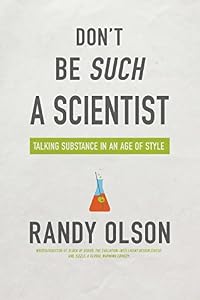
Don't Be Such a Scientist: Talking Substance in an Age of Style
by Randy Olson
On This Page
Description
When Randy Olson first described his life-changing encounter with an acting teacher in Don’t Be Such a Scientist, it seemed like the world of science was on the cusp of gaining new respect in the public eye. Through his writing, speaking, and films, Olson challenged scientists to toss out jargon in favor of a more human approach, bringing Hollywood lessons to the scientific community. Yet today, in everything from government funding cuts to climate change denial, science is under attack. show more And while communicating science is more crucial than ever, the scientific community still struggles to connect with everyday people. The time is right for a new edition of Olson’s revolutionary work. In Don’t Be Such a Scientist, Second Edition, Olson renews his call for communication that stays true to the facts while tapping into something more primordial, more irrational, and ultimately more human. In more than 50 pages of new material, Olson brings his pioneering messageto this new age, providing tools for speaking out in anti-science era and squaring off against members of the scientific establishment who resist needed change. Don’t Be Such a Scientist, Second Edition is a cutting and irreverent manual to making your voice heard in an age of attacks on science. Invaluable for anyone looking to break out of the boxes of academia or research, Olson’s writing will inspire readers to “make science human”—and to enjoy the ride along the way. show lessTags
Recommendations
















Member Reviews
Randy Olson is a marine biologist who did his research, did his publishing, and became a tenured professor at the University of New Hampshire.
And then he resigned to become a filmmaker.
In Don't Be Such a Scientist, Olson talks about his own journey from scientist to science filmmaker, and explores the problems of communicating science to a broad audience. He finds the problems to lie mainly in a disconnect between how scientists learn to communicate with each other and the kinds of communication that work with the general, non-scientist public, and especially what does and does not work in the mass media.
Scientists place the highest value on accuracy; they correct inaccuracies, they question assumptions, they demand evidence. This is show more all vital to what scientists do; without these behaviors, real advances in knowledge can't happen. But when scientists use those same behaviors when talking to the general public, and especially when speaking on tv or making films and videos intended to reach the general public, these same behaviors come across as negative, argumentative, and unlikeable. Scientists, Olson says, work almost entirely in their heads, while reaching a broad audience--even getting the attention of a broad audience, due to how inundated we are with information--requires reaching the heart, the gut, and even, as he delicately phrases it, "the lower organs."
To illustrate the impact of an over-emphasis on being serious and relentlessly accurate, vs. presenting the information with style, heart, and even humor, he compares the reception given to two 2006 movies about global warming--HBO's April 2006 Too Hot Not Too Handle, and Al Gore's May 2006 An Inconvenient Truth. The first, he says, was "solid, relatively impersonal, objective effort featuring interviews with many top scientists." The second is a personal narrative by Al Gore, featuring his stories of long-term involvement with the issue, the tragedies involving his sister and his son, some humor, along with lots of substance. With all the emphasis on style, Gore nevertheless used PowerPoint graphs in abundance to communicate facts and data.
The HBO movie was completely accurate--but also boring and depressing. It sunk without a trace. Gore's was filled with important information, but had some inaccuracies that would never have survived in the HBO effort. But none of those errors were important enough to undermine the central point--and An Inconvenient Truth was a huge hit, and won both an Oscar and a Nobel Prize. Which was more effective in getting real knowledge of global warming to the general public?
Some of the entertaining stories Olson has to tell include his own collision with acting class (news flash: scientists are not naturals at just going with their feelings), the struggles to make his own 2006 film on evolution vs. "intelligent design," Flock of Dodos, watchable--and then the reaction of science bloggers to a movie that still wasn't accessible enough for distributors to want it for general audiences.
I'm not doing justice to the book, but it's short, pithy, and completely readable, along with providing ample food for thought on how to communicate science to the general public.
Important note: I received a free electronic galley of this book from the publisher, Island Press. show less
And then he resigned to become a filmmaker.
In Don't Be Such a Scientist, Olson talks about his own journey from scientist to science filmmaker, and explores the problems of communicating science to a broad audience. He finds the problems to lie mainly in a disconnect between how scientists learn to communicate with each other and the kinds of communication that work with the general, non-scientist public, and especially what does and does not work in the mass media.
Scientists place the highest value on accuracy; they correct inaccuracies, they question assumptions, they demand evidence. This is show more all vital to what scientists do; without these behaviors, real advances in knowledge can't happen. But when scientists use those same behaviors when talking to the general public, and especially when speaking on tv or making films and videos intended to reach the general public, these same behaviors come across as negative, argumentative, and unlikeable. Scientists, Olson says, work almost entirely in their heads, while reaching a broad audience--even getting the attention of a broad audience, due to how inundated we are with information--requires reaching the heart, the gut, and even, as he delicately phrases it, "the lower organs."
To illustrate the impact of an over-emphasis on being serious and relentlessly accurate, vs. presenting the information with style, heart, and even humor, he compares the reception given to two 2006 movies about global warming--HBO's April 2006 Too Hot Not Too Handle, and Al Gore's May 2006 An Inconvenient Truth. The first, he says, was "solid, relatively impersonal, objective effort featuring interviews with many top scientists." The second is a personal narrative by Al Gore, featuring his stories of long-term involvement with the issue, the tragedies involving his sister and his son, some humor, along with lots of substance. With all the emphasis on style, Gore nevertheless used PowerPoint graphs in abundance to communicate facts and data.
The HBO movie was completely accurate--but also boring and depressing. It sunk without a trace. Gore's was filled with important information, but had some inaccuracies that would never have survived in the HBO effort. But none of those errors were important enough to undermine the central point--and An Inconvenient Truth was a huge hit, and won both an Oscar and a Nobel Prize. Which was more effective in getting real knowledge of global warming to the general public?
Some of the entertaining stories Olson has to tell include his own collision with acting class (news flash: scientists are not naturals at just going with their feelings), the struggles to make his own 2006 film on evolution vs. "intelligent design," Flock of Dodos, watchable--and then the reaction of science bloggers to a movie that still wasn't accessible enough for distributors to want it for general audiences.
I'm not doing justice to the book, but it's short, pithy, and completely readable, along with providing ample food for thought on how to communicate science to the general public.
Important note: I received a free electronic galley of this book from the publisher, Island Press. show less
Harvard-trained marine biologist-turned-filmmaker Olson makes a passionate plea to his fellow scientists to rethink how they communicate their findings. Part media kit, part personal filmmaking history, this is a lighthearted, opinionated guide. (152)
Randy Olson, the author, has unique life lessons on communication to share with academia after resigning from a tenured position at University of New Hampshire and subsequently moving to Hollywood to begin a second career as a (science) movie maker. His book on communicating science focuses on the principles, rather than the techniques, of how to effectively reach broad audiences through video and how different this is from traditional scientific communication training. This is not a how-to book. It's purpose is to convince scientists of the necessity of communicating better, and to point out just how big the gulf between the scientific community and 'the masses' really is, and why outreach and talking to 'the public' has thus far been show more ineffective.
In a conversational first person tone, he talks about different ways to connect and communicate with an audience - through the head (eg information dump), the heart (eg religion), the gut (eg humor), and the sex organs (is an eg necessary?). He also talks about ways that scientists can learn to better connect with folks - by being less cerebral, less literal, more likeable, etc. It is somewhat ironic that he spends ample time discussing how negative and negating the scientific community can be yet many of his messages are 'Don't do x' (Perhaps he thought scientists would naturally gravitate towards this type of advice?) In any case, he argues that communicating better - and through media - can be learned like most other things scientists do. Further, he maintains that learning to do so is critical to maintain public support (both directly and via government) for scientists and science that can help to improve society.
Drawing on lessons from acting classes and from movie making experience, Olson both his successes and his failures and turning points along his scientist-turn-Hollywood career. This is a worthwhile read, particularly if you are skeptical about the usefulness and power of communicating science to a wide audience or if you are unsure how communicating science to non-scientists is different from communicating to scientists.
There's a fair bit to chew over that's subjective, opinion, and anecdotal, but considering that Dr. Olson is one of the few who have walked the talk, I think it's worthwhile to hear him out. And at the very least, it may be entertaining. Recommended, 4.5 stars. show less
In a conversational first person tone, he talks about different ways to connect and communicate with an audience - through the head (eg information dump), the heart (eg religion), the gut (eg humor), and the sex organs (is an eg necessary?). He also talks about ways that scientists can learn to better connect with folks - by being less cerebral, less literal, more likeable, etc. It is somewhat ironic that he spends ample time discussing how negative and negating the scientific community can be yet many of his messages are 'Don't do x' (Perhaps he thought scientists would naturally gravitate towards this type of advice?) In any case, he argues that communicating better - and through media - can be learned like most other things scientists do. Further, he maintains that learning to do so is critical to maintain public support (both directly and via government) for scientists and science that can help to improve society.
Drawing on lessons from acting classes and from movie making experience, Olson both his successes and his failures and turning points along his scientist-turn-Hollywood career. This is a worthwhile read, particularly if you are skeptical about the usefulness and power of communicating science to a wide audience or if you are unsure how communicating science to non-scientists is different from communicating to scientists.
There's a fair bit to chew over that's subjective, opinion, and anecdotal, but considering that Dr. Olson is one of the few who have walked the talk, I think it's worthwhile to hear him out. And at the very least, it may be entertaining. Recommended, 4.5 stars. show less
Former scientist and current documentary film maker (best known for A Flock of Dodos) Randy Olson brings us important lessons in communication in his book. Don't Be Such A Scientist. The title, taken from an admonishment from his ex-wife over his scientist-tendency to over-analyze and focus on substance over style sums up this book nicely. Olson takes us on his journey from a tenured professor through giving it all up to take an acting class in Hollywood (put on by what sounds to be a truly dreadful teacher) to his lessons-learned in crafting entertaining documentaries that appeal to mass audiences if not grizzled scientists.
Olson's primary message in this book is that science in general has an image problem. The failure to address this show more has allowed insane nonsense such as "intelligent design" and other fundamentalist nutjobbery to gain traction in the public mindset. As a result, true science doesn't resonate with the masses, and when it comes time for public funding, important programs find themselves on the chopping block.
Olson teaches us about the history of science communication. The bunker mentality that many (about 1/3) scientists uphold is a modern, post-WW2 phenomenon. Prior to this, scientists were often popular speakers and adept at telling people why their work was important. There are certainly parallels in modern times: as examples, Olson holds up the late greats Carl Sagan and Stephen Jay Gould, as well as the still very much alive Neil Degrasse Tyson. (all three personal heroes of mine). While Olson's chosen medium is film, his message equally applies to books and public lectures.
For every subject, there are two audiences: the public and other scientists. Whether a sterile stream of just the facts might not even be the best way to communicate with other scientists, all of them are accustomed to it, and 1/3 will stand for nothing else. Few outside the discipline are going to enjoy, much less assimilate and retain information provided in this manner. Using Al Gore's An Inconvenient Truth as an example, entertaining documentaries can be highly effective and popular forms of communication, even if the message is slightly tampered with in the process.
I can't find fault with any of Olson's premises. It's something I try to do in communicating technical information, and I appreciate it when others make an effort to be entertaining as well as educational. I like watching documentaries and reading about science, but I like being entertained too. A dense book that is hard to choke down is not a pleasant experience and much of that painstaking detail will not be retained. Similarly, a droning documentary that fails to engage on a more visceral level might have me distracted, possibly reading that difficult book at the same time.
Olson characterizes this as four different zones where a message can be targeted: Head, Heart, Gut and, well, Groin. This happens to be the order of appeal -- a sexy message will appeal to the broadest range while an intellectual one the most narrow. The most effective communications will target several or all of these zones.
There are a few affable scientists carrying their message to the masses. Tyson, among others, are regular guests on talk shows. We need many more of them if the US is to regain and retain a reputation as a world leader in science and research. Olson tells us why and provides direction to those who wish to carry the torch and push back the tide of ignorance. show less
Olson's primary message in this book is that science in general has an image problem. The failure to address this show more has allowed insane nonsense such as "intelligent design" and other fundamentalist nutjobbery to gain traction in the public mindset. As a result, true science doesn't resonate with the masses, and when it comes time for public funding, important programs find themselves on the chopping block.
Olson teaches us about the history of science communication. The bunker mentality that many (about 1/3) scientists uphold is a modern, post-WW2 phenomenon. Prior to this, scientists were often popular speakers and adept at telling people why their work was important. There are certainly parallels in modern times: as examples, Olson holds up the late greats Carl Sagan and Stephen Jay Gould, as well as the still very much alive Neil Degrasse Tyson. (all three personal heroes of mine). While Olson's chosen medium is film, his message equally applies to books and public lectures.
For every subject, there are two audiences: the public and other scientists. Whether a sterile stream of just the facts might not even be the best way to communicate with other scientists, all of them are accustomed to it, and 1/3 will stand for nothing else. Few outside the discipline are going to enjoy, much less assimilate and retain information provided in this manner. Using Al Gore's An Inconvenient Truth as an example, entertaining documentaries can be highly effective and popular forms of communication, even if the message is slightly tampered with in the process.
I can't find fault with any of Olson's premises. It's something I try to do in communicating technical information, and I appreciate it when others make an effort to be entertaining as well as educational. I like watching documentaries and reading about science, but I like being entertained too. A dense book that is hard to choke down is not a pleasant experience and much of that painstaking detail will not be retained. Similarly, a droning documentary that fails to engage on a more visceral level might have me distracted, possibly reading that difficult book at the same time.
Olson characterizes this as four different zones where a message can be targeted: Head, Heart, Gut and, well, Groin. This happens to be the order of appeal -- a sexy message will appeal to the broadest range while an intellectual one the most narrow. The most effective communications will target several or all of these zones.
There are a few affable scientists carrying their message to the masses. Tyson, among others, are regular guests on talk shows. We need many more of them if the US is to regain and retain a reputation as a world leader in science and research. Olson tells us why and provides direction to those who wish to carry the torch and push back the tide of ignorance. show less
Olson's thesis is that Scientist do not communicate their ideas or methods with the public effectively, and that this needs to change, in order influence public thinking and opinions on all things scientific. To be totally honest most practicing scientist I know are horrible communicators. I'm just not totally sold on his methodology. Olson is both passionate about this subject matter and faithfully practices what he preaches. I even think most of his ideas and theories about communication are spot on (this is coming from someone who has no idea how to communicate).
I just don't see how poor communicators are going to incorporate these principles into their lives and future work. I guess that's what is disappoints me the most about the show more book. There is no clear guide on improving our communication with the public at large. Otherwise a very good read that I think should be incorporated into every science curriculum coupled with a seminar or workshop would help everyone from research scientist to working stiffs having to deal with clients that may not be as well informed on the subject matter. show less
I just don't see how poor communicators are going to incorporate these principles into their lives and future work. I guess that's what is disappoints me the most about the show more book. There is no clear guide on improving our communication with the public at large. Otherwise a very good read that I think should be incorporated into every science curriculum coupled with a seminar or workshop would help everyone from research scientist to working stiffs having to deal with clients that may not be as well informed on the subject matter. show less
This has been on my to-read list for ages, and now that it's semi-relevant to grad school goals, finally took it off my amazon wishlist. I watched Flock of Dodos during Darwin Week 2010; my review of that is here. Curiously, my opinions of his other work reflect what I got four years later in his book.
Dr. Olson argues that since we live in a world of short-attention spans, scientists need to learn to let go of some of the jargon and embrace subjective emotional/sexual/whatever appeal. Arouse the audience, pique their interest, and they'll follow you to your message. It's important for science communication, and here, nearly five years later there's a proliferation of science communication workshops, courses, etc. (I wonder if Randy show more ever goes to ScienceOnline in Raleigh?)
While his ideas are good, I'm not going to give it a full 4-5 stars because a good portion seemed to be writing out his disappointment in the blogger community on rejecting Sizzle (which I have yet to see). Science blogs are what drew me towards the world of SciComm, and while there are those who are considerably abrasive (PZ Myers, for example), there are many excellent writers out there (Carl Zimmer, Brian Switek, the Deep Sea News team, etc.) who talk about cool things in the science world without getting condescending (I would definitely have a beer with any of them).
Still, readers should take away from this that it's not just what you say, but how you say it that matters. One of Randy's points from Flock of Dodos is that the Intelligent Design movement is full of buzzwords and as I put it at the time, "shiny wrappers" that make it seem like a palatable product. When Bill Nye debated the legitimacy of Intelligent Design with Ken Ham last month, a sizable number in the science community felt it would be validating a worthless idea by even showing up. However, it was watched by millions, and brought Bill's joy in the scientific method to households that would otherwise never be exposed to critical thinking. Sure, Bill's an engineer and didn't have all the technical details right, but he's insanely relatable and easily communicates these big ideas. The reboot of Cosmos by Neil deGrasse Tyson also shares this enthusiasm over science without talking down to the audience. Get rid of the Ivory Tower, and share what you love! show less
Dr. Olson argues that since we live in a world of short-attention spans, scientists need to learn to let go of some of the jargon and embrace subjective emotional/sexual/whatever appeal. Arouse the audience, pique their interest, and they'll follow you to your message. It's important for science communication, and here, nearly five years later there's a proliferation of science communication workshops, courses, etc. (I wonder if Randy show more ever goes to ScienceOnline in Raleigh?)
While his ideas are good, I'm not going to give it a full 4-5 stars because a good portion seemed to be writing out his disappointment in the blogger community on rejecting Sizzle (which I have yet to see). Science blogs are what drew me towards the world of SciComm, and while there are those who are considerably abrasive (PZ Myers, for example), there are many excellent writers out there (Carl Zimmer, Brian Switek, the Deep Sea News team, etc.) who talk about cool things in the science world without getting condescending (I would definitely have a beer with any of them).
Still, readers should take away from this that it's not just what you say, but how you say it that matters. One of Randy's points from Flock of Dodos is that the Intelligent Design movement is full of buzzwords and as I put it at the time, "shiny wrappers" that make it seem like a palatable product. When Bill Nye debated the legitimacy of Intelligent Design with Ken Ham last month, a sizable number in the science community felt it would be validating a worthless idea by even showing up. However, it was watched by millions, and brought Bill's joy in the scientific method to households that would otherwise never be exposed to critical thinking. Sure, Bill's an engineer and didn't have all the technical details right, but he's insanely relatable and easily communicates these big ideas. The reboot of Cosmos by Neil deGrasse Tyson also shares this enthusiasm over science without talking down to the audience. Get rid of the Ivory Tower, and share what you love! show less
A (entertaining) book that covers science communication from a "to the masses" and "film" perspective, rather than e.g. "how to prepare for an interview" perspective. While at times I felt it focused too much on the medium of film, it is hard to overstate the importance of film (including 'videos' of all types) for mass communication, I just think I cam slightly biased against it. That said, I felt that just about everything here is relevant, whether talking about film or not, and whether talking about communicating directly to a mass audience or only indirectly.
Members
- Recently Added By
Author Information
10+ Works 286 Members
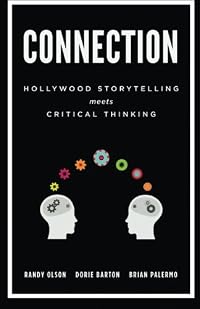
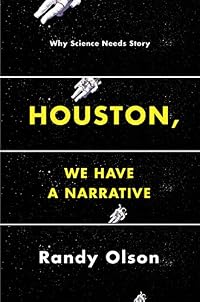
Randy Olson earned his PhD at Harvard University and became a professor of marine biology before moving to Hollywood for his second career as a filmmaker. Since obtaining an MFA from the USC School of Cinema, he has written and directed the critically acclaimed films Flock of Dodos and Sizzle, cofounded The Shifting Baselines Ocean Media Project, show more and conducted a wide range of science communication workshops. He is the author of Houston, We have a Narrative and Connection: Hollywood Meets Critical Thinking. show less
Common Knowledge
- Original publication date
- 2009-09
Classifications
Statistics
- Members
- 163
- Popularity
- 193,909
- Reviews
- 13
- Rating
- (3.57)
- Languages
- English
- Media
- Paper, Ebook
- ISBNs
- 3
- ASINs
- 2