
Stuart Firestein
Author of Ignorance: How It Drives Science
Works by Stuart Firestein
Pursuit of Ignorance,the 1 copy
Associated Works
This Will Make You Smarter: New Scientific Concepts to Improve Your Thinking (Edge Question Series) (2012) — Contributor — 899 copies, 17 reviews
Tagged
Common Knowledge
- Gender
- male
- Occupations
- neuroscientist
- Organizations
- Columbia University
- Nationality
- USA
- Associated Place (for map)
- USA
Members
Reviews
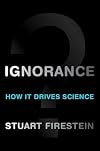
There's a popular conception of science and scientists that drives me absolutely crazy. It's one that looks on science as a supposed collection of hard, irrefutable Established Facts, and scientists as rigid, closed-minded sorts who care only about being able to say "Yes, yes, we have explained that," and who will deny the existence of anything they haven't already explained even when it's staring them plainly in the face. And it drives me crazy because it's absolutely, 100% the opposite of show more the truth. It's clear that anyone who buys into it, even the slightest bit, never heard an actual scientist talking about, say, the Pioneer Anomaly, in which the far-flung Pioneer space probes departed from their expected trajectories in a way that no one initially knew how to explain. Some of these scientists got positively giddy at the fantastically unlikely but nevertheless real possibility that this wasn't due to some overlooked but utterly mundane issue with the spacecraft themselves, but that it might, just possibly, represent some area where our current understanding of physics breaks down. (Sadly, in this case, the answer did ultimately turn out to be less exciting than that.)
Stuart Firestein doesn't talk about the Pioneer Anomaly in this short book, but he's making very much the point that I think those giddy physicists were demonstrating. The excitement of science, he says, and the key to its advancement, lies not in tidily accumulated lists of Facts That Are Known, but in identifying the areas of our ignorance and groping our way into them to try to figure out what might or, just as importantly, might not be concealed there. And this is a process that involves not so much finding the right answers, but asking the right questions, and, in some cases, in questioning even the things we think we already know.
The book itself is pretty slight, and for anyone who already understands this point, I don't think there's going to be a whole lot here that's new. And the half of the book that he spends on "case histories" -- that is, on looking at a few particular scientists and their perspectives on the unanswered questions in their fields, as well as on his own history of research and exploration -- was not nearly as interesting to me as I had expected it to be, although that may have to do with the fact that a fair amount of it wasn't new to me, either. But the basic point he's making is deeply important, and he formulates it clearly and well, in a way that's aimed at an audience of non-scientists, and there are a lot of people out there I can only wish would read it. show less
Stuart Firestein doesn't talk about the Pioneer Anomaly in this short book, but he's making very much the point that I think those giddy physicists were demonstrating. The excitement of science, he says, and the key to its advancement, lies not in tidily accumulated lists of Facts That Are Known, but in identifying the areas of our ignorance and groping our way into them to try to figure out what might or, just as importantly, might not be concealed there. And this is a process that involves not so much finding the right answers, but asking the right questions, and, in some cases, in questioning even the things we think we already know.
The book itself is pretty slight, and for anyone who already understands this point, I don't think there's going to be a whole lot here that's new. And the half of the book that he spends on "case histories" -- that is, on looking at a few particular scientists and their perspectives on the unanswered questions in their fields, as well as on his own history of research and exploration -- was not nearly as interesting to me as I had expected it to be, although that may have to do with the fact that a fair amount of it wasn't new to me, either. But the basic point he's making is deeply important, and he formulates it clearly and well, in a way that's aimed at an audience of non-scientists, and there are a lot of people out there I can only wish would read it. show less
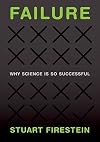
I had read Stuart Firestein’s previous book: Ignorance. It was well written, well argued, and tempered with anger about where the sciences are at this moment in history. It struck a chord with me because the book spoke out fiercely against the prevailing psyche in academia, something that was derived by the need to publish or perish. The author made a very strong point about how this aversion is destroying the fundamentals of research and pursuit of new knowledge as well as compromise the show more integrity of everyone involved in science.
Indeed, Prof. Firestein is reiterating his point in this follow up. He expresses the thought that it is an absolute imperative for scientists and technologists to commit to rigorously accepting and examining our failures; he admonishes us to actively seek opportunities to create failures, and he proclaims that it is the failures that will fuel our innovation engines.
Prof. Firestein cogently argues in fifteen succinct chapters why we must seek out failures.
In those fifteen chapters, he makes the case for taking more chances, and experiencing failure. He is able to layout a very convincing case that not only is failure something from which we need to learn from; indeed, failure is something that we absolutely need to demand of our researchers and scientists in order to make advances in science.
He makes his case mostly in the pharmacological and biological world since that is his milieu in the sciences, but the knowledge and the lessons that he provides us are general in nature. The advices are something that could be applied to both applied and pure research and for things that are far broader than just the biological world.
In Chapter One, Prof. Firestein lays out the case that we are terrible at defining what failure is because of the negative nature of the word failure. He cites Gertrude Stein’s quote: “A real failure does not need an excuse. It is an end of itself.” The quote concisely defines the bad failures, the stupid silly kinds that we all do because we were negligent, and those failures that lead us somewhere interesting. The latter are the ones that we need to talk about, the ones that piques our interest, pushes and allows us to investigate further, ask better questions. Those are the ones that. that reveal surprising questions and/or gives us a chance to re-evaluate our assumptions, understanding, and biases.
In Chapter Two, he discusses the meaning of Samuel Beckett’s famous quote: “Ever tried. Ever failed. No matter. Try again. Fail again. Fail Better.” Prof. Firestein goes into detail on what he thinks Fail Better means and he discusses what he thinks what we should do to Fail Better. This chapter was the one that really hooked me onto this book because I've always been fascinated by Beckett's quote. I hadn't really thought about what failing better meant until I read Prof. Firestein’s arguments. It clarified some of my thoughts on the subject, so kudos to him for allowing me to think about it and leading me to a clear definition of failing better.
In Chapters 3 and 8 Prof. Firestein goes after the scientific method. He takes out the scalpel and dissects the whole idea of how we do science, or the official written way we are supposed to do science. His willingness to take on the mythology of the scientific method, which turned him into an apostate to the temple of knowledge that is big science, is encouraging and very courageous. I think coming from somebody like Prof. Firestein, who is a respected researcher and a product of the system, adds weight to the argument and he doesn't disappoint. The two chapters are very forceful, and it shows a lot of very deeply thought out argument against the strawman that is the Scientific Method.
Chapters 4 and 5 are his argument on why failure is something that is beyond what we think it is. We usually believe that failure is something that should be ameliorated and something that should lead us to a positive result. His argument is that failure is something much beyond that, much like what Nicholas Taleb’s take about Anti-fragility. Being anti-fragile means something beyond grittiness and resilient, it means more than just being able to survive the bad fortune, it means being able to benefit and thrive when circumstances are against you. In Prof. Firestein’s argument, failure leads to attaining a higher level of understanding of what we're trying to study and it leads us to discovering heretofore unknown dynamics within our knowledge base. It is the negative result which will leads us to better and broader understanding of nature. In Chapter 5 Prof. Firestein goes into a very impassioned argument for the integrity of failure. The integrity of failure means that we are honest with our results, we are committed to intellectual honesty in our work, we are willing to broadcast our failures to our fellow researchers because we are dedicated to the advancement of science over shielding our own fragile egos and reputations.
Chapter 6 and 7 are interesting because they go into how we're teaching the future of research and scientific investigations and how we are putting a wrong public face on what scientific research truly entails. The crux of it is that teaching future scientists the scientific method as the means to do research we are handcuffing them to a mythology of what scientific investigation is, which in turn stifles broad questioning of concepts and ideas. In addition, by telling the non-scientific world that the scientific method is the dominant mode of doing research, we are building up a fictional impression in the general public of what scientists do on a daily basis, thereby mythologizing doing science.
Chapters 9, 12, 13, and 14 has Prof. Firestein going deep into his own milieu of biological and pharmacological research. The chapters were interesting because I have no background in the area, so I waded in with great interest but with scant background to really dig into what he was trying to get at, I enjoyed it but I’m not sure I got everything that I could have out of it. This failure was all on my part of not understanding.
In Chapters 10, 11, and 14, Prof. Firestein really gets going philosophically. It was great reading; it was very interesting reading. He talks about overcoming are negative connotation of what data that does not meet with our hypothesis should mean to us and how we can get over that mental obstacle. In Chapter 11 Prof. Firestein talks about Karl Poppers, a philosopher who worked exclusively in the area of understanding what science is, or how to differentiate between real science and bad science. It was a very educational chapter for me as I have always been interested in Popper's work, yet I have not read Poppers writing. Chapter 14 is where Prof. Firestein goes full force into the philosophical idea of a plurality. Most of us are devoted to a monistic belief, that there is only one single truth in this scientific world and that is just not true. In his dabbling in philosophy Prof. Firestein discovered this and he shares it with us and it was really a Tour de force chapter of writing where he takes you along with his experience in high level research and exploration; to think about what scientific reality is and about what our interpretation of reality is, what our mindset does to our scientific understanding of nature. A monistic scientific culture just doesn't ring true, given what we know now, demonstrating the principle that Prof. Firestein had argued all along: that our understand of the sciences are temporary, it lasts as long as the advent of the next discovery. The pluralistic one is so much more complete.
The book itself is a short one; although it is dense with ideas, ideas that we don't usually think about, ideas that we don't usually want to talk about, ideas that challenges our very existence as researchers and scientists. It is a fantastic read because it really does make you think about the meaning of scientific work, it challenges the closely held believe that you have regarding what you are doing. It is very healthy for people to read this; indeed, I believe it should be required reading for anyone who wants to get into the sciences, because it will change your viewpoint completely. I am reading this as an engineer, I am not a scientist so my work is somewhat different because of what my company wants me to work on and what I need to do to get the desired results, which is not strictly the pursuit of pure and unadulterated truth, but it does gives me food for thought and it admonishes me to be honest and truthful when I am confronted with failure, and I can look at failure without fear or shame. show less
Indeed, Prof. Firestein is reiterating his point in this follow up. He expresses the thought that it is an absolute imperative for scientists and technologists to commit to rigorously accepting and examining our failures; he admonishes us to actively seek opportunities to create failures, and he proclaims that it is the failures that will fuel our innovation engines.
Prof. Firestein cogently argues in fifteen succinct chapters why we must seek out failures.
In those fifteen chapters, he makes the case for taking more chances, and experiencing failure. He is able to layout a very convincing case that not only is failure something from which we need to learn from; indeed, failure is something that we absolutely need to demand of our researchers and scientists in order to make advances in science.
He makes his case mostly in the pharmacological and biological world since that is his milieu in the sciences, but the knowledge and the lessons that he provides us are general in nature. The advices are something that could be applied to both applied and pure research and for things that are far broader than just the biological world.
In Chapter One, Prof. Firestein lays out the case that we are terrible at defining what failure is because of the negative nature of the word failure. He cites Gertrude Stein’s quote: “A real failure does not need an excuse. It is an end of itself.” The quote concisely defines the bad failures, the stupid silly kinds that we all do because we were negligent, and those failures that lead us somewhere interesting. The latter are the ones that we need to talk about, the ones that piques our interest, pushes and allows us to investigate further, ask better questions. Those are the ones that. that reveal surprising questions and/or gives us a chance to re-evaluate our assumptions, understanding, and biases.
In Chapter Two, he discusses the meaning of Samuel Beckett’s famous quote: “Ever tried. Ever failed. No matter. Try again. Fail again. Fail Better.” Prof. Firestein goes into detail on what he thinks Fail Better means and he discusses what he thinks what we should do to Fail Better. This chapter was the one that really hooked me onto this book because I've always been fascinated by Beckett's quote. I hadn't really thought about what failing better meant until I read Prof. Firestein’s arguments. It clarified some of my thoughts on the subject, so kudos to him for allowing me to think about it and leading me to a clear definition of failing better.
In Chapters 3 and 8 Prof. Firestein goes after the scientific method. He takes out the scalpel and dissects the whole idea of how we do science, or the official written way we are supposed to do science. His willingness to take on the mythology of the scientific method, which turned him into an apostate to the temple of knowledge that is big science, is encouraging and very courageous. I think coming from somebody like Prof. Firestein, who is a respected researcher and a product of the system, adds weight to the argument and he doesn't disappoint. The two chapters are very forceful, and it shows a lot of very deeply thought out argument against the strawman that is the Scientific Method.
Chapters 4 and 5 are his argument on why failure is something that is beyond what we think it is. We usually believe that failure is something that should be ameliorated and something that should lead us to a positive result. His argument is that failure is something much beyond that, much like what Nicholas Taleb’s take about Anti-fragility. Being anti-fragile means something beyond grittiness and resilient, it means more than just being able to survive the bad fortune, it means being able to benefit and thrive when circumstances are against you. In Prof. Firestein’s argument, failure leads to attaining a higher level of understanding of what we're trying to study and it leads us to discovering heretofore unknown dynamics within our knowledge base. It is the negative result which will leads us to better and broader understanding of nature. In Chapter 5 Prof. Firestein goes into a very impassioned argument for the integrity of failure. The integrity of failure means that we are honest with our results, we are committed to intellectual honesty in our work, we are willing to broadcast our failures to our fellow researchers because we are dedicated to the advancement of science over shielding our own fragile egos and reputations.
Chapter 6 and 7 are interesting because they go into how we're teaching the future of research and scientific investigations and how we are putting a wrong public face on what scientific research truly entails. The crux of it is that teaching future scientists the scientific method as the means to do research we are handcuffing them to a mythology of what scientific investigation is, which in turn stifles broad questioning of concepts and ideas. In addition, by telling the non-scientific world that the scientific method is the dominant mode of doing research, we are building up a fictional impression in the general public of what scientists do on a daily basis, thereby mythologizing doing science.
Chapters 9, 12, 13, and 14 has Prof. Firestein going deep into his own milieu of biological and pharmacological research. The chapters were interesting because I have no background in the area, so I waded in with great interest but with scant background to really dig into what he was trying to get at, I enjoyed it but I’m not sure I got everything that I could have out of it. This failure was all on my part of not understanding.
In Chapters 10, 11, and 14, Prof. Firestein really gets going philosophically. It was great reading; it was very interesting reading. He talks about overcoming are negative connotation of what data that does not meet with our hypothesis should mean to us and how we can get over that mental obstacle. In Chapter 11 Prof. Firestein talks about Karl Poppers, a philosopher who worked exclusively in the area of understanding what science is, or how to differentiate between real science and bad science. It was a very educational chapter for me as I have always been interested in Popper's work, yet I have not read Poppers writing. Chapter 14 is where Prof. Firestein goes full force into the philosophical idea of a plurality. Most of us are devoted to a monistic belief, that there is only one single truth in this scientific world and that is just not true. In his dabbling in philosophy Prof. Firestein discovered this and he shares it with us and it was really a Tour de force chapter of writing where he takes you along with his experience in high level research and exploration; to think about what scientific reality is and about what our interpretation of reality is, what our mindset does to our scientific understanding of nature. A monistic scientific culture just doesn't ring true, given what we know now, demonstrating the principle that Prof. Firestein had argued all along: that our understand of the sciences are temporary, it lasts as long as the advent of the next discovery. The pluralistic one is so much more complete.
The book itself is a short one; although it is dense with ideas, ideas that we don't usually think about, ideas that we don't usually want to talk about, ideas that challenges our very existence as researchers and scientists. It is a fantastic read because it really does make you think about the meaning of scientific work, it challenges the closely held believe that you have regarding what you are doing. It is very healthy for people to read this; indeed, I believe it should be required reading for anyone who wants to get into the sciences, because it will change your viewpoint completely. I am reading this as an engineer, I am not a scientist so my work is somewhat different because of what my company wants me to work on and what I need to do to get the desired results, which is not strictly the pursuit of pure and unadulterated truth, but it does gives me food for thought and it admonishes me to be honest and truthful when I am confronted with failure, and I can look at failure without fear or shame. show less
Stuart Firestein aims to make science and the scientific discussion accessible to the non-specialized public and deconstruct preconceived ideas that make us look at science and scientists as a beast of seven heads. Failure: Why Science Is So Successful, his sequel to Ignorance: How It Drives Science, is a set of short essays on the importance of failure for scientific progress.
The language is conversational, the reasoning should not be understood sequentially because you can read the show more chapters separately, and the unique way Firestein highlights his beliefs about science and what moves it, stands out, making his speech ultimately successful.
The Firestein thesis is built on how failure is a constant, not only on doing science but on financing, disseminating and teaching it. But it becomes even juicier when he explores his experiences and those of his colleagues. But mostly the failure (or failures) of some famous scientists, such as Newton, Edison, Einstein or Darwin, to prove science is rarely 100% right or wrong and how failure can lead to better results.
I have to stress the importance of discussing science education and the idea, mentioned for the first time in the chapter Fail Better: Advice from Samuel Beckett, that learning science should not be a memorization marathon.
In the chapter Teaching Failure, Stuart Firestein reinforces his criticism of what he calls the bulimic system of education. A teaching method that encourages students to decorate and dump the material in exams, keeping no useful knowledge for their future as citizens and professionals.
It's also important to highlight the chapter Negative Results: How To Love Your Data When It's Wrong. It addresses the mistaken belief that the publication of a scientific article represents the end of the research, with the results being perceived as absolutely correct when the truth is science is always under constant review.
Stuart Firestein argues that the publication of results is only a contribution not only to research but also to the scientific discussion. That's why the results are always presented, even if the initial theory is refuted.
It's also important to know why research replications can raise suspicions of fraud if the data are not correct or if it's not possible to replicate them. But mostly how sometimes the replication was unsuccessful just because a scientist didn't consider it necessary to report a particular step, let alone understand it as crucial to the success of his research.
A failure can be a product of different circumstances and can become a success in another era, with new technologies, techniques and perspectives, until then not available.
In short, Firestein encourages the scientific community to reflect on the effectiveness of the scientific method, the importance of failing, assuming mistakes and achieving success through corrections, that is through failing better. show less
The language is conversational, the reasoning should not be understood sequentially because you can read the show more chapters separately, and the unique way Firestein highlights his beliefs about science and what moves it, stands out, making his speech ultimately successful.
The Firestein thesis is built on how failure is a constant, not only on doing science but on financing, disseminating and teaching it. But it becomes even juicier when he explores his experiences and those of his colleagues. But mostly the failure (or failures) of some famous scientists, such as Newton, Edison, Einstein or Darwin, to prove science is rarely 100% right or wrong and how failure can lead to better results.
I have to stress the importance of discussing science education and the idea, mentioned for the first time in the chapter Fail Better: Advice from Samuel Beckett, that learning science should not be a memorization marathon.
In the chapter Teaching Failure, Stuart Firestein reinforces his criticism of what he calls the bulimic system of education. A teaching method that encourages students to decorate and dump the material in exams, keeping no useful knowledge for their future as citizens and professionals.
It's also important to highlight the chapter Negative Results: How To Love Your Data When It's Wrong. It addresses the mistaken belief that the publication of a scientific article represents the end of the research, with the results being perceived as absolutely correct when the truth is science is always under constant review.
Stuart Firestein argues that the publication of results is only a contribution not only to research but also to the scientific discussion. That's why the results are always presented, even if the initial theory is refuted.
It's also important to know why research replications can raise suspicions of fraud if the data are not correct or if it's not possible to replicate them. But mostly how sometimes the replication was unsuccessful just because a scientist didn't consider it necessary to report a particular step, let alone understand it as crucial to the success of his research.
A failure can be a product of different circumstances and can become a success in another era, with new technologies, techniques and perspectives, until then not available.
In short, Firestein encourages the scientific community to reflect on the effectiveness of the scientific method, the importance of failing, assuming mistakes and achieving success through corrections, that is through failing better. show less
A short and congenial read about the nature of the scientific enterprise and its relationship to ignorance -- not the bad kind of ignorance exemplified by some people of today not knowing why there are seasons or not grasping the factuality of biological evolution, but the good kind of ignorance associated with the "tractable mystery" of things that are not yet understood by anyone. Firestein says research should be curiosity-driven as opposed to hypothesis-driven -- "looking in dark rooms show more for black cats that may not exist". He perhaps doesn't stress strongly enough the point that humanity's habit of making up supernatural "explanations" for not-yet-understood phenomena is a grievous mistake. show less
You May Also Like


Associated Authors
Statistics
- Works
- 5
- Also by
- 1
- Members
- 385
- Popularity
- #62,809
- Rating
- 3.6
- Reviews
- 16
- ISBNs
- 16
- Languages
- 7