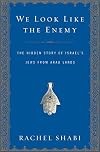
We Look Like the Enemy: The Hidden Story of Israel's Jews from Arab Lands
by Rachel Shabi
On This Page
Description
Mention Israel and internal conflict, and most people immediately think of the seemingly insoluble Palestinian problem. However, as Rachel Shabi explains in this acclaimed book, there is another crucial division within Israeli society: between Ashkenazi Jews, whose families come from Europe, and Sephardic or Mizrahi Jews, who come from the Arab countries of the Middle East. Herself from an Iraqi Jewish family, Shabi explores the history of this relationship, tracing it back to the first days show more of the new state of Israel. In a society desperate to identify itself with Europe, immigrants who spoke Arabic and followed Middle Eastern customs were seen as inferior. Sixty years later, such prejudices are still in force. As Shabi demonstrates, Mizrahis are strikingly less successful than Ashkenazis, condemned, often, to substandard education, low-quality housing and mockery for their accents, tastes and lifestyles. Not only does this damage Mizrahi lives and hopes; it also reflects a wider Israeli rejection of the Middle East and its culture that makes it impossible for Israel ever to become integrated within its own region.]] show lessTags
Recommendations


























Member Reviews
Racism exists in every country. This book documents that fact for Israel. Rachel Shani aims to document this racism that exists between the Ashkenazi (more western European jews) and the Mizrahi ( Jews of Arab descent, of which the author identifies herself). In the creation of the state of Israel the Mizrahi were the last to be settled and their treatment much resembled the concept of redlining in the united states. A practice in which members from an undesired population are forced to areas by a variety of means and then resources are drained from that. It's not a ghetto, but it acts that. In the united states those that were able to break out of these areas and end redlining could pass for white.
The author does an exellent job show more describing the situation. She creates scenarios that are controversial and effective, such as using the analogy of the creation of Israel in the Middle East is like sticking a European country there. It's also implied that if the country was not predominantly settled by Ashkensazi, would the treatment of Israel be different?
Some sections are a bit of a stretch. A bombing to scare Jews into leaving iraq for Israel by Jews came off thin.
Overall, the author does an excellent job dealing with discrimination in Israel, weaving personal stories with known historical incidents. The stories here are parellel to stories in the United States, the discrimination, the redlining, the protests and the riots. In the end an Arab Jew in Israel is the same as an Arab treated anywhere in a post 9/11.
It's a tricky topic considering the constant threat to Israel from Arab countries, but she handles it well. A story that needs to be told. show less
The author does an exellent job show more describing the situation. She creates scenarios that are controversial and effective, such as using the analogy of the creation of Israel in the Middle East is like sticking a European country there. It's also implied that if the country was not predominantly settled by Ashkensazi, would the treatment of Israel be different?
Some sections are a bit of a stretch. A bombing to scare Jews into leaving iraq for Israel by Jews came off thin.
Overall, the author does an excellent job dealing with discrimination in Israel, weaving personal stories with known historical incidents. The stories here are parellel to stories in the United States, the discrimination, the redlining, the protests and the riots. In the end an Arab Jew in Israel is the same as an Arab treated anywhere in a post 9/11.
It's a tricky topic considering the constant threat to Israel from Arab countries, but she handles it well. A story that needs to be told. show less
 This review was written for LibraryThing Early Reviewers.
This is not an easy book to read irrespective of the author's strong research, passion for the subject, and excellent story telling abilities. She also maintains a truly brutal degree of objectivity that is all the more amazing given all she, her family, and community lost because of 'a European solution to a European problem.' I tried to maintain objectivity as I read the book, but my anger and disgust reached almost uncontrollable levels and I was forced to stop reading for days at a time as I realized how many people have died and how many vibrant and creative cultures were destroyed all in the name of a solution that is as inherently wrong as the problems it seeks to correct. It is for this reason that this is a trenchant work that show more should be required reading for every political leader (irrespective of the kinds of groups they lead). Furthermore, organizations that influence the public's reading habits (such as Oprah, Reader's Digest, New York Times Review of Books etc.) should also strongly recommend it. I do not want to say anything more about its contents as I do not want to potential readers to think it is merely an anti-Zionist or pro-Zionist treatise. The author takes her and her readers past such knee-jerk reactions and seeks to address a much more fundamental question; How can these very different groups of people (who, in what is one of history's greatest ironies, are all Semites) whom history and geography have brought together find a way of living with each other? Because it is an inescapable fact that their destinies and, perhaps, that of the rest of the world, are completely entwined. show less
This review was written for LibraryThing Early Reviewers.It is obvious that Rachel Shabi is a talented journalist - her investigation into the history and experiences of Jews from Arab countries is well-written and thought provoking. She covers many areas of Israeli life from politics to music to language to religion, pointing out how Jews originating from Arab countries have been discriminated against in Israel. He stories are eye-opening in many ways and very sad in others. Naturally, one would like to believe that the (still) widespread anti-Semitism that exists in the world would cause Jews to band together, regardless of their individual national origin, but, as Shabi shows, this is not always true and her book is an enlightening and sometimes painful read.
A few problems with her exposé show more do exist. For example, she talks about how the "Mizrahi" accent of Hebrew is not the prevalent accent in Israel today and somehow makes this a part of her discrimination point, at the same time as she clearly shows how the creators meant for it to be the official accent. She concedes how difficult gutturals are to learn for people who have not had them as children and somehow means that this is the fault of the Ashkenazi community. I must admit, I am a bit bemused about her argument in this particular chapter and will concede that I may have completely misunderstood her, but, as far as I know, language is alive and will mold itself to the people's needs and people tend to do what is easiest for communicating, rather that trying to achieve some ideal goal of what "should be." I personally disagree with her statement that Hebrew in its current state is less than beautiful, but that's not a criticism of her point, it's rather a statement of my own love for the language.
The main problem, from my point of view, is her thesis that without the creation of Israel, Jews from Arab countries would have lived peacefully in their "home countries" to this very day. She may be right; had Israel never been created, countries like Iran may have been embracing their Jewish citizens (although, considering the situation of the world today, I doubt it), but she fails to empathize with the Jews who did need Israel - the Europeans and Russians who were (almost literally) exterminated at the time. She emphasizes how the Zionist movement only had Ashkenazi Jews in mind when they created what would become Israel and chides them for not taking Middle Eastern Jews into account, at the same time as she points out that Middle Eastern Jews at the time had no need for help - they were apparently living well where they were, which is clearly not true - all that's needed is to type "Farhud" into any search engine and it's clear that Shabi is wrong.
Shabi's motivation for her writing is clearly anger at how her people have been treated in Israel, but when making her passionate plea for justice she sometimes resorts to less than objective reasoning to get her point across. It's a shame, since in letting that anger color her judgment, she may alienate many readers who would have benefited from her tale. There's one thing she's absolutely right about, though: there is never a bad time to point out social injustice and a country's potential betterment of itself is always a good thing. show less
A few problems with her exposé show more do exist. For example, she talks about how the "Mizrahi" accent of Hebrew is not the prevalent accent in Israel today and somehow makes this a part of her discrimination point, at the same time as she clearly shows how the creators meant for it to be the official accent. She concedes how difficult gutturals are to learn for people who have not had them as children and somehow means that this is the fault of the Ashkenazi community. I must admit, I am a bit bemused about her argument in this particular chapter and will concede that I may have completely misunderstood her, but, as far as I know, language is alive and will mold itself to the people's needs and people tend to do what is easiest for communicating, rather that trying to achieve some ideal goal of what "should be." I personally disagree with her statement that Hebrew in its current state is less than beautiful, but that's not a criticism of her point, it's rather a statement of my own love for the language.
The main problem, from my point of view, is her thesis that without the creation of Israel, Jews from Arab countries would have lived peacefully in their "home countries" to this very day. She may be right; had Israel never been created, countries like Iran may have been embracing their Jewish citizens (although, considering the situation of the world today, I doubt it), but she fails to empathize with the Jews who did need Israel - the Europeans and Russians who were (almost literally) exterminated at the time. She emphasizes how the Zionist movement only had Ashkenazi Jews in mind when they created what would become Israel and chides them for not taking Middle Eastern Jews into account, at the same time as she points out that Middle Eastern Jews at the time had no need for help - they were apparently living well where they were, which is clearly not true - all that's needed is to type "Farhud" into any search engine and it's clear that Shabi is wrong.
Shabi's motivation for her writing is clearly anger at how her people have been treated in Israel, but when making her passionate plea for justice she sometimes resorts to less than objective reasoning to get her point across. It's a shame, since in letting that anger color her judgment, she may alienate many readers who would have benefited from her tale. There's one thing she's absolutely right about, though: there is never a bad time to point out social injustice and a country's potential betterment of itself is always a good thing. show less
This review was written for LibraryThing Early Reviewers.Rachel Shabi's We Look Like the Enemy: The Hidden Story of Israel's Jews from Arab Lands" is a well-written, well-researched yet imbalanced book. Her thesis is simple: Jews, who came from Arab countries, labeled as Mizrahis, are systematically treated as second class citizens in Israel. Her research pointed to many examples and areas of lives where, indeed Mizrahis are at an intentional or unintentional disadvantage. She also attempted to write a balanced book by pointing out the evidence that is contrary to her thesis. Unfortunately she didn't find the sought after balance, as she belittled her counterexamples to prove that suppression is systematic and central. In her desire to paint the whole, Ashkenazi society faulty at the show more class/ethnic/economic division in Israeli society, she stepped over the lines of objectivity
The book is well written at every level. The individual paragraphs are coherent and interesting to read. It helped that the author has many years of journalism experience. The chapters are also well put together and taken together cover a wide enough spectrum of life to support her thesis. The first chapter is a history lesson, how Zionism was and Ashkenazi idea and movement and consequently how they believe they founded modern Israel and how this gave them the right to suppress non-Ashkenazi culture. The chapter points out the problem with this pictures and how communal memory and social standards were created, often by force.
The second chapter tells of the history of Yemenite Jews in Israel and how stereotyping them was helped by media depiction. We also learn about the differential treatment they suffered in terms of access to land and about how their children were literally stolen from them when they immigrated to Israel. The third chapter shows what went wrong with the development or lack of, of "development towns." These towns, where mostly Mizrahis, often Moroccan and Tunisian origin lived, ended up getting much less government support than originally intended, because the money poured to the, mostly Ashkenazi settlements.
The fourth chapter covers the ancient and recent history of Iraqi Jews, through the examples of the village of Or Yehuda, where they form the majority. The author lingers a lot about the local museum and how veritable its exposition on Iraqi Jews is. The next chapter's focus is on language and pronunciation. All the old-timer popular media outlets and cultural institutions were founded by Ashkenazis and they set the tone of the voices heard. That excluded the guttural Mizrahi accent, which is closer to Arabic and to the original Semitic root of the language, than the harsh sounding, German influenced standard of Modern Hebrew.
Chapter six is about music and musicians, yet another territory where Mizrahis have to take a second role, because their affinity and integration into the wider Middle Eastern culture, which is based on Arabic one. By "second role" we mean less and later government support for classical music, as in classical Middle Eastern music is not thought and supported the same way as classical European music. Because of the complexity of Israel's diplomatic relationship with its neighbors the musicians playing this kind of music have fewer opportunities to play and travel.
The seventh chapter covers the disparities of the education system and rehashes the central idea of another book titled, "Not failures but made to fail." Through tracking the rise and fall and partial rise of Kedma--a network of schools, founded by sociologists where parents take a leading role and where the majority of the students are Mizrahi—the author shows how anti-segregation was and communal anger about disturbing social standards was used to shut down a successful school.
The penultimate chapter attacks the complex fields of politics, where in Israel the "racial card" is known as the "ethnic demon". It is used both by racists and by anti-racists, it both helped Mizrahi politicians and help to cause their decline. Raising the "ethnic demon" refers to the fear of talking about something, or doing something that may increase racist tendencies in society. At the same time, politicians of Mizrahi origin used the ethnic demon to explain if they failed at something, while their enemies used the slogan if they thought these politicians accomplished something solely on the merit of their skin color.
The final, ninth chapter proposes that the concept of being an Arab and a Jew should not be exclusive. Just like we have Hungarian Jews, French Jews and so on, the reality I that Jews from Arab lands are culturally Arabs and only Jews by their religion. It is a simplified version of the idea of course, but that was the essence I got.
I summarized the chapters so it would serve as a reminder of all the areas where Israeli society could improve integration and equal treatment of Mizrahis. Shabi did a great job of covering all of these. Her notes are extensive and scholarly: I was happy to see that she provided references, so we could check out her sources. But I would have preferred even more as there were several places where she just wrote "studies prove", without mentioning what studies. Nevertheless her year of researching and writing the book was well spent as the result proves it.
As a left-leaning, Jew of mostly Ahskenazi origin it was difficult to read this book, particularly the early parts. The beginning was even more heavily influenced by the author's sense of injustice about what happened to Palestinians and Mizrahis as the rest. While I am sympathetic to their causes as I have empathy for all suffering, but not at the expense of seriously harming my tribe. The emotions her text stirred ni me made me want to put down the book. I am glad that I didn't, because at the end I learned a lot about Israeli society and it was interesting from a sociological point of view as well. I just wish that she had opted to be more objective and less provoking. But I understand that Shabi, being an Iraqi Jew, who lives in the UK, had her own emotions to write out. show less
The book is well written at every level. The individual paragraphs are coherent and interesting to read. It helped that the author has many years of journalism experience. The chapters are also well put together and taken together cover a wide enough spectrum of life to support her thesis. The first chapter is a history lesson, how Zionism was and Ashkenazi idea and movement and consequently how they believe they founded modern Israel and how this gave them the right to suppress non-Ashkenazi culture. The chapter points out the problem with this pictures and how communal memory and social standards were created, often by force.
The second chapter tells of the history of Yemenite Jews in Israel and how stereotyping them was helped by media depiction. We also learn about the differential treatment they suffered in terms of access to land and about how their children were literally stolen from them when they immigrated to Israel. The third chapter shows what went wrong with the development or lack of, of "development towns." These towns, where mostly Mizrahis, often Moroccan and Tunisian origin lived, ended up getting much less government support than originally intended, because the money poured to the, mostly Ashkenazi settlements.
The fourth chapter covers the ancient and recent history of Iraqi Jews, through the examples of the village of Or Yehuda, where they form the majority. The author lingers a lot about the local museum and how veritable its exposition on Iraqi Jews is. The next chapter's focus is on language and pronunciation. All the old-timer popular media outlets and cultural institutions were founded by Ashkenazis and they set the tone of the voices heard. That excluded the guttural Mizrahi accent, which is closer to Arabic and to the original Semitic root of the language, than the harsh sounding, German influenced standard of Modern Hebrew.
Chapter six is about music and musicians, yet another territory where Mizrahis have to take a second role, because their affinity and integration into the wider Middle Eastern culture, which is based on Arabic one. By "second role" we mean less and later government support for classical music, as in classical Middle Eastern music is not thought and supported the same way as classical European music. Because of the complexity of Israel's diplomatic relationship with its neighbors the musicians playing this kind of music have fewer opportunities to play and travel.
The seventh chapter covers the disparities of the education system and rehashes the central idea of another book titled, "Not failures but made to fail." Through tracking the rise and fall and partial rise of Kedma--a network of schools, founded by sociologists where parents take a leading role and where the majority of the students are Mizrahi—the author shows how anti-segregation was and communal anger about disturbing social standards was used to shut down a successful school.
The penultimate chapter attacks the complex fields of politics, where in Israel the "racial card" is known as the "ethnic demon". It is used both by racists and by anti-racists, it both helped Mizrahi politicians and help to cause their decline. Raising the "ethnic demon" refers to the fear of talking about something, or doing something that may increase racist tendencies in society. At the same time, politicians of Mizrahi origin used the ethnic demon to explain if they failed at something, while their enemies used the slogan if they thought these politicians accomplished something solely on the merit of their skin color.
The final, ninth chapter proposes that the concept of being an Arab and a Jew should not be exclusive. Just like we have Hungarian Jews, French Jews and so on, the reality I that Jews from Arab lands are culturally Arabs and only Jews by their religion. It is a simplified version of the idea of course, but that was the essence I got.
I summarized the chapters so it would serve as a reminder of all the areas where Israeli society could improve integration and equal treatment of Mizrahis. Shabi did a great job of covering all of these. Her notes are extensive and scholarly: I was happy to see that she provided references, so we could check out her sources. But I would have preferred even more as there were several places where she just wrote "studies prove", without mentioning what studies. Nevertheless her year of researching and writing the book was well spent as the result proves it.
As a left-leaning, Jew of mostly Ahskenazi origin it was difficult to read this book, particularly the early parts. The beginning was even more heavily influenced by the author's sense of injustice about what happened to Palestinians and Mizrahis as the rest. While I am sympathetic to their causes as I have empathy for all suffering, but not at the expense of seriously harming my tribe. The emotions her text stirred ni me made me want to put down the book. I am glad that I didn't, because at the end I learned a lot about Israeli society and it was interesting from a sociological point of view as well. I just wish that she had opted to be more objective and less provoking. But I understand that Shabi, being an Iraqi Jew, who lives in the UK, had her own emotions to write out. show less
This review was written for LibraryThing Early Reviewers.Rachel Shabi's book is an intimate analysis of a complex racial and cultural situation surrounding Israeli Jews of mostly Arabic lineages, including the many salient political, social, pedagogical, economic, and cultural challenges they have faced and continue to face.
The work is rather fascinating, adding for me a much richer view of the problems facing Israelis than I had understood from either what I have read about Zionist/Anti-Zionist internal conflicts in Israel or my understanding of Jewish history and heritage. The work is quite easy and quick to read and digest, and not even a cursory knowledge of many of the important figures is really needed to get the gist of what Shabi is trying to describe. Shabi is clearly quite show more sympathetic to the Mizrahi (the term she prefers for the non-Ashkenazi Jewish Israelis), but is not overly hostile to other groups discussed.
For the most part, the information presented seems to be presented fairly, if not in a completely dispassionate manner. However, many supportive bits of evidence, especially in the middle of the book, are quite poor. These range from many accusatory « some people even say... » statements, uncited statistics, generalizations about people and values, oversimplified or questionable attributions of causes and motives, and implications through counterfactual examples or questions when evidence seems not to be available or supportive. That said, the book still presents a great deal of better-supported facts and sources of relevant and seemingly reliable information that still do well enough in making Shabi's case about the rather troubling past and still (though slightly less-so) troubling circumstances surrounding the treatment of Mizrahis.
The book could have been made a bit more solid, and there seemed also to be parts wherein the author undermined her own case by attempting to make strong claims on seemingly opposing sides of an issue without distinguishing how these two claims are not problematic (for instance, to put it rather crudely, how claims about Mizrahi music's importance and popularity don't undermine the position that this music is marginalized and ignored; answers may be implied by the book, but they don't seem to me adequate to allow the author to make both claims without further explanation). Otherwise, the book was quite good. I would love to hear a more detailed follow-up discussing either the specific nature of religious/cultural differences between Israeli Mizrahis non-Mizrahis or a bit deeper analysis (àla Jonathan Kozol, perhaps) of the educational cituation! show less
The work is rather fascinating, adding for me a much richer view of the problems facing Israelis than I had understood from either what I have read about Zionist/Anti-Zionist internal conflicts in Israel or my understanding of Jewish history and heritage. The work is quite easy and quick to read and digest, and not even a cursory knowledge of many of the important figures is really needed to get the gist of what Shabi is trying to describe. Shabi is clearly quite show more sympathetic to the Mizrahi (the term she prefers for the non-Ashkenazi Jewish Israelis), but is not overly hostile to other groups discussed.
For the most part, the information presented seems to be presented fairly, if not in a completely dispassionate manner. However, many supportive bits of evidence, especially in the middle of the book, are quite poor. These range from many accusatory « some people even say... » statements, uncited statistics, generalizations about people and values, oversimplified or questionable attributions of causes and motives, and implications through counterfactual examples or questions when evidence seems not to be available or supportive. That said, the book still presents a great deal of better-supported facts and sources of relevant and seemingly reliable information that still do well enough in making Shabi's case about the rather troubling past and still (though slightly less-so) troubling circumstances surrounding the treatment of Mizrahis.
The book could have been made a bit more solid, and there seemed also to be parts wherein the author undermined her own case by attempting to make strong claims on seemingly opposing sides of an issue without distinguishing how these two claims are not problematic (for instance, to put it rather crudely, how claims about Mizrahi music's importance and popularity don't undermine the position that this music is marginalized and ignored; answers may be implied by the book, but they don't seem to me adequate to allow the author to make both claims without further explanation). Otherwise, the book was quite good. I would love to hear a more detailed follow-up discussing either the specific nature of religious/cultural differences between Israeli Mizrahis non-Mizrahis or a bit deeper analysis (àla Jonathan Kozol, perhaps) of the educational cituation! show less
This review was written for LibraryThing Early Reviewers.Rachel Shabi’s book, We Look Like the Enemy, contains two themes. The first theme asserts that the Palestinians are victims of the state of Israel, a position espoused by revisionist historians such as Benny Morris and Ilan Pappé. The second theme presents a portrait of persecution of Sephardi * Jews by the Ashenazic holders of power in the state of Israel.
What is the connection between these two themes? Rachel Shabi asserts that prevailing view of the Israeli ruling elite is that Arabs are a primitive people and that the darker coloring and cultural preferences of Sephardi Jews triggers associations with Arabs in the minds of the Israeli government.
On p. 11 in a footnote, Shabi states: “Recently Israeli “New Historians” such show more as Ilan Pappé have documented that the expulsion of Palestinians was official policy.” Ephraim Karsh, author of Fabricating Israeli History—The ‘New Historians’, says that “For years Pappé has proudly presented himself as a staunch opponent of Israel’s existence.” In the introduction to his book, Karsh states: “To set my mind at rest I looked up the entire documentation used by Morris with regard to the Zionist position regarding the expulsion of the Palestinians to the neighbouring Arab states, or ‘transfer’ as it is commonly known, to which Ben-Gurion’s letter allegedly referred. To my bewilderment I discovered that there was scarcely a single document quoted by Morris which had not been rewritten in a way that distorted its original meaning altogether.”
Rachel Shabi’s book has two flaws. Relying on the ‘New Historians’ for the first theme mars the credibility of her second theme. The other flaw is the essence of anger which permeates nearly every page. That said, the book is beautifully written, with many colorful turns of phrase and treats a subject that should be explored.
*Rachel Shabi prefers the use of Mizrachi to describe Jews who came from North African and Middle Eastern countries such as Iraq, Morocco, Turkey and others, rather than the term Sephardi, which literally means from Spain. Since Sephardi is more commonly used, I have used this term in the review. show less
What is the connection between these two themes? Rachel Shabi asserts that prevailing view of the Israeli ruling elite is that Arabs are a primitive people and that the darker coloring and cultural preferences of Sephardi Jews triggers associations with Arabs in the minds of the Israeli government.
On p. 11 in a footnote, Shabi states: “Recently Israeli “New Historians” such show more as Ilan Pappé have documented that the expulsion of Palestinians was official policy.” Ephraim Karsh, author of Fabricating Israeli History—The ‘New Historians’, says that “For years Pappé has proudly presented himself as a staunch opponent of Israel’s existence.” In the introduction to his book, Karsh states: “To set my mind at rest I looked up the entire documentation used by Morris with regard to the Zionist position regarding the expulsion of the Palestinians to the neighbouring Arab states, or ‘transfer’ as it is commonly known, to which Ben-Gurion’s letter allegedly referred. To my bewilderment I discovered that there was scarcely a single document quoted by Morris which had not been rewritten in a way that distorted its original meaning altogether.”
Rachel Shabi’s book has two flaws. Relying on the ‘New Historians’ for the first theme mars the credibility of her second theme. The other flaw is the essence of anger which permeates nearly every page. That said, the book is beautifully written, with many colorful turns of phrase and treats a subject that should be explored.
*Rachel Shabi prefers the use of Mizrachi to describe Jews who came from North African and Middle Eastern countries such as Iraq, Morocco, Turkey and others, rather than the term Sephardi, which literally means from Spain. Since Sephardi is more commonly used, I have used this term in the review. show less
This review was written for LibraryThing Early Reviewers.I found this one a struggle to stay with. The author's research and effort were clear throughout, and she is a skillful writer, but the anger that came through in her voice, justified as it may be, distracted from the book. The fiery tone took from it what could otherwise have been a better book. Just the same, for a person not terribly familiar with Israeli society, I feel more educated to have been exposed to the problems Shabi describes.
This review was written for LibraryThing Early Reviewers.Members
- Recently Added By
Author Information

2 Works 109 Members
Rachel Shabi was born in Israel to Iraqi Jewish parents and grew up in England. Her journalism has been published in a variety of national and international newspapers, including the Guardian and the London Times. She also has been published in the English Al Jazeera online, the National newspaper (United Arab Emirates), Jane's Intelligence show more Digest, and Salon.com. This is her first book. show less
Awards and Honors
Common Knowledge
- Canonical title*
- Wir sehen aus wie der Feind
- Original title
- We look like the enemy
- Original publication date
- 2008
- Important places
- Israel
- Dedication*
- Für Sami "Onu" Daniel
Möge sein Andenken zum Segen sein - First words*
- Eigentlich sind es die Datteln, die ihre irakische Herkunft verraten - eine Gewohnheit, die so fest in ihnen verwurzelt ist wie die arabische Sprache und Musik, die arabische Lebensweise.
- Last words*
- (Click to show. Warning: May contain spoilers.)Bei uns daheim, meine ich.
- Original language*
- Englisch
*Some information comes from Common Knowledge in other languages. Click "Edit" for more information.
Classifications
- Genres
- Nonfiction, Anthropology, General Nonfiction, Biography & Memoir, Religion & Spirituality, History
- DDC/MDS
- 305.892 — Social sciences Social sciences, sociology & anthropology Groups of people Ethnic and national groups Other ethnic and national groups Semites
- LCC
- DS113.8 .S4 .S53 — History of Europe, Asia, Africa and Oceania Asia History of Asia Israel (Palestine). The Jews Ethnography. Tribes of Israel
- BISAC
Statistics
- Members
- 73
- Popularity
- 429,282
- Reviews
- 9
- Rating
- (3.09)
- Languages
- English, German
- Media
- Paper, Ebook
- ISBNs
- 6
- ASINs
- 2