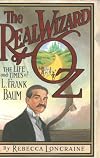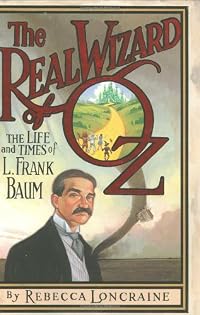
The Real Wizard of Oz: The Life and Times of L. Frank Baum
by Rebecca Loncraine
On This Page
Description
Explores the life of the unconventional author and entrepreneur, examining the era in which he lived and its influence on his work.Tags
Recommendations










Member Reviews
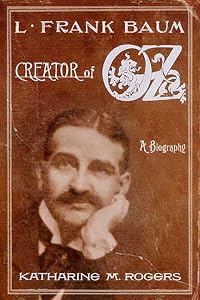
A few books have been written on L. Frank Baum in the past. Most of them assume some familiarity with his life and work, with the authors perhaps recognizing that much of their reading audience will be "Oz fans." This book is the first I've seen in the celebrity biography vein, attempting to appeal to the casual reader by couching Baum's life in his culture and times. That it is a populist book is pretty much apparent from the cover: it's designed to catch your eye and tweak some familiarity with the imagery and typeface you find on other "Wizard of Oz"-oriented merchandise.
The problem with a project like this, to a large degree, is that Baum's life isn't all that remarkable. It's certainly in no way sensational. There is no potential show more scandal attached to Baum, unlike Lewis Carroll or Hans Christian Andersen; he didn't have any nebulous health issues, he wasn't gay, and he never secluded himself from the public. He was a natural-born storyteller, a bit of a dreamer, and he was terrible with money. That's...pretty much it. As a result, Rebecca Loncraine doesn't have any marketable crises or issues around which to revolve her 300-page book, so she makes up for it by skewing her material in two different ways. Both of them are treading on thin ice.
The first zeros in on Baum's sometimes contradictory but generally progressive ideas, emphasizing the one aspect that people today might find extraordinary: theosophism. As an adult Baum was a theosophist, somewhere between agnostic and New Ager, who believed in elemental spirits, a non-specific God who could be found in every living thing, and elements of reincarnation. That's a fascinating subject, and I'm glad Loncraine chose to explain theosophism out and offer some insight into Baum's spiritual mindset. However, from the very outset of the book, she places her story in the context of spiritualism. She starts the book not with Baum's family, but the Fox sisters, who claimed to be mediums. Baum probably never had any contact with them and may not have given them more thought than most people give a movie star. Yet Loncraine insists on emphasizing every childhood death in his family, every evidence that he or his wife or his mother-in-law were interested in seances or mediums, with the implication that it inspired him (or haunted him) to create fantasy stories. I've just never seen any evidence that L. Frank Baum was any more or less interested in spirits than any other man of the early 1900s - when spiritualism was basically a craze - and more to the point, Loncraine never provides that evidence herself. Almost everything she posits is broad and hypothetical. Yes, it could be that Baum directed an interest in spirits or a fear of child death into his stories. It might also be that he just had a really big and active imagination.
At very least, the spiritualism stuff is interesting, if tangential. Loncraine's second hobby horse is markedly less original. She is very, very interested in trying to find "the inspiration" for "The Wonderful Wizard of Oz," something many people have tried and failed to do. Loncraine leaves no potential yellow brick unturned, suggesting that the low-budget opulence of the 1893 Chicago World's Fair inspired the sham of "Wizard"'s Emerald City, that a childhood dream became the Scarecrow, and that Civil War amputees became the Tin Woodman. It's all possible, of course, but Loncraine doesn't offer any quotes to add plausibility to her argument: she just throws these theories out there for readers to take at face value. Similarly, she makes all sorts of assumptions about Baum's mindset and mood in general; at one point, she names "two" major deaths in Baum's world in 1898. One is his mother-and-law, which makes perfect sense, and the other...is Lewis Carroll. Lewis Carroll, whom Baum never met. Lewis Carroll, who has only featured in two prior paragraphs in the book. Lewis Carroll, who is only mentioned in Baum's own words in the most generally respectful of terms. Okay, so Baum read Carroll. Was he necessarily one of his heroes? Would he have greeted news of his death with anything more than, "That's too bad"? We don't know. We are given no evidence one way or another in this book.
I have now spent a lot of time harping on Loncraine's biography, but I feel forced to do so because her tangents are so terribly, terribly distracting. I can't decide if the book was written quickly or just edited very poorly, but either way, it's a frustrating read. As soon as you get engrossed in a good, objective section, you get pulled out by a strong dose of authorial influence and pushed in a direction it may not make sense to go. I'm glad I read "The Real Wizard of Oz," but I really do wish the author had chosen to treat her subject with a lighter hand. Not every man lives a sensationalized life, and not every molehill need be made into a mountain. show less
The problem with a project like this, to a large degree, is that Baum's life isn't all that remarkable. It's certainly in no way sensational. There is no potential show more scandal attached to Baum, unlike Lewis Carroll or Hans Christian Andersen; he didn't have any nebulous health issues, he wasn't gay, and he never secluded himself from the public. He was a natural-born storyteller, a bit of a dreamer, and he was terrible with money. That's...pretty much it. As a result, Rebecca Loncraine doesn't have any marketable crises or issues around which to revolve her 300-page book, so she makes up for it by skewing her material in two different ways. Both of them are treading on thin ice.
The first zeros in on Baum's sometimes contradictory but generally progressive ideas, emphasizing the one aspect that people today might find extraordinary: theosophism. As an adult Baum was a theosophist, somewhere between agnostic and New Ager, who believed in elemental spirits, a non-specific God who could be found in every living thing, and elements of reincarnation. That's a fascinating subject, and I'm glad Loncraine chose to explain theosophism out and offer some insight into Baum's spiritual mindset. However, from the very outset of the book, she places her story in the context of spiritualism. She starts the book not with Baum's family, but the Fox sisters, who claimed to be mediums. Baum probably never had any contact with them and may not have given them more thought than most people give a movie star. Yet Loncraine insists on emphasizing every childhood death in his family, every evidence that he or his wife or his mother-in-law were interested in seances or mediums, with the implication that it inspired him (or haunted him) to create fantasy stories. I've just never seen any evidence that L. Frank Baum was any more or less interested in spirits than any other man of the early 1900s - when spiritualism was basically a craze - and more to the point, Loncraine never provides that evidence herself. Almost everything she posits is broad and hypothetical. Yes, it could be that Baum directed an interest in spirits or a fear of child death into his stories. It might also be that he just had a really big and active imagination.
At very least, the spiritualism stuff is interesting, if tangential. Loncraine's second hobby horse is markedly less original. She is very, very interested in trying to find "the inspiration" for "The Wonderful Wizard of Oz," something many people have tried and failed to do. Loncraine leaves no potential yellow brick unturned, suggesting that the low-budget opulence of the 1893 Chicago World's Fair inspired the sham of "Wizard"'s Emerald City, that a childhood dream became the Scarecrow, and that Civil War amputees became the Tin Woodman. It's all possible, of course, but Loncraine doesn't offer any quotes to add plausibility to her argument: she just throws these theories out there for readers to take at face value. Similarly, she makes all sorts of assumptions about Baum's mindset and mood in general; at one point, she names "two" major deaths in Baum's world in 1898. One is his mother-and-law, which makes perfect sense, and the other...is Lewis Carroll. Lewis Carroll, whom Baum never met. Lewis Carroll, who has only featured in two prior paragraphs in the book. Lewis Carroll, who is only mentioned in Baum's own words in the most generally respectful of terms. Okay, so Baum read Carroll. Was he necessarily one of his heroes? Would he have greeted news of his death with anything more than, "That's too bad"? We don't know. We are given no evidence one way or another in this book.
I have now spent a lot of time harping on Loncraine's biography, but I feel forced to do so because her tangents are so terribly, terribly distracting. I can't decide if the book was written quickly or just edited very poorly, but either way, it's a frustrating read. As soon as you get engrossed in a good, objective section, you get pulled out by a strong dose of authorial influence and pushed in a direction it may not make sense to go. I'm glad I read "The Real Wizard of Oz," but I really do wish the author had chosen to treat her subject with a lighter hand. Not every man lives a sensationalized life, and not every molehill need be made into a mountain. show less
This book is the biography of Wizard of Oz creator, L. Frank Baum. I very much enjoyed this book. I found Baum’s life extremely thought-provoking and as I read the book I found that I was routing him on! The book is enhanced by eight pages of photos (I wish there were more) that added a personal glimpse into Baum’s biography.
I have read that some of the book’s other reviewers did not like how much of the book was devoted to what was happening around Baum, i.e. thoughts and customs of the time in which he lived. But I found this added information very relevant to the biography. For example, if you read a story about a boy that wanted to explore the universe, it would be very important to know if they grew up in the 1930s-40s show more dreaming of being a spaceman like Flash and Buck, or in the 1960s-70s dreaming of being an astronaut like Neil and Buzz. Likewise, L. Frank Baum grew up in a time that greatly affected his stories. I think the author used the proper mix of personal story and American history to form the perfect blend! show less
I have read that some of the book’s other reviewers did not like how much of the book was devoted to what was happening around Baum, i.e. thoughts and customs of the time in which he lived. But I found this added information very relevant to the biography. For example, if you read a story about a boy that wanted to explore the universe, it would be very important to know if they grew up in the 1930s-40s show more dreaming of being a spaceman like Flash and Buck, or in the 1960s-70s dreaming of being an astronaut like Neil and Buzz. Likewise, L. Frank Baum grew up in a time that greatly affected his stories. I think the author used the proper mix of personal story and American history to form the perfect blend! show less
Almost everyone in the United States knows the story of the Wizard of Oz. Whether you’re familiar with it from TV reruns of the 1939 MGM classic or from reading the books, chances are you’re well acquainted with Dorothy and her quest to follow the Yellow Brick Road.
What you may not know is that like Dorothy, her creator, L. Frank Baum, experienced a tornado when he was young. Or that Baum’s interest in spiritualism informed his creation of the Scarecrow, the Tin Man and the Cowardly Lion.
In his Oz books, Baum clearly followed the old adage: write what you know. He may not have physically been to Oz and walked through the Emerald City, but he used everything from his life to inform his creations. Rebecca Loncraine show more (www.rebeccaloncraine.come) takes a detailed look at Baum’s life and its ties to his fiction in The Real Wizard of Oz: The Life and Times of L. Frank Baum.
She begins eight years before Baum’s birth with a glimpse at the growing fad for mediums who could contact the dead and the effects of a diphtheria epidemic on Baum’s family. Her attention to detail is great, and a reader comes away from the early parts of the biography with a full understanding of growing up in the latter half of the 19th century. At times, the level of detail can frustrate a reader, who wants to get to the good stuff, when Baum comes into his own and begins writing.
Patience is a virtue as each chapter detailing Baum’s young life sets the stage for the next chapter. His family newspaper, created when he was a child, holds the seeds of his later fiction. As does his interest in theater. In 1882, Baum married Maud Gage. His close ties with her family would lead him to follow his brother-in-law to Dakota Territory where he experienced droughts and conditions similar to those Dorothy Gale would face before her fateful tornado ride. He also wrote about reports of Sitting Bull’s ghost dancers in his Aberdeen Saturday pioneer, a newspaper he acquired in 1889.
Baum began working on The Wizard of Oz in 1898. He drew on his memories of Civil War amputees, his fear of scarecrows, the Chicago World’s Fair and a powerful imagination to create his world. His niece, Dorothy Gage, was born one month after Baum started writing. She would die five months later.
Once The Wizard of Oz is published, Loncraine’s book picks up momentum. Oz becomes a incredible success, allowing Baum to write other fairy tales and to further explore Oz. He creates a stage musical of the book, which dazzled audiences with its use of electric light and stage trickery.
Financially successful, Baum continues the Oz series, using the books to create a world that should be, rather than the world rapidly growing in the 20th century. Uncle Henry and Auntie Em face bankruptcy in an Oz sequel so Dorothy arranges for them live in a utopian Oz.
Loncraine follows Baum through the wild success of Oz and his alter ego pseudonyms, his financial highs and lows, all the while emphasizing Baum’s love of children and childhood and his dedication to imagination. The book continues past his death in 1918to Maud’s attendance at the 1939 MGM premiere.
The Real Wizard of Oz isn’t just a biography of L. Frank Baum, but a biography of Oz. The two are intertwined, perhaps just as Baum would have it be. show less
What you may not know is that like Dorothy, her creator, L. Frank Baum, experienced a tornado when he was young. Or that Baum’s interest in spiritualism informed his creation of the Scarecrow, the Tin Man and the Cowardly Lion.
In his Oz books, Baum clearly followed the old adage: write what you know. He may not have physically been to Oz and walked through the Emerald City, but he used everything from his life to inform his creations. Rebecca Loncraine show more (www.rebeccaloncraine.come) takes a detailed look at Baum’s life and its ties to his fiction in The Real Wizard of Oz: The Life and Times of L. Frank Baum.
She begins eight years before Baum’s birth with a glimpse at the growing fad for mediums who could contact the dead and the effects of a diphtheria epidemic on Baum’s family. Her attention to detail is great, and a reader comes away from the early parts of the biography with a full understanding of growing up in the latter half of the 19th century. At times, the level of detail can frustrate a reader, who wants to get to the good stuff, when Baum comes into his own and begins writing.
Patience is a virtue as each chapter detailing Baum’s young life sets the stage for the next chapter. His family newspaper, created when he was a child, holds the seeds of his later fiction. As does his interest in theater. In 1882, Baum married Maud Gage. His close ties with her family would lead him to follow his brother-in-law to Dakota Territory where he experienced droughts and conditions similar to those Dorothy Gale would face before her fateful tornado ride. He also wrote about reports of Sitting Bull’s ghost dancers in his Aberdeen Saturday pioneer, a newspaper he acquired in 1889.
Baum began working on The Wizard of Oz in 1898. He drew on his memories of Civil War amputees, his fear of scarecrows, the Chicago World’s Fair and a powerful imagination to create his world. His niece, Dorothy Gage, was born one month after Baum started writing. She would die five months later.
Once The Wizard of Oz is published, Loncraine’s book picks up momentum. Oz becomes a incredible success, allowing Baum to write other fairy tales and to further explore Oz. He creates a stage musical of the book, which dazzled audiences with its use of electric light and stage trickery.
Financially successful, Baum continues the Oz series, using the books to create a world that should be, rather than the world rapidly growing in the 20th century. Uncle Henry and Auntie Em face bankruptcy in an Oz sequel so Dorothy arranges for them live in a utopian Oz.
Loncraine follows Baum through the wild success of Oz and his alter ego pseudonyms, his financial highs and lows, all the while emphasizing Baum’s love of children and childhood and his dedication to imagination. The book continues past his death in 1918to Maud’s attendance at the 1939 MGM premiere.
The Real Wizard of Oz isn’t just a biography of L. Frank Baum, but a biography of Oz. The two are intertwined, perhaps just as Baum would have it be. show less
The author of this book does a great job of intertwining what is going on in the world during the time of L. Frank Baum. This is important as the events shaped his mind when he would later write the Wizard of Oz series. It seems as if the author of this book really did her research and I appreciate that. My biggest peeve of the book is that sometimes it begins to sound more like a college dissertation instead of fun, interesting book. But besides that, job well done!
An enjoyable reading of the life and times of America's first writer of fairy tales. I found Ms. Loncraine work to be most comprehensive as she analyzed Baum's life within the context of his times and then connected suggested influences to his volume of work. The only real stick I have (a very small one) is she does seem to stretch a bit when matching influences to his written stories. I recommend this work to anyone who enjoys fantasy or is interested in the world in the late 1800's or early 1900's.
(Reprinted from the Chicago Center for Literature and Photography [cclapcenter.com]. I am the original author of this essay, as well as the owner of CCLaP; it is not being reprinted illegally.)
I'm sure there's a fascinating biography to eventually be written about L. Frank Baum, author of the Oz series of children's books, because Baum was a fascinating guy -- a failed theatre veteran from the dawn of Broadway-style musicals, he cycled through a whole series of typical late-1800s entrepreneurial jobs (chicken breeder, frontier dry-goods dealer, newspaper editor) without much luck, before finally finding random fame and fortune as an author of juvenilia, immediately establishing a dysfunctional symbiotic relationship between upper-class show more trappings and Oz hatred that he then spent the rest of his life trying to rid himself of. But unfortunately The Real Wizard of Oz by British journalist Rebecca Loncraine is not that fascinating biography, namely because she falls too heavily into the "NPR trap" that plagues so many contemporary tomes; that in her desire to create a full-length book out of a novella's worth of material, so that she can go hit the intellectual talk-show circuit, she ends up writing a manuscript that can only be described as half-fluff, filled with the kind of barely causal "what if" digressions that make most lovers of smart biographies roll their eyes in annoyance. (Baum lived for a time in North Dakota, where there are a lot of tornados! He also lived for a time in Chicago, which used to possess a few streets made out of bricks that were slightly yellow-colored! Haahhh? Get it? HAAAAHHHH?!)
It's telling, I think, that Baum doesn't even reach adulthood in this overly padded book until a third of the way in, with that first third seemingly existing only to make the point that spiritualism and childhood deaths were a regular part of rural life in the 1800s, and that such things obviously had an effect on why Baum wrote the Oz books the way he did; the whole book feels like this, to tell you the truth, filled with obvious observations to mask the fact that there's simply not enough legitimately interesting things about Baum's life to fill a 300-page manuscript, and sometimes featuring nearly entire chapters of digressions about such barely connected topics as the 1893 Chicago World's Fair. Although competently written, you should do yourself a favor anyway and simply read Baum's Wikipedia entry instead, and save yourself several days of easily skippable fluff.
Out of 10: 6.7 show less
I'm sure there's a fascinating biography to eventually be written about L. Frank Baum, author of the Oz series of children's books, because Baum was a fascinating guy -- a failed theatre veteran from the dawn of Broadway-style musicals, he cycled through a whole series of typical late-1800s entrepreneurial jobs (chicken breeder, frontier dry-goods dealer, newspaper editor) without much luck, before finally finding random fame and fortune as an author of juvenilia, immediately establishing a dysfunctional symbiotic relationship between upper-class show more trappings and Oz hatred that he then spent the rest of his life trying to rid himself of. But unfortunately The Real Wizard of Oz by British journalist Rebecca Loncraine is not that fascinating biography, namely because she falls too heavily into the "NPR trap" that plagues so many contemporary tomes; that in her desire to create a full-length book out of a novella's worth of material, so that she can go hit the intellectual talk-show circuit, she ends up writing a manuscript that can only be described as half-fluff, filled with the kind of barely causal "what if" digressions that make most lovers of smart biographies roll their eyes in annoyance. (Baum lived for a time in North Dakota, where there are a lot of tornados! He also lived for a time in Chicago, which used to possess a few streets made out of bricks that were slightly yellow-colored! Haahhh? Get it? HAAAAHHHH?!)
It's telling, I think, that Baum doesn't even reach adulthood in this overly padded book until a third of the way in, with that first third seemingly existing only to make the point that spiritualism and childhood deaths were a regular part of rural life in the 1800s, and that such things obviously had an effect on why Baum wrote the Oz books the way he did; the whole book feels like this, to tell you the truth, filled with obvious observations to mask the fact that there's simply not enough legitimately interesting things about Baum's life to fill a 300-page manuscript, and sometimes featuring nearly entire chapters of digressions about such barely connected topics as the 1893 Chicago World's Fair. Although competently written, you should do yourself a favor anyway and simply read Baum's Wikipedia entry instead, and save yourself several days of easily skippable fluff.
Out of 10: 6.7 show less
Interesting book. So many curious coincidences of firsts occur, whether important or not you may judge, but L Frank Baum's first published book Mother Goose Rhymes in Prose, Illustrated by Maxfield Parrish as HIS first published Illustrations in a book and the publisher lived or owned the first house built by Frank Lloyd Wright, then later the Wizard of Oz movie classic I believe was the first to introduce color.
Interesting tidbits for such a well loved author and story and I think I have seen the 1897 true first edition printed online for as much as $10,000 in the past.
There is more in this book than this but that caught my attention.
Interesting tidbits for such a well loved author and story and I think I have seen the 1897 true first edition printed online for as much as $10,000 in the past.
There is more in this book than this but that caught my attention.
Members
- Recently Added By
Published Reviews
ThingScore 50
The book veers off on tangents and presents theories on Baum's experiences and beliefs that seem only vaguely backed up. There is also surprisingly little material from Baum himself.
added by Shortride
Ms. Loncraine, a British writer trying to describe the American landscape, can be uninspired at times... But she does a solid job of connecting dots between Baum’s life and his inventions
added by Shortride
British journalist Loncraine paints a touching portrait of the couple's mutual devotion, but she has a more uncertain grasp on the distinctively American nature of Baum's zigzagging trajectory, which she writes about with a maddening mix of shrewdness and overstatement. She's capable of perceptively spotlighting things that obviously lingered in Baum's creative memory... [but] she's also prone show more to bizarre generalizations. show less
added by Shortride
Author Information

2 Works 158 Members
Some Editions
Common Knowledge
- Original publication date
- 2009
- People/Characters
- L. Frank Baum; Benjamin Baum (father of L. Frank Baum); Maud Gage Baum; Dorothy Gale; Matilda Joslyn Gage
- Important places
- Aberdeen, South Dakota, USA; Macatawa Park, Michigan, USA; Oz
- Related movies
- The Wizard of Oz (1939 | IMDb)
- Epigraph
- "In a utilitarian age, of all other times, it is a matter of grave importance that Fairy Tales should be respected."
- Charles Dickens
"Stunt, dwarf, or destroy the imagination of a child and you have taken away its chances of success in life. Imagination transforms the commonplace into the great and creates thenew out of the old."
- L. Frank Baum - Dedication
- To Ben
- First words
- Introduction
ON TELLING THE LIFE STORY OF A STORYTELLER
In my memory, there isn't a time before The Wizard of Oz. - Last words
- (Click to show. Warning: May contain spoilers.)Baum's imagination had been reborn in the film, as it would be over and over again in the later twentieth century and beyond.
- Blurbers
- Garner, James Finn; Maslin, Janet
Classifications
- Genres
- Biography & Memoir, Literature Studies and Criticism, Fiction and Literature
- DDC/MDS
- 813.4 — Literature & rhetoric American literature in English American fiction in English Later 19th Century 1861-1900
- LCC
- PS3503 .A923 .Z74 — Language and Literature American literature American literature Individual authors 1900-1960
- BISAC
Statistics
- Members
- 135
- Popularity
- 241,357
- Reviews
- 7
- Rating
- (3.68)
- Languages
- English
- Media
- Paper, Audiobook, Ebook
- ISBNs
- 5
- ASINs
- 3