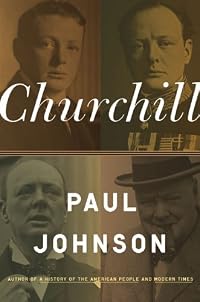
Churchill
by Paul Johnson
On This Page
Description
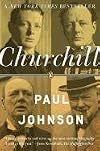
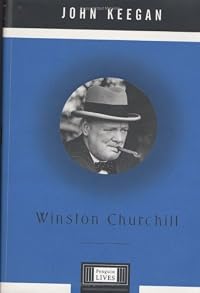
Acclaimed historian Paul Johnson shows how Churchill's immense adaptability combined with his natural pugnacity to make him a formidable leader for the better part of a century. Rich with anecdote and quotation, Johnson's narrative illustrates the British statesman's humor, resilience, courage, and eccentricity as no other biography before.Tags
Recommendations



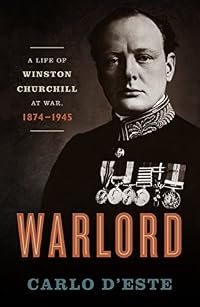
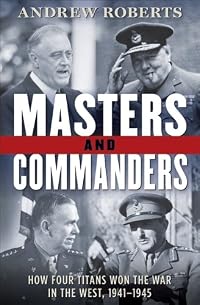
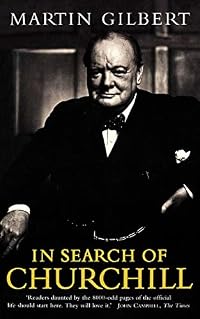



Member Recommendations

themulhern Both kind of short, Ramsden's a bit heavier on the events, Johnson's on the analysis.
Member Reviews
A Hanukkah gift from my mother, and a splendid one. You will know from the first sentence whether this is the book for you: "Of all the towering figures of the twentieth century, both good and evil, Winston Churchill was the most valuable to humanity, and also the most likable."
Johnson presents many of my favorite Churchillian moments, and uncovers new ones as well. One fabulous quote I did not know was a dinner party bon mot: "We are all worms. But I really think that I am a glow worm."
Johnson presents many of my favorite Churchillian moments, and uncovers new ones as well. One fabulous quote I did not know was a dinner party bon mot: "We are all worms. But I really think that I am a glow worm."
If you are in God's good favor you had a great history teacher who knew and loved his subject and transferred that enthusiasm to you. Paul Johnson would have been that kind of teacher, and this little book on Churchill proves why.
This is the first Johnson book I've read (although I own a few, and have more on my wishlist) and what a shame that it's taken me so long to read one! He has an obvious love of his subject, but that does not preclude him from criticizing his hero (e.g. Churchill's complete dismissal of defense issues during the run-up to WWII when he was Chancellor of the Exchequer). Also, Johnson is branded an "conservative" historian by many, but he does not use this book to hammer Churchill on his lifelong support of the show more ever-growing British welfare state that he helped to construct.
As others have mentioned, even thought this is a short book, Johnson does not just give a chronological survey of Churchill's life. His analysis on the 10 factors that made Churchill indispensable to the WWII victory effort are very convincing.
And lastly, how can you not love a book about a man so quoteable? Two of my favorites:
"Facts are better than dreams."
"If Hitler invaded Hell, at least I would ensure that in the House of Commons I made a favourable reference to the Devil." show less
This is the first Johnson book I've read (although I own a few, and have more on my wishlist) and what a shame that it's taken me so long to read one! He has an obvious love of his subject, but that does not preclude him from criticizing his hero (e.g. Churchill's complete dismissal of defense issues during the run-up to WWII when he was Chancellor of the Exchequer). Also, Johnson is branded an "conservative" historian by many, but he does not use this book to hammer Churchill on his lifelong support of the show more ever-growing British welfare state that he helped to construct.
As others have mentioned, even thought this is a short book, Johnson does not just give a chronological survey of Churchill's life. His analysis on the 10 factors that made Churchill indispensable to the WWII victory effort are very convincing.
And lastly, how can you not love a book about a man so quoteable? Two of my favorites:
"Facts are better than dreams."
"If Hitler invaded Hell, at least I would ensure that in the House of Commons I made a favourable reference to the Devil." show less
Under 200 pages, this is a summary and and an analysis of Churchill's life by a fairly well known English historian. That Churchill was a super-achiever is clear. He was also probably very hard to put up with in real life, like many very famous and formidable people. Since the author is an Englishman, he occasionally assumes an understanding of English politics and a knowledge of recent English history that I lack. Even if you have read about Churchill elsewhere, as I have, it would be perfectly reasonable to get another perspective on his life, and this one is a perfectly good one. There is one completely, to me, incomprehensible sentence that is yet interesting, "A parliamentarian to the very roots of his political personality, he show more also stressed the importance of the Strasbourg parliament as opposed to the Brussels bureaucracy." As with Christopher Hitchens, Winston Churchill is too often credited with profoundly humorous sallies that, when recounted, don't seem funny at all. show less
Not the best biography of Churchill, but a good hors d'oeuvre that doesn't take much time to read, is well-written, and is enjoyable and informative. Johnson's summation on why Churchill was great/important is worth the read.
Very short biography—a lot of telling rather than showing—but Churchill is interesting enough that telling can be punchy. Not only was Churchill a master of words, he inspired others, e.g., one comment on his history of World War I was that “Winston has written an enormous book about himself and called it The World Crisis.” Churchill had a vast energy and an ability to come back from defeats that would impress anyone. He changed parties six times, but was perfectly faithful to his wife, which in my mind is the right way to go about it. When the voters kicked him out immediately after WWII ended, his wife commented that it might be a blessing in disguise (because he’d been working himself to death), but Churchill responded show more “It appears to be very effectively disguised.” show less
Paul Johnson is one of my favorite writer/historians. He has the ability to present his material in a manner that is both intelligent and readable. This was a refreshing and short biography of Churchill focusing on his political career.
It is obvious from the beginning that Johnson is a devotee, and he mentions several times that he actually met and spoke with him, but still in all the book is fairly objective. I found the chapter where he discusses Churchill's immense power held during WWII. He poses the question "Did Churchill save Britain?" and the presents 10 reasons why he would answer in the affirmative. The book is worth reading for that chapter alone.
I was fascinated to read that Churchill stood for Parliament under six show more different 'labels': Conservative, Liberal, Coalition, Constitutionalist, Unionist, and National Conservative. I knew about his service as a journalist, 1st Sea Lord, and Chancellor of the Exchequer, but some other achievements were new to me.
And I heartily approve of his answer to the question: "To what do you attribute your success in life?"
Without pause or hesitation he replied: "Conservation of energy. Never stand up when you can sit down. Never sit down when you can lie down."
This is a well-written and researched biography touching on the high points of the life of a great statesman. It can stand alone or serve as the jumping off point for more in-depth studies. show less
It is obvious from the beginning that Johnson is a devotee, and he mentions several times that he actually met and spoke with him, but still in all the book is fairly objective. I found the chapter where he discusses Churchill's immense power held during WWII. He poses the question "Did Churchill save Britain?" and the presents 10 reasons why he would answer in the affirmative. The book is worth reading for that chapter alone.
I was fascinated to read that Churchill stood for Parliament under six show more different 'labels': Conservative, Liberal, Coalition, Constitutionalist, Unionist, and National Conservative. I knew about his service as a journalist, 1st Sea Lord, and Chancellor of the Exchequer, but some other achievements were new to me.
And I heartily approve of his answer to the question: "To what do you attribute your success in life?"
Without pause or hesitation he replied: "Conservation of energy. Never stand up when you can sit down. Never sit down when you can lie down."
This is a well-written and researched biography touching on the high points of the life of a great statesman. It can stand alone or serve as the jumping off point for more in-depth studies. show less
Painfully concise. This was a page-turner about the up and down (mostly up) career of an amazing statesman and workaholic. I got tired just reading about the guy, and am certainly now motivated to read a more thorough biography and/or one of Winnie's many door-stop works.
Members
- Recently Added By
Published Reviews
ThingScore 100
Reverential, yes, but also insightful --a short biography that’s worthy of its larger-than-life subject.
added by Shortride
Author Information

Some Editions
Common Knowledge
- People/Characters
- Winston Churchill (Churchill, Winston Leonard Spencer)
- Dedication
- This book is dedicated to my eldest son, Daniel
- First words
- Of all the towering figures of the twentieth century, both good and evil, Winston Churchill was the most valuable to humanity, and also the most likable.
- Quotations
- Churchill often stayed at the Hotel de Paris in Monte Carlo, in a penthouse flat prepared for him. But he liked to dine downstairs with Mrs. Reeves, know as "Rhinestone Wendy". Evelyn Waugh, also staying there, wrote to Ian F... (show all)leming's wife, Ann:
"We sometimes see Sir Winston (at a respectful distance) gorging vast quantities of rich food.His face is elephant grey and quite expressionless. His moll sits by him coaxing him and he sometimes turns a pink little eye towards her without turning his head."
(pp.157-158)
"Which way shall we turn to save our lives and the future of the world? It does not matter so much to old people; they are going to die soon anyway; but I find it poignant to look at youth in all its activity and ardour and, ... (show all)most of all, to watch little children playing their merry games, and wonder what would lie before them if God wearied of mankind."
(pp.155-156)
"The day may dawn when fair play, love for one's fellow men, respect for justice and freedom, will enable tormented generations to march forth serene and triumphant from the hideous epoch in which we have to dwell. Meanwhile,... (show all) never flinch, never weary, never despair."
(p. 156)
"On the night of 10 May 1940, at the outset of the mighty Battle of Britain, I acquired the chief power in the State, which henceforth I wielded in ever-growing measure for five years and three months of world war, at the end... (show all) of which time, all our enemies having surrendered unconditionally or being about to do so, I was immediately dismissed by the British electorate from all further conduct of their affairs."
Mrs. Churchill's comment was: "Perhaps it is a blessing in disguise." To which Churchill replied: "It appears to be very effectively disguised."
"All the horrors of all the ages were brought together, and not only armies but whole populations were thrust into the midst of them. The mighty educated states involved conceived - not without reason - that their very existe... (show all)nce was at stake. Neither peoples nor rulers drew the line at any deed which they thought could help them to win. Germany, having let Hell loose, kept well in the van of terror; but she was followed step by step by the desperate and ultimately avenging nations she had assailed. Every outrage against humanity and international law was repaid by reprisals - often on a greater scale and of longer duration. No truce or parley mitigated the strife of the armies. The wounded died between the lines: the dead mouldered into the soil. Merchant ships and neutral ships and hospital ships were sunk on the seas, and all on board left to their fate, or killed as they swam. Every effort was made to starve whole nations into submission, without regard to age or sex. Cities and monuments were smashed by artillery. Bombs from the air were cast down indiscriminately. Poison gas in many forms stifled or seared the soldiers. Liquid fire was projected upon their bodies. Men fell from the air in flames, or were smothered often slowly in the dark recesses of the sea. The fighting strength of armies was limited only by the manhood of their countries. Europe and large parts of Asia or Africa became one vast battlefield on which not only armies but entire nations broke and ran."
(pp.47-48)
Classifications
- Genres
- Biography & Memoir, History, Nonfiction, General Nonfiction
- DDC/MDS
- 941.084092 — History & geography History of Europe British Isles Historical periods of British Isles 1837- Period of Victoria and House of Windsor 1936-1945
- LCC
- DA566.9 .C5 .J64 — History of Europe, Asia, Africa and Oceania Great Britain History of Great Britain England History By period Modern, 1485- 20th century
- BISAC
Statistics
- Members
- 795
- Popularity
- 34,717
- Reviews
- 23
- Rating
- (3.75)
- Languages
- 6 — Chinese, Czech, English, Portuguese, Russian, Spanish
- Media
- Paper, Audiobook, Ebook
- ISBNs
- 17
- ASINs
- 8