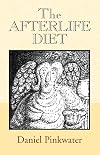
The Afterlife Diet
by Daniel Manus Pinkwater
On This Page
Description
The first commercially published fat novel, (or Schmalzroman), this book sold out its first printing in three weeks, and was promptly abandoned by its original publisher. Was this fat-prejudice, or just another example of corporate shit-headedness? Now available again, read it with someone you love, and make sandwiches.The gonzo humor and imagination that popularize Pinkwater as both NPR commentator and childrens author permeate every line of his hilarious third novel for adults. . . . You show more need a wacko sense of humor for this one, but those who qualify will read it a dozen times over and laugh out loud each time. Publishers WeeklyCorny? You bet. BooklistThe Afterlife Diet . . . dispenses laughs and startling insights about our cultures obsessions with body weight, personal fulfillment, and psychotherapy. . . . Part canned goods, part fresh food for thought, The Afterlife Diet certainly will satisfy your cravings for funny prose. Philadelphia InquirerThis is classic Pinkwater slapshtick with plenty of Jewish jokes and a lineup of puns that arrive like slow-motion whipped cream pies in the face. Simply delicious. USA Today show lessTags
Recommendations


















Member Reviews
Fifth-rate book editor Milton Cramer dies and discovers that heaven is basically a very uninspiring resort camp. Also, everybody he meets there is fat, because the thin people don't want to have to look at fat people in their heaven. And from there, things just get... strange.
I loved Daniel Pinkwater's kids' books when I was young, and the ones I've read or reread as an adult, I've mostly also loved. They're just so wonderfully offbeat and nutty and inventive. Well, this one is also offbeat and nutty and inventive, but it does leave me thinking that maybe his particular kind of nuttiness works a little better in kids' books that it does in an adult one. (And this one is definitely written for adults.)
Don't get me wrong. There's a lot of show more cleverness here. There's some stuff that's very funny, in its own ridiculous way. And there's some impressively vicious satire aimed at the way that fat people are treated with contempt in our society and at the exploitative nature of the diet industry. But while some of the satiric stuff is scathingly effective, I think it's undermined somewhat by being a bit overdone, as well as by the way Pinkwater himself perpetuates the stereotype of fat people as gluttonously obsessed with food. And the story itself has all the coherent structure of a plate of spaghetti. (Note: one of the side effects of reading this apparently involves an irresistible urge to describe things using food metaphors.)
Admittedly, this is perhaps not something I should have picked up while suffering a head cold and the resultant thick, sluggish thought processes. I kept encountering characters, thinking their name looked familiar, and having to flip back through the book to figure out that, oh, yes, they'd popped up briefly thirty pages earlier in a completely different context for no obvious reason. Because it's just that kind of a book. show less
I loved Daniel Pinkwater's kids' books when I was young, and the ones I've read or reread as an adult, I've mostly also loved. They're just so wonderfully offbeat and nutty and inventive. Well, this one is also offbeat and nutty and inventive, but it does leave me thinking that maybe his particular kind of nuttiness works a little better in kids' books that it does in an adult one. (And this one is definitely written for adults.)
Don't get me wrong. There's a lot of show more cleverness here. There's some stuff that's very funny, in its own ridiculous way. And there's some impressively vicious satire aimed at the way that fat people are treated with contempt in our society and at the exploitative nature of the diet industry. But while some of the satiric stuff is scathingly effective, I think it's undermined somewhat by being a bit overdone, as well as by the way Pinkwater himself perpetuates the stereotype of fat people as gluttonously obsessed with food. And the story itself has all the coherent structure of a plate of spaghetti. (Note: one of the side effects of reading this apparently involves an irresistible urge to describe things using food metaphors.)
Admittedly, this is perhaps not something I should have picked up while suffering a head cold and the resultant thick, sluggish thought processes. I kept encountering characters, thinking their name looked familiar, and having to flip back through the book to figure out that, oh, yes, they'd popped up briefly thirty pages earlier in a completely different context for no obvious reason. Because it's just that kind of a book. show less
Pinkwater is partly known for his vastly popular children's and young adult novels, many of which have gained cult status among the awkward and disenfranchised youth for whom they were written.
The Afterlife Diet is one of his few works of fiction meant for an adult audience, and is as equally deserving of cult status.
Filled with his usual obsessions regarding food, bizarre science fiction, and people dressing up like birds, it would be easy to overlook the major theme if one were so inclined. But the focus of the book (how fat people are perceived by themselves, each other, family members, society as a whole, and even God himself) is handled with such humor and satire that if you aren't there for the message, you'll still stick around show more for the meal. show less
The Afterlife Diet is one of his few works of fiction meant for an adult audience, and is as equally deserving of cult status.
Filled with his usual obsessions regarding food, bizarre science fiction, and people dressing up like birds, it would be easy to overlook the major theme if one were so inclined. But the focus of the book (how fat people are perceived by themselves, each other, family members, society as a whole, and even God himself) is handled with such humor and satire that if you aren't there for the message, you'll still stick around show more for the meal. show less
A Pinkwater novel for adults is much like a Pinkwater novel for kids: an almost-random flow of very odd, usually funny, situations involving sketchily but sympathetically portrayed characters. This one begins in the Afterlife - or more accurately, an afterlife that seems designed just for very fat people. Milton, the POV character, is aware that he is dead, due to circumstances eventually explained but never detailed, beyond that the dim memory makes him queasy. One plot line follows Milton's post-death adventures. Another follows his pre-death activities as a not very diligent editor for a publisher of low grade mass market books. Another follows Milo, who works at a hot dog restaurant, apparently in Chicago, though atmosphere is much show more more Jewish, and erstwhile author. Many other characters get POV chapters. What connects everyone and everything is being fat. A few characters, like a therapist who sees his patients in restaurants and eats constantly, embrace their fatness. Others embrace instead various fraudulent fat-shaming cults. Since this is his adult book, sex happens fairly frequently, but discretely.
In the end, for me, this was more of an essay on the topic of fatness and diets, than an examination, never boring but never laugh out loud funny, either. show less
In the end, for me, this was more of an essay on the topic of fatness and diets, than an examination, never boring but never laugh out loud funny, either. show less
I REALLY disliked this book. I was thoroughly uncomfortable with the "fatty humor" which I felt was just plain cruel. I thought the book was disjointed and slapped together, when it should have been glued shut.
Very strange tale of fat people's purgatory - Daniel's mind is truly warped!
Ratings
Members
- Recently Added By
Author Information

131+ Works 11,587 Members
Author, illustrator, and radio commentator Daniel M. Pinkwater was born in Memphis Tennessee on November 15, 1941. He is trained as an artist and attended Bard College. In 1969, he wrote and illustrated his first book, The Terrible Roar. Since then he has written over 50 books for children, young adults, and adults. He is also a commentator on show more National Public Radio's All Things Considered and regularly reviews children's books on Weekend Edition Saturday. While he has illustrated many of his works, his most recent ones have been illustrated by his wife Jill Pinkwater. (Bowker Author Biography) Daniel Pinkwater is regarded by critics, educators, psychologists, and law enforcement agencies as the world's most influential writer of books for children and young adults. Since 1987, he has been a regular commentator on NPR's All Things Considered and two collections of his essays have been brought out to the delight of listeners who can read. He lives in Hyde Park, New York. (Publisher Provided) show less
Common Knowledge
- Original publication date
- 1995
Classifications
Statistics
- Members
- 85
- Popularity
- 376,960
- Reviews
- 5
- Rating
- (3.47)
- Languages
- English
- Media
- Paper, Ebook
- ISBNs
- 3
- ASINs
- 1