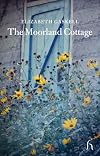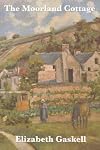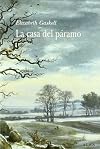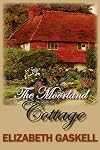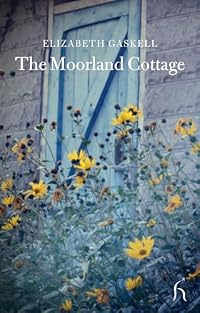
The Moorland Cottage
by Elizabeth Gaskell
On This Page
Description
Looking for an engaging and emotionally resonant read from a novelist who was inspired by the works of both Charles Dickens and Charlotte Bronte? Elizabeth Gaskell's 1850 short novel The Moorland Cottage offers up a unflinching slice of nineteenth-century family life, with a particular focus on family dynamics in an era where sons were openly favored..
Tags
Recommendations




















Member Reviews
Prior to coming upon this book recently, I had thought I had read all Elizabeth Gaskell’s novels and most of her short stories years ago, I re-read Cranford two years ago and loved it all over again. I was therefore both surprised and delighted to come across this short novel which I hadn’t either read or heard of. What a treat!
“If you take the turn to the left, after you pass the lyke-gate at Combehurst Church, you will come to the wooden bridge over the brook; keep along the field path, which mounts higher and higher, and, in half a mile or so, you will be in a breezy upland field, almost large enough to be called a down, where sheep pasture on short, fine, elastic turf. You look down on Combehurst and its beautiful church show more spire. After the field is crossed, you come to a common, richly coloured with the golden gorse and the purple heather, which in summer time send out their warm scents into the quiet air. The swelling waves of the upland make a near horizon against the sky; the line is only broken in one place by a small grove of small Scotch firs, which always look black and shadowed even at midday, when all the rest of the landscape seems bathed in sunlight.”
The Moorland Cottage is just over 140 pages long, and is a charming beautifully constructed little story. Maggie Browne is the daughter of a deceased clergyman, who lives with her widowed mother and her brother Edward in the moorland cottage of the title. Her mother is almost unreasonably devoted to her son; Maggie is expected to devote herself likewise to him. While her mother carps and criticises Maggie – she seems incapable of seeing any fault in her son – who is in fact very far from faultless. The family’s servant Nancy loves Maggie dearly and tries to make up a little for her mother’s neglect.
The Brownes are befriended by local landowner Mr Buxton, who lives nearby with his ailing wife, his son Frank and niece Erminia. Mrs Buxton takes particularly to Maggie – and encourages Maggie to visit her frequently, times in which Mrs Buxton seeks to guide Maggie in her own gentle ways. Maggie is thrown into company with Frank and Erminia too, with whom she develops strong friendships.
“Erminia and Maggie went, with their arms round each other’s necks, to Mrs Buxton’s dressing room. The misfortune had made them friends. Mrs Buxton lay on the sofa, so fair and white and colourless, in her muslin dressing gown, that when Maggie first saw the lady lying with her eyes shut, her heart gave a start, for she thought she was dead. But she opened her large, languid eyes, and called them to her, and listened to their story with interest.”
Yet Maggie’s future happiness is threatened by her brother’s selfish disregard. When Edward’s very liberty is under threat Maggie is expected to sacrifice herself for his good. Maggie proves herself a strong minded and steadfast young woman as she strives to do right by her family and keep her own hopes for the future alive. The ending of this lovely little novel is marvellously dramatic and satisfying. Maggie is a wonderful character, generous intelligent and loyal without being too good to be true - as some nineteenth century heroines can be.
So glad I discovered this little gem – I may have to re-read some of my other Elizabeth Gaskell novels too. show less
“If you take the turn to the left, after you pass the lyke-gate at Combehurst Church, you will come to the wooden bridge over the brook; keep along the field path, which mounts higher and higher, and, in half a mile or so, you will be in a breezy upland field, almost large enough to be called a down, where sheep pasture on short, fine, elastic turf. You look down on Combehurst and its beautiful church show more spire. After the field is crossed, you come to a common, richly coloured with the golden gorse and the purple heather, which in summer time send out their warm scents into the quiet air. The swelling waves of the upland make a near horizon against the sky; the line is only broken in one place by a small grove of small Scotch firs, which always look black and shadowed even at midday, when all the rest of the landscape seems bathed in sunlight.”
The Moorland Cottage is just over 140 pages long, and is a charming beautifully constructed little story. Maggie Browne is the daughter of a deceased clergyman, who lives with her widowed mother and her brother Edward in the moorland cottage of the title. Her mother is almost unreasonably devoted to her son; Maggie is expected to devote herself likewise to him. While her mother carps and criticises Maggie – she seems incapable of seeing any fault in her son – who is in fact very far from faultless. The family’s servant Nancy loves Maggie dearly and tries to make up a little for her mother’s neglect.
The Brownes are befriended by local landowner Mr Buxton, who lives nearby with his ailing wife, his son Frank and niece Erminia. Mrs Buxton takes particularly to Maggie – and encourages Maggie to visit her frequently, times in which Mrs Buxton seeks to guide Maggie in her own gentle ways. Maggie is thrown into company with Frank and Erminia too, with whom she develops strong friendships.
“Erminia and Maggie went, with their arms round each other’s necks, to Mrs Buxton’s dressing room. The misfortune had made them friends. Mrs Buxton lay on the sofa, so fair and white and colourless, in her muslin dressing gown, that when Maggie first saw the lady lying with her eyes shut, her heart gave a start, for she thought she was dead. But she opened her large, languid eyes, and called them to her, and listened to their story with interest.”
Yet Maggie’s future happiness is threatened by her brother’s selfish disregard. When Edward’s very liberty is under threat Maggie is expected to sacrifice herself for his good. Maggie proves herself a strong minded and steadfast young woman as she strives to do right by her family and keep her own hopes for the future alive. The ending of this lovely little novel is marvellously dramatic and satisfying. Maggie is a wonderful character, generous intelligent and loyal without being too good to be true - as some nineteenth century heroines can be.
So glad I discovered this little gem – I may have to re-read some of my other Elizabeth Gaskell novels too. show less
At the heart of Gaskell novels is always a remarkable woman. Here, it is Maggie. Slighted by her mother and bullied by her brother, her gentle nature is however appreciated by the Buxton family (though it took a while for Mr Buxton to appreciate her qualities). Underlying the selflessness is stoicism and the courage to stand up to her convictions, supported by faith in God. Definitely qualities worth emulating.
An early short work of Gaskell's, The Moorland Cottage tells the story of young Maggie Browne and her struggle between her own desires and her duty to her family. Maggie (an 'angel in the house' type), her widowed mother, patronizing brother, and beloved servant live modestly in Moorland Cottage outside the village. Since her father's death, their mother has kept them socially secluded, but an irresistible invitation to the big house of the Buxton's (Mr. Buxton is one of her father's friends and a wealthy man with a sickly but loving wife, a handsome, kind son; and a lovely niece who is his ward) draws them out of their solitude. If one is a reader of 19th century fiction, one can more or less predict the direction of the story but show more despite it's predictability, and the fact that the ending is melodramic and wraps up a bit too quickly I enjoyed it nonetheless.
As the front flap suggests, it is quite possibly a template for Eliot's later novel, Mill and the Floss; there are just enough similarities to suggest it. show less
As the front flap suggests, it is quite possibly a template for Eliot's later novel, Mill and the Floss; there are just enough similarities to suggest it. show less
Demasiado cursi y sensiblero, con personajes maniqueos que se hacen inaguantables e increíbles: el mal absoluto o la bondad ínfinita no existen, lo mismo que las personas no son absolutamente aborrecibles o adorables en su trato diario.
No dudo que la autora tenga obras mejores, pero para mí esta es insufrible.
No dudo que la autora tenga obras mejores, pero para mí esta es insufrible.
A short 1850 novel by the author of one of my favorites, North and South. This is the simple story of the Browne and Buxton families. The widowed Mrs. Browne is having trouble making ends meet, and she places her hopes on her son Edward, who eventually decides to become a lawyer. It's very sad to see how she prefers the selfish Edward to her devoted daughter Maggie, who can do no right in her mother's eyes. Mrs. Browne cultivates a connection with the Buxton's, a wealthy landowner and his widowed sister-in-law. The novel is as much about class and social ambition as it is about dysfunctional family dynamics. Nowhere near as good as Gaskell's longer novels, but a fast and engaging read.
The Browne siblings could not be more different: sweet, mild mannered Maggie and rough, self-centered Ned. How are their lives affected when they are introduced to the Buxton family, a well-to-do country family?
The widow Mrs. Browne has high hopes for her son, yet cuts her daughter at every turn. Mr. Buxton takes an interest in Ned's schooling, while his son Frank and niece Erminia sympathizes for Maggie's ill treatment at the hands of her family. How far will Maggie go to keep peace in the family?
For anyone who has watched 'Return to Cranford' this short story by Gaskell was inter-woven into the story line (with a few alterations of course). As a fan of Elizabeth Gaskell's work, I can say it is no North and South or Mary Barton, it show more still has tragedy and intrigue but on a much lighter level. I do reccomend it as a great quick and easy read! show less
The widow Mrs. Browne has high hopes for her son, yet cuts her daughter at every turn. Mr. Buxton takes an interest in Ned's schooling, while his son Frank and niece Erminia sympathizes for Maggie's ill treatment at the hands of her family. How far will Maggie go to keep peace in the family?
For anyone who has watched 'Return to Cranford' this short story by Gaskell was inter-woven into the story line (with a few alterations of course). As a fan of Elizabeth Gaskell's work, I can say it is no North and South or Mary Barton, it show more still has tragedy and intrigue but on a much lighter level. I do reccomend it as a great quick and easy read! show less
Moorland Cottage by Elizabeth Gaskell is a short novella that was first published around 1850 after her first novel Mary Barton but before one of her more famous novels Cranford. It centers on Maggie Browne, her brother Edward, and their mother who live at the novella's title Moorland Cottage. Mr. Browne died when the children were very young and Mrs. Browne has spent most of the rest of her time neglecting Maggie and catering to her Edward, allowing him all of life's pleasures and ambitions. Maggie obediently stands by and watches her mother spoil Edward and never complains when she is ordered around or criticized for every little thing she does wrong. Maggie's fortune changes when a friend of her father's Mr. Buxton visits the family show more and invites them to come and spend the day at his home. Maggie becomes a favorite to his sick wife and only son Frank and spends a day a week in their company. Mrs. Buxton teaches Maggie a lot about self-sacrificing, and as Maggie grows she becomes a beautiful, pious young woman and she must learn to find her voice if she is to overcome some of the obstacles that come into her way.
For the most part I really enjoyed this novella. I love the way that Mrs. Gaskell writes and I have enjoyed all of the previous books of hers that I have read. She is one of my favorite authors. I think she has such a way with words and expressing simple thoughts and ideas, she can make the most mundane circumstances sound charming and poetic. This novella has all of the things that I love so much about her work. Also, for a novella the pace is never hurried and I never felt as if the story was skipping over major events to save time.
On the other hand, I don't think this is one of her strongest works. The story is at time too sentimental and I found that some of the characters were a little flat or too perfect. Maggie is so virtuous and never does anything wrong or complain about her lot in life. She feels horribly about the way her mother treats her but she doesn't moan about it. It seems a bit too much for a young girl to accept her life like that. Edward is so bad that at times he seems so flat and hardly ever shows any remorse for his actions. Also I see a lot of similarities in the relationships between Maggie and Frank and the relationship between Roger and Molly in Wives and Daughters but I think that by the time Mrs. Gaskell went to write Wives and Daughters she expanded so much on Roger and Molly and perfected this relationship perfectly. Also I see a lot of similarities in the relationships between Maggie and Frank and the relationship between Roger and Molly in Wives and Daughters but I think that by the time Mrs. Gaskell went to write Wives and Daughters she expanded so much on Roger and Molly and perfected this relationship perfectly. This novella is an excellent way to introduce Mrs. Gaskell’s writings and see how well her writing develops when reading some of her later novels. show less
For the most part I really enjoyed this novella. I love the way that Mrs. Gaskell writes and I have enjoyed all of the previous books of hers that I have read. She is one of my favorite authors. I think she has such a way with words and expressing simple thoughts and ideas, she can make the most mundane circumstances sound charming and poetic. This novella has all of the things that I love so much about her work. Also, for a novella the pace is never hurried and I never felt as if the story was skipping over major events to save time.
On the other hand, I don't think this is one of her strongest works. The story is at time too sentimental and I found that some of the characters were a little flat or too perfect. Maggie is so virtuous and never does anything wrong or complain about her lot in life. She feels horribly about the way her mother treats her but she doesn't moan about it. It seems a bit too much for a young girl to accept her life like that. Edward is so bad that at times he seems so flat and hardly ever shows any remorse for his actions. Also I see a lot of similarities in the relationships between Maggie and Frank and the relationship between Roger and Molly in Wives and Daughters but I think that by the time Mrs. Gaskell went to write Wives and Daughters she expanded so much on Roger and Molly and perfected this relationship perfectly. Also I see a lot of similarities in the relationships between Maggie and Frank and the relationship between Roger and Molly in Wives and Daughters but I think that by the time Mrs. Gaskell went to write Wives and Daughters she expanded so much on Roger and Molly and perfected this relationship perfectly. This novella is an excellent way to introduce Mrs. Gaskell’s writings and see how well her writing develops when reading some of her later novels. show less
Members
- Recently Added By
Lists

Which house?
423 works; 16 members
Author Information

229+ Works 30,424 Members
Elizabeth Gaskell was born on September 29, 1810 to a Unitarian clergyman, who was also a civil servant and journalist. Her mother died when she was young, and she was brought up by her aunt in Knutsford, a small village that was the prototype for Cranford, Hollingford and the setting for numerous other short stories. In 1832, she married William show more Gaskell, a Unitarian clergyman in Manchester. She participated in his ministry and collaborated with him to write the poem Sketches among the Poor in 1837. Our Society at Cranford was the first two chapters of Cranford and it appeared in Dickens' Household Words in 1851. Dickens liked it so much that he pressed Gaskell for more episodes, and she produced eight more of them between 1852 and 1853. She also wrote My Lady Ludlow and Lois the Witch, a novella that concerns the Salem witch trials. Wives and Daughters ran in Cornhill from August 1864 to January 1866. The final installment was never written but the ending was known and the novel exists now virtually complete. The story centers on a series of relationships between family groups in Hollingford. Most critics agree that her greatest achievement is the short novel Cousin Phillis. Gaskell was also followed by controversy. In 1853, she offended many readers with Ruth, which explored seduction and illegitimacy that led the "fallen woman" into ostracism and inevitable prostitution. The novel presents the social conduct in a small community when tolerance and morality clash. Critics praised the novel's moral lessons but Gaskell's own congregation burned the book and it was banned in many libraries. In 1857, The Life of Charlotte Brontë was published. The biography was initially praised but angry protests came from some of the people it dealt with. Gaskell was against any biographical notice of her being written during her lifetime. After her death on November 12, 1865, her family refused to make family letters or biographical data available. (Bowker Author Biography) show less
Series
Belongs to Publisher Series
Work Relationships
Common Knowledge
- Canonical title*
- La casa del páramo
- Original title
- The Moorland Cottage
- Original publication date
- 1850
- People/Characters
- Maggie Browne; Edward Browne; Frank Buxton; Mr Buxton; Mrs Browne; Erminia Harvey
- First words
- If you take the turn to the left, after you pass the lyke-gate at Combehurst Church, you will come to the wooden bridge over the brook; keep along the field-path which mounts higher and higher, and, in half a mile or so, you ... (show all)will be in a breezy upland field, almost large enough to be called a down, where sheep pasture on the short, fine, elastic turf.
- Last words
- (Click to show. Warning: May contain spoilers.)Over both old and young the memory of one who is dead broods like a dove,--of one who could do but little during her lifetime; who was doomed only to 'stand and wait,' who was meekly content to be gentle, holy, patient, and undefiled,--the memory of the invalid Mrs Buxton.
*Some information comes from Common Knowledge in other languages. Click "Edit" for more information.
Classifications
Statistics
- Members
- 194
- Popularity
- 168,207
- Reviews
- 11
- Rating
- (3.51)
- Languages
- English, Italian, Spanish
- Media
- Paper, Ebook
- ISBNs
- 41
- ASINs
- 8