On This Page
Description
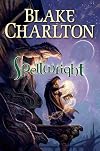
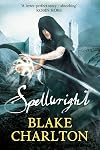
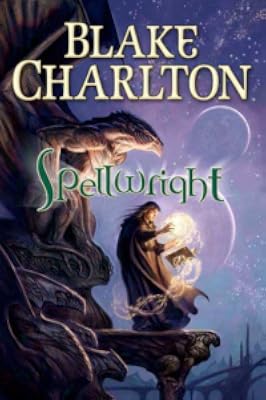
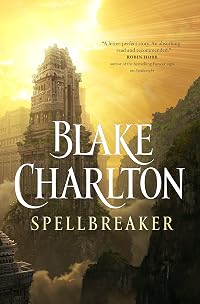
"Nicodemus Weal has trained at the wizardly stronghold of Starhaven since he was a boy. His mentor, the famous wizard Agwu Shannon, taught him how to cast spells made from luminescent magical runes, how to peel written words off a page and make them physically real, how to protect himself with defensive paragraphs, and how to thrust sharply worded sentences at an enemy. Initially, Nicodemus showed great promise. Able to forge magical runes with great speed, he was once thought to be the show more Halcyon--a powerful spellwright prophesied to prevent the apocalypse known as the Disjunction. There was only one problem: Nicodemus couldn't spell. Every time he touched a magical text, he unintentionally corrupted it, turning a useful spell into a dangerous, potentially deadly misspell. Even now, at twenty-five, Nicodemus's problem remains so bad that he is allowed to use his magic only for janitorial tasks. While his peers advance as wizards, he is still an apprentice, living with other disabled spellwrights and reading knightly romances that fuel his dreams of escape and adventure. When a powerful wizard is murdered with a misspell, Nicodemus and Shannon both are suspected. Worse, Nicodemus dreams of a foreign city under attack from an ancient, godlike spell...and wakes to find Starhaven abuzz with news of that city's actual destruction. A second nightmare makes Nicodemus begin to question his own sanity. When there are more mysterious deaths, the authorities hunt him as a murderer. Tormented and desperate, Nicodemus has no choice but to flee his pursuers so that he can discover the truth about the murders, the nature of magic...and himself."--Dust cover flap. show lessTags
Recommendations






Member Reviews
If you haven't met Nicodemus Weal, you should. He's the kind of character that will touch your heart and change your perspective.A brilliant debut by a talented writer, Spellwright's story is all the more intriguing because it parallels the author's own struggles with dyslexia. The story of Nicodemus Weal, a dyslexic apprentice wizard who becomes hunted by several factions when it's thought he could be the long awaited Halcyon, who will bring unity and power to defeat the dark forces threatening their world. Others fear he could instead be the storm Petrel who will bring destruction. So Nicodemus finds himself on the run, wondering who he is and who to trust.Spellwright takes place in a well crafted and interesting world where words are show more not just communication but a force to be reckoned with. They can be harvested as weapons or shields by those with the gift of magic who learn to control them. The journey of Nico and his mentor, Magister Shannon, grabs hold of you and never lets go, taking you on a fascinating and compelling ride.The background of author Blake Charlton (http://www.blakecharlton.com/) is as unique and interesting as that of his main character. On his own website he writes:As a child, severe dyslexia placed me in special education for most of elementary school. Only with the support of my saintly parents did I improve enough to be mainstreamed into a normal fourth-grade classroom. I was still pulled out for remediation in half of the classes. Each year, I just barely advanced to the next grade. At twelve years old, I still couldn’t read a book by myself.But his parents were persistent and began reading fantasy to him: Robert Jordan, Terry Brooks, Tad Williams... As his interest grew, they began to read to Blake less and less, faking sore throats or other ailments, but always leaving the books behind. Blake writes:I became obsessed with fantasy. I snuck Robert Jordan and Robin Hobb paperbacks into special ed study hall and read them under my desk when I was supposed to be completing spelling drills. My grades improved only marginally, but my height increased exponentially. The football coach at a local high-powered private academy noticed this and helped me get into his school. About that time I started reading science fiction (Frank Herbert, Orson Scott Card, etc.) and discovered more classical fantasy: Grandpa Tolkien, John Gardner, Ursula K. LeGuin, and Mary Stewart. Suddenly school wasn’t so bad: I discovered that Shakespeare and Spenser weren’t so different from Tolkien, chemistry not far off from alchemy, physics the closest thing to magic. Though I still loved football, I began to live to put my nose in books.But this dyslexic child went on to graduate from Yale Summa Cum Laude, Phi Beta Kappa, with distinction in the major and Trumbull College awarded him the John Spangler Nicholas Scholarship. His fascination with reading fantasy and science fiction, soon fed his creativity and he began writing. A college dean encouraged him to take time out upon seeing an early draft of Spellwright. And in 2006 Tor, seeing promise in Spellwright, offered Blake a three-book deal. Stanford Medical School, seeing the value of a career in writing and medicine, offered him admission.Since then, Blake's completed the preclinical years of medical school and taken the US Medical Licensing Examination. During that time, he twice rewrote Spellwright, while Stanford provided financial support in the form of a Medical Scholars Research Fellowship to write fiction.But overcoming his own disability still wasn't enough. In addition to his desire to help people through medicine, Blake has been an English teacher, a learning disability tutor and a football coach. His passion for learning disabled kids is part of his inspiration for Nicodemus Weal and Spellwright's story of the power to overcome any struggle and succeed.Blake is preparing his draft of the followup Spellbound to turn into the publisher shortly and it should be out by the end of year. Maybe he'll give me an early review copy, if not, I know I'll be waiting outside the story.A great read, a unique world, a fun adventure. Spellwright is highly recommended. show less
A magnificently intricate and innovative magical system underpinning a world that... well, honestly, we don't see much of it at all since we never leave the bounds of the magical system. This book started really strongly, with fascinating magic used by interesting and sympathetic characters in complicated situations that they never bollocksed up themselves. All good things. However, towards the late-middle, it started to get so enmeshed in its own systems that the only way forward was info-dumps, and conversations of the "Why can't I just do X?" / "Because Z." variety, which rather takes the shine off things. It dribbled to an end, rather than going out with a portentious bang, which is unfortunate in a first-in-a-series book.
Good. Not show more great. show less
Good. Not show more great. show less
Nicodemus Weal is a cacographer, the magical equivalent of dyslexia, which makes him misspell magic texts and shortchanges his spellcasting ability. An unknown enemy is searching for a powerful cacographer, and Nicodemus is in grave danger, even while the master that would protect him, Magister Agwu Shannon, is under suspicion of murder.
This fantasy is an excellent blend of old and new. I loved the inventiveness of magic itself - and gargoyles, constructs, and the like - being built out of text. This gave rise to numerous plays on words and new meanings for such things as "authors" and "grammarians" that were really fun to discover. At the same time, the use of magic, prophecy, and battle of good and evil put this well within the show more traditional genre. Though given to long, conversational exposition and a long ending that seemed more to set up the next book than wrap up loose ends, this debut shows a lot of talent, and I look forward to reading the next in the series. show less
This fantasy is an excellent blend of old and new. I loved the inventiveness of magic itself - and gargoyles, constructs, and the like - being built out of text. This gave rise to numerous plays on words and new meanings for such things as "authors" and "grammarians" that were really fun to discover. At the same time, the use of magic, prophecy, and battle of good and evil put this well within the show more traditional genre. Though given to long, conversational exposition and a long ending that seemed more to set up the next book than wrap up loose ends, this debut shows a lot of talent, and I look forward to reading the next in the series. show less
This review has been crossposted from my blog at The Cosy Dragon . Please head there for more in-depth reviews by me, which appear on a timely schedule.
Nicodemus Weal is both blessed and cursed. Once thought to be the saviour of humanity, his ability with spells is actually warped so that he misspells everything creating chaos. This sound bad enough, but add re-emerging golems and a couple of murders and you have a real recipe for disaster.
The idea of this book came from the author's own dyslexia which I think adds a lovely depth and essential detail to the novel. Personal experience can be such a weath to mine and produce something wonderful. In this case, it is an extremely complicated and novel system of word forging. As the novel show more progresses, the reader is introduced to more of the complex spellwriting languages.
The introductory chapter of this book was unnecessarily wordy, even if it did explain well the system of magic operating in this world. The magic system was what redeemed this book for me, and I only wish there had been a better way of explaining how it worked, and I also would have liked some more information about the other languages.
Nicodemus and Shannon are really flat, transperant characters. Nicodemus was sure he was the chosen one, even when he wasn't obviously one. Even with the million hints pointing to him being something else, he wasn't able to realise that! Plus he should have kept a better grip on that damn emerald. As if you wouldn't sew it into your skin so you didn't lose it again. I actually liked Shannon, and although he wasn't fleshed out, I still empathised with him, and felt sorry for him.
The twist with the Druid wasn't lead up to properly, and I didn't understand her stupid fits at all! Nicodemus was far too trusting, and noone seemed able to make the obvious connections that were there. The rest of the time the Druid didn't make sense, and her place in the Arc's protection was not obvious. The reader wasn't even able to make the same connections as Nicodemus about her magic abilities, because they weren't given enough information.
The perspective changes in this novel could have been used more, but they did work for me. I just wished I had had more information on the motives of all parties, rather than the focus on Nicodemus (although he was the main character, the other characters were equally important I think).
I'd say that this book was suitable for both teens and adults in terms of content, although the style of writing is certainly for adults. It wasn't a bad book, just not an outstanding one because I didn't connect with the main character. There is another book in this series (it is a triology) and although I enjoyed this book (mainly due to the magic system, not the characters), the sequel is not on my ever-growing to-read-soon list. show less
Nicodemus Weal is both blessed and cursed. Once thought to be the saviour of humanity, his ability with spells is actually warped so that he misspells everything creating chaos. This sound bad enough, but add re-emerging golems and a couple of murders and you have a real recipe for disaster.
The idea of this book came from the author's own dyslexia which I think adds a lovely depth and essential detail to the novel. Personal experience can be such a weath to mine and produce something wonderful. In this case, it is an extremely complicated and novel system of word forging. As the novel show more progresses, the reader is introduced to more of the complex spellwriting languages.
The introductory chapter of this book was unnecessarily wordy, even if it did explain well the system of magic operating in this world. The magic system was what redeemed this book for me, and I only wish there had been a better way of explaining how it worked, and I also would have liked some more information about the other languages.
Nicodemus and Shannon are really flat, transperant characters. Nicodemus was sure he was the chosen one, even when he wasn't obviously one. Even with the million hints pointing to him being something else, he wasn't able to realise that! Plus he should have kept a better grip on that damn emerald. As if you wouldn't sew it into your skin so you didn't lose it again. I actually liked Shannon, and although he wasn't fleshed out, I still empathised with him, and felt sorry for him.
The twist with the Druid wasn't lead up to properly, and I didn't understand her stupid fits at all! Nicodemus was far too trusting, and noone seemed able to make the obvious connections that were there. The rest of the time the Druid didn't make sense, and her place in the Arc's protection was not obvious. The reader wasn't even able to make the same connections as Nicodemus about her magic abilities, because they weren't given enough information.
The perspective changes in this novel could have been used more, but they did work for me. I just wished I had had more information on the motives of all parties, rather than the focus on Nicodemus (although he was the main character, the other characters were equally important I think).
I'd say that this book was suitable for both teens and adults in terms of content, although the style of writing is certainly for adults. It wasn't a bad book, just not an outstanding one because I didn't connect with the main character. There is another book in this series (it is a triology) and although I enjoyed this book (mainly due to the magic system, not the characters), the sequel is not on my ever-growing to-read-soon list. show less
Blake Charlton's debut novel, Spellwright, is a mixed bag, with some particularly strong points to be found in its characterization and its heavy, almost hard fantasy focus on an often ridiculed method of producing magic: language. While the novel is not without flaws, Charlton makes up for it with strong action sequences that often result in a little of the gosh-wow that many have argued is sorely missing from fantasy's cousin, science fiction.
Spellwright follows Nicodemus Weal, a wizard in training at an academy. He was once considered to be the Halcyon, a mythical figure prophesied to return to stop the Disjunction--a battle against the demons of the old world from across the ocean. The only problem is that Nicodemus is a show more cacographer, whose dangerous misspells of common languages makes him potentially dangerous to any other magic user. His cacography makes him anything but the "one." When a grand wizard at the academy is killed by a powerful misspell, Nicodemus and his teacher, Shannon, are the prime suspects. And as politics and prejudice play out in the academy, something with intimate ties to the forgotten, blasphemous magical languages from the old world sets a plan in motion that could destroy the academy and bring about the Disjunction, an event the Nicodemus will be a part of, whether he wants to be or not.
What sets Charlton's novel apart from other fantasy works is its magic system. Firmly rooted in the author's dyslexic past, the magic system ofSpellwright avoids spoken language and instead places all of the power in the written word. Spells have to literally be written within the body and then passed down through the arms to be cast. Likewise, you have to know the language(s) to be able to use them effectively (and there are many languages). The great part about this is that it creates a lot of fantastic limitations: particularly large and powerful spells take a long time to cast, not knowing how to spell properly can be unintentionally deadly, as is the case with Nicodemus, and magical languages become protected entities from other groups, because without knowing a particular language, you can't see or cast against it.
Taking a detour from the magic, I think it's important to note that the characterization in Spellwright, while not as well-developed as I would have liked, does show a lot of promise. The fact that the main character and Charlton share a common origin shouldn't be misconstrued as a kind of Mary Sue (or Gary Stu, since Charlton is a man), but instead seen for what it is: an intimate portrayal of a character with a mental disability who must battle against a world that views him not as a person with some value, but as kind of disease. Nicodemus is not difficult to like. His struggles, motivations, and outbursts all make sense. I suspect that many will identify with Nicodemus, even if they have no disabilities (for lack of a better word) themselves; we can empathize with people who have been ostracized for one reason or another. To be critical for a moment, I do think that the characterization that exploded in the last third of the novel should have come more gradually throughout. The ending does feel somewhat rushed in terms of the characters, and it would make more sense for them to develop less abruptly.
The action, however, will likely be seen as the novel's strongest point. It becomes clear early on that Charlton has thought through how his wizards will fight. A standard wizardly slug match where users just toss fireballs and the like at one another won't do, namely because spells that can do the most damage can't generally be put together on the fly (though some can). We see only a glimpse of the potential in Charlton's magic as a combat system, because the novel itself is not set within the Disjunction, but in a somewhat peaceful time. That glimpse is enough, though. The fights are exciting, the magic equally so, and all the creations that come as a result make for a very fast-paced book.
The novel's weaknesses seem to be more within the realm of continuity and genre trappings than anythingels. The magic system, while unique and quite intriguing, often isn't set in stone. For example, it's mentioned numerous times that characters cannotspellwright within the walls of the academy, and yet we see numerous characters do just that. Either I missed something, or the author didn't make it clear enough that he meant only certain characters (or something else).
Finally, while I understand that fantasy is often repetitive, I have to wonder when we're going to see enough of this prophesy business. I like Charlton's novel, but the prophesy subplot plays a crucial role in the overall story, and I feel as though this takes away from the potential of the novel. Here is a book that has a great magic system, an interesting past, and interesting "races," yet it finds itself stuck using the all-too-familiar furniture of a genre burdened with familiar furniture. Prophesies are sort of like the cheap bookshelves you get at Walmart: a lot of people have them, and they're all the same--cheap, colorless, and weak. Move away from prophesy. We need more characters who rise up to the occasion on their own, without prompting from people who think they are something else. There's nothing heroic about someone fulfilling their destiny; it's just...expected.
Spellwright's prophesy subplot does have a twist in it and much of the novel is spent dispelling the belief that Nicodemus is the Halycon, but the prophesy bit is still there in the background. Fantasy has sort of built up its foundations on recycled themes, and it continues to do so, because that's sort of how it's done; some of these themes, I think, should simply disappear.
But moving away from that, I'll try to get back on a positive note, because I don't think it's fair to point all the fingers at Charlton, or to try to take away from what works in the novel. Charlton has a lot of potential. He could take the concepts of his novel very far: so much can be done with thecacography and all the unique languages he has created for his magic system. If he keeps pressing the details in his future novels, I think he'll become a strong player in the fantasy realm. Right now,Spellwright is fun, unique, and engaging, despite being a tad cliche. Hopefully we'll seem some improvement in the second book. show less
Spellwright follows Nicodemus Weal, a wizard in training at an academy. He was once considered to be the Halcyon, a mythical figure prophesied to return to stop the Disjunction--a battle against the demons of the old world from across the ocean. The only problem is that Nicodemus is a show more cacographer, whose dangerous misspells of common languages makes him potentially dangerous to any other magic user. His cacography makes him anything but the "one." When a grand wizard at the academy is killed by a powerful misspell, Nicodemus and his teacher, Shannon, are the prime suspects. And as politics and prejudice play out in the academy, something with intimate ties to the forgotten, blasphemous magical languages from the old world sets a plan in motion that could destroy the academy and bring about the Disjunction, an event the Nicodemus will be a part of, whether he wants to be or not.
What sets Charlton's novel apart from other fantasy works is its magic system. Firmly rooted in the author's dyslexic past, the magic system ofSpellwright avoids spoken language and instead places all of the power in the written word. Spells have to literally be written within the body and then passed down through the arms to be cast. Likewise, you have to know the language(s) to be able to use them effectively (and there are many languages). The great part about this is that it creates a lot of fantastic limitations: particularly large and powerful spells take a long time to cast, not knowing how to spell properly can be unintentionally deadly, as is the case with Nicodemus, and magical languages become protected entities from other groups, because without knowing a particular language, you can't see or cast against it.
Taking a detour from the magic, I think it's important to note that the characterization in Spellwright, while not as well-developed as I would have liked, does show a lot of promise. The fact that the main character and Charlton share a common origin shouldn't be misconstrued as a kind of Mary Sue (or Gary Stu, since Charlton is a man), but instead seen for what it is: an intimate portrayal of a character with a mental disability who must battle against a world that views him not as a person with some value, but as kind of disease. Nicodemus is not difficult to like. His struggles, motivations, and outbursts all make sense. I suspect that many will identify with Nicodemus, even if they have no disabilities (for lack of a better word) themselves; we can empathize with people who have been ostracized for one reason or another. To be critical for a moment, I do think that the characterization that exploded in the last third of the novel should have come more gradually throughout. The ending does feel somewhat rushed in terms of the characters, and it would make more sense for them to develop less abruptly.
The action, however, will likely be seen as the novel's strongest point. It becomes clear early on that Charlton has thought through how his wizards will fight. A standard wizardly slug match where users just toss fireballs and the like at one another won't do, namely because spells that can do the most damage can't generally be put together on the fly (though some can). We see only a glimpse of the potential in Charlton's magic as a combat system, because the novel itself is not set within the Disjunction, but in a somewhat peaceful time. That glimpse is enough, though. The fights are exciting, the magic equally so, and all the creations that come as a result make for a very fast-paced book.
The novel's weaknesses seem to be more within the realm of continuity and genre trappings than anythingels. The magic system, while unique and quite intriguing, often isn't set in stone. For example, it's mentioned numerous times that characters cannotspellwright within the walls of the academy, and yet we see numerous characters do just that. Either I missed something, or the author didn't make it clear enough that he meant only certain characters (or something else).
Finally, while I understand that fantasy is often repetitive, I have to wonder when we're going to see enough of this prophesy business. I like Charlton's novel, but the prophesy subplot plays a crucial role in the overall story, and I feel as though this takes away from the potential of the novel. Here is a book that has a great magic system, an interesting past, and interesting "races," yet it finds itself stuck using the all-too-familiar furniture of a genre burdened with familiar furniture. Prophesies are sort of like the cheap bookshelves you get at Walmart: a lot of people have them, and they're all the same--cheap, colorless, and weak. Move away from prophesy. We need more characters who rise up to the occasion on their own, without prompting from people who think they are something else. There's nothing heroic about someone fulfilling their destiny; it's just...expected.
Spellwright's prophesy subplot does have a twist in it and much of the novel is spent dispelling the belief that Nicodemus is the Halycon, but the prophesy bit is still there in the background. Fantasy has sort of built up its foundations on recycled themes, and it continues to do so, because that's sort of how it's done; some of these themes, I think, should simply disappear.
But moving away from that, I'll try to get back on a positive note, because I don't think it's fair to point all the fingers at Charlton, or to try to take away from what works in the novel. Charlton has a lot of potential. He could take the concepts of his novel very far: so much can be done with thecacography and all the unique languages he has created for his magic system. If he keeps pressing the details in his future novels, I think he'll become a strong player in the fantasy realm. Right now,Spellwright is fun, unique, and engaging, despite being a tad cliche. Hopefully we'll seem some improvement in the second book. show less
This is a strong opening to a new fantasy series which takes the power of language literally. One of the things I most enjoyed was how complete the worldbuilding is and the many different cultures that populate the novel. Nicodemus is a deeply sympathetic character whose cacography (think of dyslexia but with magical ramifications) not only keeps him from being able to cast spells but also makes it difficult for him to even handle magical artifacts. Too often a character is given a disability which is unrelated to the larger quest, but in Spellwright it is deeply connected to the larger quest.
If you are looking for a new voice in fantasy, give this a try.
If you are looking for a new voice in fantasy, give this a try.
Whenever I get to the ending of a book it can go either way: I stop reading because is too good for it to end; or I stop reading because I'm tired from it and need a break. Eventually I get back to it, or not. With this one I stopped because it was good. I got tired of being kept at the edge of my seat so I took a break. A very short one.
I've been on a reading slump because I couldn't find a fantasy book worthy of my limited time. I started reading this at the store because it kept popping up at the corner of my eye when looking for something to read. I tend to judge a book on how it gets me going from the first pages. Sometimes is no good, so I skip to a few pages ahead, no good. Sometimes I give it a chance and keep going a few pages show more more. With this one I kept reading as soon as I opened the book on the first pages. I had to stop myself and put the book away until I could purchase it.
I love the characters and the twists that come with them. I love the fact that no character is perfect, and they all have their problems and a road to evolve and grow up into. I love the fact that the main character isn't perfect but isn't too broody and angsty.
This is the first time I have encountered such use of the magic and spellcasting world. Made me have to re-read sentences, go back pages, to see what I missed or didn't understand as well. Very complex, and believeable due to the fact of where the world itself is based off. Can't wait for more. show less
I've been on a reading slump because I couldn't find a fantasy book worthy of my limited time. I started reading this at the store because it kept popping up at the corner of my eye when looking for something to read. I tend to judge a book on how it gets me going from the first pages. Sometimes is no good, so I skip to a few pages ahead, no good. Sometimes I give it a chance and keep going a few pages show more more. With this one I kept reading as soon as I opened the book on the first pages. I had to stop myself and put the book away until I could purchase it.
I love the characters and the twists that come with them. I love the fact that no character is perfect, and they all have their problems and a road to evolve and grow up into. I love the fact that the main character isn't perfect but isn't too broody and angsty.
This is the first time I have encountered such use of the magic and spellcasting world. Made me have to re-read sentences, go back pages, to see what I missed or didn't understand as well. Very complex, and believeable due to the fact of where the world itself is based off. Can't wait for more. show less
Members
- Recently Added By
Lists

KayStJ's to-read list
1,616 works; 11 members
Author Information
6+ Works 995 Members
Some Editions
Awards and Honors
Series

Belongs to Publisher Series
Work Relationships
Has as a commentary on the text
Common Knowledge
- Canonical title
- Spellwright
- Original title
- Spellwright
- Original publication date
- 2010
- People/Characters
- Nicodemus Weal; Agwu Shannon; Fellwroth
- Important places*
- Sterrenstee (fictief)
- Epigraph
- If one believes that words are acts, as I do, then one must hold writers responsible for what their words do.
Ursula K. Le Guin
Dancing at the Edge of the World: Thoughts on Words, Women, Places - Dedication
- To the memory of my grandmother,
Jane Bryden Buck (1912-2002),
for long stories and lessons in kindness - First words
- The grammarian was choking to death on her own words.
- Quotations*
- Als je, zoals ik, gelooft dat woorden invloed hebben,
zijn schrijvers verantwoordelijk voor wat ze met hun
woorden teweegbrengen.
- Ursula K. Le Guin
Dancing at the Edge of the World;
Thoughts on Words... (show all), Women, Places. - Last words
- (Click to show. Warning: May contain spoilers.)The bright words had illuminated his smile with soft white light and, by contrast, filled his dark eyes with a joyful, sparkling black.
- Blurbers
- Hobb, Robin; Brooks, Terry; Williams, Tad; Anderson, Kevin J.; Anthony, Piers; Elliott, Kate (show all 7); Buckell, Tobias S.
*Some information comes from Common Knowledge in other languages. Click "Edit" for more information.
Classifications
Statistics
- Members
- 709
- Popularity
- 40,120
- Reviews
- 26
- Rating
- (3.42)
- Languages
- 6 — Dutch, English, French, German, Polish, Spanish
- Media
- Paper, Audiobook, Ebook
- ISBNs
- 15
- ASINs
- 6