
Jon Sprunk
Author of Shadow's Son
About the Author
Series
Works by Jon Sprunk
Associated Works
Blackguards: Tales of Assassins, Mercenaries, and Rogues (2015) — Contributor — 88 copies, 4 reviews
Tagged
Common Knowledge
- Gender
- male
- Nationality
- USA
- Places of residence
- Pennsylvania, USA
- Associated Place (for map)
- Pennsylvania, USA
Members
Reviews
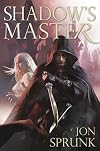
The good news is that except for the character growth of Caim, if a reader happens upon SHADOW'S MASTER before the first two novels (SHADOW'S SON and SHADOW'S LURE) they won't be lost. More so than the first book into the second, Sprunk gives a better accounting of things so that a new reader stumbling in won't be scratching their head and grow frustrated.
The other piece of good news is that this book pays off for readers of the previous two volumes. Caim's heritage, the nature of his show more otherworldly powers and his role as the 'Scion' are given center stage as he travels north to find out about his (not quite human) mother. A resolution is also found for the love triangle that is Josey-Caim-Kit, though I'm less keen on that aspect (I was never actually invested in either relationship, though I felt keenly for Josey's predicament during book 2).
The less good news is that because Sprunk seemed to make this more standalone than the previous two novels (despite being the third and final part of the trilogy), Caim's behavior seems off somehow. He's brooding, angsty and bothered by things that would have made more sense in book 1 then now in book 3.
My favorite parts, which probably say’s a lot about where my priorities were and how skewed they were, involved Josey and her schemes and machinations to keep her throne. Fortunately even without Caim around to help her do sneaky things, Josey forges alliances and has a number of people she can trust to help her stave off death and dethronement. By the end of the novel she finds her place in the world and finds herself able to come to terms with the changes she's undergone and I applaud her for it. Josey was never a weak character (irritating at times, but not weak) and her growth throughout the books has made me smile.
I'll give Sprunk credit, in what could have been a sentimental book dealing with the nature of families, history and love he still packs in enough fighting, bloodshed and action to keep just about anyone happy. Between Caim's battles in the north and Josey's battles to protect her throne, there's very little downtime for our heroes. It made for a quick-paced read that keeps the reader entranced until the last page.
In all this was a good farewell to the world and Caim in particular. I was satisfied by the conclusion, though that's not to say I would be averse to Sprunk writing short stories about Nimea and how Josey's reign goes on in the future however.
Review originally posted at Night Owl Reviews show less
The other piece of good news is that this book pays off for readers of the previous two volumes. Caim's heritage, the nature of his show more otherworldly powers and his role as the 'Scion' are given center stage as he travels north to find out about his (not quite human) mother. A resolution is also found for the love triangle that is Josey-Caim-Kit, though I'm less keen on that aspect (I was never actually invested in either relationship, though I felt keenly for Josey's predicament during book 2).
The less good news is that because Sprunk seemed to make this more standalone than the previous two novels (despite being the third and final part of the trilogy), Caim's behavior seems off somehow. He's brooding, angsty and bothered by things that would have made more sense in book 1 then now in book 3.
My favorite parts, which probably say’s a lot about where my priorities were and how skewed they were, involved Josey and her schemes and machinations to keep her throne. Fortunately even without Caim around to help her do sneaky things, Josey forges alliances and has a number of people she can trust to help her stave off death and dethronement. By the end of the novel she finds her place in the world and finds herself able to come to terms with the changes she's undergone and I applaud her for it. Josey was never a weak character (irritating at times, but not weak) and her growth throughout the books has made me smile.
I'll give Sprunk credit, in what could have been a sentimental book dealing with the nature of families, history and love he still packs in enough fighting, bloodshed and action to keep just about anyone happy. Between Caim's battles in the north and Josey's battles to protect her throne, there's very little downtime for our heroes. It made for a quick-paced read that keeps the reader entranced until the last page.
In all this was a good farewell to the world and Caim in particular. I was satisfied by the conclusion, though that's not to say I would be averse to Sprunk writing short stories about Nimea and how Josey's reign goes on in the future however.
Review originally posted at Night Owl Reviews show less
Review Originally Posted At: FictionForesight
A "Pull No Punches" 4 1/2 Stars!
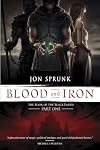
Blood and Iron is an action-packed adventure that hones all best pieces of fantasy into whats sure to be an amazing series!
A Quick Summary:
Blood and Iron begins as all epic tales do, with tragedy. In this case, tragedy comes in the form of a ship wreck. Horace, our main character, is a ship builder who was unlucky enough to be aboard a vessel that sank during an extraordinary storm. Washing up on the shore of his show more enemies homeland, Horace is taken captive and sold into slavery. Things don't look good. Not only a slave to his enemies, Horace is in a place where he doesn't speak the language, and doesn't know the customs. Combine that with the grueling conditions the slaves are put through, and you have a recipe for death.
Fate however, had another plan. Horace, and everyone else, soon discovers that he has latent magical abilities. Abilities which his enemies covet and consider a divine presence. It is because of this that Horace is soon broken from his bonds of slavery, and thrust into the even deadlier game of politics.
Along the way Horace crosses paths with a host of other characters, including Jirom, a gladiator and ex-mercenary, Alyra, a slave and spy, and Blythe, the queen of Akeshia (Horace's enemy). Each has a unique relationship, that inadvertently is affected by the other. And with each character having their own agenda, things don't look good for Horace.
The Good:
Lets start with the magic, because that was just awesome! I can't say that Jon Sprunk created a unique system of magic, because that's not necessarily true. Instead it seems that he did what he did with the rest of the book, he took some existing magic systems and reworked them with a bit of his own flavor mixed in. Well it worked. I loved the fact that each element had its own name, and own workings. For instance, throughout the book whenever the earth element was used, the character that was using it claimed they felt stronger. As if the element influenced the users emotions based on what we think of when we think of that element. Earth being strong, steadfast, unbending, etc.
The action was epic. Jon Sprunk knows what this reader likes. With some books the action scenes seem pitiful, or are seemingly indifferent to the other scenes. That's certainly not the case here. This book grabs you by the throat, and makes you take witness to a ton of "it's about to go down" moments scattered all throughout the book. Honestly, there are fight scenes in this book that literally gave me chills while I was reading. I can't stress how much I love that feeling in books.
Characterization was great too. I read quite a few reviews before reading this book (yes reviewers read reviews too!) and I have to admit, I was a bit bias going in. So many reviewers claimed that the characters were flat, one-sided, and lacked depth that's necessary in order to relate. I disagree wholeheartedly. I found the characters to be quite real, relatable, flawed, etc. I think there's a character for every personality too. I mean we have Horace, the conflicted foreigner with morals and beliefs akin to his homeland, who still is able to see the other side of the coin. He isn't perfect. He openly berates himself for his personal life and circumstances. He's this all-powerful sorcerer who has a hard time coping with the fact that he even has magic at all. Then even being an all-powerful sorcerer, he still has a lack of control over his own abilities, that doesn't "magically" go away. We have Alyra who is a spy, a fighter that serves and plays the role of a slave, who still comes to love and trust despite an upbringing that would not warrant such things. Jirom feels like your typical brute at first, but then we learn of a somewhat squishy layer that exists underneath. He set's himself a part from every other typical brute out there in that he's smart and calculating, but he's still not immune to his own hypocrisy. I could go on for days. Frankly put, these to me are not flat characters.
I liked the fact that while the story switched back and forth from different character's perspectives, we weren't in a stagnant rut. Some books switch back and forth from characters between chapters, but they always do the same switches. Chapter 1 is this person, 2 is that person. Back and forth. Blood and Iron switches between perspectives, but it does so in a much more flowing manner. The switches make sense. We learn more about situations when we get to see both, or all, sides. Not only that, but in a couple of situations the story flashes back a bit too, which is nice. So when we have an action scene take place with character A, we don't necessarily pick up at the same part with character B. We get to take a step back to see how the events built up to that point. I think this made this book much more enjoyable than others that have a similar story.
Speaking of story, lets briefly chat about the story-line / plot arcs. This entire plot, the idea of a stranger showing up, having magical abilities, finding a place in the world, it's all been done before. This isn't cutting edge stuff here. It's timeless stuff, the stuff that fantasy lovers want in their books. Jon Sprunk takes all the good things from other fantasy novels and twists it until you find something that's uniquely his. There were some parts where I already knew what was going to happen, because you could tell a mile away, and then others still, admittedly, surprised me quite a bit. (I. e. a certain someone taking a certain sibling captive!). It was these little surprises that kept me on my toes, and enjoying a story-line I had read a thousand times before, but never quite in that way.
The Bad:
I really had to think here to come up with something that I thought was bad enough to include in this section. I know other reviewers have their opinions (and they should!), but I just couldn't find a lot of fault here.
For me, setting was a point of contention. Don't misunderstand, the world building was pretty good. You got to learn quite a bit about the world that this story takes place in, but I still found myself picturing some place else. I know that this is set in Egyptian like times / locales, but all the while reading I kept finding myself picturing an Arthurian England. Why? Couldn't possibly begin to tell you. Mr. Sprunk clearly articulates the setting, style of dress, even the hierarchy that exists. And it all fits with the Egyptian theme. But short of the desert, I suppose you could take this story just about anywhere and still have it feel just as good. So in my head, were not in Egypt anymore.
Other than that petty point, I think the lacking romance was the biggest culprit. I mean I get it, you don't necessarily need people hooking up in every story. But that's not what I'm alluding to at all. I just wish there was a bit more romantically here. Sure Horace was fawning over other characters, and yes I understand the pain he went through and how big of a step this would be for him, but still. I'm dreadfully hoping for the romantic arc to take some major leaps forward in the sequel.
Overall:
Blood and Iron wasn't good. It was great. Jon Sprunk writes in such a way that little is held back, and in the end, everything is left on the page. For better or worse, he call's it like he sees it. For me, that's the key. That's what separates this book from all the rest. It was almost as realistic and gritty as a historical take on this type of era, with a great plot-line and cast of characters strewn in. I would definitely recommend this read to anyone who enjoys fantasy, or is looking for a little magic in their life. I can't wait for the sequel to follow Horace and the gang through to their next battle!
(www.FictionForesight.com) show less
A "Pull No Punches" 4 1/2 Stars!
Blood and Iron is an action-packed adventure that hones all best pieces of fantasy into whats sure to be an amazing series!
A Quick Summary:
Blood and Iron begins as all epic tales do, with tragedy. In this case, tragedy comes in the form of a ship wreck. Horace, our main character, is a ship builder who was unlucky enough to be aboard a vessel that sank during an extraordinary storm. Washing up on the shore of his show more enemies homeland, Horace is taken captive and sold into slavery. Things don't look good. Not only a slave to his enemies, Horace is in a place where he doesn't speak the language, and doesn't know the customs. Combine that with the grueling conditions the slaves are put through, and you have a recipe for death.
Fate however, had another plan. Horace, and everyone else, soon discovers that he has latent magical abilities. Abilities which his enemies covet and consider a divine presence. It is because of this that Horace is soon broken from his bonds of slavery, and thrust into the even deadlier game of politics.
Along the way Horace crosses paths with a host of other characters, including Jirom, a gladiator and ex-mercenary, Alyra, a slave and spy, and Blythe, the queen of Akeshia (Horace's enemy). Each has a unique relationship, that inadvertently is affected by the other. And with each character having their own agenda, things don't look good for Horace.
The Good:
Lets start with the magic, because that was just awesome! I can't say that Jon Sprunk created a unique system of magic, because that's not necessarily true. Instead it seems that he did what he did with the rest of the book, he took some existing magic systems and reworked them with a bit of his own flavor mixed in. Well it worked. I loved the fact that each element had its own name, and own workings. For instance, throughout the book whenever the earth element was used, the character that was using it claimed they felt stronger. As if the element influenced the users emotions based on what we think of when we think of that element. Earth being strong, steadfast, unbending, etc.
The action was epic. Jon Sprunk knows what this reader likes. With some books the action scenes seem pitiful, or are seemingly indifferent to the other scenes. That's certainly not the case here. This book grabs you by the throat, and makes you take witness to a ton of "it's about to go down" moments scattered all throughout the book. Honestly, there are fight scenes in this book that literally gave me chills while I was reading. I can't stress how much I love that feeling in books.
Characterization was great too. I read quite a few reviews before reading this book (yes reviewers read reviews too!) and I have to admit, I was a bit bias going in. So many reviewers claimed that the characters were flat, one-sided, and lacked depth that's necessary in order to relate. I disagree wholeheartedly. I found the characters to be quite real, relatable, flawed, etc. I think there's a character for every personality too. I mean we have Horace, the conflicted foreigner with morals and beliefs akin to his homeland, who still is able to see the other side of the coin. He isn't perfect. He openly berates himself for his personal life and circumstances. He's this all-powerful sorcerer who has a hard time coping with the fact that he even has magic at all. Then even being an all-powerful sorcerer, he still has a lack of control over his own abilities, that doesn't "magically" go away. We have Alyra who is a spy, a fighter that serves and plays the role of a slave, who still comes to love and trust despite an upbringing that would not warrant such things. Jirom feels like your typical brute at first, but then we learn of a somewhat squishy layer that exists underneath. He set's himself a part from every other typical brute out there in that he's smart and calculating, but he's still not immune to his own hypocrisy. I could go on for days. Frankly put, these to me are not flat characters.
I liked the fact that while the story switched back and forth from different character's perspectives, we weren't in a stagnant rut. Some books switch back and forth from characters between chapters, but they always do the same switches. Chapter 1 is this person, 2 is that person. Back and forth. Blood and Iron switches between perspectives, but it does so in a much more flowing manner. The switches make sense. We learn more about situations when we get to see both, or all, sides. Not only that, but in a couple of situations the story flashes back a bit too, which is nice. So when we have an action scene take place with character A, we don't necessarily pick up at the same part with character B. We get to take a step back to see how the events built up to that point. I think this made this book much more enjoyable than others that have a similar story.
Speaking of story, lets briefly chat about the story-line / plot arcs. This entire plot, the idea of a stranger showing up, having magical abilities, finding a place in the world, it's all been done before. This isn't cutting edge stuff here. It's timeless stuff, the stuff that fantasy lovers want in their books. Jon Sprunk takes all the good things from other fantasy novels and twists it until you find something that's uniquely his. There were some parts where I already knew what was going to happen, because you could tell a mile away, and then others still, admittedly, surprised me quite a bit. (I. e. a certain someone taking a certain sibling captive!). It was these little surprises that kept me on my toes, and enjoying a story-line I had read a thousand times before, but never quite in that way.
The Bad:
I really had to think here to come up with something that I thought was bad enough to include in this section. I know other reviewers have their opinions (and they should!), but I just couldn't find a lot of fault here.
For me, setting was a point of contention. Don't misunderstand, the world building was pretty good. You got to learn quite a bit about the world that this story takes place in, but I still found myself picturing some place else. I know that this is set in Egyptian like times / locales, but all the while reading I kept finding myself picturing an Arthurian England. Why? Couldn't possibly begin to tell you. Mr. Sprunk clearly articulates the setting, style of dress, even the hierarchy that exists. And it all fits with the Egyptian theme. But short of the desert, I suppose you could take this story just about anywhere and still have it feel just as good. So in my head, were not in Egypt anymore.
Other than that petty point, I think the lacking romance was the biggest culprit. I mean I get it, you don't necessarily need people hooking up in every story. But that's not what I'm alluding to at all. I just wish there was a bit more romantically here. Sure Horace was fawning over other characters, and yes I understand the pain he went through and how big of a step this would be for him, but still. I'm dreadfully hoping for the romantic arc to take some major leaps forward in the sequel.
Overall:
Blood and Iron wasn't good. It was great. Jon Sprunk writes in such a way that little is held back, and in the end, everything is left on the page. For better or worse, he call's it like he sees it. For me, that's the key. That's what separates this book from all the rest. It was almost as realistic and gritty as a historical take on this type of era, with a great plot-line and cast of characters strewn in. I would definitely recommend this read to anyone who enjoys fantasy, or is looking for a little magic in their life. I can't wait for the sequel to follow Horace and the gang through to their next battle!
(www.FictionForesight.com) show less
I honestly didn't think this sort of fantasy got published any more - the pedestrian, cliche-loaded, mediocre-tolkien/mythology-aspirant sort. At least the plot moves fast, though I suspect it has to or otherwise you'd be able to see daylight through the holes that turn into lace. Characters made of thin cardboard in utterly familiar shapes, a brutal dichotomy of good and evil, and a setting that's both generic and wildly anachronistic in its influences. Sort of like in was written from an show more unholy melange of the notes from Dan Brown's newest novel, and the notes from a teenage GM's newest campaign. At least I finished it; it's that bearable. show less
Blood and Iron by Jon Sprunk is the first in a new high fantasy series that will feel both familiar and fresh. Blood and Iron has many typical elements of high fantasy while also pulling in more diverse characters. While the premise held promise, the writing and characters failed to deliver and I ended up simply frustrated. Many of the initially interesting and heartening elements of Blood and Iron ended up feeling exceedingly superficial as Blood and Iron morphed into a very typical high show more fantasy. If you are looking for another fantasy series just for the sake of reading fantasy, Blood and Iron might appeal, but if you were hoping for a story that brings something new to the genre, you’ll probably be disappointed.
Note: I received Blood and Iron through Edelweiss for an honest review. Some things may have changed in the final version.
This book has adult content.
Blood and Iron by Jon Sprunk (The Book of the Black Earth #1)
Published by Pyr on March 11th, 2014
Genres: Adult, Fantasy
Length: 428 pages
How I got my copy: Edelweiss
It starts with a shipwreck following a magical storm at sea. Horace, a soldier from the west, had joined the Great Crusade against the heathens of Akeshia after the deaths of his wife and son from plague. When he washes ashore, he finds himself at the mercy of the very people he was sent to kill, who speak a language and have a culture and customs he doesn't even begin to understand.
Not long after, Horace is pressed into service as a house slave. But this doesn't last. The Akeshians discover that Horace was a latent sorcerer, and he is catapulted from the chains of a slave to the halls of power in the queen's court. Together with Jirom, an ex-mercenary and gladiator, and Alyra, a spy in the court, he will seek a path to free himself and the empire's caste of slaves from a system where every man and woman must pay the price of blood or iron. Before the end, Horace will have paid dearly in both.
Strengths:
The fantasy world of Blood and Iron is filled with warring empires, cults worshipping sun gods, and magic chaos storms. While we only actually adventure in a couple areas of the world, others are introduced or hinted at, building up opportunities for more adventuring in future books.
The characters in Blood and Iron are refreshingly diverse. There is a queen ruling without a husband and trying hard to hold on to that power, a gladiator who happens to be gay, a slave girl who is far more than she appears, and of course our main character Horace who’d like to think he is just a carpenter. For a genre that tends to fall back on a narrow range of character choices, it was nice to see this level of diversity.
Weaknesses:
The biggest problem that I had with Blood and Iron was that I just never cared about the characters. The writing was such that even during action scenes, I felt no suspense. It was obvious everything would turn out, and even if it didn’t, I wasn’t attached enough to the characters to worry for them. There was actually a part of me that was hoping the main character would be killed since then at least the story would feel fresher.
Blood and Iron has one main plot line told from Horace’s perspective and then another plot line that follows Jirom (the gay gladiator) after he splits from Horace. The problem is that those two plot lines never reconnect and therefore Jirom’s ended up feeling completely pointless. This further frustrated me since it made it feel like Jirom was a token gay character and he was only in the story to have a crush on Horace. Blood and Iron could have completely cut him from the story and nothing would have changed….
The romantic element doesn’t surface for a while, but once it does, it is just so awkward. There are some definite power issues Horace’s relationship, plus a strange love quadrangle because everyone is interested in Horace.
The magic system in Blood and Iron at first has nice and interesting rules: magic users get cuts all over their bodies when they use their magic, therefore they can’t use it for very long. However, Horace is of course special and proves very quickly that his magic doesn’t follow those rules and that makes him pretty much all powerful. There was promise of Horace still be limited because he lacked skill in the various elemental magics, but of course he then unlocks those secrets in the middle of battles whenever it is convenient for the action.
Summary:
Blood and Iron had potential and interesting elements, but quickly failed to live up to that potential. I was so excited to see a fantasy world with non-straight characters, but that hope was eventually crushed by the realization that those characters don’t actually matter to the story. If you are looking for a typical fantasy that is full of familiar elements, you might like Blood and Iron, but don’t expect to be surprised. show less
Note: I received Blood and Iron through Edelweiss for an honest review. Some things may have changed in the final version.
This book has adult content.
Blood and Iron by Jon Sprunk (The Book of the Black Earth #1)
Published by Pyr on March 11th, 2014
Genres: Adult, Fantasy
Length: 428 pages
How I got my copy: Edelweiss
It starts with a shipwreck following a magical storm at sea. Horace, a soldier from the west, had joined the Great Crusade against the heathens of Akeshia after the deaths of his wife and son from plague. When he washes ashore, he finds himself at the mercy of the very people he was sent to kill, who speak a language and have a culture and customs he doesn't even begin to understand.
Not long after, Horace is pressed into service as a house slave. But this doesn't last. The Akeshians discover that Horace was a latent sorcerer, and he is catapulted from the chains of a slave to the halls of power in the queen's court. Together with Jirom, an ex-mercenary and gladiator, and Alyra, a spy in the court, he will seek a path to free himself and the empire's caste of slaves from a system where every man and woman must pay the price of blood or iron. Before the end, Horace will have paid dearly in both.
Strengths:
The fantasy world of Blood and Iron is filled with warring empires, cults worshipping sun gods, and magic chaos storms. While we only actually adventure in a couple areas of the world, others are introduced or hinted at, building up opportunities for more adventuring in future books.
The characters in Blood and Iron are refreshingly diverse. There is a queen ruling without a husband and trying hard to hold on to that power, a gladiator who happens to be gay, a slave girl who is far more than she appears, and of course our main character Horace who’d like to think he is just a carpenter. For a genre that tends to fall back on a narrow range of character choices, it was nice to see this level of diversity.
Weaknesses:
The biggest problem that I had with Blood and Iron was that I just never cared about the characters. The writing was such that even during action scenes, I felt no suspense. It was obvious everything would turn out, and even if it didn’t, I wasn’t attached enough to the characters to worry for them. There was actually a part of me that was hoping the main character would be killed since then at least the story would feel fresher.
Blood and Iron has one main plot line told from Horace’s perspective and then another plot line that follows Jirom (the gay gladiator) after he splits from Horace. The problem is that those two plot lines never reconnect and therefore Jirom’s ended up feeling completely pointless. This further frustrated me since it made it feel like Jirom was a token gay character and he was only in the story to have a crush on Horace. Blood and Iron could have completely cut him from the story and nothing would have changed….
The romantic element doesn’t surface for a while, but once it does, it is just so awkward. There are some definite power issues Horace’s relationship, plus a strange love quadrangle because everyone is interested in Horace.
The magic system in Blood and Iron at first has nice and interesting rules: magic users get cuts all over their bodies when they use their magic, therefore they can’t use it for very long. However, Horace is of course special and proves very quickly that his magic doesn’t follow those rules and that makes him pretty much all powerful. There was promise of Horace still be limited because he lacked skill in the various elemental magics, but of course he then unlocks those secrets in the middle of battles whenever it is convenient for the action.
Summary:
Blood and Iron had potential and interesting elements, but quickly failed to live up to that potential. I was so excited to see a fantasy world with non-straight characters, but that hope was eventually crushed by the realization that those characters don’t actually matter to the story. If you are looking for a typical fantasy that is full of familiar elements, you might like Blood and Iron, but don’t expect to be surprised. show less
Awards


You May Also Like


Associated Authors
Statistics
- Works
- 16
- Also by
- 4
- Members
- 776
- Popularity
- #32,779
- Rating
- 3.4
- Reviews
- 32
- ISBNs
- 57
- Languages
- 5