
Stephen Deas
Author of The Adamantine Palace
About the Author
Disambiguation Notice:
Has contributed to the Bulldog Drummond series which attributes authorship to the original writer, "Sapper".
Series
Works by Stephen Deas
Gallow: Solace 1 copy
Associated Works
Unexpected Journeys — Contributor — 1 copy
Tagged
Common Knowledge
- Other names
- Hawke, Nathan (fantasy pen name)
Deas, S. J. (historical fiction pen name)
Deas, Gavin
Sharp, SK (crime pen name)
Peters, Sam (science fiction pen name) - Birthdate
- 1968
- Gender
- male
- Education
- University of Cambridge (bachelor's|Theoretical Physics)
- Occupations
- novelist
- Organizations
- BAE Systems
- Nationality
- UK
- Places of residence
- Essex, England, UK
- Disambiguation notice
- Has contributed to the Bulldog Drummond series which attributes authorship to the original writer, "Sapper".
- Associated Place (for map)
- England, UK
Members
Reviews
For the first while I was reading this book, the first 75 pages or so, I felt a bit confused. It felt like I came in part of the way through the story rather than at the beginning, or like there was some prequel that I should have already read. Perhaps it was just my frame of mind at the time, I don't know. Everything certainly made sense later, and the story as a whole was enjoyable, so I'm not going to count my initial reaction much toward the overall review. But still, it's worthy of a show more mention.
Some fantasy novels that deal with a lot of political intrigue end up making the politics incredibly boring. Some novels that feature dragons as a main point end up filled with so much action and adventure that there seems to be no break in a series of hectic events. Neither of those problems existed in The Adamantine Palace. The blend of action and politics was a good one, just enough on both sides to make you anxious to get back to each piece as the point of view changed from chapter to chapter, to add a few more pieces to the puzzle.
I was quite happy to see that not once did any of the dragon-kings or -queens actually put together what was happening in regard to the white dragon's disappearance. They all formed their own opinions based on what they wanted to believe and what their experience had taught them, but none of them came to the correct conclusion, and that was actually refreshing to see. Maybe I've just read too many "cut-and-dry" plots in novels, but for characters to not connect all the dots perfectly was surprising and pleasing, since that sort of thing seems to happen a lot.
But I guess one of the marks of a good author can be the ability to leave the characters hanging as well as the readers.
I'm quite pleased by my introduction to Deas's writing. I'm definitely looking forward to the release of the sequel! show less
Some fantasy novels that deal with a lot of political intrigue end up making the politics incredibly boring. Some novels that feature dragons as a main point end up filled with so much action and adventure that there seems to be no break in a series of hectic events. Neither of those problems existed in The Adamantine Palace. The blend of action and politics was a good one, just enough on both sides to make you anxious to get back to each piece as the point of view changed from chapter to chapter, to add a few more pieces to the puzzle.
I was quite happy to see that not once did any of the dragon-kings or -queens actually put together what was happening in regard to the white dragon's disappearance. They all formed their own opinions based on what they wanted to believe and what their experience had taught them, but none of them came to the correct conclusion, and that was actually refreshing to see. Maybe I've just read too many "cut-and-dry" plots in novels, but for characters to not connect all the dots perfectly was surprising and pleasing, since that sort of thing seems to happen a lot.
But I guess one of the marks of a good author can be the ability to leave the characters hanging as well as the readers.
I'm quite pleased by my introduction to Deas's writing. I'm definitely looking forward to the release of the sequel! show less
Dragons.
Dinosaurs, nightmarishly re-imagined. Fantasy’s Six Million Dollar Dino—built bigger, stronger, faster, meaner. Better. A Jurassic Park bogeyman; a spook story mommy dinosaurs tell to scare their babies, of big flying reptiles, covered in scales like lizardskin china, maws glistening with killer enamel, eyes twinkling with attitude, menace. Possibly fire-breathing. A predator. The top of the food chain.
Then people hit the scene. With their enormous egos, their misguided show more conceptions, and their fervent belief that they wear the ruler pants, proclaiming themselves top of the food chain. Ruler of the Universe. It’s our world; everything else is just a peasant groveling before our throne, basking in our glory. Dragons are fearsome, yes. But they’re beasts. Mounts. Like a pony. Only a hell of a lot scarier.
So we tame them, raise them, nurture them. So we can ride them. Like nobility. Like Dragon Lords. The biggest, scariest predator in the kingdom, and we put it between our legs. Like straddling fantasy’s ultimate weapon of mass destruction, a one hundred megaton nuclear reptile. Only a bad man could ride such a bad beast. As far as substitute penises go, dragons can’t be beat.
And dragons allow this. Allow being dominated, ridden. Like an obedient and compliant pony, happy and content, domesticated and mostly harmless, a gift you’d give your eight-year old daughter because she’s screaming: I want a dragon. Most dragons happily submit, yearning for a pat on the head, or an encouraging word, even though they’re often intelligent, self-aware, and rational. Some speak, others communicate telepathically. Some demonstrate immense brainpower, enough to humiliate a Harvard law student. Others speak like they’re channeling Jane Austen.
So why allow themselves to serve as a mount for some vainglorious yahoo, some Dragon Rider? Why allow themselves to be treated as inferiors? Are they good-hearted, or moved by a strong moral fiber? Or maybe it’s because of their deep friendship with the rider? Really. It’s friendship? When’s the last time you let your best friend ride on your back, while you carted them around? It’s fantasy’s magnificent mystery, a conundrum wrapped in an enigma. Unanswered.
Until now.
Stephen Deas shatters this mystery, sledgehammering the dragon mythos into fragments, in his awesome new novel The Adamantine Palace. Vicious, predatory dragons. Equally unpleasant humans, driven by personal agendas. Court intrigue, thick as tar, and just as black. A novel less about good and evil, and more about bad and worse. About who’s the greater monster. Dragons. Or people.
Naomi Novik’s Temeraire series has been the recent standard bearer for dragon-themed fantasy. Part Napoleonic war story, part travelogue, Temeraire is all buddy picture, the touching story between a boy—or a former naval officer, in this case—and his friendly, talking dragon. It’s generally happy, and leaves you with a warm, fuzzy feeling. Unlike The Adamantine Palace which crushes the necks (and hopes) of good dragons everywhere under its monstrous talon, stomping them repeatedly until their black swollen tongues loll from their crushed skulls, before finally urinating on the aftermath. It’s the anti-Temeraire, a novel where the dragons finally get pissed off, and do something violent about it. And it’s a revolution, an uprising in which Deas seizes the dragon mantle from Novik, becoming the new standard bearer. There’s a new sheriff in town. And his name is Stephen Deas.
The characters are fantastic, multi-faceted and morally complex. It’s not good versus evil; there is no good. There are no angelic choirboys here, no innocent doe-eyed farm boys. There’s only the most powerful, the rulers of the land, the ones with Machiavellian agendas, the ones looking out for number one, the self-serving. The kings and queens; the princes and princesses. All of them cutthroats and backstabbers. Not since George R.R. Martin’s series A Song of Ice and Fire has court intrigue been so deliciously wicked, so deliciously fun. The Adamantine Palace is about power. And those who struggle for it. Who lie for it. Who kill for it.
Prince Jehal shines as one of the book’s prime movers. He’s fratboy arrogance smothered in malice, a Teflon bully, smugness to a nauseating extreme. The character you’ll love to hate, the one who’ll have you begging for karmic justice, praying for it. Hoping, desperately, for fate to depants the twit. To expose his vulnerability. Just so you can savor its sweet taste.
Last Word:
Stephen Deas shakes up the dragon mythos wonderfully in his seismic, Richter-scale-popping novel, The Adamantine Palace. These aren’t your father’s dragons. These are the dragons your mom warned you about, the ones lurking in the shadows, doing bad things. Horrible things. These are the predators; the ones that floss with velociraptors. Unapologetic. Vicious. Intelligent. Unstoppable. And they might not even be the biggest monsters on the block. That distinction may be reserved for the people that ride them.
One of the best fantasy books of the year. show less
Dinosaurs, nightmarishly re-imagined. Fantasy’s Six Million Dollar Dino—built bigger, stronger, faster, meaner. Better. A Jurassic Park bogeyman; a spook story mommy dinosaurs tell to scare their babies, of big flying reptiles, covered in scales like lizardskin china, maws glistening with killer enamel, eyes twinkling with attitude, menace. Possibly fire-breathing. A predator. The top of the food chain.
Then people hit the scene. With their enormous egos, their misguided show more conceptions, and their fervent belief that they wear the ruler pants, proclaiming themselves top of the food chain. Ruler of the Universe. It’s our world; everything else is just a peasant groveling before our throne, basking in our glory. Dragons are fearsome, yes. But they’re beasts. Mounts. Like a pony. Only a hell of a lot scarier.
So we tame them, raise them, nurture them. So we can ride them. Like nobility. Like Dragon Lords. The biggest, scariest predator in the kingdom, and we put it between our legs. Like straddling fantasy’s ultimate weapon of mass destruction, a one hundred megaton nuclear reptile. Only a bad man could ride such a bad beast. As far as substitute penises go, dragons can’t be beat.
And dragons allow this. Allow being dominated, ridden. Like an obedient and compliant pony, happy and content, domesticated and mostly harmless, a gift you’d give your eight-year old daughter because she’s screaming: I want a dragon. Most dragons happily submit, yearning for a pat on the head, or an encouraging word, even though they’re often intelligent, self-aware, and rational. Some speak, others communicate telepathically. Some demonstrate immense brainpower, enough to humiliate a Harvard law student. Others speak like they’re channeling Jane Austen.
So why allow themselves to serve as a mount for some vainglorious yahoo, some Dragon Rider? Why allow themselves to be treated as inferiors? Are they good-hearted, or moved by a strong moral fiber? Or maybe it’s because of their deep friendship with the rider? Really. It’s friendship? When’s the last time you let your best friend ride on your back, while you carted them around? It’s fantasy’s magnificent mystery, a conundrum wrapped in an enigma. Unanswered.
Until now.
Stephen Deas shatters this mystery, sledgehammering the dragon mythos into fragments, in his awesome new novel The Adamantine Palace. Vicious, predatory dragons. Equally unpleasant humans, driven by personal agendas. Court intrigue, thick as tar, and just as black. A novel less about good and evil, and more about bad and worse. About who’s the greater monster. Dragons. Or people.
Naomi Novik’s Temeraire series has been the recent standard bearer for dragon-themed fantasy. Part Napoleonic war story, part travelogue, Temeraire is all buddy picture, the touching story between a boy—or a former naval officer, in this case—and his friendly, talking dragon. It’s generally happy, and leaves you with a warm, fuzzy feeling. Unlike The Adamantine Palace which crushes the necks (and hopes) of good dragons everywhere under its monstrous talon, stomping them repeatedly until their black swollen tongues loll from their crushed skulls, before finally urinating on the aftermath. It’s the anti-Temeraire, a novel where the dragons finally get pissed off, and do something violent about it. And it’s a revolution, an uprising in which Deas seizes the dragon mantle from Novik, becoming the new standard bearer. There’s a new sheriff in town. And his name is Stephen Deas.
The characters are fantastic, multi-faceted and morally complex. It’s not good versus evil; there is no good. There are no angelic choirboys here, no innocent doe-eyed farm boys. There’s only the most powerful, the rulers of the land, the ones with Machiavellian agendas, the ones looking out for number one, the self-serving. The kings and queens; the princes and princesses. All of them cutthroats and backstabbers. Not since George R.R. Martin’s series A Song of Ice and Fire has court intrigue been so deliciously wicked, so deliciously fun. The Adamantine Palace is about power. And those who struggle for it. Who lie for it. Who kill for it.
Prince Jehal shines as one of the book’s prime movers. He’s fratboy arrogance smothered in malice, a Teflon bully, smugness to a nauseating extreme. The character you’ll love to hate, the one who’ll have you begging for karmic justice, praying for it. Hoping, desperately, for fate to depants the twit. To expose his vulnerability. Just so you can savor its sweet taste.
Last Word:
Stephen Deas shakes up the dragon mythos wonderfully in his seismic, Richter-scale-popping novel, The Adamantine Palace. These aren’t your father’s dragons. These are the dragons your mom warned you about, the ones lurking in the shadows, doing bad things. Horrible things. These are the predators; the ones that floss with velociraptors. Unapologetic. Vicious. Intelligent. Unstoppable. And they might not even be the biggest monsters on the block. That distinction may be reserved for the people that ride them.
One of the best fantasy books of the year. show less
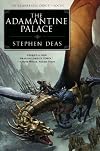
I am going to start with what I liked, because there are some aspects to that I found pretty good..
The concept is interesting. Instead of dragons working with humans they are unknowingly enslaved from the moment they are born, and of course this becomes one of the main points of conflict in the story when one gets away. The writing is also good and pacing make for a relatively quick and easy read.
The dragons concept is about where my enjoyment for this book ends. I found myself enjoying the show more chapters with Snow much more than the others. The re-awakening to need for revenge plotline was much more interesting than the stab at political intrigue. This book also falls rather short on character personality and development.
" 'He's vicious, callous, arrogant, self-obsessed-'
'You could be describing any of us' She smiled slightly."
I feel like the quote wasn't meaning to be intentional, but it really does describe all of the human characters. The royals especially. Everyone is a selfish, scheming, stone cold plotter to get to the top. Except Jehal, who just seems to be a little better at everything to keep him ahead of the rest. Most of the time I would forget who's POV the chapter was supposed to be from until a name was mentioned. Even the dragons, despite being awakened, had little personality beyond being impulsive, impatient, and eating anything close to them. Maybe that is because they are still too "new" after realizing what has been happening to them, but even Snow doesn't have much growth.
A smaller nit pick, and maybe it was the copy I had, but it could have benefitted from having a world map. It makes it harder to get more into the story and world when names are just thrown around without having any real sense where they sit in the world itself other than knowing it's in the mountains or forest.
There are a lot of good tokens and tidbits in this first installment, but the lack of character in world building pulls it down for me. It is the author's first book, so maybe the later ones improve on this, but for now I am left a little torn. Maybe eventually I'll decide to take the plunge and see if the later books are better. show less
The concept is interesting. Instead of dragons working with humans they are unknowingly enslaved from the moment they are born, and of course this becomes one of the main points of conflict in the story when one gets away. The writing is also good and pacing make for a relatively quick and easy read.
The dragons concept is about where my enjoyment for this book ends. I found myself enjoying the show more chapters with Snow much more than the others. The re-awakening to need for revenge plotline was much more interesting than the stab at political intrigue. This book also falls rather short on character personality and development.
" 'He's vicious, callous, arrogant, self-obsessed-'
'You could be describing any of us' She smiled slightly."
I feel like the quote wasn't meaning to be intentional, but it really does describe all of the human characters. The royals especially. Everyone is a selfish, scheming, stone cold plotter to get to the top. Except Jehal, who just seems to be a little better at everything to keep him ahead of the rest. Most of the time I would forget who's POV the chapter was supposed to be from until a name was mentioned. Even the dragons, despite being awakened, had little personality beyond being impulsive, impatient, and eating anything close to them. Maybe that is because they are still too "new" after realizing what has been happening to them, but even Snow doesn't have much growth.
A smaller nit pick, and maybe it was the copy I had, but it could have benefitted from having a world map. It makes it harder to get more into the story and world when names are just thrown around without having any real sense where they sit in the world itself other than knowing it's in the mountains or forest.
There are a lot of good tokens and tidbits in this first installment, but the lack of character in world building pulls it down for me. It is the author's first book, so maybe the later ones improve on this, but for now I am left a little torn. Maybe eventually I'll decide to take the plunge and see if the later books are better. show less

William Falkland languishes in a cell awaiting execution. He is a Royalist soldier captured by Parliamentarians and despite surviving battle he knows he cannot survive capture. Taken from his prison, blindfolded, he expects the worst but is actually shown into the presence of Oliver Cromwell. Cromwell has heard of Falkland, a man whose honour and morals transcend battle, and he tasks Falkland to look into a spate of suicides amongst the New Model Army stationed at Crediton in Devon. Neither show more prisoner nor loyalist, Falkland must try to get to the bottom of mystery which wraps paranoia and witchcraft around the troubles of a large army encamped in the remains of a small town through a cold and harsh winter.
Deas writes well, the evocation of cold is beautiful and realistic, the descriptions of prison and squalor equally so. The plot is clever and twists and turns seem completely integral to the story. The denouement less so. This is a well-researched book and it comes from a different sort of perspective to many in the 'historical detective' genre, in that it focuses on character and place rather than plot.
A promising start to a projected series. show less
Deas writes well, the evocation of cold is beautiful and realistic, the descriptions of prison and squalor equally so. The plot is clever and twists and turns seem completely integral to the story. The denouement less so. This is a well-researched book and it comes from a different sort of perspective to many in the 'historical detective' genre, in that it focuses on character and place rather than plot.
A promising start to a projected series. show less
Lists
Awards


You May Also Like


Associated Authors
Statistics
- Works
- 34
- Also by
- 2
- Members
- 1,453
- Popularity
- #17,686
- Rating
- 4.3
- Reviews
- 35
- ISBNs
- 97
- Languages
- 3
