
Mark Charan Newton
Author of Nights of Villjamur
About the Author
Series
Works by Mark Charan Newton
Associated Works
Tagged
Common Knowledge
- Birthdate
- 1981
- Gender
- male
- Nationality
- UK
- Places of residence
- Nottingham, Nottinghamshire, England, UK
- Associated Place (for map)
- England, UK
Members
Reviews
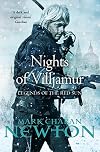
Yeah, ditched it at page 166. Reasons, from the ones that caused most aggravation to the ones that are actually serious problems:
- Words used wrong. As in "mortification" at finding more stairs at the end of a long climb. (Look, I find my personal level of fitness embarrassing too, but that's not what he meant.)
- General uncomfortable language use. Scott Lynch once mentioned something about wanting to feel like the author really chose their words with care, but this was like feeling that show more he was sifting through a dictionary going, "Ooh, that one sounds so much better than what I had before, let's use it." It made clunky sentences because I had to process multiple uncommon words, but was also a problem because sometimes it made things ambiguous or unclear, and problematic in a book where he was also making words up completely. (Which is obviously not a sin in fantasy, but when you're not sure whether he's just using the word weirdly because it's a Thing or because he's Being Creative, it doesn't aid the story.)
- Telling. Whoa nelly, the telling. Classic telling, of the "look, there's a 'because' separating a character action from an explanation of that action" variety. There was a stepped-back-from-realist-narrative vibe about the book that I was prepared to go with, and thus wear a little telling, but it just got too much, and wasn't facilitating any really interesting cohesion of concepts.
- Where is this story even going? I was a third of the way through it without any real sense of a big and interesting story. There was a murder mystery (more like a police procedural without any particulars of the procedure) and a guy trying to sleep with anything in a skirt (...) and a military man running errands and getting attacked (for reasons that presumably go beyond the "need an action scene!"). There was an ice age coming. That might have been interesting, but no one really seemed that involved with it.
- Not a single character I cared about. Good lord, were these some macho unlikeable characters, from the grumpy old bastard cop to the self-doubting military hero to the remarkably uncharismatic womaniser. The prostitute with the magical art was a little interesting, but in isolation that just gave me a yen to re-read [b:The Etched City|944555|The Etched City|K.J. Bishop|http://photo.goodreads.com/books/1320551808s/944555.jpg|929493].
So why have I given it two stars? The world. Everything, from the looming (if slightly inexplicable) ice-age, through the techno-magical system, to the human-like races, and especially the Viking-without-the-kitsch setting, was really interesting. That felt fresh.
Shame about the rest. show less
- Words used wrong. As in "mortification" at finding more stairs at the end of a long climb. (Look, I find my personal level of fitness embarrassing too, but that's not what he meant.)
- General uncomfortable language use. Scott Lynch once mentioned something about wanting to feel like the author really chose their words with care, but this was like feeling that show more he was sifting through a dictionary going, "Ooh, that one sounds so much better than what I had before, let's use it." It made clunky sentences because I had to process multiple uncommon words, but was also a problem because sometimes it made things ambiguous or unclear, and problematic in a book where he was also making words up completely. (Which is obviously not a sin in fantasy, but when you're not sure whether he's just using the word weirdly because it's a Thing or because he's Being Creative, it doesn't aid the story.)
- Telling. Whoa nelly, the telling. Classic telling, of the "look, there's a 'because' separating a character action from an explanation of that action" variety. There was a stepped-back-from-realist-narrative vibe about the book that I was prepared to go with, and thus wear a little telling, but it just got too much, and wasn't facilitating any really interesting cohesion of concepts.
- Where is this story even going? I was a third of the way through it without any real sense of a big and interesting story. There was a murder mystery (more like a police procedural without any particulars of the procedure) and a guy trying to sleep with anything in a skirt (...) and a military man running errands and getting attacked (for reasons that presumably go beyond the "need an action scene!"). There was an ice age coming. That might have been interesting, but no one really seemed that involved with it.
- Not a single character I cared about. Good lord, were these some macho unlikeable characters, from the grumpy old bastard cop to the self-doubting military hero to the remarkably uncharismatic womaniser. The prostitute with the magical art was a little interesting, but in isolation that just gave me a yen to re-read [b:The Etched City|944555|The Etched City|K.J. Bishop|http://photo.goodreads.com/books/1320551808s/944555.jpg|929493].
So why have I given it two stars? The world. Everything, from the looming (if slightly inexplicable) ice-age, through the techno-magical system, to the human-like races, and especially the Viking-without-the-kitsch setting, was really interesting. That felt fresh.
Shame about the rest. show less

Very intriguing start to a new series. Although I found the writing odd and quirky, I was quickly entangled into the plot. Good story and excellent creation of atmosphere and complex alien world. I especially liked that his world was created not just using visual images, but included sound and smell and at times I felt I could touch the cold stones and frightening snow.
I found some of the characters to be problematic, at first, but I was relieved to see they all grew and matured and deepened show more as the tale progressed.
I'll definitely read the next book in the series to follow the adventures of the rebels of Villjamur. show less
I found some of the characters to be problematic, at first, but I was relieved to see they all grew and matured and deepened show more as the tale progressed.
I'll definitely read the next book in the series to follow the adventures of the rebels of Villjamur. show less
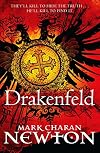
If you ever get the opportunity to check out Drakenfeld, I highly recommend doing so! Go ahead and pick up the book, take your time to admire that striking, gorgeous cover, and give the first chapter a whirl. For myself, I was irrevocably hooked by the third page. It's hard not to be intrigued by the opening scene, when the descriptions of a brutal, torturous act of punishment is at once juxtaposed by the eponymous main character's deep regret and compassion, especially since he was the one show more who so doggedly hunted down the condemned in the first place.
Indeed, Lucan Drakenfeld has his work cut out for him. As an officer of the Sun Chamber, the independent organization tasked with maintaining the peace and stability of the various kingdoms in the Royal Vispasian Union, he has traveled far and wide and acted as lawkeeper in many places across the land. Yet when news of his father's death reaches him at the start of this story, Drakenfeld is recalled to his childhood home of Tryum.
Unfortunately, our protagonist has scarcely settled into his new post when tragedy befalls Tryum's royal family. The king's sister Lacanta has been found murdered, and Drakenfeld is called in to investigate the case. But with the princess' body found inside an empty locked temple just minutes after she was last seen alive by numerous witnesses, the baffling circumstances around her death seem quite impossible. Furthermore, the rumors that she was struck down by sorcery and witchcraft certainly aren't helping one bit.
First of all, I was absolutely delighted to find a book like this! I'll admit, despite hearing it described as a "fantasy mystery", I had my doubts in the beginning, namely in the "Mystery" part of that combination. After all, I've read a lot fantasy in the past which have been lumped into this category (specifically, a lot of urban fantasy and paranormal) but only because they happen to contain a few elements of the genre like noir or crime. Don't get me wrong; I've been known to enjoy those kinds of books a lot as well, but it was still very exciting, the moment when I was reading Drakenfeld and realized that I was holding an actual bonafide whodunit murder mystery in my hands.
It only gets better. The book's fantasy setting is one rich with politics, religion and culture, with an atmosphere reminiscent of Ancient Rome. Mark Charan Newton's writing style is wonderful, bringing the world of Drakenfeld to life in a way that gives it an almost classical, literary feel. As a lover of epic and historical fantasy, I was in my comfort zone, even as the meat of the mystery plot unfolded.
But perhaps my biggest attraction to this book is the character of Lucan Drakenfeld himself. In a genre that has seen the rise of many anti-heroes and other darker, morally-ambiguous characters in recent years, I was actually a little taken aback to encounter someone like Drakenfeld. Put simply, our narrator is a good person. Not perfect, no; but he values life and law in equal measure. His code of honor, as I said, was something I was able to determine very early on, from his attitude towards crime and punishment in the opening scene. A genuine belief in the adherence to regulations combined with a respect for personal freedoms made him an intriguing character whom I knew I was going to love. Coming down from reading a lot of epic fantasy starring thieves, mercenaries and assassins as of late also made meeting Drakenfeld a refreshing change.
This is the first book I've ever read by Mark Charan Newton, but it certainly won't be my last. With its perfect blend of fantasy and mystery and an excellent cast of characters, Drakenfeld gave me one of the more unique reading experiences I've had this year, and I think those who enjoy both those genres will really like this one. At the risk of sounding like a broken record, definitely check this one out. show less
Indeed, Lucan Drakenfeld has his work cut out for him. As an officer of the Sun Chamber, the independent organization tasked with maintaining the peace and stability of the various kingdoms in the Royal Vispasian Union, he has traveled far and wide and acted as lawkeeper in many places across the land. Yet when news of his father's death reaches him at the start of this story, Drakenfeld is recalled to his childhood home of Tryum.
Unfortunately, our protagonist has scarcely settled into his new post when tragedy befalls Tryum's royal family. The king's sister Lacanta has been found murdered, and Drakenfeld is called in to investigate the case. But with the princess' body found inside an empty locked temple just minutes after she was last seen alive by numerous witnesses, the baffling circumstances around her death seem quite impossible. Furthermore, the rumors that she was struck down by sorcery and witchcraft certainly aren't helping one bit.
First of all, I was absolutely delighted to find a book like this! I'll admit, despite hearing it described as a "fantasy mystery", I had my doubts in the beginning, namely in the "Mystery" part of that combination. After all, I've read a lot fantasy in the past which have been lumped into this category (specifically, a lot of urban fantasy and paranormal) but only because they happen to contain a few elements of the genre like noir or crime. Don't get me wrong; I've been known to enjoy those kinds of books a lot as well, but it was still very exciting, the moment when I was reading Drakenfeld and realized that I was holding an actual bonafide whodunit murder mystery in my hands.
It only gets better. The book's fantasy setting is one rich with politics, religion and culture, with an atmosphere reminiscent of Ancient Rome. Mark Charan Newton's writing style is wonderful, bringing the world of Drakenfeld to life in a way that gives it an almost classical, literary feel. As a lover of epic and historical fantasy, I was in my comfort zone, even as the meat of the mystery plot unfolded.
But perhaps my biggest attraction to this book is the character of Lucan Drakenfeld himself. In a genre that has seen the rise of many anti-heroes and other darker, morally-ambiguous characters in recent years, I was actually a little taken aback to encounter someone like Drakenfeld. Put simply, our narrator is a good person. Not perfect, no; but he values life and law in equal measure. His code of honor, as I said, was something I was able to determine very early on, from his attitude towards crime and punishment in the opening scene. A genuine belief in the adherence to regulations combined with a respect for personal freedoms made him an intriguing character whom I knew I was going to love. Coming down from reading a lot of epic fantasy starring thieves, mercenaries and assassins as of late also made meeting Drakenfeld a refreshing change.
This is the first book I've ever read by Mark Charan Newton, but it certainly won't be my last. With its perfect blend of fantasy and mystery and an excellent cast of characters, Drakenfeld gave me one of the more unique reading experiences I've had this year, and I think those who enjoy both those genres will really like this one. At the risk of sounding like a broken record, definitely check this one out. show less
A slow experience. I loved the concept of the oncoming ice age forcing a political revolution.
Unfortunately, the book starts with the usual disjointed narrative, hopping from person, place and time, which drives me up the wall. My most frequent review complaint: why must everyone write the deconstructionist novel? I'm convinced that it's a writing shortcut--it's so much easier to keep doing brief sketches from each viewpoint rather than strive for a cohesive whole. And it's a lazy-ass way show more to develop suspense when the characters are acting against each other. However, we mostly stick with four or five or six main characters: Randur, the dandy and dancer; Tuya the artist; Investigator Rumex Jeryd, a runnel; Brynd the captain of the elite Night Guard; the cultist Duncan; the high Councilor Urtica; the princesses Rika and Eir... okay, now that I think about it, we get to see inside everyone's head. Too bad. It's a whole mish-mash of people, both protagonist and antagonist, and unfortunately, a lot of them sound like the neighbor down the street pretending to be different people at the office when he's telling a story. I enjoyed following some of the storylines, but think the details in each could have been bulked and individualized by not switching narratives so often. Doing so created a sort of homogeneousness of narrative voice and vocabulary.
There were some creative moments--a lot of the underlying ideas were interesting, even if they lacked structure to make a cohesive whole. The setting and the concept of the ice age is fascinating. The races are kind of interesting to me. The cultist concept and Duncan's preoccupation with death is an interesting set-up.
I do have to note that this book involved some of the most awkward sex scenes that I've read in a long time (edited snarky comment here). I'd rather Newton just left it out, as it gave very little insight into the character(s) or setting--or even vicarious enjoyment.
I found the crab people an odd plot development. Did the story really need another race, and one on the attack, to propel it forward? It added confusion to an already disjointed plot. Okay, I get maybe it's the falling of the empire while petty maneuvers wear it away from within, but this isn't well done at all.
Nonetheless, something about the coming ice age is fascinating to me--could be my preoccupation with post-apocalypse novels, so I'll likely get the next book from the library to see how it develops. Or maybe I'm just OCD and I want to see what happens because I can't quite guess how this mess well end up. Well, actually, I can. Eir will be crowned after a long and bloody revolution that pits soldiers/commoners/runnels against the old nobility. Some cultist device will be used. A couple characters will be killed. show less
Unfortunately, the book starts with the usual disjointed narrative, hopping from person, place and time, which drives me up the wall. My most frequent review complaint: why must everyone write the deconstructionist novel? I'm convinced that it's a writing shortcut--it's so much easier to keep doing brief sketches from each viewpoint rather than strive for a cohesive whole. And it's a lazy-ass way show more to develop suspense when the characters are acting against each other. However, we mostly stick with four or five or six main characters: Randur, the dandy and dancer; Tuya the artist; Investigator Rumex Jeryd, a runnel; Brynd the captain of the elite Night Guard; the cultist Duncan; the high Councilor Urtica; the princesses Rika and Eir... okay, now that I think about it, we get to see inside everyone's head. Too bad. It's a whole mish-mash of people, both protagonist and antagonist, and unfortunately, a lot of them sound like the neighbor down the street pretending to be different people at the office when he's telling a story. I enjoyed following some of the storylines, but think the details in each could have been bulked and individualized by not switching narratives so often. Doing so created a sort of homogeneousness of narrative voice and vocabulary.
There were some creative moments--a lot of the underlying ideas were interesting, even if they lacked structure to make a cohesive whole. The setting and the concept of the ice age is fascinating. The races are kind of interesting to me. The cultist concept and Duncan's preoccupation with death is an interesting set-up.
I do have to note that this book involved some of the most awkward sex scenes that I've read in a long time (edited snarky comment here). I'd rather Newton just left it out, as it gave very little insight into the character(s) or setting--or even vicarious enjoyment.
Nonetheless, something about the coming ice age is fascinating to me--could be my preoccupation with post-apocalypse novels, so I'll likely get the next book from the library to see how it develops. Or maybe I'm just OCD and I want to see what happens because I can't quite guess how this mess well end up. Well, actually, I can. Eir will be crowned after a long and bloody revolution that pits soldiers/commoners/runnels against the old nobility. Some cultist device will be used. A couple characters will be killed. show less
Lists
Winter Books (1)
Awards


You May Also Like


Associated Authors
Statistics
- Works
- 11
- Also by
- 1
- Members
- 972
- Popularity
- #26,497
- Rating
- 3.2
- Reviews
- 39
- ISBNs
- 56
- Languages
- 2