
Jacqueline Carey (1) (1964–)
Author of Kushiel's Dart
For other authors named Jacqueline Carey, see the disambiguation page.
About the Author
Jacqueline Carey was born in 1964 in Highland Park, Illinois. After receiving B.A. degrees in psychology and English literature from Lake Forest College, she spent six months working in a bookstore in London. Upon returning to the U.S., she began her writing career while working at a local college. show more Her debut novel, Kushiel's Dart, was published in 2001 and won the 2002 Locus Award for Best First Novel. Her other works include the Kushiel's Legacy series, the Naamah series, the Sundering series, and Santa Olivia series. (Bowker Author Biography) show less
Series
Works by Jacqueline Carey
Kushiel's Legacy Series BOOKS 1-6 (Kushiel's Dart, Kushiel's Avatar, Kushiel's Mercy, Kushiel's Chosen, Kushiel's Justice, Kushiel's Scion) (2008) 11 copies
Kushiel's Dart, Part 2 of 2 5 copies
The Isle of Women 3 copies
The Kushiel's Legacy Series 3 copies
Kushiel's Chosen, Part 1 of 2 2 copies
You And You Alone 2 copies
Kushiel's Chosen, Part 2 of 2 2 copies
Kushiel's Avatar, Part 1 of 2 2 copies
Santitos At Large 1 copy
The Martyr of the Roses 1 copy
Associated Works
Songs of Love and Death: All Original Tales of Star Crossed Love (2010) — Contributor — 805 copies, 36 reviews
The Anthology at the End of the Universe: Leading Science Fiction Authors on Douglas Adams' The Hitchhiker's Guide to th (2005) — Contributor — 139 copies, 2 reviews
Revisiting Narnia: Fantasy, Myth and Religion in C. S. Lewis' Chronicles (2005) — Contributor — 54 copies, 1 review
Tagged
Common Knowledge
- Birthdate
- 1964-10-09
- Gender
- female
- Education
- Lake Forest College (B.A.|Psychology)
Lake Forest College (B.A.|English Literature) - Organizations
- Science Fiction and Fantasy Writers of America
- Nationality
- USA
- Birthplace
- Highland Park, Illinois, USA
- Places of residence
- Saugatuck, Michigan, USA
- Associated Place (for map)
- USA
Members
Discussions
Jacqueline Carey too cavalier about sexual assault or assault against children? in Book talk (March 2023)
Reviews
Kushiel’s Legacy: (Kushiel's Dart, Kushiel's Chosen, Kushiel's Avatar) (Kushiel's Legacy Book 4) by Jacqueline Carey
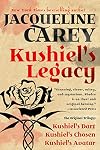
I am so glad to have discovered Jacqueline Carey and her "Kushiel's Legacy" series, which begins with "Kushiel's Dart." I've always been an avid reader of sci-fi and fantasy, but in recent years I've branched out to read a lot more "regular" fiction as well as other types of genre fiction (gothic, thriller, espionage, etc) and the only unfortunate side effect of being more broadly read is that I've become a lot pickier about what I read in general, but especially when I return to the fantasy show more genre. Let's face it. There is a LOT of bad fantasy out there, and it can be a little difficult to sift through it all to find a good level of craftmanship and story without doing a bunch of research online before heading to the store (or site...). I picked up "Kushiel's Dart" due to a staff recommendation tagged on the shelf, read the back, hemmed and hawed a little, read the first few pages, carried it around the store for awhile, then put it back and ended up getting it from the library. This is because I just could NOT decide based on the back of the book and the cover (which is a pretty corny cover complete with red foil stamping and a shirtless woman) whether this was thinly disguised erotica, or if it was a ridiculously brave and ingenious idea. Luckily for me, it was the latter! The world Carey has created is unique, rich, and believable, and the heroine is well worth championing. Yes, there is sex here, but it isn't nearly so overt as I was expecting, given that Phèdre nó Delaunay is a courtesan. Not only that, but she is a masochist, or an "anguisette" in the parlance of her world. The genius of Carey's work here is that because Phèdre enjoys her work, the taboo aspect of it falls away rather quickly, and her sexuality is not a vulnerability, but instead just part of who she is. (It also helps that very few of the scenes of a sexual nature are particularly explicit). This frees up the reader's attention for the meat of the story. Phèdre is not just a courtesan; she has been trained to observe, analyze, and remember details. Essentially, she is a spy, and an extremely effective one. This leads her into the depths of her country's political turmoil. When she stumbles into a plot against her beloved country, she uses her unique capabilities to work for the preservation of her queen and her homeland. Of course, "Kushiel's Dart" is not perfect. There are some characters who I wished would have had a little more development, and there are some signs of the first time author, but overall, Carey is just so inventive that I have to forgive her. I will be following the rest of the series to see how she grows as an author and to follow the intriguing, unusual character of Phèdre. show less
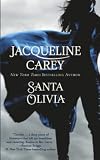
Someone I usually trust told me "You like Buffy, so read this" and thrust this book into my hands. And I'm glad.
In a not-too-distant future, the US government is finally sick of illegal immigrants, bird flu, and terrorist attacks from south of the border and do something drastic but effective: they cordon off a strip of west Texas, declare it no longer part of the US but a military buffer zone, and give everyone a few hours to get out. Those who choose to remain - and, 20 years later, their show more children - find themselves living on occupied territory, with only as many rights as it's currently convenient for the military to allow them, and no possibility to leave in either direction. Except one: every month or so, there's a boxing gala where locals are invited to challenge the current military champion. If they win, they get a ticket back to the States. Of course nobody has (yet), and isn't likely to since everyone knows it'd be a PR disaster if people back home found out how things are...
This is where Loup (pronounced "Lou") Garrón grows up. Loup is... different. Her father, a deserter whom she never met, was part of some sort of military experiment (described with a great deal of exaggeration in the tabloids as "werewolf soldiers", hence her name), and as a result, it's clear early on that Loup has inherited something from him. She's stronger and faster than a normal person, and she has no capacity to feel fear. Which isn't a good thing when you're living under martial law, and doesn't get easier when she and her half-brother get orphaned early on. He grows up to be the best boxer the town of Santa Olivia has seen, she grows up in an orphanage trying to hide who or what she is; falling in love with another girl doesn't make things easier for her. But the town has a legend of its own, that of Santa Olivia, the blue-clad little girl who stopped a war, and as people get sick of their situation they start praying for her to appear.
It's tempting to describe the plot of Santa Olivia as Dark Angel meets Rocky; mutant girl becoming working-class hero. That doesn't mean it's not an intriguing novel. Sure, you'll see the plot twists coming, but Carey wisely doesn't rush into things, taking time to set up her world and giving all sides motivations for acting the way they do without painting anyone as a grade-A villain. The SF/fantasy elements and the big political questions are played very low and used mostly as a background for the story of the town, how people survive in it, the stories and dreams they rely on to keep going from day to day, and of course Loup herself. She's an intriguing character, enough so that even when the tempo flags in the middle rounds (the entire third act of the novel is essentially one long training montage) it stays on track, a slow but rich build-up to a finale that makes me want to read more. It's not quite a masterpiece, but hey, if you like the idea of a fairly realistic dystopia with a female protagonist who kicks ass, you won't be disappointed. show less
In a not-too-distant future, the US government is finally sick of illegal immigrants, bird flu, and terrorist attacks from south of the border and do something drastic but effective: they cordon off a strip of west Texas, declare it no longer part of the US but a military buffer zone, and give everyone a few hours to get out. Those who choose to remain - and, 20 years later, their show more children - find themselves living on occupied territory, with only as many rights as it's currently convenient for the military to allow them, and no possibility to leave in either direction. Except one: every month or so, there's a boxing gala where locals are invited to challenge the current military champion. If they win, they get a ticket back to the States. Of course nobody has (yet), and isn't likely to since everyone knows it'd be a PR disaster if people back home found out how things are...
This is where Loup (pronounced "Lou") Garrón grows up. Loup is... different. Her father, a deserter whom she never met, was part of some sort of military experiment (described with a great deal of exaggeration in the tabloids as "werewolf soldiers", hence her name), and as a result, it's clear early on that Loup has inherited something from him. She's stronger and faster than a normal person, and she has no capacity to feel fear. Which isn't a good thing when you're living under martial law, and doesn't get easier when she and her half-brother get orphaned early on. He grows up to be the best boxer the town of Santa Olivia has seen, she grows up in an orphanage trying to hide who or what she is; falling in love with another girl doesn't make things easier for her. But the town has a legend of its own, that of Santa Olivia, the blue-clad little girl who stopped a war, and as people get sick of their situation they start praying for her to appear.
It's tempting to describe the plot of Santa Olivia as Dark Angel meets Rocky; mutant girl becoming working-class hero. That doesn't mean it's not an intriguing novel. Sure, you'll see the plot twists coming, but Carey wisely doesn't rush into things, taking time to set up her world and giving all sides motivations for acting the way they do without painting anyone as a grade-A villain. The SF/fantasy elements and the big political questions are played very low and used mostly as a background for the story of the town, how people survive in it, the stories and dreams they rely on to keep going from day to day, and of course Loup herself. She's an intriguing character, enough so that even when the tempo flags in the middle rounds (the entire third act of the novel is essentially one long training montage) it stays on track, a slow but rich build-up to a finale that makes me want to read more. It's not quite a masterpiece, but hey, if you like the idea of a fairly realistic dystopia with a female protagonist who kicks ass, you won't be disappointed. show less
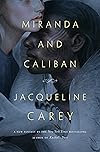
In this haunting retelling of a classic, Jacqueline Carey imagines the events that led up to the storm that begins Shakespeare's The Tempest. Six-year-old Miranda and her father Prospero have been living on a Mediterranean island for years, but neither the reader nor Miranda know how they came to be there. Prospero, through his magical workings, has command of a number of elemental beings who perform various menial duties for them, and on one fateful day he executes a spell that brings show more Caliban, a wild boy also living on the island, into their household.
I do love a retelling, and Carey's deft and evocative writing boosts this one to among some of my favorites. Be forewarned that it is ultimately a sad story — there is no happy ending, and Prospero's behavior toward nearly every other character can only be described as abusive. It is beautiful, though. show less
I do love a retelling, and Carey's deft and evocative writing boosts this one to among some of my favorites. Be forewarned that it is ultimately a sad story — there is no happy ending, and Prospero's behavior toward nearly every other character can only be described as abusive. It is beautiful, though. show less
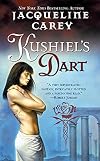
Knowledge of the BDSM aspect made me really uncomfortable in the beginning, primarily because of Phèdre's age (hint: she grows up!), but later on, I never felt that the SM was the focus of the story, it was just a facet of Phèdre's personality. The sex scenes, as apart from the SM scenes, were all pretty tame. A couple of the SM scenes rated pretty high on the squick-scale for my own tastes, but I didn't think they were there merely for titillation and actually served a purpose within the show more story. When Phèdre is in Skaldia and is being held by her rapists, how the fact that she gets off on humiliation compounded her feelings of non-sexy shame was eye-opening. And how her pain-fetish plays into her relationship with Melisande, just whoa.
Despite the fact that the story is about a courtesan who is also a god-touched masochist, I'd class this as Fantasy-plus as opposed to Erotica-Fantasy. It's like all my favorite things in one book: fantasy, magic, sexy-funtimes, a little romance, political intrigue, super character development, and a believable, logical world. It's also like, a million pages long, so it took a little effort to read, which I appreciate. show less
Despite the fact that the story is about a courtesan who is also a god-touched masochist, I'd class this as Fantasy-plus as opposed to Erotica-Fantasy. It's like all my favorite things in one book: fantasy, magic, sexy-funtimes, a little romance, political intrigue, super character development, and a believable, logical world. It's also like, a million pages long, so it took a little effort to read, which I appreciate. show less
Lists
Guilty Pleasures (1)
io9 Book Club (1)
Princess Tales (1)
BDSM Erotica (1)
Awards


You May Also Like


Associated Authors
Statistics
- Works
- 52
- Also by
- 10
- Members
- 34,013
- Popularity
- #562
- Rating
- 4.0
- Reviews
- 952
- ISBNs
- 310
- Languages
- 8
- Favorited
- 235

