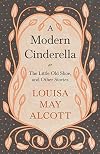
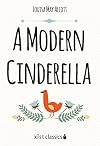
A Modern Cinderella
by Louisa May Alcott
On This Page
Description
In this charming collection of stories, the author of beloved novels such as Little Women re-imagines several classic fairy tales and fables, setting them among the austere beauty of the nineteenth-century New England countryside. A Modern Cinderella a satisfying treat for readers of all age..
Tags
Recommendations














Member Reviews
Disclaimer: I only read the title story.
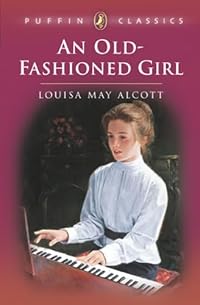
Alcott's other personalities seep into this one. You can't read about Di, Nan, and Laura without imposing characteristics from Little Women, Eight Cousins, and An Old-fashioned Girl. It isn't literature, makes you think of Jo's(aka LMA's) newspaper stories that put bread on the table. But no one does engagements better than Louisa, Lucy Maud Montgomery, and Jane Austen--at least in my opinion.
Alcott's other personalities seep into this one. You can't read about Di, Nan, and Laura without imposing characteristics from Little Women, Eight Cousins, and An Old-fashioned Girl. It isn't literature, makes you think of Jo's(aka LMA's) newspaper stories that put bread on the table. But no one does
The four stories in this collection differ greatly from one another in tone and subject matter.
The title story didn't appeal to me all that much, as the experimental style didn't suit my taste. At times I was quite confused as to what was happening.
The tale features three sisters who live with their father. The oldest sister takes on the role mother, doing most of the household chores, thus she is the modern Cinderella.
Her younger sisters are in their late teens and do little to help out until she suffers from exhaustion and becomes bedridden. The teens aren't in the wicked stepsister mould but that's who they represent - "idle sisters" would be more apt.
Two stars for this one.
"Nelly's Hospital" is a children's story. Because of this I show more was tempted to skip it, but I have such respect for Ms Alcott's writing abilities that I gave it a go. I enjoyed this more than the title story.
Nelly is a girl of, I assume, nine or ten. She has a friend called Tony who's twelve and I get the impression Nelly's a bit younger than him.
Anyway, after the girl's soldier brother is wounded, she is inspired to start her own hospital - for small animals and insects. She and Tony clear a space to house the 'patients' and the following day Nelly goes into the garden to find injured creatures.
Three stars for this tale.
"The Brothers" is the most serious story of the four.
A lady who's previously had the pox agrees to look after an injured rebel soldier, aided by a man recently released from slavery (his mother was black; his father white). Can't say much more without giving the plot away, but it's quite a sombre tale.
Three stars for this.
In contrast, "Debby's Debut" is a light-hearted story, featuring eighteen-year-old Debby - aka Dora - on holiday and under her aunt's wing. Her aunt is the epitome of Victorian prudery, fussing all the time about appearances, and is careful with whom her niece should or should not keep company with.
Debby, although respectful of her aunt's ideals, has a mind of her own. She's not rebellious but she is an independent thinker, good-natured, and cares little if her hair is out of place when she's having fun. Nor does it bother her to be seen having bread and milk to eat in public - this is an embarrassment as far as the pedantic aunt is concerned.
Two men fall in love with Debby, adding further interest to the tale.
So four stars for this enjoyable story with its humour and romantic interludes. show less
The title story didn't appeal to me all that much, as the experimental style didn't suit my taste. At times I was quite confused as to what was happening.
The tale features three sisters who live with their father. The oldest sister takes on the role mother, doing most of the household chores, thus she is the modern Cinderella.
Her younger sisters are in their late teens and do little to help out until she suffers from exhaustion and becomes bedridden. The teens aren't in the wicked stepsister mould but that's who they represent - "idle sisters" would be more apt.
Two stars for this one.
"Nelly's Hospital" is a children's story. Because of this I show more was tempted to skip it, but I have such respect for Ms Alcott's writing abilities that I gave it a go. I enjoyed this more than the title story.
Nelly is a girl of, I assume, nine or ten. She has a friend called Tony who's twelve and I get the impression Nelly's a bit younger than him.
Anyway, after the girl's soldier brother is wounded, she is inspired to start her own hospital - for small animals and insects. She and Tony clear a space to house the 'patients' and the following day Nelly goes into the garden to find injured creatures.
Three stars for this tale.
"The Brothers" is the most serious story of the four.
A lady who's previously had the pox agrees to look after an injured rebel soldier, aided by a man recently released from slavery (his mother was black; his father white). Can't say much more without giving the plot away, but it's quite a sombre tale.
Three stars for this.
In contrast, "Debby's Debut" is a light-hearted story, featuring eighteen-year-old Debby - aka Dora - on holiday and under her aunt's wing. Her aunt is the epitome of Victorian prudery, fussing all the time about appearances, and is careful with whom her niece should or should not keep company with.
Debby, although respectful of her aunt's ideals, has a mind of her own. She's not rebellious but she is an independent thinker, good-natured, and cares little if her hair is out of place when she's having fun. Nor does it bother her to be seen having bread and milk to eat in public - this is an embarrassment as far as the pedantic aunt is concerned.
Two men fall in love with Debby, adding further interest to the tale.
So four stars for this enjoyable story with its humour and romantic interludes. show less
Ratings
Members
- Recently Added By
Author Information

464+ Works 108,552 Members
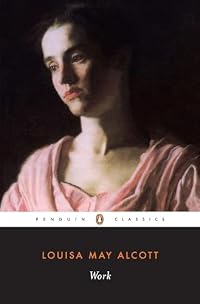
Louisa May Alcott was born in Germantown, Pennsylvania, in 1832. Two years later, she moved with her family to Boston and in 1840 to Concord, which was to remain her family home for the rest of her life. Her father, Bronson Alcott, was a transcendentalist and friend of Ralph Waldo Emerson and Henry David Thoreau. Alcott early realized that her show more father could not be counted on as sole support of his family, and so she sacrificed much of her own pleasure to earn money by sewing, teaching, and churning out potboilers. Her reputation was established with Hospital Sketches (1863), which was an account of her work as a volunteer nurse in Washington, D.C. Alcott's first works were written for children, including her best-known Little Women (1868--69) and Little Men: Life at Plumfield with Jo's Boys (1871). Moods (1864), a "passionate conflict," was written for adults. Alcott's writing eventually became the family's main source of income. Throughout her life, Alcott continued to produce highly popular and idealistic literature for children. An Old-Fashioned Girl (1870), Eight Cousins (1875), Rose in Bloom (1876), Under the Lilacs (1878), and Jack and Jill (1881) enjoyed wide popularity. At the same time, her adult fiction, such as the autobiographical novel Work: A Story of Experience (1873) and A Modern Mephistopheles (1877), a story based on the Faust legend, shows her deeper concern with such social issues as education, prison reform, and women's suffrage. She realistically depicts the problems of adolescents and working women, the difficulties of relationships between men and women, and the values of the single woman's life. (Bowker Author Biography) show less
Common Knowledge
- Canonical title
- A Modern Cinderella
- Original title
- A Modern Cinderella; Or, The Little Old Shoe and Other Stories
- Original publication date
- 1893
- First words
- Among green New England hills stood an ancient house, many-gabled, mossy-roofed, and quaintly built, but picturesque and pleasant to the eye; for a brook ran babbling through the orchard that encompassed it about, a garden-pl... (show all)at stretched upward to the whispering birches on the slope, and patriarchal elms stood sentinel upon the lawn, as they had stood almost a century ago, when the Revolution rolled that way and found them young.
Classifications
- Genres
- Fiction and Literature, General Fiction, Children's Books
- DDC/MDS
- 813.4 — Literature & rhetoric American literature in English American fiction in English Later 19th Century 1861-1900
- LCC
- PZ7 .A335 .A436 — Language and Literature Fiction and juvenile belles lettres Fiction and juvenile belles lettres Juvenile belles lettres
- BISAC
Statistics
- Members
- 116
- Popularity
- 279,751
- Reviews
- 2
- Rating
- (3.45)
- Languages
- English
- Media
- Paper, Audiobook, Ebook
- ISBNs
- 63
- ASINs
- 12