Disobedience
by Naomi Alderman
On This Page
Description
"When a young photographer living in New York learns that her estranged father, a well-respected rabbi, has died, she can no longer run away from the truth, and soon sets out for the Orthodox Jewish community in London where she grew up. Back for the first time in years, Ronit can feel the disapproving eyes of the community. Especially those of her beloved cousin, Dovid, her father's favorite student and now an admired rabbi himself, and Esti, who was once her only ally in youthful show more rebelliousness. Now Esti is married to Dovid, and Ronit is shocked by how different they both seem, and how much greater the gulf between them is. But when old flames reignite and the shocking truth about Ronit and Esti's relationship is revealed, the past and present converge in this award-winning and critically acclaimed novel about the universality of love and faith, and the strength and sacrifice it takes to fight for what you believe in--even when it means disobedience."--Back cover. show lessTags
Recommendations


































Member Recommendations

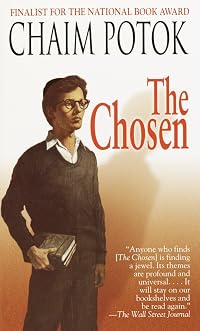
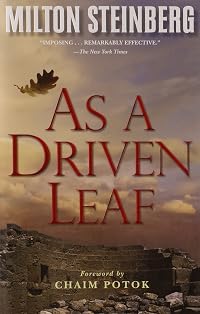
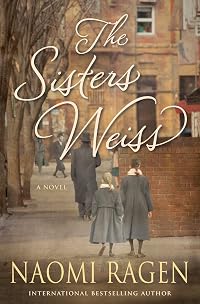
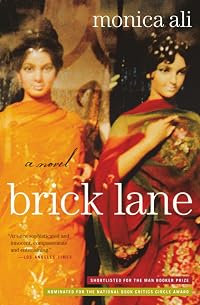
Citizenjoyce Both books have a unique analysis of Judaism and the bible.
Member Reviews
A novel about two women, raised as Orthodox Jews and once girlhood lovers, now (since one married the other's cousin) struggling respectively with being a lesbian and with being an Orthodox Jew.
Usually I'm, at best, intensely frustrated with books about adulterous love triangles. Now this joins “The Princess of Cleves" to make the only two such books that, by contrast, I loved. (this probably has something to do with the fact that neither treats love as fated or impossible to resist or the most important consideration in the characters' lives.) And I believe it's the only book where I love all three main characters from beginning to end.
And the structure of it, mingling characters and culture and religion in one organic exploration of show more the theme (of which one example might be “Sometimes I think that my life is a punishment for wanting. And the wanting is a punishment too. But I think, if God wishes to punish me, so be it; that is His right. But it is my right to disobey.") is just wonderful. show less
Usually I'm, at best, intensely frustrated with books about adulterous love triangles. Now this joins “The Princess of Cleves" to make the only two such books that, by contrast, I loved. (this probably has something to do with the fact that neither treats love as fated or impossible to resist or the most important consideration in the characters' lives.) And I believe it's the only book where I love all three main characters from beginning to end.
And the structure of it, mingling characters and culture and religion in one organic exploration of show more the theme (of which one example might be “Sometimes I think that my life is a punishment for wanting. And the wanting is a punishment too. But I think, if God wishes to punish me, so be it; that is His right. But it is my right to disobey.") is just wonderful. show less
Ronit Krushka left behind her Orthodox Jewish community in London and moved to New York when she was 18. In New York, she became a successful businesswoman, with a less than successful love life. When her father dies, she has to go back to London and face her past. Her wise-cracking, provocative manner shocks the community in which she grew up, but Ronit finds that she is not above being shocked by what she discovers both about herself and her former best friends Dovid and Esti…
Disobedience is a fascinating novel, which as well as being an entertaining account of three people facing their past (and their present), also offers an insight into the world of Orthodox Judaism. In each chapter there is a short reading from the Torah, with show more an explanation of it’s meaning. From there, the narrative switches between the third person, giving an objective view of what is happening, and Ronit’s first person narrative in which she describes events from her viewpoint.
The three main characters – Ronit, Dovid and Esti are all very well drawn and fully rounded characters. Although Ronit is the only one of the three to narrate parts of the story, I felt that we got to know them all equally. The peripheral characters were also depicted very well. I really liked Ronit – her behaviour was sometimes deliberately outrageous or unfair – but her motives for this were explained in her own quick witted way. I also thought Esti was a very interesting and somewhat enigmatic character.
The writing itself flowed well, weaving the different parts of the story together very well. I enjoyed reading about the Jewish traditions and way of life, and how it was for someone who had formerly lived in that community to feel like an outsider.
Overall, an enjoyable book and an author I will definitely be keeping an eye open for in future. show less
Disobedience is a fascinating novel, which as well as being an entertaining account of three people facing their past (and their present), also offers an insight into the world of Orthodox Judaism. In each chapter there is a short reading from the Torah, with show more an explanation of it’s meaning. From there, the narrative switches between the third person, giving an objective view of what is happening, and Ronit’s first person narrative in which she describes events from her viewpoint.
The three main characters – Ronit, Dovid and Esti are all very well drawn and fully rounded characters. Although Ronit is the only one of the three to narrate parts of the story, I felt that we got to know them all equally. The peripheral characters were also depicted very well. I really liked Ronit – her behaviour was sometimes deliberately outrageous or unfair – but her motives for this were explained in her own quick witted way. I also thought Esti was a very interesting and somewhat enigmatic character.
The writing itself flowed well, weaving the different parts of the story together very well. I enjoyed reading about the Jewish traditions and way of life, and how it was for someone who had formerly lived in that community to feel like an outsider.
Overall, an enjoyable book and an author I will definitely be keeping an eye open for in future. show less
I love this book. I didn't expect to given the complaints I kept seeing in reviews about how it was not enough this and too much that. Yes of course I read reviews. I'm curious about what people think of things. In this case, I believe that a lot of them were... not wrong per se, because your opinions are never wrong. But I think they were looking for something far smaller than what Alderman has given us here.
To begin, this isn't a book that is primarily about being a Jewish lesbian. It's not primarily about being Jewish or being a lesbian even though both those things are critical to understanding what's being said. The book's theme is right there in the title, but it takes a long time, and some discomfort to understand what show more disobedience has to do with anything. It's about man's (in the generic sense) relationship with God. It's about our relationship to ourselves and how we become who we need to be.
It's the story of Ronit Krushka, the estranged daughter of an Orthodox Rabbi, who returns home from her self-imposed exile in New York after her father dies. She plans to stay with her cousin, Dovid, unaware that he is married to Ronit's girlhood lover, Esti. I didn't like Ronit at the beginning, she seemed like a walking cliche to me. She had no use for her father, never contacted him after she left home. She has no use for the community she grew up in, for the religion in which she was raised. She self-identifies as lesbian but has an on-again, off-again affair with her (male) boss. She felt like everyone I've ever known who felt compelled to rebel as loudly and obviously as possible.
Her cousin, Dovid, seems like a non-entity. We are told right at the start that nobody in the congregation would ever think of him as the Rav, even though he's been groomed to succeed Rabbi Krushka. His wife, Ronit's former lover Esti, is odd in a way that has already been marked by the congregation. They don't know what to make of her. She harbors lustful thoughts for one of the teachers in her school, but never dares act on them, so we feel she is repressed. We see all of them from the outside, and it feels as if this is going to be a love story between Ronit and Esti that will scorch the earth of their carefully tended lives.
But without a lot of emotional upheaval, Alderman leads us into their minds and hearts, and we discover that none of them are who we think they are. None of them want what we expect them to want (I think that's why a lot of people are disappointed in the book.), or react the way we expect them to react. We come to see them as more than just their sexuality or religion, we are given relationships that are complicated and unexpected, choices that perhaps we never expected, but which feel right in the context of the book.
By the end, I'd come to like Ronit a lot, and love Esti and Dovid. Even better, I felt hopeful that they would make the best possible decisions for themselves in the long run. I felt comfortable with the choices they'd made, and the quiet, determined way in which they lived their lives. I felt as if they were changing the paradigm in part because they had come to understand that their god gave them the ability to be disobedient, and to question His rules.
I came to the end and there were tears. I was surprised, yet unsurprised, and happy. In Ronit's dream, I understood her journey and that of Esti and Dovid, and I knew they'd be all right, that they all had gained a sense of order that was meaningful to them.
I should say something about the narrator, who was very good. I've seen people complain that her Hebrew pronunciation is not the best, but I noted nothing wrong. I think it's a good production. show less
To begin, this isn't a book that is primarily about being a Jewish lesbian. It's not primarily about being Jewish or being a lesbian even though both those things are critical to understanding what's being said. The book's theme is right there in the title, but it takes a long time, and some discomfort to understand what show more disobedience has to do with anything. It's about man's (in the generic sense) relationship with God. It's about our relationship to ourselves and how we become who we need to be.
It's the story of Ronit Krushka, the estranged daughter of an Orthodox Rabbi, who returns home from her self-imposed exile in New York after her father dies. She plans to stay with her cousin, Dovid, unaware that he is married to Ronit's girlhood lover, Esti. I didn't like Ronit at the beginning, she seemed like a walking cliche to me. She had no use for her father, never contacted him after she left home. She has no use for the community she grew up in, for the religion in which she was raised. She self-identifies as lesbian but has an on-again, off-again affair with her (male) boss. She felt like everyone I've ever known who felt compelled to rebel as loudly and obviously as possible.
Her cousin, Dovid, seems like a non-entity. We are told right at the start that nobody in the congregation would ever think of him as the Rav, even though he's been groomed to succeed Rabbi Krushka. His wife, Ronit's former lover Esti, is odd in a way that has already been marked by the congregation. They don't know what to make of her. She harbors lustful thoughts for one of the teachers in her school, but never dares act on them, so we feel she is repressed. We see all of them from the outside, and it feels as if this is going to be a love story between Ronit and Esti that will scorch the earth of their carefully tended lives.
But without a lot of emotional upheaval, Alderman leads us into their minds and hearts, and we discover that none of them are who we think they are. None of them want what we expect them to want (I think that's why a lot of people are disappointed in the book.), or react the way we expect them to react. We come to see them as more than just their sexuality or religion, we are given relationships that are complicated and unexpected, choices that perhaps we never expected, but which feel right in the context of the book.
By the end, I'd come to like Ronit a lot, and love Esti and Dovid. Even better, I felt hopeful that they would make the best possible decisions for themselves in the long run. I felt comfortable with the choices they'd made, and the quiet, determined way in which they lived their lives. I felt as if they were changing the paradigm in part because they had come to understand that their god gave them the ability to be disobedient, and to question His rules.
I came to the end and there were tears. I was surprised, yet unsurprised, and happy. In Ronit's dream, I understood her journey and that of Esti and Dovid, and I knew they'd be all right, that they all had gained a sense of order that was meaningful to them.
I should say something about the narrator, who was very good. I've seen people complain that her Hebrew pronunciation is not the best, but I noted nothing wrong. I think it's a good production. show less
Disobedience begins with the death of the well-respected leader of an Orthodox Jewish synagogue in Hendon, England. The death of Rav Krushka sets off a chain of events which reveals the essence of one Orthodox Jewish community. Ronit Krushka, the estranged daughter of the Rav, is the perfect vehicle for this story, revealing the hypocrisy of those who eagerly pursue the righteousness God desires while at the same time failing to tamp down the sinful gossip and petty self-righteousness of their ingrown community. Additionally, the narrative takes a look at Ronit's cousin Rabbi Dovid Kuperman and his wife Esti who have eased into a marriage that is what neither expected and which provides happiness to neither. The Rav's death and the show more resulting return of Ronit to the community after a number of years absence unearth a number of issues that have lain dormant within the community and through which they must work in the course of the novel. Each chapter is artfully divided into three sections: one section for Ronit, one from Dovid and Esti, and one Godly anecdote that serves to shed light on the chapter's subject matter. With this format Alderman illuminates the community from God's perspective, from the inside, and from Ronit's slightly more deprecating point of view.
Readers will laugh at Ronit's wit with regard to her former community and her eagerness to knock this backward community off its axis, even if that means telling entirely wacky untruthes. They will sympathize as Dovid struggles against a leadership role in a synagogue which he is coming to respect less and less, and with Esti as she strives to find a way to combat her "inappropriate" desires and to combat the gossip of the coummunity she never could escape.
As each of the characters works to "fix" a group of people that are terribly stuck in their ways and to come to terms with those things that simply cannot be changed, this community and Orthodox Judaism come to life. In all, this is a triumphant story told with grace and sensitivity toward a community loved by God and its own citizens regardless of its imperfections. The narrative is richly rewarding as we watch the three main characters come to terms with the nature of their community and find themselves in the process.
I loved Alderman's honest depiction of Orthodox Judaism. The community's rigorous efforts to follow God's commands to the letter are astonishing. The characters are unique and engaging. Each faces their own difficulty within the community and within their selves, and it is fascinating to watch them become agents of change within a community that seems unchangeable and come to various degrees of contentment both inside and outside of the community. Additionally, I loved the first part of each chapter which is written in an almost sermon-like format using "we." I found that I appreciated the insight that these few paragraphs in each chapter had into the nature of God and the clues they provided for the larger meaning of the chapters. I really appreciated the format and the inside and out look at the community it provided. show less
Readers will laugh at Ronit's wit with regard to her former community and her eagerness to knock this backward community off its axis, even if that means telling entirely wacky untruthes. They will sympathize as Dovid struggles against a leadership role in a synagogue which he is coming to respect less and less, and with Esti as she strives to find a way to combat her "inappropriate" desires and to combat the gossip of the coummunity she never could escape.
As each of the characters works to "fix" a group of people that are terribly stuck in their ways and to come to terms with those things that simply cannot be changed, this community and Orthodox Judaism come to life. In all, this is a triumphant story told with grace and sensitivity toward a community loved by God and its own citizens regardless of its imperfections. The narrative is richly rewarding as we watch the three main characters come to terms with the nature of their community and find themselves in the process.
I loved Alderman's honest depiction of Orthodox Judaism. The community's rigorous efforts to follow God's commands to the letter are astonishing. The characters are unique and engaging. Each faces their own difficulty within the community and within their selves, and it is fascinating to watch them become agents of change within a community that seems unchangeable and come to various degrees of contentment both inside and outside of the community. Additionally, I loved the first part of each chapter which is written in an almost sermon-like format using "we." I found that I appreciated the insight that these few paragraphs in each chapter had into the nature of God and the clues they provided for the larger meaning of the chapters. I really appreciated the format and the inside and out look at the community it provided. show less
https://fromtheheartofeurope.eu/disobedience-by-naomi-alderman/
I’ve read two other books by Naomi Alderman, a Doctor Who story and a novel where all women have the power to strike down their enemies, and enjoyed them both. Disobedience is not sf; it’s a closely observed story of a Jewish woman returning to London from New York after her rabbi father’s death, and becoming simultaneously enmeshed in and rejected by the dynamics of the Jewish community in which she grew up, where the new rabbi is her cousin who has meanwhile married the girl she loved as a teenager. The dynamics of grief and disruption of a conservative community are very well described; the Hendon synagogue isn’t quite the Satmar sect of Unorthodox, but that show more actually means it is recognisably closer to the Irish Catholicism that I experienced growing up. Recommended. show less
I’ve read two other books by Naomi Alderman, a Doctor Who story and a novel where all women have the power to strike down their enemies, and enjoyed them both. Disobedience is not sf; it’s a closely observed story of a Jewish woman returning to London from New York after her rabbi father’s death, and becoming simultaneously enmeshed in and rejected by the dynamics of the Jewish community in which she grew up, where the new rabbi is her cousin who has meanwhile married the girl she loved as a teenager. The dynamics of grief and disruption of a conservative community are very well described; the Hendon synagogue isn’t quite the Satmar sect of Unorthodox, but that show more actually means it is recognisably closer to the Irish Catholicism that I experienced growing up. Recommended. show less
To be honest, I don't know if Disobedience would appeal to a non-Jewish audience. It's just such a specifically Jewish book, tied up in specific Jewish experiences. That being said, the book also at one point confuses the fourth and fifth Commandments (score one for Jew school).
Disobedience could be confused for a soap opera premise: Ronit is the daughter of a prominent British Orthodox rabbi (though never explicitly stated, the community swings in a Yeshivish-with-Hasidic-undertones direction). She went off the derech--left the fold--for a secular life in New York after spending her teenage years making out with her best friend, Esti. Returning home for her father's funeral, Ronit discovers that Esti is now married to Ronit's cousin show more Dovid. Esti's also not over Ronit in the slightest. Still, the book overcomes it's melodramatic beginnings to become something quite interesting.
At it's heart, Disobedience is a meditation on the insular Orthodox world and those who don't quite fit in. Esti and Ronit are the most obvious misfits: Esti is lesbian and Ronit is bi, and their teenage relationship is the impetus for much angst over the course of the book. But Dovid makes things a bit more interesting. As the late Rav's nephew, star pupil, and assistant, Dovid is the unofficial successor to the Rav's throne (or pulpit). But Dovid is also a quiet, gentle man without charisma or desire for power. In his own way, he is also not what the community expects or wants. Despite existing at the center of attention following the Rav's death, he is also entirely alone. And unlike Ronit and Esti, he has no one to take comfort in.
Still, despite the introspection, Disobedience is a flawed novel. Alderman clearly isn't in the Yeshivish Orthodox fold, and her pretty obviously negative view of those communities shades every part of Disobedience. Which makes certain characters' ultimate decision to stay in the Orthodox community read as rather odd, as the book presents there being few benefits to staying in. As someone who is Orthodox herself (albeit Modern), I can say that Orthodox Judaism is intensely miserable for anyone who doesn't want to be there and pretty great for anyone who does. I don't begrudge Alderman her opinion, but she doesn't do a good job of presenting reasons why anyone would actually want to stay. And since some of the characters do decide to stay, we don't really understand why. show less
Disobedience could be confused for a soap opera premise: Ronit is the daughter of a prominent British Orthodox rabbi (though never explicitly stated, the community swings in a Yeshivish-with-Hasidic-undertones direction). She went off the derech--left the fold--for a secular life in New York after spending her teenage years making out with her best friend, Esti. Returning home for her father's funeral, Ronit discovers that Esti is now married to Ronit's cousin show more Dovid. Esti's also not over Ronit in the slightest. Still, the book overcomes it's melodramatic beginnings to become something quite interesting.
At it's heart, Disobedience is a meditation on the insular Orthodox world and those who don't quite fit in. Esti and Ronit are the most obvious misfits: Esti is lesbian and Ronit is bi, and their teenage relationship is the impetus for much angst over the course of the book. But Dovid makes things a bit more interesting. As the late Rav's nephew, star pupil, and assistant, Dovid is the unofficial successor to the Rav's throne (or pulpit). But Dovid is also a quiet, gentle man without charisma or desire for power. In his own way, he is also not what the community expects or wants. Despite existing at the center of attention following the Rav's death, he is also entirely alone. And unlike Ronit and Esti, he has no one to take comfort in.
Still, despite the introspection, Disobedience is a flawed novel. Alderman clearly isn't in the Yeshivish Orthodox fold, and her pretty obviously negative view of those communities shades every part of Disobedience. Which makes certain characters' ultimate decision to stay in the Orthodox community read as rather odd, as the book presents there being few benefits to staying in. As someone who is Orthodox herself (albeit Modern), I can say that Orthodox Judaism is intensely miserable for anyone who doesn't want to be there and pretty great for anyone who does. I don't begrudge Alderman her opinion, but she doesn't do a good job of presenting reasons why anyone would actually want to stay. And since some of the characters do decide to stay, we don't really understand why. show less
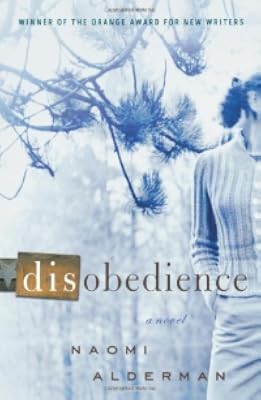
I read the film tie-in edition of this novel, published in 2018, which has a very annoying cover (visible in the list of editions if you're on the Goodreads desktop site). It gives away rather too much of the plot, and sets certain expectations which were difficult to shake. Fortunately, there is much more to this book than what the cover promises.
I imagine that if you asked Naomi Alderman what the book was about while she was writing it she would have embarked on a thirty second explanation and somehow found herself still talking ten minutes later. It is at once a very simple story and wonderfully complex. The writing, too, has hidden depths and shows a level of control that is very powerful. There is wit, heart and just enough plot to show more keep the pages turning.
Ronit, the protagonist, is very sympathetic and well-drawn and the stifling Jewish "village" that Alderman describes added flesh to the bones which I must confess I only ever saw from the bus when passing through certain North London suburbs. show less
I imagine that if you asked Naomi Alderman what the book was about while she was writing it she would have embarked on a thirty second explanation and somehow found herself still talking ten minutes later. It is at once a very simple story and wonderfully complex. The writing, too, has hidden depths and shows a level of control that is very powerful. There is wit, heart and just enough plot to show more keep the pages turning.
Ronit, the protagonist, is very sympathetic and well-drawn and the stifling Jewish "village" that Alderman describes added flesh to the bones which I must confess I only ever saw from the bus when passing through certain North London suburbs. show less
Members
- Recently Added By
Lists

BBC Radio 4 Bookclub
340 works; 13 members

Books Read in 2023
5,547 works; 145 members

BingoDOG 2015 Challenge
49 works; 3 members
Author Information

20+ Works 8,697 Members
Some Editions
Awards and Honors
Awards
Common Knowledge
- Canonical title
- Disobedience
- Original title
- Disobedience
- Original publication date
- 2006
- People/Characters
- Ronit Krushka; Dovid Kuperman; Esti Kuperman
- Important places
- London, England, UK; Hendon, London, England, UK
- Related movies
- Disobedience (2017 | IMDb)
- Dedication
- For my parents
- First words
- By the first Sabbath after the festival of Simchat Torah, Rav Krushka had grown so thin and pale that, the congregation muttered, the next world could be seen in the hollows of his eyes.
- Last words
- (Click to show. Warning: May contain spoilers.)And he threw back his head and laughed.
Classifications
Statistics
- Members
- 851
- Popularity
- 32,052
- Reviews
- 25
- Rating
- (3.62)
- Languages
- 6 — Dutch, English, French, German, Italian, Portuguese (Portugal)
- Media
- Paper, Audiobook, Ebook
- ISBNs
- 37
- ASINs
- 8