
Marcelo in the Real World
by Francisco Stork
On This Page
Description
Marcelo Sandoval, a seventeen-year-old boy on the high-functioning end of the autistic spectrum, faces new challenges, including romance and injustice, when he goes to work for his father in the mailroom of a corporate law firm.Tags
Recommendations








































Member Recommendations

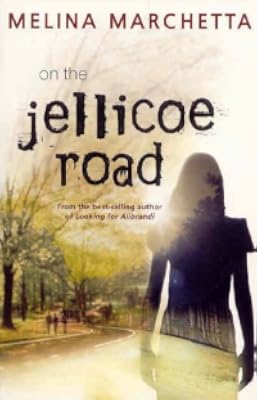
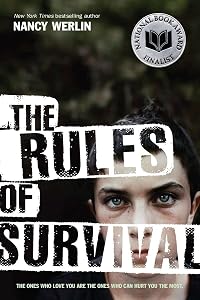
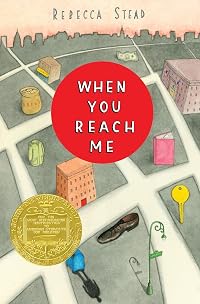
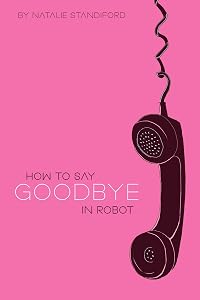
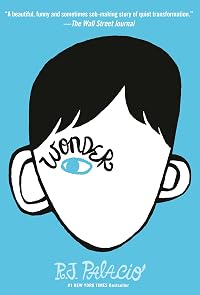
khuggard Also narrated by a teen with an Autism Spectrum disorder.
60

cammykitty This book is for adults, but teens who are good readers may like it. It is about an adult with ASD who is given the option to cure himself through an experimental procedure. Very authentic portrayal.
20



Member Reviews
Merideth Says: This is a beautifully written book. Stork nails Marcelo' s oddly formal, strangely lyrical way of thinking and speaking. My only quibble is that the supporting cast are not as well drawn as Marcelo. Arturo (the father) is little more than a sketch, and Wendell is almost a parody of a entitled Ivy League douchebag. Compelling is the word that I would use for this book; I read it almost in one sitting, and couldn't put it down.
Kearsten says: First off, I was completely enchanted by this book. Could not put it down, then about halfway through I had to put it aside for a few days because I both wanted it to never end but also because I was uncomfortable with the way things were going.
I just finished it today, and while the show more discomfort was there, and I did squirm, I'm sooooo glad I read this.
Marcelo is such a fascinating character - being on the autism spectrum, he has difficulty reading social and emotional cues, and so by nature he's outside of the "real world" and as such, is able to observe "normal" people with simple yet spot-on insight. At the beginning of summer, Marcelo makes a deal with his lawyer father - come to work at his law firm, and if he "succeeds," Marcelo can choose for himself which school he'd like to attend in the fall. Fail to succeed and Marcelo has to go to the local high school for his senior year, instead of the special school he's been attending for his whole life.
Marcelo's work at the law firm brings him into contact with several situations and people, some of whom mean him harm, and his struggle to learn how to navigate this new, "real world" is breathtaking and heartbreaking.
I cannot recommend this book enough - it will make you smile, laugh, worry and it certainly made me choke up a bit.
One of my favorite reads all year.
Susan says - This was an amazing book, full of insight and care. Marcelo is a teenager who is on the autism spectrum whose father works as a lawyer. His father tells Marcelo that he will be working for the summer in his father's law firm. This law firm changes Marcelo so much - more than anyone thought possible. He becomes exposed to his father's partner who is sleazy, the girl who works in the mailroom, and that family. It is a wonderful book about Marcelo - he is very measured and careful and analyzes everything very carefully. He has always been comfortable going to his special school and doing what was asked of him. However, his father gets him involved in manipulation and a lawsuit that Marcelo feels is very wrong. The book is fantastic, but I can see that it definitely runs a little fast towards the end - I think it wraps up with a glance at Marcelo's life in the real world that is maybe a little forced. But it was great - tender and loving and clearheaded. Really good. show less
Kearsten says: First off, I was completely enchanted by this book. Could not put it down, then about halfway through I had to put it aside for a few days because I both wanted it to never end but also because I was uncomfortable with the way things were going.
I just finished it today, and while the show more discomfort was there, and I did squirm, I'm sooooo glad I read this.
Marcelo is such a fascinating character - being on the autism spectrum, he has difficulty reading social and emotional cues, and so by nature he's outside of the "real world" and as such, is able to observe "normal" people with simple yet spot-on insight. At the beginning of summer, Marcelo makes a deal with his lawyer father - come to work at his law firm, and if he "succeeds," Marcelo can choose for himself which school he'd like to attend in the fall. Fail to succeed and Marcelo has to go to the local high school for his senior year, instead of the special school he's been attending for his whole life.
Marcelo's work at the law firm brings him into contact with several situations and people, some of whom mean him harm, and his struggle to learn how to navigate this new, "real world" is breathtaking and heartbreaking.
I cannot recommend this book enough - it will make you smile, laugh, worry and it certainly made me choke up a bit.
One of my favorite reads all year.
Susan says - This was an amazing book, full of insight and care. Marcelo is a teenager who is on the autism spectrum whose father works as a lawyer. His father tells Marcelo that he will be working for the summer in his father's law firm. This law firm changes Marcelo so much - more than anyone thought possible. He becomes exposed to his father's partner who is sleazy, the girl who works in the mailroom, and that family. It is a wonderful book about Marcelo - he is very measured and careful and analyzes everything very carefully. He has always been comfortable going to his special school and doing what was asked of him. However, his father gets him involved in manipulation and a lawsuit that Marcelo feels is very wrong. The book is fantastic, but I can see that it definitely runs a little fast towards the end - I think it wraps up with a glance at Marcelo's life in the real world that is maybe a little forced. But it was great - tender and loving and clearheaded. Really good. show less
The term "cognitive disorder" implies there is something wrong with the way I think or the way I perceive reality. I perceive reality just fine. Sometimes I perceive more of reality than others. Marcelo Sandoval hears music that nobody else can hear - part of an autism-like condition that no doctor has been able to identify. But his father has never fully believed in the music or Marcelo's differences, and he challenges Marcelo to work in the mailroom of his law firm for the summer . . . to join "the real world. There Marcelo meets Jasmine, his beautiful and surprising coworker, and Wendell, the son of another partner in the firm. He learns about competition and jealousy, anger and desire. But it's a picture he finds in a file a picture show more of a girl with half a face that truly connects him with the real world: its suffering, its injustice, and what he can do to fight.
Marcelo Sandoval is a high-functioning, extremely self-aware teenager with Asperger's syndrome. He has an empathetic mother and a father, Arturo, who appears to be less empathetic as he pushes Marcelo to live in the "real world." The form the real world takes is a summer job in the mailroom at Arturo's law office. The teen is forced to think on his feet, multitask, and deal with duplicitous people who try to take advantage of him. Over the course of a summer, Marcelo learns that he can function in society; he is especially surprised to find that he can learn to read people's expressions, even to the point of knowing whom he can and cannot trust. Writing in a first-person narrative, Stork does an amazing job of entering Marcelo's consciousness and presenting him as a dynamic, sympathetic, and wholly believable character. show less
Marcelo Sandoval is a high-functioning, extremely self-aware teenager with Asperger's syndrome. He has an empathetic mother and a father, Arturo, who appears to be less empathetic as he pushes Marcelo to live in the "real world." The form the real world takes is a summer job in the mailroom at Arturo's law office. The teen is forced to think on his feet, multitask, and deal with duplicitous people who try to take advantage of him. Over the course of a summer, Marcelo learns that he can function in society; he is especially surprised to find that he can learn to read people's expressions, even to the point of knowing whom he can and cannot trust. Writing in a first-person narrative, Stork does an amazing job of entering Marcelo's consciousness and presenting him as a dynamic, sympathetic, and wholly believable character. show less
3.5 stars
I'm not sure where to begin with this. On one hand, I loved this book. On the other hand, I do have a few major problems with it.
Firstly, the positives: Marcelo in the Real World features an autistic, Latino protagonist (super important representation!), Marcelo is not judged for his positive experience at a school for disabled children, complex themes such as religion, injustice and love are explored and the story gives an insight to the difficulties autistic people face when adjusting to the neurotypical world. On top of that, the book is easy to read and the writing is solid.
As for my complaints, I was quite disappointed in the usage of "functioning" labels. Myself and many others in the autistic community regard show more functioning labels as harmful, and Marcelo is consistently praised for his "extremely high-functioning" autism. As someone who would medically be considered "mildly autistic", it was difficult to read that praise, as it denies support and recognition of my issues. Besides, it also implies "low-functioning" autistics have less worth, which is an inhumane statement in itself.
Then, there was the focus on becoming a "regular" person. This was particularly emphasised at the end of the book: Marcelo managed to "fit in" by masking his autistic traits as much as he could and he's happy about it. That is not a message that should be spread, and this comes from someone who has mastered the skill of what we call masking in the autistic community. The solution is not to have autistic people hide parts of themselves, it is to give them space to be themselves.
I also didn't appreciate the inconsistent narrative. Marcelo switches from talking in first and third person regularly, even though it is implied in the beginning of the story that he only uses first person language when he consciously reminds himself of it. Some thing just didn't really add up.
Despite my complaints, I really enjoyed this Y/A novel. Being a seventeen-year-old is hard enough, let alone being thrown into a judgmental, confusing world which is completely out of your comfort zone. I think the autistic representation could've been better, but it's a start (besides, a neurotypical will never be able to portray us as well as we deserve, so let's give autistic authors a voice!).
Note: this book includes several ableist slurs, such as the r-word, m*ron and imb*cile. show less
I'm not sure where to begin with this. On one hand, I loved this book. On the other hand, I do have a few major problems with it.
Firstly, the positives: Marcelo in the Real World features an autistic, Latino protagonist (super important representation!), Marcelo is not judged for his positive experience at a school for disabled children, complex themes such as religion, injustice and love are explored and the story gives an insight to the difficulties autistic people face when adjusting to the neurotypical world. On top of that, the book is easy to read and the writing is solid.
As for my complaints, I was quite disappointed in the usage of "functioning" labels. Myself and many others in the autistic community regard show more functioning labels as harmful, and Marcelo is consistently praised for his "extremely high-functioning" autism. As someone who would medically be considered "mildly autistic", it was difficult to read that praise, as it denies support and recognition of my issues. Besides, it also implies "low-functioning" autistics have less worth, which is an inhumane statement in itself.
Then, there was the focus on becoming a "regular" person. This was particularly emphasised at the end of the book: Marcelo managed to "fit in" by masking his autistic traits as much as he could and he's happy about it. That is not a message that should be spread, and this comes from someone who has mastered the skill of what we call masking in the autistic community. The solution is not to have autistic people hide parts of themselves, it is to give them space to be themselves.
I also didn't appreciate the inconsistent narrative. Marcelo switches from talking in first and third person regularly, even though it is implied in the beginning of the story that he only uses first person language when he consciously reminds himself of it. Some thing just didn't really add up.
Despite my complaints, I really enjoyed this Y/A novel. Being a seventeen-year-old is hard enough, let alone being thrown into a judgmental, confusing world which is completely out of your comfort zone. I think the autistic representation could've been better, but it's a start (besides, a neurotypical will never be able to portray us as well as we deserve, so let's give autistic authors a voice!).
Note: this book includes several ableist slurs, such as the r-word, m*ron and imb*cile. show less
Marcelo Sandoval has a rare form of autism, but he can hear music no one else can hear. After spending years in a special school away from the “real world,” his father, an attorney, pulls strings to get Marcelo work in his law firm’s mailroom. Soon Marcelo finds himself mixed up in legal intrigue involving the slimy Wendell and potential romance with the beautiful and exotic Jasmine. Composed with great sensitivity and suspense, this novel provides a fine alternative to the glut of fantasy/science fiction/otherwise out-of-this-world YA literature. It is truly of the real world, yet it has its own lyrical magic.
This book won, inter alia, New York Times Notable Children's Book of 2009, 2009 Booklist Editors' Choice, Horn Book Fanfare Book, Kirkus Best Book of 2009, Publishers Weekly Best Book of 2009 and School Library Journal Best Book of 2009.
Much of the marketing for this book labels it as a book about Asperger’s Syndrome, a high-level functioning form of autism. I think that characterization mispresents the nature of this book. Yes, 17-year old Marcelo Sandoval has been diagnosed with AS, but the story is not about his disability, per se, other than perhaps in terms of the reaction of other people to Marcelo. Above all, it is a beautiful coming of age story about what happens when Marcelo leaves the protected environment of a special show more school and goes to work at his father’s law firm “in the real world.”
Marcelo’s father Arturo, the head of a rapacious corporate law firm, thinks “the real world” will be good for him. But for Marcelo, in an analogy later explored with his spiritual advisor, Rabbi Heschel, the transition is more than just a change of location. By going from the special school to the law firm, basically he has left the innocence and goodness of Eden and now has to learn about the existence of evil. He even begins to question his faith, which previously had been the bedrock of his sheltered existence. The pain he saw at the special school, he discovers, is nothing in comparison to the pain people inflict on one another outside its confines.
At the law firm, his father arranges for him to work in the mailroom under Jasmine, a girl not much older than he is. She is kind and patient with him, unlike others in the firm, who call him “Gump” or “Retard.” Marcelo and Jasmine discover they share a love of music and of the way it both calms and also elates them.
Wendell, the shallow and callow son of Arturo’s partner, gets Marcelo transferred to his office so that Marcelo can do his work while he hits the beach. He also regularly tries to pressure Marcelo into helping him get Jasmine into a compromising sexual situation.
But while doing Wendell’s work, Marcelo discovers something about a big ongoing litigation case that will ultimately change his life. First though, he must decide how to resolve the moral dilemma he has encountered. He asks Jasmine for her opinion:
Jasmine: "I’m not the one playing the piano here. You’re the one that needs to decide what the next note will be."
Marcelo: "But how do I know the next note is the right one?"
Jasmine: "The right note sounds right and the wrong note sounds wrong."
Rabbi Heschel uses her own analogy: When the sap comes up from the ground and travels through the branches of a tree, it can go up one branch and it is good and bears fruit. Or it can go up another and it is evll and there is no fruit. She says: “You have to make sure it goes up the right branch. It’s up to you.”
Beyond the micro sense of the wrongdoing he has uncovered, Marcelo wonders generally, “How do we go about living when there is so much suffering?“ The process by which Marcelo arrives at a satisfactory answer to both of these questions is one that is so well thought out and riveting that the reader is carried along by his logic and good-heartedness to perform a similar self-analysis.
And the beginnings of young love, so new to someone like Marcelo, are a joy to witness. He wonders why he feels like there are “a thousand butterflies fluttering inside of him” when he is near Jasmine. He also tries to work out what this means, and how it fits in with his other discoveries about the real world.
Evaluation: Did I say enough times how fabulous this book is? It’s not another wonderful book about a disabled person. It’s a wonderful book in which the protagonist (and narrator) happens to be disabled. And yet, by the end of the book, you wonder, along with some of the characters, who the “disabled” people in this story really are. Highly recommended. show less
Much of the marketing for this book labels it as a book about Asperger’s Syndrome, a high-level functioning form of autism. I think that characterization mispresents the nature of this book. Yes, 17-year old Marcelo Sandoval has been diagnosed with AS, but the story is not about his disability, per se, other than perhaps in terms of the reaction of other people to Marcelo. Above all, it is a beautiful coming of age story about what happens when Marcelo leaves the protected environment of a special show more school and goes to work at his father’s law firm “in the real world.”
Marcelo’s father Arturo, the head of a rapacious corporate law firm, thinks “the real world” will be good for him. But for Marcelo, in an analogy later explored with his spiritual advisor, Rabbi Heschel, the transition is more than just a change of location. By going from the special school to the law firm, basically he has left the innocence and goodness of Eden and now has to learn about the existence of evil. He even begins to question his faith, which previously had been the bedrock of his sheltered existence. The pain he saw at the special school, he discovers, is nothing in comparison to the pain people inflict on one another outside its confines.
At the law firm, his father arranges for him to work in the mailroom under Jasmine, a girl not much older than he is. She is kind and patient with him, unlike others in the firm, who call him “Gump” or “Retard.” Marcelo and Jasmine discover they share a love of music and of the way it both calms and also elates them.
Wendell, the shallow and callow son of Arturo’s partner, gets Marcelo transferred to his office so that Marcelo can do his work while he hits the beach. He also regularly tries to pressure Marcelo into helping him get Jasmine into a compromising sexual situation.
But while doing Wendell’s work, Marcelo discovers something about a big ongoing litigation case that will ultimately change his life. First though, he must decide how to resolve the moral dilemma he has encountered. He asks Jasmine for her opinion:
Jasmine: "I’m not the one playing the piano here. You’re the one that needs to decide what the next note will be."
Marcelo: "But how do I know the next note is the right one?"
Jasmine: "The right note sounds right and the wrong note sounds wrong."
Rabbi Heschel uses her own analogy: When the sap comes up from the ground and travels through the branches of a tree, it can go up one branch and it is good and bears fruit. Or it can go up another and it is evll and there is no fruit. She says: “You have to make sure it goes up the right branch. It’s up to you.”
Beyond the micro sense of the wrongdoing he has uncovered, Marcelo wonders generally, “How do we go about living when there is so much suffering?“ The process by which Marcelo arrives at a satisfactory answer to both of these questions is one that is so well thought out and riveting that the reader is carried along by his logic and good-heartedness to perform a similar self-analysis.
And the beginnings of young love, so new to someone like Marcelo, are a joy to witness. He wonders why he feels like there are “a thousand butterflies fluttering inside of him” when he is near Jasmine. He also tries to work out what this means, and how it fits in with his other discoveries about the real world.
Evaluation: Did I say enough times how fabulous this book is? It’s not another wonderful book about a disabled person. It’s a wonderful book in which the protagonist (and narrator) happens to be disabled. And yet, by the end of the book, you wonder, along with some of the characters, who the “disabled” people in this story really are. Highly recommended. show less
First off, I was completely enchanted by this book. Could not put it down, then about halfway through I had to put it aside for a few days because I both wanted it to never end but also because I was uncomfortable with the way things were going.
I just finished it today, and while the discomfort was there, and I did squirm, I'm sooooo glad I read this.
Marcelo is such a fascinating character - being on the autism spectrum, he has difficulty reading social and emotional cues, and so by nature he's outside of the "real world" and as such, is able to observe "normal" people with simple yet spot-on insight . At the beginning of summer, Marcelo make a deal with his lawyer father - come to work at his law firm, and if he "succeeds," Marcelo can show more choose for himself which school he'd like to attend in the fall. Fail to succeed and Marcelo has to go to the local high school for his senior year, instead of the special school he's been attending for his whole life.
Marcelo's work at the law firm brings him into contact with several situations and people, some of whom mean him harm, and his struggle to learn how to navigate this new, "real world" is breathtaking and heartbreaking.
I cannot recommend this book enough - it will make you smile, laugh, worry and it certainly made me choke up a bit.
One of my favorite reads all year. show less
I just finished it today, and while the discomfort was there, and I did squirm, I'm sooooo glad I read this.
Marcelo is such a fascinating character - being on the autism spectrum, he has difficulty reading social and emotional cues, and so by nature he's outside of the "real world" and as such, is able to observe "normal" people with simple yet spot-on insight . At the beginning of summer, Marcelo make a deal with his lawyer father - come to work at his law firm, and if he "succeeds," Marcelo can show more choose for himself which school he'd like to attend in the fall. Fail to succeed and Marcelo has to go to the local high school for his senior year, instead of the special school he's been attending for his whole life.
Marcelo's work at the law firm brings him into contact with several situations and people, some of whom mean him harm, and his struggle to learn how to navigate this new, "real world" is breathtaking and heartbreaking.
I cannot recommend this book enough - it will make you smile, laugh, worry and it certainly made me choke up a bit.
One of my favorite reads all year. show less
I considered saying that this is a wonderful book about a young man with disabilities. But that wouldn't be quite correct. Marcello does indeed see the world differently, but would I call it a disability? Not for Marcello.
I thought about saying that this is a coming of age story. That is true, almost. Marcello does indeed find the strength within himself to see the world differently. In all of its ugliness and sad reality. So in this way, I guess he did go through a coming of age period, or at least began to find the strength he will need to make a place for himself.
This is the story of an extraordinary young man. A teenager who sees things differently, and thinks about what it is he sees. Really thinks. And finds understanding. He show more grows up in a family where he is embraced by his mother and sister for who he is, and who he can be. He is taught in an environment where there is no judgement, just unconditional acceptance. When the time comes for him to be tested, these all serve him well in finding his strength, his place in the world, his happiness and perhaps his love.
Marcello drew me in immediately. He and his family mattered to me. I so wanted him to be more than fiction, and I am sure that somewhere, he is. Marcello in the Real World is a wonderful book. I read it in one long session, because i couldn't make myself leave. I had to know how he faired. I couldn't step away before reaching the end of his story. But as with all good stories, there is no ending here. It is all about beginnings. show less
I thought about saying that this is a coming of age story. That is true, almost. Marcello does indeed find the strength within himself to see the world differently. In all of its ugliness and sad reality. So in this way, I guess he did go through a coming of age period, or at least began to find the strength he will need to make a place for himself.
This is the story of an extraordinary young man. A teenager who sees things differently, and thinks about what it is he sees. Really thinks. And finds understanding. He show more grows up in a family where he is embraced by his mother and sister for who he is, and who he can be. He is taught in an environment where there is no judgement, just unconditional acceptance. When the time comes for him to be tested, these all serve him well in finding his strength, his place in the world, his happiness and perhaps his love.
Marcello drew me in immediately. He and his family mattered to me. I so wanted him to be more than fiction, and I am sure that somewhere, he is. Marcello in the Real World is a wonderful book. I read it in one long session, because i couldn't make myself leave. I had to know how he faired. I couldn't step away before reaching the end of his story. But as with all good stories, there is no ending here. It is all about beginnings. show less
Members
- Recently Added By
Published Reviews
ThingScore 94
Shot with spirtualism, laced with love, and fraught with conundrums, this book, like Marcelo himself, surprises.
added by khuggard
Writing in a first-person narrative, Stork does an amazing job of entering Marcelo's consciousness and presenting him as a dynamic, sympathetic, and wholly believable character.
added by khuggard
. . . in the skillful hands of Francisco X. Stork, 17-year-old Marcelo Sandoval is the bravest, most original hero I’ve met in years.
added by khuggard
Lists

Best Young Adult
413 works; 102 members

Boy Protagonists
65 works; 1 member

Books I may read for March 2012 TIOLI
6 works; 1 member

Best books read in the first half of 2012
38 works; 6 members

BingoDOG - Books About Autism: Fiction
27 works; 14 members

Top Five Books of 2014
1,064 works; 398 members
Books Read in 2012
816 works; 34 members

Best 21st Century Books (So Far)
679 works; 86 members
Author Information

11+ Works 3,525 Members
Some Editions
Awards and Honors
Awards
Distinctions
Notable Lists
Common Knowledge
- Canonical title*
- Marcelo en de echte wereld
- Original title
- Marcelo In The Real World
- Original publication date
- 2009
- People/Characters
- Marcelo Sandoval; Jasmine; Rabbi Heschel; Arturo Sandoval; Wendell Holmes; Aurora Sandoval (show all 10); Amos; Kickaz; Jerry Garcia; Ixtel
- Important places
- Boston, Massachusetts, USA; Vermont, USA
- Dedication
- For Ruth, my mother
- First words
- "Marcelo, are you ready?"
- Quotations
- The term "cognitive disorder" implies there is something wrong with the way I think or the way I perceive reality. I perceive reality just fine. Sometimes I perceive more of reality than others.
I stay up listening to her fall asleep, feeling how it is not to be alone.
The right note sounds right and the wrong note sounds wrong.
"Does Jasmine know that she is beautiful?" [Marcelo asks; he is very perceptive about people because he is so observant.] (p. 105)
Tomorrow ... I'll make sure I find the time and place to weight all of it. But today - today I will just be. (p. 230)
There, hidden in the middle of the hill, are a dozen or so thin and tall white trees. The green leaves on the top rustle with a breeze that is not felt on the ground but must exist up there. "Birches. Aren't they pretty? They... (show all)'re my favorite. I don't know why. Those white trunks in the middle of a brown-and-green forest. And in the fall, their leaves make a tinkling sound."
"This is where Jasmine ... where you get your ideas for your music."
"There are so many sounds. The wind makes different sounds depending on the different trees it travels through. There are sounds that the earth makes. And wait until you get to the water. Then there are animals too. And they all come together sometimes." (p. 249)
How does one weigh love for a parent against the urge to help someone in need? (p. 253)
"Thank You for this place. Thank You for the fish." [Marcelo]
"Thank You for the company." [Jasmine] (p. 254) - Last words
- (Click to show. Warning: May contain spoilers.)And when she steps out, I hear or I remember, I can't tell which, the most beautiful of melodies.
- Publisher's editor
- Klein, Cheryl
- Blurbers
- Zarr, Sara; Nolan, Han
*Some information comes from Common Knowledge in other languages. Click "Edit" for more information.
Classifications
Statistics
- Members
- 1,968
- Popularity
- 10,806
- Reviews
- 154
- Rating
- (4.17)
- Languages
- 9 — Catalan, Dutch, English, German, Hungarian, Italian, Portuguese, Spanish, Swedish
- Media
- Paper, Audiobook, Ebook
- ISBNs
- 33
- ASINs
- 6