Journey to the West, Vol. 2 {Yu}
by Wu Cheng'en
Journey to the West (Collections and Selections — Yu, 2 of 4)
On This Page
Description
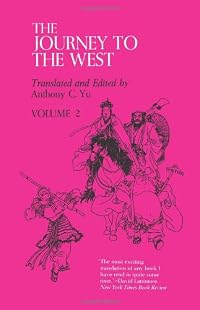
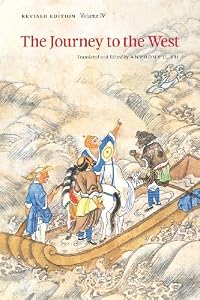
The Journey to the West, volume 2, comprises the second twenty-five chapters of Anthony C. Yu's four-volume translation of Hsi-yu Chi, one of the most beloved classics of Chinese literature. The fantastic tale recounts the sixteen-year pilgrimage of the monk Hsüan-tsang (596-664), one of China's most illustrious religious heroes, who journeyed to India with four animal disciples in quest of Buddhist scriptures. For nearly a thousand years, his exploits were celebrated and embellished in show more various accounts, culminating in the hundred-chapter Journey to the West, which combines religious allegory with romance, fantasy, humor, and satire. show lessTags
Recommendations











Member Reviews
The second volume of Anthony C. Yu's translation of The Journey to the West was originally published in 1978. The Chicago University Press initially released Yu's translation, the first and one of the only complete translations of The Journey to the West available in English, in four volumes between 1977 and 1983. I recently learned that Yu is working on updating and revising his translation, but it has yet to be published. The original version of The Journey to the West was written in sixteenth-century China. Although written anonymously, it has been attributed to Cheng'en Wu. The Journey to the West has become an extremely important and highly influential classic of world literature. It's because of its influence that I wanted to read show more the work. And now that I've read the first half of The Journey to the West, I seem to be running into even more references to the tale than I was before. Or, maybe it's just that I can recognize them now.
The second volume of The Journey to the West covers chapters twenty-five to fifty of the original tale. At this point, the monk Tripitaka is well along in his journey to retrieve sacred Buddhist scriptures from the Western Heaven. The trip so far has been quite an ordeal for him and has been made both better and worse by his traveling companions. It has also lasted much longer than he anticipated; he hasn't even reached his destination yet, yet alone returned to the Tang empire. Tripitaka is repeatedly confronted by monsters and demons who would like to eat him in order to gain immortality. Fortunately, his companions, especially Monkey, are very protective of him. But sometimes even they are no match for the challenges that await them.
Throughout The Journey to the West, Pa-Chieh, one of Tripitaka's traveling companions and protectors, is frequently referred to as Idiot. After reading the first volume, I wasn't quite sure why, feeling that the moniker often fit Monkey more than it did Pa-Chieh. But after finishing the second volume I understand why he is called that. Simply put, it is because Pa-Chieh really is an idiot. He's prone to acting without thinking things through and makes trouble seemingly for trouble's sake. Poor Tripitaka is usually the one to suffer most for Pa-Chieh's follies. Pa-Chieh also has an interesting relationship with Monkey--something almost akin to a sibling rivalry. He is constantly challenging Monkey's authority and tries to outdo him. In return, Monkey doesn't hesitate to put Pa-Chieh in his place or play pranks on him. In some ways, they are actually quite alike.
The Journey to the West is a single story (or, depending on how you look at it, a string of closely related stories). The reason that it has been divided into individual volumes is that it is so long. Although, it is written in a style that makes it easy to put down and pick back up again. The chapters are short and often retell what has already happened. Yu seems to expect the reader to not only have read the first volume, but to also have it on hand; many of the footnotes and the story itself cross reference each other between volumes. I am very grateful for Yu's notes. The Journey to the West incorporates many Chinese and religious tales and legends, most of which I wouldn't have recognized if it wasn't for Yu since I'm not personally familiar with the mythologies. I really am enjoying The Journey to the West. It is an exciting tale that can be both humorous and gruesome. I'm looking forward to finding out what happens in the third volume.
Experiments in Manga show less
The second volume of The Journey to the West covers chapters twenty-five to fifty of the original tale. At this point, the monk Tripitaka is well along in his journey to retrieve sacred Buddhist scriptures from the Western Heaven. The trip so far has been quite an ordeal for him and has been made both better and worse by his traveling companions. It has also lasted much longer than he anticipated; he hasn't even reached his destination yet, yet alone returned to the Tang empire. Tripitaka is repeatedly confronted by monsters and demons who would like to eat him in order to gain immortality. Fortunately, his companions, especially Monkey, are very protective of him. But sometimes even they are no match for the challenges that await them.
Throughout The Journey to the West, Pa-Chieh, one of Tripitaka's traveling companions and protectors, is frequently referred to as Idiot. After reading the first volume, I wasn't quite sure why, feeling that the moniker often fit Monkey more than it did Pa-Chieh. But after finishing the second volume I understand why he is called that. Simply put, it is because Pa-Chieh really is an idiot. He's prone to acting without thinking things through and makes trouble seemingly for trouble's sake. Poor Tripitaka is usually the one to suffer most for Pa-Chieh's follies. Pa-Chieh also has an interesting relationship with Monkey--something almost akin to a sibling rivalry. He is constantly challenging Monkey's authority and tries to outdo him. In return, Monkey doesn't hesitate to put Pa-Chieh in his place or play pranks on him. In some ways, they are actually quite alike.
The Journey to the West is a single story (or, depending on how you look at it, a string of closely related stories). The reason that it has been divided into individual volumes is that it is so long. Although, it is written in a style that makes it easy to put down and pick back up again. The chapters are short and often retell what has already happened. Yu seems to expect the reader to not only have read the first volume, but to also have it on hand; many of the footnotes and the story itself cross reference each other between volumes. I am very grateful for Yu's notes. The Journey to the West incorporates many Chinese and religious tales and legends, most of which I wouldn't have recognized if it wasn't for Yu since I'm not personally familiar with the mythologies. I really am enjoying The Journey to the West. It is an exciting tale that can be both humorous and gruesome. I'm looking forward to finding out what happens in the third volume.
Experiments in Manga show less
I somehow read volume 3 before 2 so i've had to change my reviews around.
Edit:
"Even if all that is granted," said Monkey, "he's been sleeping with the queen and the consorts in the harem. Surely this has sullied them and been an affront to morality."
"He has not sullied them at all," the Bodhisattva replied. "He's a gelded lion."
Hearing this Pig went up to the creature and had a feel. "This evil spirit's got a bad reputation he doesn't deserve," he chuckled, "like a teetotaler with a red nose."
I had a lot of different ebook versions on my reader and not sure which translations i read with previous volumes. This time i definitely started with the supposedly superior, or at least more scholarly Anthony C. Yu version but didn't like it that show more much so switched to the W.J.F.Jenner version which seems to read much smoother.
Some of that might just be because the names it uses at more similar to the 70's tv show i'm used to.
One odd thing in this volume the penultimate chapters seem a bit fragmented everything just resolves suddenly, i assume that isn't a translation issue though. Anyway 3 volumes down now even if i did read them in the wrong order. Still repetitive but still entertaining. show less
Edit:
"Even if all that is granted," said Monkey, "he's been sleeping with the queen and the consorts in the harem. Surely this has sullied them and been an affront to morality."
"He has not sullied them at all," the Bodhisattva replied. "He's a gelded lion."
Hearing this Pig went up to the creature and had a feel. "This evil spirit's got a bad reputation he doesn't deserve," he chuckled, "like a teetotaler with a red nose."
I had a lot of different ebook versions on my reader and not sure which translations i read with previous volumes. This time i definitely started with the supposedly superior, or at least more scholarly Anthony C. Yu version but didn't like it that show more much so switched to the W.J.F.Jenner version which seems to read much smoother.
Some of that might just be because the names it uses at more similar to the 70's tv show i'm used to.
One odd thing in this volume the penultimate chapters seem a bit fragmented everything just resolves suddenly, i assume that isn't a translation issue though. Anyway 3 volumes down now even if i did read them in the wrong order. Still repetitive but still entertaining. show less
I don't know what to say about this book. Perhaps I should just copy/paste my thoughts regarding the first book here and just add the comment "it's as annoying as the first book". Perhaps even MORE annoying than the first book because, well, at least in the first book everything seems to be new, you are getting to know the characters a little bit better and the reason why things happen that way. This book seems to be the predecessor of all the fillers in the world and is basically... "Sanzang and his disciples are travelling. Sanzang is kidnapped. Disciples rescue him.". Repeat this throughout 500 pages. There you have it. Journey to the West volume 2.
Frankly, I lost all my hopes that this story can get any better. I'm fed up with show more Sanzang's stupidity (because, seriously, I would find it acceptable for a person to commit the same mistakes twice or thrice in a book, but the stupid monk just keeps doing it all over again!!), with Pig's ill intentions and with Friar Sand's uselessness.
Well, at least Wukong is evolving in terms of personality. In a VERY, VERY subtle way, but at least he is the only one that looks like he's at least TRYING to be a better being. show less
Frankly, I lost all my hopes that this story can get any better. I'm fed up with show more Sanzang's stupidity (because, seriously, I would find it acceptable for a person to commit the same mistakes twice or thrice in a book, but the stupid monk just keeps doing it all over again!!), with Pig's ill intentions and with Friar Sand's uselessness.
Well, at least Wukong is evolving in terms of personality. In a VERY, VERY subtle way, but at least he is the only one that looks like he's at least TRYING to be a better being. show less
***** A great comic and allegorical adventure tale of a Buddhist monk's journey from China to India during the Tang dynasty to bring Buddhist scriptures back to China. Along the way, the monk hooks up with several animal/jhuman/magical assistants, including the Monkey King who is one of the best characters in world trickster literature. Deservedly a classic of chinese literature, this is both an exciting and hilarious comic-book adventure and a work of obscure allegory and chinese alchemy. Great fun and fascinating.
journey to the west volume 2: A really great book, I could hardly put it down. The subtle comedy and the continuos action is perfect for anyone above 9 years old. I LOVED it.
Ratings
Members
- Recently Added By
Author Information

Wu is the reputed author of the great comic-picaresque novel Journey to the West, or Monkey, as Arthur Waley entitled his translation, which has often been compared for its content and its influence on tradition with Don Quixote in European literature. Wu was a native of Huai-an (in Kiangsu), and in the local history published there in 1625 the show more statement is made about his authorship of the work. However, this was unknown by the general reading public for over 300 years, perhaps partly because Wu died without children to perpetuate his claim to fame. Though the story of the novel is loosely based on the historical pilgrimage of a Chinese Buddhist monk, Hsuan-tsang, to India in the years 629--645 to obtain Buddhist scriptures, in fact the narrative bears little relation to what actually happened. Instead, it is fabricated from the many popular tales told by storytellers, which over the years embellished the factual chronicles left by Hsuan-tsang with many Chinese beliefs about the monsters and demons of the lands he passed through. The novel teems with humor, invention, and memorable characters, and has been a great favorite with Chinese audiences for centuries. Comic book versions of its stories can be found in Chinatowns all over the world. (Bowker Author Biography) show less
All Editions
Series

Work Relationships
Is contained in
Common Knowledge
- Canonical title
- Journey to the West, Vol. 2 {Yu}
- Original title
- 西遊記
Classifications
- Genres
- Fiction and Literature, General Fiction, Fantasy
- DDC/MDS
- 895.134 — Literature & rhetoric Asian Literature Literatures of East and Southeast Asia Chinese Chinese fiction Song, Yuan, Ming, Qing dynasties 960–1912
- LCC
- PL2697 .H75 .E596 — Language and Literature Languages and literatures of Eastern Asia, Africa, Oceania Languages of Eastern Asia, Africa, Oceania Chinese language and literature Chinese literature Individual authors and works
- BISAC
Statistics
- Members
- 141
- Popularity
- 231,330
- Reviews
- 5
- Rating
- (4.21)
- Languages
- Chinese, English
- Media
- Paper
- ISBNs
- 2
- UPCs
- 1