Everyday Apocalypse
by David Dark
On This Page
Description
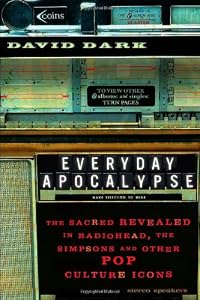
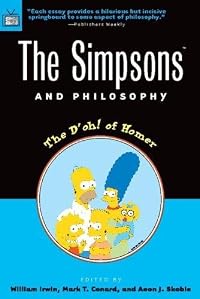
The term "apocalypse" usually evokes images of mass destruction-burning buildings and nuclear fallout, or even rapture and tribulation. Often, our attempts to interpret the imagery of the book of Revelation seem to carry us far away from our day-to-day existence. David Dark challenges this narrow understanding in Everyday Apocalypse, calling his readers back to the root of the word, which is "revelation." Through readings of Flannery O'Connor stories and savvy discussion of The Matrix show more themes, Dark calls us to imagine the apocalypse as a more watchful way of being in the world. He draws on the sometimes unlikely wisdom of popular culture-including The Simpsons and films like The Truman Show-to highlight how the imagination can expose our moral condition. Ultimately, Dark presents apocalypse as honest self-assessment and other-centeredness in the here and now. This engaging book holds enormous appeal for readers interested in the pursuit of everyday spirituality. It will delight lovers of literature, popular music, and movies, as well as anyone concerned with a Christian response to popular culture. show lessTags
Recommendations








Member Reviews
The first realization when reading this book is that David Dark presents an alternative meaning of apocalyptic literature. Apocalyptic in this case does not necessarily mean books that represent the end of the world. Instead it represents works (books, movies, music) and ideas that deconstruct and tear down our perceptions of the society (the machine) in which we live, so that we can reach a greater and deeper understanding of our self and the world, thus breaking free in a greater spiritual and emotional awareness.
He suggests that as well as the Revelations of the Bible, the literature of Flannery O'Connor, the music of Radiohead and Beck, the episodes of the Simpsons, and the movies of the Coen brothers all represent this kind of show more apocalyptic questioning. He says the works of the artists here mentioned represent versions of our reality that can seem mocking or bleak, but that really represent a form of hope and salvation for those who are willing to push past the norms as society insists we perceive them, in order to be jolted awake.
I think Dark has some very interesting points to make throughout the book, however, I couldn't quite help but feel that there was some sort of a disconnect in his logic. The redefining of apocalyptic, for one, is difficult to take in, and creates a confusing form of terminology to work around.
I'm really torn on this one, because I did enjoy reading it for the most part. The chapters on the Coen brothers films especially rang true for me. However, I keep coming back to it, because I'm not quite comfortable with it as a whole. There's something that bothers me about it on a fundamental level, and it's hard for me to name.
The rest of my thoughts on this book are posted to my blog: http://blythe025.livejournal.com/238943.html show less
He suggests that as well as the Revelations of the Bible, the literature of Flannery O'Connor, the music of Radiohead and Beck, the episodes of the Simpsons, and the movies of the Coen brothers all represent this kind of show more apocalyptic questioning. He says the works of the artists here mentioned represent versions of our reality that can seem mocking or bleak, but that really represent a form of hope and salvation for those who are willing to push past the norms as society insists we perceive them, in order to be jolted awake.
I think Dark has some very interesting points to make throughout the book, however, I couldn't quite help but feel that there was some sort of a disconnect in his logic. The redefining of apocalyptic, for one, is difficult to take in, and creates a confusing form of terminology to work around.
I'm really torn on this one, because I did enjoy reading it for the most part. The chapters on the Coen brothers films especially rang true for me. However, I keep coming back to it, because I'm not quite comfortable with it as a whole. There's something that bothers me about it on a fundamental level, and it's hard for me to name.
The rest of my thoughts on this book are posted to my blog: http://blythe025.livejournal.com/238943.html show less
Ratings
Members
- Recently Added By
Author Information

6+ Works 602 Members
David Dark teaches in the College of Theology at Belmont University and among the incarcerated communities of Nashville, Tennessee. He is the author of The Sacredness of Questioning Everything. Everyday Apocalypse and The Gospel According to America. His writing has appeared in Pitchfork, Paste, Books Culture and Killing the Buddha.
Classifications
- Genres
- Nonfiction, Religion & Spirituality, General Nonfiction, Literature Studies and Criticism
- DDC/MDS
- 261 — Religion Christian organization, social work & worship Social theology and interreligious relations and attitudes
- LCC
- BR115 .C8 .D37 — Philosophy, Psychology and Religion Christianity Christianity Christianity in relation to special subjects
- BISAC
Statistics
- Members
- 179
- Popularity
- 182,357
- Reviews
- 1
- Rating
- (3.83)
- Languages
- English
- Media
- Paper, Ebook
- ISBNs
- 3
- ASINs
- 2