On This Page
Description
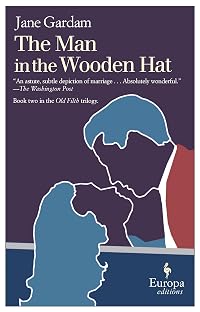
Acclaimed as Jane Gardam's masterpiece, Old Filth is a lyrical novel that recalls the fully lived life of Sir Edward Feathers. The Man in the Wooden Hat is the history of his marriage told from the perspective of his wife, Betty, a character as vivid and enchanting as Filth himself. They met in Hong Kong after the war. Betty had spent the duration in a Japanese internment camp. Filth was already a successful barrister, handsome, fast becoming rich, in need of a wife but unaccustomed to show more romance. A perfect English couple of the late 1940s. As a portrait of a marriage, with all the bittersweet secrets and surprising fulfillment of the fifty-year union of two remarkable people, The Man in the Wooden Hat is a triumph. Fiction of a very high order from a great novelist working at the pinnacle of her considerable power, it will be read and loved and recommended by all the many thousands of readers who found its predecessor, Old Filth, so compelling and thoroughly satisfying. show lessTags
Recommendations














Member Reviews
The Man in the Wooden Hat is Jane Gardam's second novel involving the upright and seemingly stodgy Sir Edward Feathers. He is a lawyer and then judge known as Filth, the nickname derived from "Failed In London, Try Hong Kong". In the first novel, Old Filth, he was introduced as a lonely widower residing in western England, looking back on his days of wealth and fame in Hong Kong. This one tells the story from the perspective of his beloved wife Betty, starting with her saying yes to his proposal in a Hong Kong hotel.
Gardam is particularly good at letting us see the inner workings of outwardly convention-observing characters, as they struggle with inner yearnings versus the desire to be moral and respectable, and successful in the eyes show more of others. When, shortly after Filth's proposal, Betty runs into Terry Veneering, Filth's rival, she wishes the proposal had come an hour later. That attraction will have have long lasting effects for all of them.
The steamy Hong Kong and austere English countryside atmospheres are vividly portrayed, and there are revelations around every corner, including a corker at the end. Betty evolves from a clever but unworldly youngster with "unpainted, sandy toenails" to a decisive ruler of her realm. What a feat for Gardam to so engagingly tell the story from two different perspectives in two different novels. A third novel, Last Friends, will tell the story from the POV of Filth's rival Veneering. Reading high quality writing always feels good, and like the first novel, this one is cleverly conceived and affecting, as you find out more about all three protagonists. Four stars, and it may well deserve more. show less
Gardam is particularly good at letting us see the inner workings of outwardly convention-observing characters, as they struggle with inner yearnings versus the desire to be moral and respectable, and successful in the eyes show more of others. When, shortly after Filth's proposal, Betty runs into Terry Veneering, Filth's rival, she wishes the proposal had come an hour later. That attraction will have have long lasting effects for all of them.
The steamy Hong Kong and austere English countryside atmospheres are vividly portrayed, and there are revelations around every corner, including a corker at the end. Betty evolves from a clever but unworldly youngster with "unpainted, sandy toenails" to a decisive ruler of her realm. What a feat for Gardam to so engagingly tell the story from two different perspectives in two different novels. A third novel, Last Friends, will tell the story from the POV of Filth's rival Veneering. Reading high quality writing always feels good, and like the first novel, this one is cleverly conceived and affecting, as you find out more about all three protagonists. Four stars, and it may well deserve more. show less
"The Man in the Wooden Hat" is less a retelling of Gardam's terrific "Old Filth" than a complement to it. While it's narrated by Edward Feathers's wife, Betty, he's still very much the focal point of this story, a compelling, enigmatic, oddly charismatic figure. Those who enjoyed "Old Filth" can expect more of the wonderful same. There's Gardam's startlingly lucid prose, her elegant insights in to her characters' emotional lives, and a slowly developing disquisition of what it means to grow up as a permanent expatriate in a dying Empire. Gardam fans shouldn't expect any major revelations here, though I hardly think they'll mind. The author seems to use Betty's side of this twice-told tale to demonstrate how the effects hastily made show more decisions can play out over the space of an entire lifetime and how passions felt in one's youth can linger into one's retirement years. Recommended, though readers new to Betty and Edward should certainly start with "Old Filth." show less
The storyline of Old Filth doesn't seem to offer much scope for sequels - it's pretty much a cradle-to-grave novel, with no obvious sign of a younger generation following - but, like Laurence Durrell in The Alexandria Quartet, or like Ford Maddox Ford in The good soldier, Gardam uses the trick of going back over essentially the same material from the viewpoint of a different central character, and showing us how it can all be read with quite a different slant. I think she must have had FMF in the back of her mind - Sir Edward Feathers sometimes seems to have more than a hint of Ashburnham (or even Tietjens) about him.
The man in the wooden hat puts Feathers's wife, Betty, in the spotlight, and shows us something about the history of the show more love affair hinted at in the first book, but what it's really interested in is the way two people who are married for fifty years and may be presumed to know each other better than anyone else does, can still have important pieces of their lives that they aren't prepared to share - whether or not their "secrets" are really secret. And what the presence of those "secrets" in their lives means to them.
I felt that this was perhaps even a better, more complicated novel than Old Filth, although it's difficult to assess, because it does also rest quite heavily on the heavy work of exposition and scene-setting that's already been done in the first volume. Certainly, Gardam seems to be more comfortable with Betty as a character, and is more prepared to take risks and let herself be witty. show less
The man in the wooden hat puts Feathers's wife, Betty, in the spotlight, and shows us something about the history of the show more love affair hinted at in the first book, but what it's really interested in is the way two people who are married for fifty years and may be presumed to know each other better than anyone else does, can still have important pieces of their lives that they aren't prepared to share - whether or not their "secrets" are really secret. And what the presence of those "secrets" in their lives means to them.
I felt that this was perhaps even a better, more complicated novel than Old Filth, although it's difficult to assess, because it does also rest quite heavily on the heavy work of exposition and scene-setting that's already been done in the first volume. Certainly, Gardam seems to be more comfortable with Betty as a character, and is more prepared to take risks and let herself be witty. show less
I have held off on reviewing this second book in the trilogy until I had finished the third, so as to have a clear view of where it sits in terms of quality and my general level of satisfaction with the narrative. While still an exceptional read - the quality of the authorship guarantees that - this falls shy of Old Filth's knockout punch, the clear masterpiece in the series with an elegant tightness belying the complexity of the Sir Edward Feathers' redemptive arc, and the satisfaction of the well-seasoned stew of related characters by which Last Friends brings an end to Gardam's fictional cycle.
I suspect at base my dissatisfaction stems from the character of Betty Feathers, née Macintosh. While both Betty and Edward have secrets in show more their past, Betty lacks the will and/or the opportunity to reconcile with hers. Old Filth saw Edward Feathers respond to sudden and shocking loss with a somewhat mad road-trip, taking him from disintegration of character to reintegration and reconciliation with his "self" and his past. Betty's similar loss leads to introspection and not a lot else. Is this a reversal of Old Filth's path? He begins fractured and ends mended while Betty begins whole and loses impetus/will/individuality? Perhaps.
The big shock for me was realising that Teddy's belief that he and his wife were a near perfect union - a pair who completed and enriched each other's lives - was delusional. There, I think, lies the true tragedy. Betty loves Edward, or so it would seem as she says this to herself on numerous occasions, but her passion lies elsewhere. The kicker for me is her refusal to let Edward talk to her about his past: she made a choice to not talk about hers, but he needed to talk, wanted to talk, tried to talk and she refused point-blank to hear. I find that unforgivable.
I would not hesitate to recommend The Man in the Wooden Hat as part of an excellent trilogy and, in the course of writing this review, have raised my rating from 3.5 to 4 stars. Well may my feelings towards Betty be the antithesis of the affection engendered towards Old Filth, but the ability to evoke such a strong emotional response is testament to brilliant writing. show less
I suspect at base my dissatisfaction stems from the character of Betty Feathers, née Macintosh. While both Betty and Edward have secrets in show more their past, Betty lacks the will and/or the opportunity to reconcile with hers. Old Filth saw Edward Feathers respond to sudden and shocking loss with a somewhat mad road-trip, taking him from disintegration of character to reintegration and reconciliation with his "self" and his past. Betty's similar loss leads to introspection and not a lot else. Is this a reversal of Old Filth's path? He begins fractured and ends mended while Betty begins whole and loses impetus/will/individuality? Perhaps.
I would not hesitate to recommend The Man in the Wooden Hat as part of an excellent trilogy and, in the course of writing this review, have raised my rating from 3.5 to 4 stars. Well may my feelings towards Betty be the antithesis of the affection engendered towards Old Filth, but the ability to evoke such a strong emotional response is testament to brilliant writing. show less
My god - absolutely beautiful. I picked this up on a whim before a flight, knowing that I had an afternoon to kill, and I am so, so glad that I did.
Why did I love it so much? Maybe it's the way Ms. Gardam writes about emotionality without becoming maudlin. The characters all stand on their own, and I don't feel she expects or wants me to pity them, even at painful times. Maybe it's the lack of overblown prose - description when necessary, but not so much that I wanted to skip it. Every sentence has a point, even if it comes much later. Maybe it's just the simplicity of tracing the steps of a marriage that endures.
At any rate, it's gone into my permanent favorites category, and I suspect will be one of those books that I'm pressing show more others to read. show less
Why did I love it so much? Maybe it's the way Ms. Gardam writes about emotionality without becoming maudlin. The characters all stand on their own, and I don't feel she expects or wants me to pity them, even at painful times. Maybe it's the lack of overblown prose - description when necessary, but not so much that I wanted to skip it. Every sentence has a point, even if it comes much later. Maybe it's just the simplicity of tracing the steps of a marriage that endures.
At any rate, it's gone into my permanent favorites category, and I suspect will be one of those books that I'm pressing show more others to read. show less
A wonderful novel made even brighter by being a brilliant complement and sequel to Old Filth.
Jane Gardam's prose is perfectly chosen and her style reads so simply and succinctly. Yet she manages to pack in such a story through glimpses into a life, almost a series of connected novellas.
The story is of Elizabeth (Betty) Feathers (nee Mackintosh) - her engagement and marriage to Edward (Eddie) Feathers (whose story has been told in Old Filth and the The People on Privilege Hill). A life spent as support to her husband, as he works hard and prospers at the Bar, although we have glimpses of her life and friends before this. We also share meet the brief passion of her life, Terry Veneering, and her love for his son, Harry Veneering.
Through show more this, we learn of the stifled life of the last of the professional British ruling class in Hong Kong, but much more, we learn of the emotional turning points in Betty Feathers' life.
A wonderful read, with some satisfying twists at the end that do not change what has gone before, but throw further light on it.
Reread with equal pleasure in 2023. show less
Jane Gardam's prose is perfectly chosen and her style reads so simply and succinctly. Yet she manages to pack in such a story through glimpses into a life, almost a series of connected novellas.
The story is of Elizabeth (Betty) Feathers (nee Mackintosh) - her engagement and marriage to Edward (Eddie) Feathers (whose story has been told in Old Filth and the The People on Privilege Hill). A life spent as support to her husband, as he works hard and prospers at the Bar, although we have glimpses of her life and friends before this. We also share meet the brief passion of her life, Terry Veneering, and her love for his son, Harry Veneering.
Through show more this, we learn of the stifled life of the last of the professional British ruling class in Hong Kong, but much more, we learn of the emotional turning points in Betty Feathers' life.
A wonderful read, with some satisfying twists at the end that do not change what has gone before, but throw further light on it.
Reread with equal pleasure in 2023. show less
Getting to know intimately one half of a married couple can ill prepare you for meeting the other half, who may fail to live up to their superior advance billing, or, as likely, be so surprisingly normal—even pleasant—that you mistrust your own memory of past marital revelations. Award-winning British writer Jane Gardem’s books Old Filth (from the husband’s point of view) and The Man in the Wooden Hat (the wife’s) apply these different lenses to the same 50-year marriage.
I’ve read only this one, published in 2009, but went back to reviews of Old Filth (2006) and found that many of the animating events in the couple’s life are described in both novels. While the bones of the relationship remain the same, “Little here is show more as it seemed in ‘Old Filth,’ and both books are the richer for it,” said Louisa Thomas in her New York Times review.
The sobriquet Old Filth—created by and applied to talented barrister Edward Feathers, later Sir Edward—is an acronym for “Failed In London, Try HongKong.” Try there, he does, and succeeds. Also in Hong Kong, his future wife Elisabeth Macintosh debates whether to marry him, decides to, and carries through at rather a slap-dash pace in ancient borrowed finery. Eddie’s preoccupation is that Betty should never leave him, and she promises she won’t. This is a promise Betty learns will be enforced by Edward’s best friend, the card-playing Chinese dwarf Albert Ross (“Albatross”): “If you leave him, I will break you,” Ross threatens, and she is sure he means it.
The wedding ceremony follows by a few hours a one-night affair, in which Betty is deflowered by Eddie’s nemesis, rival barrister Terry Veneering. Trust Charles Dickens to recognize an allusive name when he hears one; like the nouveau riche social climbers in Our Mutual Friend, this Veneering has a charming surface. His attraction Betty lasts for decades, and he weaves in and out of the story of the couple’s marriage.
While a story of interpersonal relationships, the book takes place after World War II, and is necessarily revelatory about broad social upheavals in Britain. Class and privilege are never the same after the unraveling of Empire, the economic upheavals of the decade before the war, and the war itself. The world into which the three protagonists were born simply disappeared beneath their feet and dissolved out of their arms.
The novel follows the couple from youth to old age, with Betty’s death planting tulips in their rural garden. Mostly, though, it focuses on their early relationship, including the tragedy of a miscarriage that leaves Betty unable to have her heart’s desire, children. The closest relationship she maintains with a young person is with Veneering’s precocious son, Harry, whom she meets when he is nine years old and “crunching a lobster” under the table at a banquet. She has numerous lively and colorful friends in Hong Kong and later in London, whose appearance in the narrative is always welcome.
As for the everyday relationship between the spouses, the reader is shown the benefits of accommodation rather than the head-to-head battles that often characterize such books.
Well plotted and carefully written, full of good humor and getting on with it. A third book in the Old Filth trilogy, Last Friends, was published in 2013. It’s a view of the Feathers’s marriage from Veneering’s point of view. Now that should be interesting! show less
I’ve read only this one, published in 2009, but went back to reviews of Old Filth (2006) and found that many of the animating events in the couple’s life are described in both novels. While the bones of the relationship remain the same, “Little here is show more as it seemed in ‘Old Filth,’ and both books are the richer for it,” said Louisa Thomas in her New York Times review.
The sobriquet Old Filth—created by and applied to talented barrister Edward Feathers, later Sir Edward—is an acronym for “Failed In London, Try HongKong.” Try there, he does, and succeeds. Also in Hong Kong, his future wife Elisabeth Macintosh debates whether to marry him, decides to, and carries through at rather a slap-dash pace in ancient borrowed finery. Eddie’s preoccupation is that Betty should never leave him, and she promises she won’t. This is a promise Betty learns will be enforced by Edward’s best friend, the card-playing Chinese dwarf Albert Ross (“Albatross”): “If you leave him, I will break you,” Ross threatens, and she is sure he means it.
The wedding ceremony follows by a few hours a one-night affair, in which Betty is deflowered by Eddie’s nemesis, rival barrister Terry Veneering. Trust Charles Dickens to recognize an allusive name when he hears one; like the nouveau riche social climbers in Our Mutual Friend, this Veneering has a charming surface. His attraction Betty lasts for decades, and he weaves in and out of the story of the couple’s marriage.
While a story of interpersonal relationships, the book takes place after World War II, and is necessarily revelatory about broad social upheavals in Britain. Class and privilege are never the same after the unraveling of Empire, the economic upheavals of the decade before the war, and the war itself. The world into which the three protagonists were born simply disappeared beneath their feet and dissolved out of their arms.
The novel follows the couple from youth to old age, with Betty’s death planting tulips in their rural garden. Mostly, though, it focuses on their early relationship, including the tragedy of a miscarriage that leaves Betty unable to have her heart’s desire, children. The closest relationship she maintains with a young person is with Veneering’s precocious son, Harry, whom she meets when he is nine years old and “crunching a lobster” under the table at a banquet. She has numerous lively and colorful friends in Hong Kong and later in London, whose appearance in the narrative is always welcome.
As for the everyday relationship between the spouses, the reader is shown the benefits of accommodation rather than the head-to-head battles that often characterize such books.
Well plotted and carefully written, full of good humor and getting on with it. A third book in the Old Filth trilogy, Last Friends, was published in 2013. It’s a view of the Feathers’s marriage from Veneering’s point of view. Now that should be interesting! show less
Members
- Recently Added By
Published Reviews
ThingScore 100
On its own, “The Man in the Wooden Hat” is funny and affecting, but read alongside “Old Filth,” it’s remarkable. Gardam has attempted to turn a story inside out without damaging the original narrative’s integrity — moving from black to white without getting stuck with gray. Little here is as it seemed in “Old Filth,” and both books are the richer for it.
added by Shortride
"While "Old Filth" is principally about the man, his dark boyhood at the mercy of a distant, unfeeling father, with the wife a rather shadowy character in the background, "The Man in the Wooden Hat" fills in her side of the story, in the process revealing itself to be an astute, subtle depiction of marriage, with all its shared experiences and separate secrets."
added by olevia
What Gardam is particularly good at – and what made Old Filth so compelling – is creating for her characters façades of complete conventionality, which are then chipped away to reveal strange internal workings.
added by olevia
Lists

Best Love Stories
107 works; 14 members

Top Five Books of 2020
982 works; 348 members

Top Five Books of 2018
802 works; 265 members

the old and the restless
62 works; 14 members

Love Triangles in Literature
108 works; 15 members

Books Read in 2020
4,379 works; 123 members

Books Read in 2017
4,249 works; 129 members

Literature About Adultery
69 works; 10 members

Books Read in 2018
4,360 works; 110 members

Recommend the 20 best books you've read in the last five years
2,168 works; 603 members

Books Read in 2024
4,727 works; 128 members
Author Information

36+ Works 8,953 Members
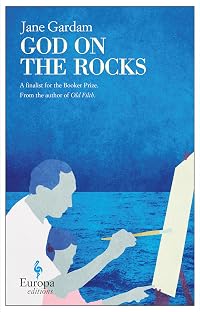
Jane Gardam was born in North Yorkshire, England in 1928. She is the author of many children's novels that include "A Long Way from Verona" (1971). She has also written novels and collections of stories for adults that include "God on the Rocks" (1978), "Bilgewater and the Pangs of Love and Other Stories" (1983) and "The Summer After the Funeral." show more Her book "Groundlings" was taken from "Showing the Flag and Other Stories" (1989). Gardam's novels and stories have received many literary prizes. (Bowker Author Biography) show less
Some Editions
Awards and Honors
Awards
Distinctions
Series

Belongs to Publisher Series
dtv (14609)
Work Relationships
Is contained in
Common Knowledge
- Canonical title
- The Man in the Wooden Hat
- Original title
- The Man in the Wooden Hat
- Original publication date
- 2009
- People/Characters
- Elisabeth "Betty" Macintosh; Sir Edward "Eddie" Feathers, QC; Isobel "Lizzie" Ingoldby; Albert Ross; Terry Veneering; Harry Veneering (show all 8); Delilah Dexter; Fiscal-Smith
- Important places
- Hong Kong, China; England, UK
- Epigraph
- "Old, forgotten far-off things
and battles long ago." - Dedication
- for David
- First words
- There is a glorious part of England known as the Donheads.
- Last words
- (Click to show. Warning: May contain spoilers.)It was a small oilskin packet tied with very old string, and inside it was a watch.
- Original language*
- Engels
*Some information comes from Common Knowledge in other languages. Click "Edit" for more information.
Classifications
Statistics
- Members
- 1,125
- Popularity
- 22,570
- Reviews
- 55
- Rating
- (3.97)
- Languages
- 7 — Danish, Dutch, English, German, Italian, Spanish, Swedish
- Media
- Paper, Audiobook, Ebook
- ISBNs
- 27
- ASINs
- 21