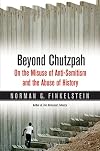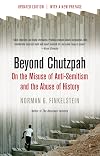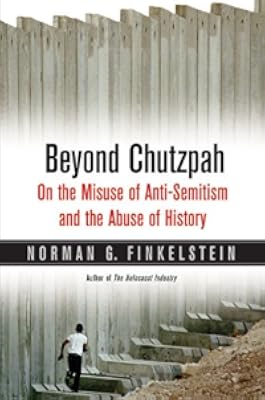
Beyond Chutzpah: On the Misuse of Anti-Semitism and the Abuse of History
by Norman G. Finkelstein
On This Page
Description
Meticulously researched and tightly argued, Beyond Chutzpah points to a consensus among historians and human rights organizations on the factual record of the Israel-Palestine conflict. Norman G. Finkelstein exposes the corruption of scholarship and the contrivance of controversy shrouding human rights abuses, and interrogates the new anti-Semitism. This paperback edition adds a preface analyzing recent developments in the conflict, and a new afterword on Israel's construction of a wall in show more the West Bank. show lessTags
Recommendations




































Member Reviews
Norman Finkelstein goes beyond his initial clash with Alan Dershowitz on Democracy Now! to expose Dershowitz's book "The Case for Israel," as one of the most spectacular hoaxes in the history of all Middle-East scholarship. Finkelstein proves that Dershowitz:
1) Plagiarized from the other great hoax, Joan Peters' "From Time Immemorial." Now during the initial debate, Dershowitz argued that it wasn't plagiarism if he saw the quote in Peters' book, but then went to the original source to check to make sure it's accurate. However, that was simply not the case. Dershowitz borrows a quote from Mark Twain that was used in Peters, but the problem is that he cites a 1995 edition of the book, but in the 1995 edition the Twain quote is not an show more extended quote, there are over twenty pages separating the first part of the quote with the final part, and Dershowitz cites the quote as continuous, proving that he simply lifted the inaccurate quote from Peters without checking the original. Also, Finkelstein unveils the advanced proofs for the Case for Israel, revealing that in the footnotes Dershowitz initially cited Peters for the quotes in question.
2) Systematically misrepresents Israel's human rights record in the occupied territories. Dershowitz makes the claim in The Case for Israel that Israel is the only country in the Middle-East to have abolished torture in practice as well as in law. However, Amnesty International, Human Rights Watch, and B'Tselem have all concluded that Israel still regularly practices torture, and that Palestinian detainees have in fact died because of Israeli torture in the past. Dershowitz also makes the claim that Israel has never deliberately targeted civilians. Once again, the human rights record is radically different from Dershowitz's claims; Israel has in fact targeted innocent civilians repeatedly, and has also committed war crimes and crimes against humanity such as in the siege of Jenin.
3) Distorts evidence (or often refuses to provide any) in arguing that Israel has consistently supported a two-state solution and the Palestinians have rejected it. Finkelstein makes the case that it is Israel that has rejected the principles of U.N. resolution 242, that the PLO has been constantly in favor of it, but Israel has always preferred a "Bantustans" style state for the Palestinians.
4) Dershowitz repeatedly misrepresents the writing of Israeli historian Benny Morris when discussing the first Arab war, and often provides unreliable evidence to support his claims, such as quotes from right-wing Israeli websites.
I could go on, but I won't. Finkelstein provides virtually a line-for-line debunking of the "Case for Israel" in the last section of the book, which serves the dual-role of exposing the crimes of Israel, and exposing the apologist for those crimes, Alan Dershowitz. My only problem with "Beyond Chutzpah" lies in the first section, on the "Misuse of Anti-Semitism." It seems that this section was just attached the make the book more than just a Dershowitz expose; but Finkelstein leaves a lot of gaping wholes in his argument here, it's hard to make such a sweeping declaration in so short a section. Although his analysis of the ADL and books like "The New Anti-Semitism," and "The Real-Anti-Semitism," is interesting and informative. But it's the examination of "The Case for Israel," that makes "Beyond Chutzpah" an important work on the Israel-Palestine conflict. show less
1) Plagiarized from the other great hoax, Joan Peters' "From Time Immemorial." Now during the initial debate, Dershowitz argued that it wasn't plagiarism if he saw the quote in Peters' book, but then went to the original source to check to make sure it's accurate. However, that was simply not the case. Dershowitz borrows a quote from Mark Twain that was used in Peters, but the problem is that he cites a 1995 edition of the book, but in the 1995 edition the Twain quote is not an show more extended quote, there are over twenty pages separating the first part of the quote with the final part, and Dershowitz cites the quote as continuous, proving that he simply lifted the inaccurate quote from Peters without checking the original. Also, Finkelstein unveils the advanced proofs for the Case for Israel, revealing that in the footnotes Dershowitz initially cited Peters for the quotes in question.
2) Systematically misrepresents Israel's human rights record in the occupied territories. Dershowitz makes the claim in The Case for Israel that Israel is the only country in the Middle-East to have abolished torture in practice as well as in law. However, Amnesty International, Human Rights Watch, and B'Tselem have all concluded that Israel still regularly practices torture, and that Palestinian detainees have in fact died because of Israeli torture in the past. Dershowitz also makes the claim that Israel has never deliberately targeted civilians. Once again, the human rights record is radically different from Dershowitz's claims; Israel has in fact targeted innocent civilians repeatedly, and has also committed war crimes and crimes against humanity such as in the siege of Jenin.
3) Distorts evidence (or often refuses to provide any) in arguing that Israel has consistently supported a two-state solution and the Palestinians have rejected it. Finkelstein makes the case that it is Israel that has rejected the principles of U.N. resolution 242, that the PLO has been constantly in favor of it, but Israel has always preferred a "Bantustans" style state for the Palestinians.
4) Dershowitz repeatedly misrepresents the writing of Israeli historian Benny Morris when discussing the first Arab war, and often provides unreliable evidence to support his claims, such as quotes from right-wing Israeli websites.
I could go on, but I won't. Finkelstein provides virtually a line-for-line debunking of the "Case for Israel" in the last section of the book, which serves the dual-role of exposing the crimes of Israel, and exposing the apologist for those crimes, Alan Dershowitz. My only problem with "Beyond Chutzpah" lies in the first section, on the "Misuse of Anti-Semitism." It seems that this section was just attached the make the book more than just a Dershowitz expose; but Finkelstein leaves a lot of gaping wholes in his argument here, it's hard to make such a sweeping declaration in so short a section. Although his analysis of the ADL and books like "The New Anti-Semitism," and "The Real-Anti-Semitism," is interesting and informative. But it's the examination of "The Case for Israel," that makes "Beyond Chutzpah" an important work on the Israel-Palestine conflict. show less
This book has two main themes: the "new anti-semitism" and the poor Israel human rights record. What unites both is an utterly devastating rebutal of the book The Case for Israel by the Harvard Law School professor and preeminent member of the Israel lobby, Alan Dershowitz. Finkelstein's work is, as usual, powerful, deeply informed, and, in stark contrast with his target, intelectually very honest, providing the reader with a detailed and very precise references that the reader can check if he/she feels the need. The book is divided into two parts and an equally thick set of afterwords (Postscript, Appendices, and Epilogue). Finkelstein rebuts Dershowitz's various statements about the "new anti-semitism", about Israel "purity of arms", show more its use of torture and human rights violations, its treatment of Palestinians (including the record of Israel's High Court decisions), as well as Dershowitz's attacks on international, israeli, an Palestinian human rights organizations. All this is done resorting to appropriate examples, citations, and sources, it is written with such a precision and and fine attention to detail that, in any society that nurtures true and intelectual honesty, Dershowitz's Israel statements would have been disqualified and forever marked as an unremitting fraud and justly shovelled away. Being things as they are, it was Dershowitz who preassured right and left until he finally got his way and Finkelstein was denied tenure by his University (as we learn in this book's Epilogue, written by Frank J. Menetrez), in what constitutes a very lively illustration of the U.S. Israel lobby at work and the power it has to stifle speech critical of Israel. As for this Finkelstein book: a must! show less
Professor Finkelstein starts his book with the assertion the that while the basic facts and causes of the Palestinian-Israeli conflict have been pretty conclusively established by historians, they are not well understood due to the mystification and obfuscation of these facts by a veritable industry of highly partisan authors and media personalities. This serves the purpose of shifting the debate over the conflict and its solutions away from meaningful conversations and towards ill-informed and ideologically charged conversations, thereby serving the interests of the status quo and those who benefit from it.
The bulk of the book takes on the works of high-powered defense attorney and Harvard law professor Alan Dershowitz, who Finkelstein show more believes to be a particularly egregious and influential purveyor of falsehoods and misdirections. This is done in an exhaustive, clinical fashion, (each chapter is also led by a quote from Dershowitz's writings on being a defense attorney which include statements about trying to hide facts that make one's client look bad and so on) so that by the end one feels he has done a pretty thorough job of demolishing many of the popular myths floating around.
This paperback edition includes an introduction dealing with Dershowitz's defense of his work and his attacks on Finkelstein's book. Dershowitz certainly did not take Finkelstein's demolition job lying down, but not really being able to answer most of the charges made in this book, he took to character assassination, using his influence and that of the Harvard name to undermine Finkelstein's reputation with a battery of accusations and ad hominen attacks which would eventually impact Finkelstein's tenure hearing at DePaul University. Despite the Political Science Department and Personnel Committee of the College of Arts and Sciences voting in favour of tenure, the University Board voted 4-3 to deny tenure. One of the appendices of the book is an article originally published in Counterpunch magazine which looks at the criticisms Dershowitz made of the book as well as his answers to its charges. It also questions the extent to which Dershowitz influenced the tenure process at DePaul.
All in all an interesting and insightful book which will be of interest to those who are interested in representations of the Israeli-Palestinian conflict in the west (and particularly in the United States). show less
The bulk of the book takes on the works of high-powered defense attorney and Harvard law professor Alan Dershowitz, who Finkelstein show more believes to be a particularly egregious and influential purveyor of falsehoods and misdirections. This is done in an exhaustive, clinical fashion, (each chapter is also led by a quote from Dershowitz's writings on being a defense attorney which include statements about trying to hide facts that make one's client look bad and so on) so that by the end one feels he has done a pretty thorough job of demolishing many of the popular myths floating around.
This paperback edition includes an introduction dealing with Dershowitz's defense of his work and his attacks on Finkelstein's book. Dershowitz certainly did not take Finkelstein's demolition job lying down, but not really being able to answer most of the charges made in this book, he took to character assassination, using his influence and that of the Harvard name to undermine Finkelstein's reputation with a battery of accusations and ad hominen attacks which would eventually impact Finkelstein's tenure hearing at DePaul University. Despite the Political Science Department and Personnel Committee of the College of Arts and Sciences voting in favour of tenure, the University Board voted 4-3 to deny tenure. One of the appendices of the book is an article originally published in Counterpunch magazine which looks at the criticisms Dershowitz made of the book as well as his answers to its charges. It also questions the extent to which Dershowitz influenced the tenure process at DePaul.
All in all an interesting and insightful book which will be of interest to those who are interested in representations of the Israeli-Palestinian conflict in the west (and particularly in the United States). show less
The books is mainly a response to Alan Dershowitz's "bestseller": The Case for Israel. The title calls to mind an earlier Dershowitz title "Chutzpah". The discussion is mainly focused on arguments brought forth in The Case for Israel, but anyone familiar with the Middle East conflict can benefit from the research.
People have short memories and the longevity of the Israeli-Palestinian conflict means that there is almost no living memory of the actual events leading to 1948 and only vague memory of the events leading to 1967. It is useful to read again about the balance of power that led the establishment of the Jewish state and how the international community and the United Nations dealt with the issue since then. The arguments of The show more Case For Israel are the well-worn pro-Israeli propaganda which surprisingly still finds some acceptance, so it is useful to read a well-researched and documented response to it. As an Arab I also find it great to read about this subject from a western point of view because it does not favour the passionate and emotive over the factual.
That said, I must admit though that I found the Finkelstein's overall treatment of Dershowitz on the caustic side, but the tone does not harm the thrust of his arguments. show less
People have short memories and the longevity of the Israeli-Palestinian conflict means that there is almost no living memory of the actual events leading to 1948 and only vague memory of the events leading to 1967. It is useful to read again about the balance of power that led the establishment of the Jewish state and how the international community and the United Nations dealt with the issue since then. The arguments of The show more Case For Israel are the well-worn pro-Israeli propaganda which surprisingly still finds some acceptance, so it is useful to read a well-researched and documented response to it. As an Arab I also find it great to read about this subject from a western point of view because it does not favour the passionate and emotive over the factual.
That said, I must admit though that I found the Finkelstein's overall treatment of Dershowitz on the caustic side, but the tone does not harm the thrust of his arguments. show less
While I am sure that this is a very important work, particularly since I was told quite firmly to take the link to the BeTzelem website off of my own website back in 2006, I found this book far too depressing to continue reading. I do not feel at full liberty, for personal reasons, to discuss this book any further in public, but it should be read by anyone and everyone who wants to understand the current problems with this issue.
While I am sure that this is a very important work, particularly since I was told quite firmly to take the link to the BeTzelem website off of my own website back in 2006, I found this book far too depressing to continue reading. I do not feel at full liberty, for personal reasons, to discuss this book any further in public, but it should be read by anyone and everyone who wants to understand the current problems with this issue.
De Balfourtdeclaratie :
2 november 1917
"Zijne Majesteits Regering staat welwillend tegenover de vestiging in Palestina van een nationaal tehuis voor het Joodse volk, en zal zijn beste krachten aanwenden de verwezenlijking van dit doel te bevorderen, waarbij het duidelijk moet zijn dat niets zal worden ondernomen dat de burgerlijke en godsdienstige rechten van niet-Joodse gemeenschappen in Palestina zou kunnen aantasten, of de rechten en de politieke status die Joden genieten in enig ander land." Nu ja !
Als Israël maar lang genoeg zich niets blijft aantrekken van het internationaal recht en de publieke opinie om haar bezettingspolitiek en gebiedsuitbreiding verder blijft uitoefenen zal zij blijvend beloond worden ten nadele van het show more Palestijns volk. Hoe lang dit ook al gebeurt en hoe langer dit duurt, zal deze gecreërde werkelijkheid, deze verkeerde werkelijkheid niet meer kunnen teruggedraaid worden. Vrede ? Door een opzettelijke onkenning van het Palestijns recht op zelfbeschikking, vooral door de zionisten, zal een vrede nooit bestaan, vooral omdat de Palestijnen welbewust onrecht is aangedaan en van hun zeer beperkte rechten constant worden beroofd.
Als er al een vorm van antisemitisme bestaat zou dit al opgelost geraken als de verdrukking naar de Palestijnen gedaan zouden zijn en de erkenning van de grenzen van voor 1967 in het gebied van Palestina zouden gerespecteerd worden.
Sinds 7 oktober 2023 woedt er een felle strijd om uitschakeling van Hamas. Maar hoe komt het dat Hamas zulke daden heeft gesteld ? Zovele redenen kunnen aangehaald worden onder andere de feiten die Amnesty International aanhaalt dat de Gazastrook al vele jaren het meest onder de verwoestingen van het Israëlisch leger geleden heeft. Bijvoorbeeld werden van oktober 2000 tot oktober 2003 ruim 2150 huizen gesloopt en meer dan 16000 huizen beschadigd. Tevens werd ruim 10 % van de landerijen verwoest door het leger.
Human Rights Watch kwam in 2004 met een rapport dat geheel aan de Gazastrook is gewijd. Hier zijn vanaf september 2000 ruim 2500 Palestijnse huizen door het Israëlisch leger gebulldozerd en hebben 16000 mensen het dak boven hun hoofd verloren. De meeste zijn vluchtelingen en verloren voor de tweede en zelfs de derde keer alles wat ze bezaten.
De eindconclusie van B'Tselem is dat de Israëlische politiek inzake de bezette gebieden een op discriminatie gestoelde segregatie is. In een en hetzelfde gebied gelden twee rechtsstelsels en het recht van het individu hangt af van zijn nationaliteit. Dit regime is wereldwijd het enige in zijn soort en doet denken aan verwerpelijke regels van weleer, zoals het zuid-Afrikaanse apartheidsbewind.
Onder historici wint steeds meer de overtuiging terrein dat de Palestijnse Arabieren werden verdreven (1948) doordat het zionisme het grootste belang hechtte aan een staat met een grote joodse meerderheid in een land waar de meerderheid uit Palestijnen bestond.
De grote morele kwestie waar de wereld voor staat is of de poging van Israël om zich tegen het terrorisme te beschermen met zovele burgerslachtoffers, tot een toename van het wereldwijde antisemitisme zal kunnen gaan leiden. show less
2 november 1917
"Zijne Majesteits Regering staat welwillend tegenover de vestiging in Palestina van een nationaal tehuis voor het Joodse volk, en zal zijn beste krachten aanwenden de verwezenlijking van dit doel te bevorderen, waarbij het duidelijk moet zijn dat niets zal worden ondernomen dat de burgerlijke en godsdienstige rechten van niet-Joodse gemeenschappen in Palestina zou kunnen aantasten, of de rechten en de politieke status die Joden genieten in enig ander land." Nu ja !
Als Israël maar lang genoeg zich niets blijft aantrekken van het internationaal recht en de publieke opinie om haar bezettingspolitiek en gebiedsuitbreiding verder blijft uitoefenen zal zij blijvend beloond worden ten nadele van het show more Palestijns volk. Hoe lang dit ook al gebeurt en hoe langer dit duurt, zal deze gecreërde werkelijkheid, deze verkeerde werkelijkheid niet meer kunnen teruggedraaid worden. Vrede ? Door een opzettelijke onkenning van het Palestijns recht op zelfbeschikking, vooral door de zionisten, zal een vrede nooit bestaan, vooral omdat de Palestijnen welbewust onrecht is aangedaan en van hun zeer beperkte rechten constant worden beroofd.
Als er al een vorm van antisemitisme bestaat zou dit al opgelost geraken als de verdrukking naar de Palestijnen gedaan zouden zijn en de erkenning van de grenzen van voor 1967 in het gebied van Palestina zouden gerespecteerd worden.
Sinds 7 oktober 2023 woedt er een felle strijd om uitschakeling van Hamas. Maar hoe komt het dat Hamas zulke daden heeft gesteld ? Zovele redenen kunnen aangehaald worden onder andere de feiten die Amnesty International aanhaalt dat de Gazastrook al vele jaren het meest onder de verwoestingen van het Israëlisch leger geleden heeft. Bijvoorbeeld werden van oktober 2000 tot oktober 2003 ruim 2150 huizen gesloopt en meer dan 16000 huizen beschadigd. Tevens werd ruim 10 % van de landerijen verwoest door het leger.
Human Rights Watch kwam in 2004 met een rapport dat geheel aan de Gazastrook is gewijd. Hier zijn vanaf september 2000 ruim 2500 Palestijnse huizen door het Israëlisch leger gebulldozerd en hebben 16000 mensen het dak boven hun hoofd verloren. De meeste zijn vluchtelingen en verloren voor de tweede en zelfs de derde keer alles wat ze bezaten.
De eindconclusie van B'Tselem is dat de Israëlische politiek inzake de bezette gebieden een op discriminatie gestoelde segregatie is. In een en hetzelfde gebied gelden twee rechtsstelsels en het recht van het individu hangt af van zijn nationaliteit. Dit regime is wereldwijd het enige in zijn soort en doet denken aan verwerpelijke regels van weleer, zoals het zuid-Afrikaanse apartheidsbewind.
Onder historici wint steeds meer de overtuiging terrein dat de Palestijnse Arabieren werden verdreven (1948) doordat het zionisme het grootste belang hechtte aan een staat met een grote joodse meerderheid in een land waar de meerderheid uit Palestijnen bestond.
De grote morele kwestie waar de wereld voor staat is of de poging van Israël om zich tegen het terrorisme te beschermen met zovele burgerslachtoffers, tot een toename van het wereldwijde antisemitisme zal kunnen gaan leiden. show less
Members
- Recently Added By
Lists

Decolonize Palestine's Reading List
126 works; 3 members
Author Information

27+ Works 2,433 Members
Norman G. Finkelstein teaches political science at DePaul University.
Common Knowledge
- Important places*
- Israël
*Some information comes from Common Knowledge in other languages. Click "Edit" for more information.
Classifications
- Genres
- Nonfiction, History, General Nonfiction, Politics and Government, Religion & Spirituality
- DDC/MDS
- 323.1192 — Society, government, & culture Political science Civil Rights & Liberties/ Human Rights Minority Politics Specific Groups Biography And History Biography
- LCC
- DS119.7 .F544 — History of Europe, Asia, Africa and Oceania Asia History of Asia Israel (Palestine). The Jews
- BISAC
Statistics
- Members
- 397
- Popularity
- 78,515
- Reviews
- 8
- Rating
- (4.15)
- Languages
- 5 — Dutch, English, German, Norwegian (Bokmål), Polish
- Media
- Paper, Ebook
- ISBNs
- 14
- ASINs
- 3