
On Anarchism
by Noam Chomsky
On This Page
Description
"Radical linguist, philosopher, and activist Noam Chomsky is one of the world's foremost intellectuals. Known for his brilliant evisceration of American foreign policy, state capitalism, and the mainstream media, he remains a formidable and unapologetic critic of established authority. On Anarchism sheds a much-needed light on the foundations of Chomsky's thought, specifically his constant questioning of the legitimacy of entrenched power. The book gathers his essays and interviews to show more provide a short, accessible introduction to his distinctively optimistic brand of anarchism. Chomsky eloquently refutes the notion of anarchism as a fixed idea, suggesting that it is part of a living, evolving tradition, and he disputes the traditional fault lines between anarchism and socialism, emphasizing the power of collective, rather than individualist, action. Including a revealing new interview with Chomsky by well-known writer and blogger Nathan Schneider that assesses Chomsky's writings on anarchism to date, this is a book that is sure to challenge, provoke, and inspire. Profoundly relevant to our times, On Anarchism is a touchstone for political activists and anyone interested in deepening their understanding of anarchism and the man dubbed the "nation's conscience." Incorporating revealing interviews with Chomsky by writer Nathan Schneider that update each in light of today's events, this is a book that is sure to provoke and inspire. Profoundly relevant to our times, Chomsky on Anarchism is a touchstone for activists and anyone interested in politics and the man dubbed "our nation's conscience." "-- show lessTags
Recommendations
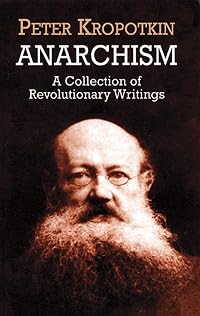
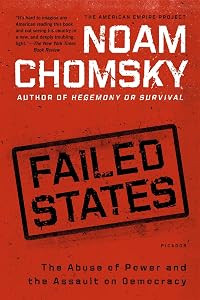
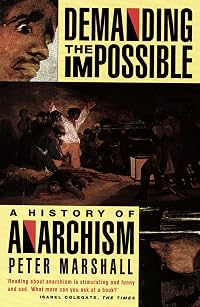
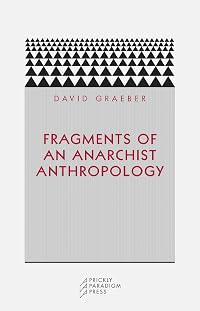
















Member Recommendations
Member Reviews
I started reading this book expecting something different from what it turned out to be, but it was informative regardless. I expected it to be more descriptive of anarchism and more contextual regarding the matters it discussed, but it was easy to fill those blanks for most part with Noam Chomsky's style of narration.
In this book, Chomsky argues the case for the anarchist ideology by firstly dismissing the notion that just because it hasn't been fully implemented doesn't mean it isn't practicable, and later by giving historical examples, mostly from the industrial and agricultural collectives established in Catalonia during the Spanish Civil War. He consolidates his case by presenting various citations for each claim and debunking show more various unfounded claims against those anarchist societies, especially those made by author Gabriel Jackson in his award-winning work The Spanish Republic and the Civil War 1931–39.
Everytime I listen to Noam Chomsky, it is easy to notice how calm and collected his demeanor is, and one can almost sense that calmness even in his written works. Every argument he makes in negation of Gabriel Jackson's work is undoubtedly well constructed, but what makes it commendable is that one can sense absolutely no hatred in Chomsky's arguments. For someone as clearheaded and radicalized as him, he has the ability to radicalize his readers without losing his cool which makes this, and all of his other works a uniquely positive experience despite the generally negative scope of his research.
This book urged me to find out more about the Spanish Civil War from the anarchist perspective, and based on this read, I can safely say that Noam Chomsky is perhaps the only scholar whose book I would blindly pick to read despite having zero context about it. show less
In this book, Chomsky argues the case for the anarchist ideology by firstly dismissing the notion that just because it hasn't been fully implemented doesn't mean it isn't practicable, and later by giving historical examples, mostly from the industrial and agricultural collectives established in Catalonia during the Spanish Civil War. He consolidates his case by presenting various citations for each claim and debunking show more various unfounded claims against those anarchist societies, especially those made by author Gabriel Jackson in his award-winning work The Spanish Republic and the Civil War 1931–39.
Everytime I listen to Noam Chomsky, it is easy to notice how calm and collected his demeanor is, and one can almost sense that calmness even in his written works. Every argument he makes in negation of Gabriel Jackson's work is undoubtedly well constructed, but what makes it commendable is that one can sense absolutely no hatred in Chomsky's arguments. For someone as clearheaded and radicalized as him, he has the ability to radicalize his readers without losing his cool which makes this, and all of his other works a uniquely positive experience despite the generally negative scope of his research.
This book urged me to find out more about the Spanish Civil War from the anarchist perspective, and based on this read, I can safely say that Noam Chomsky is perhaps the only scholar whose book I would blindly pick to read despite having zero context about it. show less
From the book:
One of the things I like best about Chomsky, is that, regardless of whether you hail or diss him, you're bound to understand what he's talking about. It's always clear-cut, referenced throughout and simple, even when dealing with complex and even advanced matters at times, but if you just re-read that stuff if it feels hard to get, you will get it.
To begin with, he both discusses what anarchism has been, is and is not, which is vital.
His thoughts on anarchy are massive, intrinsic and needed. He exudes socialism and anarchism where he discusses matters as far-flung as language, freedom, politics and philosophy of today as well as during the days of Descartes, George Bush and how corporate capitalism has taken over to be the lingua franca state of life for many people.
And he often exemplifies how anarchism lives, not only in the mind, but very closely:
The chapter on language and freedom goes into anarchy from a linguistic route, even as it's very human. The chapter on Spain and the anarcho-syndicalistic ideas that grew into action from there is also really interesting.
All in all: very recommendable, even if you're not into politics. It's mind-bending in a good way. show less
WOMAN: It seems to me that as a social system, anarchism makes such bottom-line sense that it was necessary to discredit the word, and take it out of people’s whole vocabulary and thinking—so you just have a reflex of fear when you hear it.show more
CHOMSKY: Yeah, anarchism has always been regarded as the ultimate evil by people with power. So in Woodrow Wilson’s Red Scare [a 1919 campaign against “subversives” in the U.S.], they were harsh on socialists, but they murdered anarchists—they were really bad news. See, the idea that people could be free is extremely frightening to anybody with power.
That’s why the 1960s have such a bad reputation. I mean, there’s a big literature about the Sixties, and it’s mostly
written by intellectuals, because they’re the people who write books, so naturally it has a very bad name—because they hated it. You could see it in the faculty clubs at the time: people were just traumatized by the idea that students were suddenly asking questions and not just copying things down. In fact, when people like Allan Bloom [author of The Closing of the American Mind] write as if the foundations of civilization were collapsing in the Sixties, from their point of view that’s exactly right: they were. Because the foundations of civilization are, “I’m a big professor, and I tell you what to say, and what to think, and you write it down in your notebooks, and you repeat it.”
If you get up and say, “I don’t understand why I should read Plato, I think it’s nonsense,” that’s destroying the foundations of civilization. But maybe it’s a perfectly sensible question—plenty of philosophers have said it, so why isn’t it a sensible question? As with any mass popular movement, there was a lot of crazy stuff going on in the Sixties—but that’s the only thing that makes it into history: the crazy stuff around the periphery. The main things that were going on are out of history—and that’s because they had a kind of libertarian character, and there is nothing more frightening to people with power.
One of the things I like best about Chomsky, is that, regardless of whether you hail or diss him, you're bound to understand what he's talking about. It's always clear-cut, referenced throughout and simple, even when dealing with complex and even advanced matters at times, but if you just re-read that stuff if it feels hard to get, you will get it.
To begin with, he both discusses what anarchism has been, is and is not, which is vital.
The anarchist historian Rudolf Rocker, who presents a systematic conception of the development of anarchist thought towards anarchosyndicalism, along lines that bear comparison to Guérin’s work, puts the matter well when he writes that anarchism is not a fixed, self-enclosed social system but rather a definite trend in the historic development of mankind, which, in contrast with the intellectual guardianship of all clerical and governmental institutions, strives for the free unhindered unfolding of all the individual and social forces in life. Even freedom is only a relative, not an absolute concept, since it tends constantly to become broader and to affect wider circles in more manifold ways. For the anarchist, freedom is not an abstract philosophical concept, but the vital concrete possibility for every human being to bring to full development all the powers, capacities, and talents with which nature has endowed him, and turn them to social account. The less this natural development of man is influenced by ecclesiastical or political guardianship, the more efficient and harmonious will human personality become, the more will it become the measure of the intellectual culture of the society in which it has grown.
His thoughts on anarchy are massive, intrinsic and needed. He exudes socialism and anarchism where he discusses matters as far-flung as language, freedom, politics and philosophy of today as well as during the days of Descartes, George Bush and how corporate capitalism has taken over to be the lingua franca state of life for many people.
In his attack on the right of private or bureaucratic control over the means of production, the anarchist takes his stand with those who struggle to bring about “the third and last emancipatory phase of history,” the first having made serfs out of slaves, the second having made wage earners out of serfs, and the third which abolishes the proletariat in a final act of liberation that places control over the economy in the hands of free and voluntary associations of producers (Fourier, 1848).
And he often exemplifies how anarchism lives, not only in the mind, but very closely:
MAN: Then how can we build a social contract which is cooperative in nature, but at the same time recognizes individual humanity? It seems to me that there’s always going to be a very tense polar pull there.
CHOMSKY: Where’s the polar pull—between what and what?
MAN: Between a collective value and an individual value.
CHOMSKY: I guess I don’t see why there has to be any contradiction there at all. It seems to me that a crucial aspect of humanity is being a part of functioning communities—so if we can create social bonds in which people find satisfaction, we’ve done it: there’s no contradiction. Look, you can’t really figure out what problems are going to arise in group situations unless you experiment with them—it’s like physics: you can’t just sit around and think what the world would be like under such and such conditions, you’ve got to experiment and learn how things actually work out. And one of the things I think you learn from the kibbutz experiment is that you can in fact construct quite viable and successful democratic structures—but there are still going to be problems that come along. And one of the problems that people just have to face is the effect of group pressures to conform. I think everybody knows about this from families. Living in a family is a crucial part of human life, you don’t want to give it up. On the other hand, there plainly are problems that go along with it—nobody has to be told that. And a serious problem, which becomes almost pathological when it arises in a close-knit group, is exclusion—and to avoid exclusion often means doing things you wouldn’t want to do if you had your own way. But that’s just a part of living, to be faced with human problems like that. Actually, I’m not a great enthusiast of Marx, but one comment he made seems appropriate here. I’m quoting, so pardon the sexist language, but somewhere or other he said: socialism is an effort to try to solve man’s animal problems, and after having solved the animal problems, then we can face the human problems—but it’s not a part of socialism to solve the human problems; socialism is an effort to get you to the point where you can face the human problems. And I think the kind of thing you’re concerned about is a human problem—and those are going to be there. Humans are very complicated creatures, and have lots of ways of torturing themselves in their inter-personal relations. Everybody knows that, without soap operas.
The chapter on language and freedom goes into anarchy from a linguistic route, even as it's very human. The chapter on Spain and the anarcho-syndicalistic ideas that grew into action from there is also really interesting.
All in all: very recommendable, even if you're not into politics. It's mind-bending in a good way. show less
It seems like AK press is hell bent on publishing everything Chomsky has ever written and said over and over again. Unfortunately there is nothing in this text that hasn't already been printed, so readers of Chomsky are more than likely to be disappointed as I was. There are excellent articles in here however, such as "Objectivity and Liberal Scholarship, an article on Vietnam and the Spanish Revolution which originally appeared in Chomsky's first political book, "American Power and the New Mandarins." The article is first-rate scholarship and includes excellent bibliographical information. Chomsky was probably the only American dissident in the 1960's who was discussing issues like Anarcho-Syndicalism in relation to the Vietnam show more conflict. The other articles in the book have also appeared elsewhere, and they vary in quality a great deal. There is some interesting discussion here on Libertarian Socialist life in the Israeli Kibbutzim as well. "Language and Freedom," is an excellent lecture which connects his linguistic work with political ideology (which Chomsky now refuses to do), and discusses classical anarchist thinkers like Bakunin and Rocker. The last couple of interviews get slightly too informal for my taste and there are hardly any footnotes to back them up, but still this is a moderately helpful collection of material which gives an insight into Chomsky's anarchist convictions show less
I have no idea whom this book (collection of essays, to be more accurate) is aimed at. The liberals and leftists who might be swayed over to anarchism? Something for the centrist or conservative to ponder over? For the politically-inclined language theorist? Or all of the above?
Keeping aside the stream-of-consciousness narrative (this is a common feature of all Chomsky texts, but it is most apparent here) made it a vaguely illuminating read. As an idealist at heart - Chomsky raises a valid point in saying that anarchism is the belief of questioning those in authority as to how they got their power in the first place - if they can't prove that there is a reason for their existence, then they should be dismantled. More strikingly, it show more doesn't simply apply to businesses - but also for the government.
To most, this all sounds very romantic, not in the 'this will take a lot of time to be achieved' way but in the 'unicorns will fart rainbows before this ever happens' way. To assuage these concerns, Chomsky assures the reader that this is possible - it was seen before in large swathes of Spain in the Spanish civil war, during 1936. Revolutionary Catalonia didn't implode - the then-government crushed the spontaneous revolution with the help of Russia.
So there you have it. A primer to anarchism as a viable philosophy? It sounds like fun reading!
But that is sadly not the case. The book is sometimes too nuanced, name-dropping terms that the reader is expected to know. Then, on the other hand, there are some very simplistic interviews, all saying more or less the same thing - the book feels to drag even with its short length. But the simplicity of Chomsky's arguments is so magnificent that when you're reading it, all of this will not strike you.
This book is probably not the best first read if you're looking to get familiar with anarchism as a philosophy, but as someone looking to read up more on the topic, it's not exactly a bad read. I would recommend it solely because it's a breeze to go through, and it raises some hard questions. show less
Keeping aside the stream-of-consciousness narrative (this is a common feature of all Chomsky texts, but it is most apparent here) made it a vaguely illuminating read. As an idealist at heart - Chomsky raises a valid point in saying that anarchism is the belief of questioning those in authority as to how they got their power in the first place - if they can't prove that there is a reason for their existence, then they should be dismantled. More strikingly, it show more doesn't simply apply to businesses - but also for the government.
To most, this all sounds very romantic, not in the 'this will take a lot of time to be achieved' way but in the 'unicorns will fart rainbows before this ever happens' way. To assuage these concerns, Chomsky assures the reader that this is possible - it was seen before in large swathes of Spain in the Spanish civil war, during 1936. Revolutionary Catalonia didn't implode - the then-government crushed the spontaneous revolution with the help of Russia.
So there you have it. A primer to anarchism as a viable philosophy? It sounds like fun reading!
But that is sadly not the case. The book is sometimes too nuanced, name-dropping terms that the reader is expected to know. Then, on the other hand, there are some very simplistic interviews, all saying more or less the same thing - the book feels to drag even with its short length. But the simplicity of Chomsky's arguments is so magnificent that when you're reading it, all of this will not strike you.
This book is probably not the best first read if you're looking to get familiar with anarchism as a philosophy, but as someone looking to read up more on the topic, it's not exactly a bad read. I would recommend it solely because it's a breeze to go through, and it raises some hard questions. show less
On Anarchism was a collection of short essay that wasn't really what I was expecting. I was hoping for examples, or at least ideas, of how anarchism would actually work in the real world. How we'd get from an idea to a product without a profit motive. What I got instead was basically a label for my wife. She doesn't think governments should exist but while they do she supports a large welfare state to take care of the people. Chomsky appears to be the same.It was well writen and well cited, and otherwise awesome if I had gone in with different expectations it might be getting a 5 instead of a three.
If someone has a recommendation for a different book on anarchism that actually answers my questions I would appreciate it.
If someone has a recommendation for a different book on anarchism that actually answers my questions I would appreciate it.
Em honra dos 90 anos de Noam Chomsky (07/12/1928)
Quanto mais eu conheço o Chomsky, mais o considero o maior intelectual vivo e mais acho inadmissível que todo mundo não concorde com ele – pelo menos em questões políticas já que quanto à linguística nem sou tão fã assim.
Vamos pegar o exemplo das últimas eleições no Brasil em que a maioria dos ditos anarquistas não votou/anulou o voto porque o Estado é malvadão independente de quem o comande, aí com esse pensamento atroz faz-se eleger um fascista obviamente ignorante em detrimento de um professor culto e humanista. Você acha que sento isentão nessas condições fez bem ao povo ou ao seu ego enorme? É por isso que esses pseudo anarquistas isentões que só pensam nos show more próprios slogans defasados deveriam realmente escutar a sabedoria de Chomsky, sou tão anarquista quanto ele e concordo plenamente com o diálogo que ele mantem com os Estados que visam o bem estar social – é óbvio que não conscientizaremos a população de um dia para o outro dos benefícios da autogestão e a derrubada do Estado, nós não estamos conseguindo nem que deixem de serem neofascistas, por isso acho criminoso da parte desses anarquistas burgueses pagarem de isentões frente ao fascismo, ceis precisam mais de Chomsky nas suas vidas. Todo mundo precisa. show less
Quanto mais eu conheço o Chomsky, mais o considero o maior intelectual vivo e mais acho inadmissível que todo mundo não concorde com ele – pelo menos em questões políticas já que quanto à linguística nem sou tão fã assim.
Vamos pegar o exemplo das últimas eleições no Brasil em que a maioria dos ditos anarquistas não votou/anulou o voto porque o Estado é malvadão independente de quem o comande, aí com esse pensamento atroz faz-se eleger um fascista obviamente ignorante em detrimento de um professor culto e humanista. Você acha que sento isentão nessas condições fez bem ao povo ou ao seu ego enorme? É por isso que esses pseudo anarquistas isentões que só pensam nos show more próprios slogans defasados deveriam realmente escutar a sabedoria de Chomsky, sou tão anarquista quanto ele e concordo plenamente com o diálogo que ele mantem com os Estados que visam o bem estar social – é óbvio que não conscientizaremos a população de um dia para o outro dos benefícios da autogestão e a derrubada do Estado, nós não estamos conseguindo nem que deixem de serem neofascistas, por isso acho criminoso da parte desses anarquistas burgueses pagarem de isentões frente ao fascismo, ceis precisam mais de Chomsky nas suas vidas. Todo mundo precisa. show less
On Anarchism is a collection of excerpts from previous interviews. Chomsky needs no introduction as he is well known as a voice of the far left -- articulate and well spoken. He is not the political sound bite of the evening or 24 hour news channel. He is the details and the details that get drowned out of the mainstream media.
As a professor of linguistics Chomsky knows words mean things. He sticks to the proper usage of words rather than the contemporary view. Historically, libertarian does not mean the same thing as it does in the US. It does mean minimal government interference in life, but in a socialist way. Chomsky use libertarianism, socialism, and anarchism. There is not much of the defining the terms as in other more complete show more works. But, socialism had little to do with the Soviet Union which was not socialist or communist, but totalitarian. The only real difference between right wing dictatorships and left wing dictatorships is ownership. The state is the property owner in left wing dictatorships and foreigners are the owners in right wing dictatorships.
Chomsky champions the worker and the individual. Citing Tocqueville, Chomsky makes the point that many governments (including our own) are based on the right of property over the right of the individual. Remember the Bill of Rights came two years after the Constitution. He makes the stand that the US operates under State Capitalism just as the Soviets were State Socialism. The state becomes the problem in both. The idea of the free market in the US is "baloney" according to Chomsky. America has a planned economy. The state subsidies to agriculture, pharmaceuticals, and technology allow these industries to profit. They do not rely on the market, but on tax dollars. The difference between America, the Asian success stories, and the Soviet Union is the amount of state centralization and bureaucracy. The Soviet system was inefficient, but it did provide a safety net for the people. Compare the standard of living before and after the fall of communism.
In a democracy the power should lie not just formally in the population, but actually in the people. People are losing control of the government. Politicians court corporations and favor their interests. American's themselves seem to be caught up in a trap. They hate taxes, but want roads, schools, and a huge military. What is called a welfare state is the recognition that every child has a right to food, healthcare, and an education. This recognition came with a century of work from labor and socialism.
Adam Smith the champion of the free market believed people should be free. They should be free from authoritarian government and authoritarian institutions. Chomsky argues that Smith was the opposite of a capitalist. He believed that people's character involves sympathy, solidarity, and the right to control their own work.
Chomsky is an idealist and admits that his ideas may not be completely possible today. However, in the eighteenth century political democracy was a dream, yet by the nineteenth century it existed. Chomsky believes that change can happen. He also believes that people need to stand up and call out injustice. In order for change to happen, it will take effort. People today are too distracted by superficial flashes and ignore their own interests. A distracted society will be taken advantage of and find their rights stripped away, usually by their own vote. show less
As a professor of linguistics Chomsky knows words mean things. He sticks to the proper usage of words rather than the contemporary view. Historically, libertarian does not mean the same thing as it does in the US. It does mean minimal government interference in life, but in a socialist way. Chomsky use libertarianism, socialism, and anarchism. There is not much of the defining the terms as in other more complete show more works. But, socialism had little to do with the Soviet Union which was not socialist or communist, but totalitarian. The only real difference between right wing dictatorships and left wing dictatorships is ownership. The state is the property owner in left wing dictatorships and foreigners are the owners in right wing dictatorships.
Chomsky champions the worker and the individual. Citing Tocqueville, Chomsky makes the point that many governments (including our own) are based on the right of property over the right of the individual. Remember the Bill of Rights came two years after the Constitution. He makes the stand that the US operates under State Capitalism just as the Soviets were State Socialism. The state becomes the problem in both. The idea of the free market in the US is "baloney" according to Chomsky. America has a planned economy. The state subsidies to agriculture, pharmaceuticals, and technology allow these industries to profit. They do not rely on the market, but on tax dollars. The difference between America, the Asian success stories, and the Soviet Union is the amount of state centralization and bureaucracy. The Soviet system was inefficient, but it did provide a safety net for the people. Compare the standard of living before and after the fall of communism.
In a democracy the power should lie not just formally in the population, but actually in the people. People are losing control of the government. Politicians court corporations and favor their interests. American's themselves seem to be caught up in a trap. They hate taxes, but want roads, schools, and a huge military. What is called a welfare state is the recognition that every child has a right to food, healthcare, and an education. This recognition came with a century of work from labor and socialism.
Adam Smith the champion of the free market believed people should be free. They should be free from authoritarian government and authoritarian institutions. Chomsky argues that Smith was the opposite of a capitalist. He believed that people's character involves sympathy, solidarity, and the right to control their own work.
Chomsky is an idealist and admits that his ideas may not be completely possible today. However, in the eighteenth century political democracy was a dream, yet by the nineteenth century it existed. Chomsky believes that change can happen. He also believes that people need to stand up and call out injustice. In order for change to happen, it will take effort. People today are too distracted by superficial flashes and ignore their own interests. A distracted society will be taken advantage of and find their rights stripped away, usually by their own vote. show less
Members
- Recently Added By
Author Information

582+ Works 47,589 Members
Noam Chomsky was born in Philadelphia, Pennsylvania on December 7, 1928. Son of a Russian emigrant who was a Hebrew scholar, Chomsky was exposed at a young age to the study of language and principles of grammar. During the 1940s, he began developing socialist political leanings through his encounters with the New York Jewish intellectual show more community. Chomsky received his Ph.D. from the University of Pennsylvania, where he studied linguistics, mathematics, and philosophy. He conducted much of his research at Harvard University. In 1955, he began teaching at MIT, eventually holding the Ferrari P. Ward Chair of Modern Language and Linguistics. Today Chomsky is highly regarded as both one of America's most prominent linguists and most notorious social critics and political activists. His academic reputation began with the publication of Syntactic Structures in 1957. Within a decade, he became known as an outspoken intellectual opponent of the Vietnam War. Chomsky has written many books on the links between language, human creativity, and intelligence, including Language and Mind (1967) and Knowledge of Language: Its Nature, Origin, and Use (1985). He also has written dozens of political analyses, including Manufacturing Consent: The Political Economy of the Mass Media (1988), Chronicles of Dissent (1992), and The Prosperous Few and the Restless Many (1993). (Bowker Author Biography) show less
Some Editions
Common Knowledge
- Canonical title
- On Anarchism
- Original publication date
- 2005
- People/Characters
- Noam Chomsky
Classifications
- Genres
- General Nonfiction, Nonfiction, Philosophy, Politics and Government, History
- DDC/MDS
- 335.83092 — Society, government, & culture Economics Socialism and related systems Other systems Anarchism Biography And History Biography
- LCC
- HX828 .C52 — Social sciences Socialism. Communism. Anarchism Anarchism
- BISAC
Statistics
- Members
- 1,392
- Popularity
- 17,051
- Reviews
- 21
- Rating
- (3.85)
- Languages
- 6 — Catalan, English, Greek, Portuguese, Serbian, Spanish
- Media
- Paper, Audiobook, Ebook
- ISBNs
- 19
- ASINs
- 12