On This Page
Description
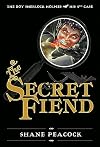
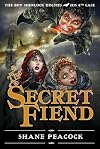
It is 1868, the week that Benjamin Disraeli becomes Prime Minister of the Empire. Sherlock's beautiful but poor admirer, Beatrice, the hatter's daughter, appears at the door late at night. She is terrified, claiming that she and her friend have just been attacked by the Spring Heeled Jack on Westminster Bridge and the fiend has made off with her friend. At first Sherlock thinks Beatrice simply wants his attention, and he is reluctant to go back to detective work. He also believes that the show more Jack everyone fears is a fictional figure. But soon he is suspicious of various individuals, several of them close friends.Set at a time when many in England were in a state of fear because a Jew was running the country, Shane Peacock presents a compelling story filled with an atmosphere of paranoia and secrets and surprises played out on late-night London streets. Sherlock gets drawn deeper and deeper into the pursuit of the Spring Heeled Jack, whose attacks grow in number until it seems that there are Jacks everywhere.
The Secret Fiend is the fourth book in Shane Peacock's award-winning Boy Sherlock Holmes series, combining brilliant storytelling with fascinating historical detail and a mystery worthy of one of the greatest sleuths in English literature.
From the Hardcover edition.
. show less
Tags
Recommendations



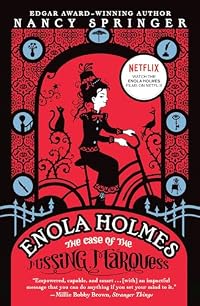

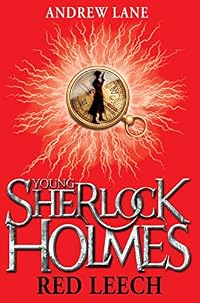

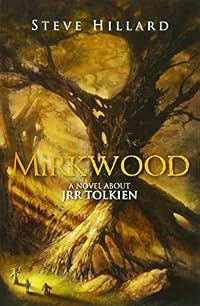
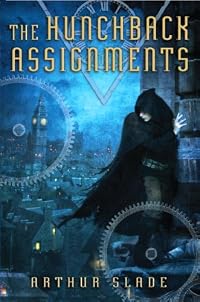















Member Reviews
This book was, I noted, offered by the Early Reviewer's group, but there was no way I was going to wait for that!
This is the fourth book in Shane Peacock's incredibly rich and wonderful series about Sherlock Holmes as he developed during his youth. The story in this case concerns a "fiend" known as the Spring-Heeled Jack. The Spring-Heeled Jack originated in actual claimed sightings in 1837, and eventually evolved into a kind of bogeyman of cheap Victorian serial tabloid fiction. The case begins after a childhood friend (Beatrice) of Sherlock is attacked by this "fiend". She becomes a new love interest for Sherlock, as something of a foil to Irene Doyle, who of course appears again in this novel.
We see in this novel a further show more development of the close relationship between Sherlock and his mentor, Bell the apothecary. Indeed, there are fascinating secrets about Bell that are revealed as the story unfolds. But it is Sherlock's continuing nemesis whose development steals the show in this book. I don't wish to include spoilers so let it suffice to say that it becomes very clear by the end of the book the direction in which Peacock is going to take this central figure of the series.
The otherwise wonderful story in the book is blemished by an unfortunate reference to Chaos Theory (in the mathematical sense), which was not formulated until 1961.
While the first three books were relatively tame in this regard, there is sufficient suggested and apparent violence in this fourth book that I would not recommend it for children younger than the target age group (10 and up).
I found this fourth case to be the most interesting and exciting of the books so far. I am eagerly awaiting the next instalment in what I think is the most exciting series since Harry Potter. show less
This is the fourth book in Shane Peacock's incredibly rich and wonderful series about Sherlock Holmes as he developed during his youth. The story in this case concerns a "fiend" known as the Spring-Heeled Jack. The Spring-Heeled Jack originated in actual claimed sightings in 1837, and eventually evolved into a kind of bogeyman of cheap Victorian serial tabloid fiction. The case begins after a childhood friend (Beatrice) of Sherlock is attacked by this "fiend". She becomes a new love interest for Sherlock, as something of a foil to Irene Doyle, who of course appears again in this novel.
We see in this novel a further show more development of the close relationship between Sherlock and his mentor, Bell the apothecary. Indeed, there are fascinating secrets about Bell that are revealed as the story unfolds. But it is Sherlock's continuing nemesis whose development steals the show in this book. I don't wish to include spoilers so let it suffice to say that it becomes very clear by the end of the book the direction in which Peacock is going to take this central figure of the series.
The otherwise wonderful story in the book is blemished by an unfortunate reference to Chaos Theory (in the mathematical sense), which was not formulated until 1961.
While the first three books were relatively tame in this regard, there is sufficient suggested and apparent violence in this fourth book that I would not recommend it for children younger than the target age group (10 and up).
I found this fourth case to be the most interesting and exciting of the books so far. I am eagerly awaiting the next instalment in what I think is the most exciting series since Harry Potter. show less
This is the fourth in Peacock's series about "the boy Sherlock Holmes," and since it's the first I've read, I can assure you that it can stand alone; however, I'm eager to read the series from the beginning.
Sherlock is fourteen years old in this book, and Disraeli has just become the first Jewish prime minister of England, a truly terrifying prospect to some of the ruling class. Social unrest abounds, with increasing demands for expanded voting rights and for feeding the desperately poor. The real terror begins when a mysterious creature, reminiscent of the Spring Heeled Jack of the Penny Dreadfuls, with red eyes and blue flames shooting from its mouth, begins randomly attacking the poor and other marginalized people, beginning with show more Sherlock's friend Beatrice. Sherlock has apparently decided to forgo sleuthing until he is an adult, but Beatrice more or less drags him into an investigation.
The historical details really make this book rich and enjoyable. 1868 London is beautifully described as Sherlock and his friends walk (not having the money for cabs) back and forth through every part of the city. The social unrest is woven neatly into the story, and if the solution is rather telegraphed, Sherlock's clever sleuthing makes up for it. The seemingly impossible villain is unmasked and Sherlock has another case under his belt.
Sherlock's development will be interesting to fans of Arthur Conan Doyle, as he attempts to shelve emotion in favor of logic and trains in martial arts with the apothecary. I found this a thoroughly enjoyable romp through 1868 London and in the mind of young Sherlock.
Source disclosure: I received a review copy of this book from the publisher. show less
Sherlock is fourteen years old in this book, and Disraeli has just become the first Jewish prime minister of England, a truly terrifying prospect to some of the ruling class. Social unrest abounds, with increasing demands for expanded voting rights and for feeding the desperately poor. The real terror begins when a mysterious creature, reminiscent of the Spring Heeled Jack of the Penny Dreadfuls, with red eyes and blue flames shooting from its mouth, begins randomly attacking the poor and other marginalized people, beginning with show more Sherlock's friend Beatrice. Sherlock has apparently decided to forgo sleuthing until he is an adult, but Beatrice more or less drags him into an investigation.
The historical details really make this book rich and enjoyable. 1868 London is beautifully described as Sherlock and his friends walk (not having the money for cabs) back and forth through every part of the city. The social unrest is woven neatly into the story, and if the solution is rather telegraphed, Sherlock's clever sleuthing makes up for it. The seemingly impossible villain is unmasked and Sherlock has another case under his belt.
Sherlock's development will be interesting to fans of Arthur Conan Doyle, as he attempts to shelve emotion in favor of logic and trains in martial arts with the apothecary. I found this a thoroughly enjoyable romp through 1868 London and in the mind of young Sherlock.
Source disclosure: I received a review copy of this book from the publisher. show less
 This review was written for LibraryThing Early Reviewers.
This was an ER book and is the fourth in a series on "The Boy Sherlock Holmes". Therefore, I read the first two books in the series, which I was able to find in the library, first. In this series, Peacock tries to explore the childhood of the boy and what might have created the adult figure of Holmes that we know so well from Arthur Conan Doyle's stories--aloof, no family ties to speak of, unemotional. Unfortunately, from my point of view, he chooses to do this in third person present tense. "It's a trap, thinks Sherlock." This continually jarred on my ear.
The books themselves are dark, IMO. There is an incident at the end of the first book that deeply disturbed me. This may be necessary, in the long story arc, to create the person show more Holmes becomes, but there would have been other ways to develop the isolation. I am not a habitual murder mystery reader, but I have read all of Doyle's Sherlock Holmes, and I enjoyed other historical mysteries such as Bruce Alexander's Sir John Fielding books, quite a bit. Each book revolves around a case, but also moves Holmes forward in age and relationships, some of which are not very believable.
I believe Peacock has won a number of awards with his books, so it may just be me. Indeed, from the reviews so far, I think it IS just that these are not MY cup of tea. show less
The books themselves are dark, IMO. There is an incident at the end of the first book that deeply disturbed me. This may be necessary, in the long story arc, to create the person show more Holmes becomes, but there would have been other ways to develop the isolation. I am not a habitual murder mystery reader, but I have read all of Doyle's Sherlock Holmes, and I enjoyed other historical mysteries such as Bruce Alexander's Sir John Fielding books, quite a bit. Each book revolves around a case, but also moves Holmes forward in age and relationships, some of which are not very believable.
I believe Peacock has won a number of awards with his books, so it may just be me. Indeed, from the reviews so far, I think it IS just that these are not MY cup of tea. show less
This review was written for LibraryThing Early Reviewers.The Secret Fiend, the fourth book in Shane Peacock's Boy Sherlock Holmes series, is as good as, if not better than, the first three. In this novel, Sherlock helps his friend Beatrice Leckie, who is one of several people in London terrorized by a madman dressed as a penny dreadful character. Like the other books in this series, The Secret Fiend features an exciting plot, good character development, and an interesting and detailed historical setting. In addition, there is a romantic element consistent with Sherlock's increasing maturity, greater revelation of the characters' histories, and more about the political and social concerns of the time.
My 11-year-old is as big a fan of this series as I am. She started the book as soon as she got show more it and could barely put it down, finishing it in a single day. We're both eagerly awaiting the next book in the series. show less
My 11-year-old is as big a fan of this series as I am. She started the book as soon as she got show more it and could barely put it down, finishing it in a single day. We're both eagerly awaiting the next book in the series. show less
I may have said this about the last one, but this is by far and away the best in the Boy Sherlock Holmes series. The Secret Fiend is clever and Peacock teases us with hints of who Malefactor really is (and oh, I love it). I find that Sherlock's issues with women are fascinating though at times annoying. Regardless, I like this series quite a bit.
I received The Secret Fiend through Librarything's Early Reviewers.
This book is the fourth in a series that centers around Sherlock Holmes as a teenager. I have to admit, most of what I know about Sherlock Holmes comes from parodies and homages. That being said, I have read a handful of Doyle's original Sherlock Holmes stories and have seen a couple of Sherlock Holmes films. I like detective stories like that, so I mostly enjoyed this novel.
In this volume, the boy Sherlock Holmes is dragged into a case by his childhood friend, Beatrice Leckie. Beatrice and her friend are attacked by a "Spring Heeled Jack," a figure only known from books and stories. At first Holmes sense that it is all a prank, but soon the exploits of this Spring show more Heeled Jack become more sinister.
The setting of the novel is London in the 1860s-1870s. At this time, England was experiencing some social unrest, as the country was being run by its first Jewish Prime Minister, Benjamin Disraeli. As an American, I know little to nothing about this time period in England, so while The Secret Fiend is primarily a detective story, it contains a great lot of historical fiction.
The story was extremely engaging and unlike a lot of detective stories written for children or young adults, the ending was not easy to guess or apparent from the start. I would have rated the book higher if not for one thing: the narration in The Secret Fiend is completely in the present tense. The writing style distracted me from the story and though it was by no means a difficult read, I had a hard time getting through it because the writing bothered me a lot. If you can ignore the writing style or if you like this sort of present tense fiction, then I would encourage you to read this series. If, like me, you have a hard time reading fiction written like this, I would not suggest this book at all. The interesting story isn't worth trying to get through the narration. show less
This book is the fourth in a series that centers around Sherlock Holmes as a teenager. I have to admit, most of what I know about Sherlock Holmes comes from parodies and homages. That being said, I have read a handful of Doyle's original Sherlock Holmes stories and have seen a couple of Sherlock Holmes films. I like detective stories like that, so I mostly enjoyed this novel.
In this volume, the boy Sherlock Holmes is dragged into a case by his childhood friend, Beatrice Leckie. Beatrice and her friend are attacked by a "Spring Heeled Jack," a figure only known from books and stories. At first Holmes sense that it is all a prank, but soon the exploits of this Spring show more Heeled Jack become more sinister.
The setting of the novel is London in the 1860s-1870s. At this time, England was experiencing some social unrest, as the country was being run by its first Jewish Prime Minister, Benjamin Disraeli. As an American, I know little to nothing about this time period in England, so while The Secret Fiend is primarily a detective story, it contains a great lot of historical fiction.
The story was extremely engaging and unlike a lot of detective stories written for children or young adults, the ending was not easy to guess or apparent from the start. I would have rated the book higher if not for one thing: the narration in The Secret Fiend is completely in the present tense. The writing style distracted me from the story and though it was by no means a difficult read, I had a hard time getting through it because the writing bothered me a lot. If you can ignore the writing style or if you like this sort of present tense fiction, then I would encourage you to read this series. If, like me, you have a hard time reading fiction written like this, I would not suggest this book at all. The interesting story isn't worth trying to get through the narration. show less
This review was written for LibraryThing Early Reviewers.This, the fourth book in the series, is the first one I've read, so I can report that it does stand alone, and, though I don't have the other books to compare it to, it does not seem to me to show any signs of flagging or being played out. On the contrary, it is a well-paced, action-filled book which I think would have some appeal to boys. Particular strengths are the descriptions of London as Holmes and various characters cross it on foot. (Does no one take cabs? Are we never going to hear Holmes say "Paddington Station, man, and there's an extra guinea in it for you if we get there in ten minutes!"?) Compared to some of the adult books written about Holmes, the main character lacks eccentricity and brilliance, that sort of inhuman show more remoteness which makes Holmes so interesting. There is also a heavy-handed political plot which was fairly obvious. However, fans of the series probably won't be disappointed and it makes for a lively read. show less
This review was written for LibraryThing Early Reviewers.Members
- Recently Added By
Author Information

26 Works 1,388 Members
Awards and Honors
Series

Common Knowledge
- Canonical title
- The Secret Fiend
Classifications
- Genres
- Fiction and Literature, Young Adult, Teen
- DDC/MDS
- 813.54 — Literature & rhetoric American literature in English American fiction in English 1900-1999 1945-1999
- LCC
- PZ7 .P3117523 .S — Language and Literature Fiction and juvenile belles lettres Fiction and juvenile belles lettres Juvenile belles lettres
- BISAC
Statistics
- Members
- 138
- Popularity
- 236,253
- Reviews
- 17
- Rating
- (3.84)
- Languages
- English
- Media
- Paper, Ebook
- ISBNs
- 9
- ASINs
- 1