Shamela
by Henry Fielding
On This Page
Description
Shamela is a bawdy, spirited, and hilarious response to Samuel Richardson's hugely popular 1740 novel, Pamela. In a pointed satire, Shamela, which happens to be the real name of Richardson's Pamela, reveals the ulterior motives behind the events that took place in Pamela. Shamela is unlike the virtuous young lady portrayed in Richardson's novel, and she takes command of her master, Squire Booby. She has planned it all out from the start and is determined to entrap her master into marriage.Tags
Recommendations



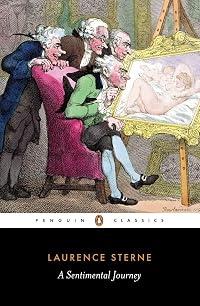
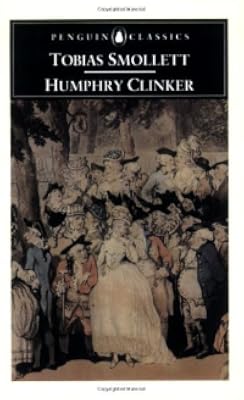



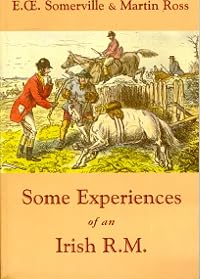
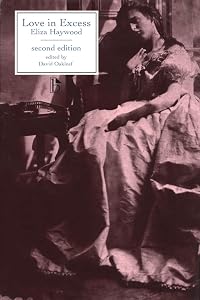









Member Recommendations

kara.shamy You can't have Shamela without Pamela; they're like two peas in a pod ;)
Seriously, you cannot come close to maximizing your appreciation of this work without at least taking a gander at the original Samuel Richardson epistolary novel that inspired this satire. Please trust me when I tell you the complementary read will pay off in the form of some laughs (or at least some chuckles), which is more than I can say for most highly recommended companion reads (at least that I make) to great novels in English.
Member Reviews
Everyone loves a good cat fight...but a fair one. An Apology... was Fielding's direct satirical attack on Samuel Richardson's Pamela, however Fielding was a coward. He first published An Apology...under the false name of Conny Keyber. It was supposed to be the true events or what really happened with Pamela in a mere sixty pages. According to Fielding, Pamela is not a chaste and sweet girl. Instead she is wicked and full of lust. Instead of being seduced by her former employer's son, Fielding thinks she entrapped him into marrying her.
I have to admit I can't speak to the steadfast morality of a teenager, but I agreed with Fielding in that I found it completely unbelievable that a fifteen year old girl would continue her diaries through show more all the chaos and upheaval. show less
I have to admit I can't speak to the steadfast morality of a teenager, but I agreed with Fielding in that I found it completely unbelievable that a fifteen year old girl would continue her diaries through show more all the chaos and upheaval. show less
Well, it's certainly better than Pamela was. I laughed a few times. If you've slogged through all of Pamela, you might as well blitz through this too; it's only 50 pages or so.
This is Henry Fielding's satiric response to Samuel Richardson's famous and successful "Pamela" where, rather than being virtue personified, Shamela is a scheming shrew, intent on catching the Squire.
The result is a bit patchy and falls a bit flat. Fielding can't quite sustain the gibes to form them into a meaningful whole.
Read Dec 2017
The result is a bit patchy and falls a bit flat. Fielding can't quite sustain the gibes to form them into a meaningful whole.
Read Dec 2017
Ratings
Members
- Recently Added By
Lists

SHOULD Read Books!
354 works; 9 members

Books Read in 2014
2,343 works; 89 members
Author Information

263+ Works 15,900 Members
Henry Fielding, 1707 - 1754 A succcessful playwright in his twenties, Henry Fielding turned to the study of law and then to journalism, fiction, and a judgeship after his Historical Register, a political satire on the Walpole government, contributed to the censorship of plays that put him out of business. As an impoverished member of the upper show more classes, he knew the country squires and the town nobility; as a successful young playwright, the London jet set; as a judge at the center of London, the city's thieves, swindlers, petty officials, shopkeepers, and vagabonds. As a political journalist (editor-author of The Champion, 1739-1741; The True Patriot, 1745-1746; The Jacobite's Journal, 1747-1748; The Covent-Garden Journal, 1752), he participated in argument and intrigue over everything from London elections to national policy. He knowledgeably attacked and defended a range of politicians, from ward heelers to the Prince of Wales. When Fielding undertook writing prose fiction to ridicule the simple morality of Pamela by Samuel Richardson, he first wrote the hilarious burlesque Shamela (1741). However, he soon found himself considering all the forces working on humans, and in Joseph Andrews (1742) (centering on his invented brother of Pamela), he played with the patterns of Homer, the Bible, and Cervantes to create what he called "a comic epic poem in prose." His preface describing this new art form is one of the major documents in literary criticism of the novel. Jonathan Wild, a fictional rogue biography of a year later, plays heavily with ironic techniques that leave unsettled Fielding's great and recurring theme: the difficulty of uniting goodness, or an outflowing love of others, with prudence in a world where corrupted institutions support divisive pride rather than harmony and self-fulfillment. In his masterpiece Tom Jones (1749), Fielding not only faces this issue persuasively but also shows for the first time the possibility of bringing a whole world into an artistic unity, as his model Homer had done in verse. Fielding develops a coherent and centered sequence of events-something Congreve had done casually on a small scale in Incognita 60 years before. In addition he also relates the plot organically to character and theme, by which he gives us a vision of the archetypal good person (Tom) on a journey toward understanding. Every act by every character in the book reflects the special and typical psychology of that character and the proper moral response. In Tom Jones, Fielding affirms the existence of an order under the surface of chaos. In his last novel, Amelia (1751), which realistically examines the misery of London, he can find nothing reliable except the prudent good heart, and that only if its possessor escapes into the country. Fielding based the title character on his second wife, with whom he was deeply in love. However, ill himself, still saddened by the deaths of his intensely loved first wife and daughter, and depressed by a London magistrate's endless toil against corruption, Fielding saw little hope for goodness in that novel or in his informal Journal of a Voyage to Lisbon (1755). Shortly after traveling to Lisbon for his health, Fielding died at the age of 47, having proved to his contemporaries and successors that the lowly novel was capable of the richest achievements of art. (Bowker Author Biography) show less
Some Editions
Work Relationships
Is contained in
Is a parody of
Common Knowledge
- Canonical title
- Shamela
- Original title
- An apology for the life of Mrs. Shamela Andrews
- Original publication date
- 1741-04-02
- First words
- Madame,
It will be naturally expected, that when I write the life of Shamela, I should dedicate it to some young lady, whose wit and beauty might be the proper subject of a comparison with the heroine of my piece. - Last words
- (Click to show. Warning: May contain spoilers.)P.S. Since I writ, I have a certain account, that Mr. Booby hath caught his wife in bed with Williams; hath turned her off, and is prosecuting him in the spiritual court.
Classifications
Statistics
- Members
- 98
- Popularity
- 329,164
- Reviews
- 3
- Rating
- (3.00)
- Languages
- English, Finnish, Italian
- Media
- Paper, Audiobook, Ebook
- ISBNs
- 17
- UPCs
- 1
- ASINs
- 5