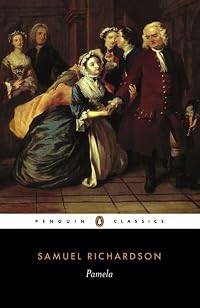
Pamela: or, Virtue Rewarded
by Samuel Richardson
On This Page
Description
For a fascinating glimpse into eighteenth-century morals and values, take a look at Samuel Richardson's Pamela, or Virtue Rewarded. A blockbuster of a bestseller in its day, Pamela recounts the tribulations of a poor housekeeper who is forced constantly to fend off the prurient advances of her employer. Her reward? Pamela is offered—and accepts—her lustful master's hand in marriage and is thrust into upper-class society..
Tags
Recommendations
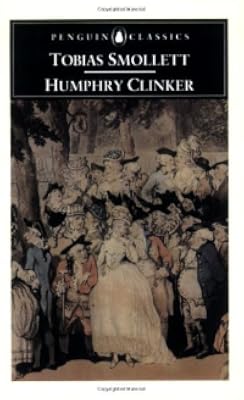

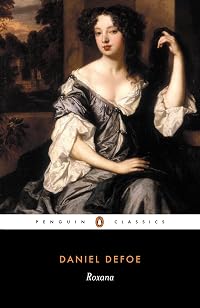
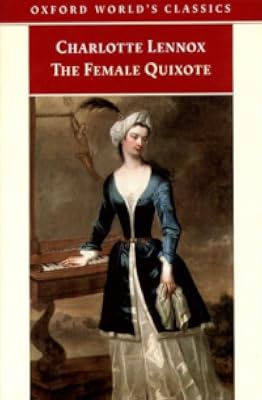
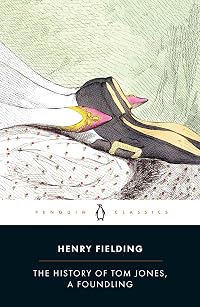


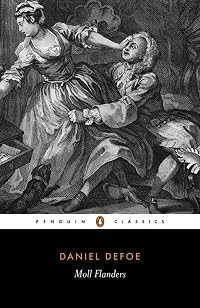





Member Recommendations

Imprinted A satiric take on the popular Pamela by one of Richardson's contemporaries.
kara.shamy Must read Shamela! It's an incomplete experience to read Richardson's novel or Fielding's satirical take on it apart from the other text, I think...
41


Member Reviews
Finally relinquished this to Goodwill, but not before re-reading the scribbles I made in the covers during my "The Origins Of The Novel" class, circa 2001:
"It's like a manifesto! Serving girls! Throw off your chains and marry your masters!"
... actually, my professor said that one.
Confession: I love Samuel Richardson. I love Pamela. I love Clarissa. I love the wicked Mr. B-, who practically twirls his mustache as he looms in corners, waiting for 'poor unhappy Pamela' to drop her defenses (and her drawers) so he can steal her sweet, sweet virtue. I love the ridiculous plot that somehow is not ridiculous when drawn out & elaborated piece-by-piece by Richardson. (A reader's version of Stockholm syndrome, perhaps? After spending 300 pages show more on a book, do we automatically believe anything?)
Other readers criticize unhappy Pamela for her docility, her passivity, her calf eyes and willingness to trust Mr. B- after having proof time and time again that he is just up to no good. I remind them of her escape, her lies, her dissembling and her general under-the-radar intelligence. She's hampered by virtue, not stupidity.
And oh! most of all I love the sunflower scene.
"What are you doing there, sauce-pot?"
"Just - uh - smelling a sunflower."
"Sunflowers have no scent, idiot."
"... so I find." show less
"It's like a manifesto! Serving girls! Throw off your chains and marry your masters!"
... actually, my professor said that one.
Confession: I love Samuel Richardson. I love Pamela. I love Clarissa. I love the wicked Mr. B-, who practically twirls his mustache as he looms in corners, waiting for 'poor unhappy Pamela' to drop her defenses (and her drawers) so he can steal her sweet, sweet virtue. I love the ridiculous plot that somehow is not ridiculous when drawn out & elaborated piece-by-piece by Richardson. (A reader's version of Stockholm syndrome, perhaps? After spending 300 pages show more on a book, do we automatically believe anything?)
Other readers criticize unhappy Pamela for her docility, her passivity, her calf eyes and willingness to trust Mr. B- after having proof time and time again that he is just up to no good. I remind them of her escape, her lies, her dissembling and her general under-the-radar intelligence. She's hampered by virtue, not stupidity.
And oh! most of all I love the sunflower scene.
"What are you doing there, sauce-pot?"
"Just - uh - smelling a sunflower."
"Sunflowers have no scent, idiot."
"... so I find." show less
Haha. Oh man, oh wow. I read this book right after reading Moll Flanders, so as far as the writing style went, Pamela wasn't a challenge.
The story and subject matter on the other hand... this book was said to cause an uproar over its publication because some saw it as porn, etc etc. Well, Mr. B does attempt to rape Pamela, so... Yeah, you heard right. Anyway.
Pamela starts out as the virtuous maid of a recently-deceased lady. She is 15 at this time and has been in employ in the house for over 3 years now and the lady had given Pamela an education, introducing her to literature, music, etc. She passes away, leaving Pamela in the employ of her son, who is nowhere near as altruistic as his mother and tries to seduce her. Pamela holds fast show more to her virtue (because how else would she be rewarded?)
She continues to rebuff him to the point where the other servants have taken notice, and try to assist her in what way they can without rousing the master's ire. It culminates in the master kidnapping Pamela to his country estate in hopes of wearing her down and making her give up her virtue. Among her trials are a housekeeper who constantly watches her and even hits her, a thug hired to scare her straight, and an attempted rape in which said housekeeper was complicit.
Pamela is pretty much a Mary Sue. She is beautiful, virtuous, charming, clever, and despite her poor background, has the grace of a lady. Her would-be haters are soon enough won over by her sweetness and virtue, and even Mr. B, that roguish dastard, is so awed by her determined virtue that he declares he no longer wants her as mistress, but as wife. She completely forgives all the wrongs that were committed towards her, even the physical abuse from Mr. B's maid, and the attempted rape itself. She is constantly falling to her knees to pray to God and thank him for her blessings, and what an unworthy creature of Mr. B she is (yes, an unworthy creature to her would-be rapist!) Seriously, after she agreed to marry Mr. B it felt like she was falling to her knees and thanking Mr. B for his generosity and kindness, or thanking God for the same every other page.
500 pages of this. 500 freaking pages. The first half was all like...
Mr. B. "I want you."
Pamela "No."
Mr. B. "Yes."
Pamela "No. Muh virtue!!!!!!!!"
Mr. B. "You sauce-box! You slut! You creature! You bold-face!"
Pamela "MUH VIRTUE!!!111!!!!!one!!!!11!!!"
Mr. B. "So? I'll pay you for it."
Pamela "No! My virtue is not for sale!"
Mr. B "Bold-face! Sauce-box! Creature! Hussy! Slut! Slattern! Silly girl/child!!! GIVE IT TO ME!!! Y WONT U GIVE IT TO ME!!! I AM SO ANGRY WITH U!!!" (let's keep in mind that it's Pamela who has every right to be angry here, yet she still won't BE angry. Just frightened, whining, crying, and fainting)
Then comes the scene of the attempted rape, where Pamela throws such a swooning/fainting/hysterical fit that it actually gives Mr. B pause. Thank goodness.
Then the second half of this book was like...
Mr. B. "You are such a sweet creature, and I humbly repent of all my sins!"
Pamela "Oh you are too kind, master, I am such an unworthy creature!"
Mr. B. "You are an angel, and have reformed me of my rakish ways. My love for you is undying. Be my wife!"
Pamela "Thank you, God, for rewarding my virtue!"
Sigh. At least the author does recognize the double standard of a man being able to fool around with little or no consequences, where naturally, the same usually could not be said of the woman. However, he could have told a much better (and shorter) story than Pamela.
One thing that really bothered me about this book was the implication that Pamela's father would have disowned her if she had given up her virginity to Mr. B. Regardless of the fact that Pamela kept telling her father (via letters) how frightened she was, how she was praying to God, how she was fighting for her virtue, etc etc. That was one thing that really decided me against the book, I MIGHT have given this book 3 stars because hey, this IS a old book and gender norms were different back then, but this over-emphasis on Pamela's virginity (and that of women overall) really grated on me. show less
The story and subject matter on the other hand... this book was said to cause an uproar over its publication because some saw it as porn, etc etc. Well, Mr. B does attempt to rape Pamela, so... Yeah, you heard right. Anyway.
Pamela starts out as the virtuous maid of a recently-deceased lady. She is 15 at this time and has been in employ in the house for over 3 years now and the lady had given Pamela an education, introducing her to literature, music, etc. She passes away, leaving Pamela in the employ of her son, who is nowhere near as altruistic as his mother and tries to seduce her. Pamela holds fast show more to her virtue (because how else would she be rewarded?)
She continues to rebuff him to the point where the other servants have taken notice, and try to assist her in what way they can without rousing the master's ire. It culminates in the master kidnapping Pamela to his country estate in hopes of wearing her down and making her give up her virtue. Among her trials are a housekeeper who constantly watches her and even hits her, a thug hired to scare her straight, and an attempted rape in which said housekeeper was complicit.
Pamela is pretty much a Mary Sue. She is beautiful, virtuous, charming, clever, and despite her poor background, has the grace of a lady. Her would-be haters are soon enough won over by her sweetness and virtue, and even Mr. B, that roguish dastard, is so awed by her determined virtue that he declares he no longer wants her as mistress, but as wife. She completely forgives all the wrongs that were committed towards her, even the physical abuse from Mr. B's maid, and the attempted rape itself. She is constantly falling to her knees to pray to God and thank him for her blessings, and what an unworthy creature of Mr. B she is (yes, an unworthy creature to her would-be rapist!) Seriously, after she agreed to marry Mr. B it felt like she was falling to her knees and thanking Mr. B for his generosity and kindness, or thanking God for the same every other page.
500 pages of this. 500 freaking pages. The first half was all like...
Mr. B. "I want you."
Pamela "No."
Mr. B. "Yes."
Pamela "No. Muh virtue!!!!!!!!"
Mr. B. "You sauce-box! You slut! You creature! You bold-face!"
Pamela "MUH VIRTUE!!!111!!!!!one!!!!11!!!"
Mr. B. "So? I'll pay you for it."
Pamela "No! My virtue is not for sale!"
Mr. B "Bold-face! Sauce-box! Creature! Hussy! Slut! Slattern! Silly girl/child!!! GIVE IT TO ME!!! Y WONT U GIVE IT TO ME!!! I AM SO ANGRY WITH U!!!" (let's keep in mind that it's Pamela who has every right to be angry here, yet she still won't BE angry. Just frightened, whining, crying, and fainting)
Then comes the scene of the attempted rape, where Pamela throws such a swooning/fainting/hysterical fit that it actually gives Mr. B pause. Thank goodness.
Then the second half of this book was like...
Mr. B. "You are such a sweet creature, and I humbly repent of all my sins!"
Pamela "Oh you are too kind, master, I am such an unworthy creature!"
Mr. B. "You are an angel, and have reformed me of my rakish ways. My love for you is undying. Be my wife!"
Pamela "Thank you, God, for rewarding my virtue!"
Sigh. At least the author does recognize the double standard of a man being able to fool around with little or no consequences, where naturally, the same usually could not be said of the woman. However, he could have told a much better (and shorter) story than Pamela.
One thing that really bothered me about this book was the implication that Pamela's father would have disowned her if she had given up her virginity to Mr. B. Regardless of the fact that Pamela kept telling her father (via letters) how frightened she was, how she was praying to God, how she was fighting for her virtue, etc etc. That was one thing that really decided me against the book, I MIGHT have given this book 3 stars because hey, this IS a old book and gender norms were different back then, but this over-emphasis on Pamela's virginity (and that of women overall) really grated on me. show less
Start to finish: badly-written, moralising drivel. If this book hadn’t been as influential as it had been, this would probably have received my lowest rating. It did however prove inspirational to many in its time. I’m sure the world is a better place for it. Absolutely.
Pamela is a woman who sincerely believes that the best way to resist emotional and sexual abuse from her employer, Mr B., is to believe the best about him. She seems oblivious to the fact that he is an unrepentant predator nor to the fact that by not removing herself from the situation, she contributes to both the cause and result of what must be, oh, three quarters of the novel.
But after being a despicable lecher for most of the book, he suddenly turns over a new show more leaf and she, dim girl, decides that this is satisfactory and ends up marrying him. They settle down happily and she begins to work on his acquaintances and friends, sorting their debased lives out as well through her pious example. And then, suddenly,
right at the end, just when you think things are going to continue in the same vein they have for over 300 pages, absolutely nothing happens.
Oh, dear. Now I’ve spoiled it for you.
I thought this was a poor book from beginning to end. At the very least, this is misguided rubbish by a man who had absolutely no idea what it was like to be a vulnerable female in a male-dominated society where women’s needs came slightly lower down the scale than those of the family dog. To suggest that women who found themselves subject to compromise from the likes of Mr B., could simply hold fast to their virtue and defeat evil is naive at best and downright dangerous at worst.
And it’s written in the most laborious and over-elaborate style conceivable. Things happen but the whole thing is so drawn out you feel like nothing does. It’s epistolary, which is an entirely pointless structure which I don’t think a single author has ever pulled off to their credit.
So, I’ve read it to save you the bother. Go and find an author who can write a moral tale without sermonising and leave Richardson for lit. buffs to analyse. show less
Pamela is a woman who sincerely believes that the best way to resist emotional and sexual abuse from her employer, Mr B., is to believe the best about him. She seems oblivious to the fact that he is an unrepentant predator nor to the fact that by not removing herself from the situation, she contributes to both the cause and result of what must be, oh, three quarters of the novel.
But after being a despicable lecher for most of the book, he suddenly turns over a new show more leaf and she, dim girl, decides that this is satisfactory and ends up marrying him. They settle down happily and she begins to work on his acquaintances and friends, sorting their debased lives out as well through her pious example. And then, suddenly,
right at the end, just when you think things are going to continue in the same vein they have for over 300 pages, absolutely nothing happens.
Oh, dear. Now I’ve spoiled it for you.
I thought this was a poor book from beginning to end. At the very least, this is misguided rubbish by a man who had absolutely no idea what it was like to be a vulnerable female in a male-dominated society where women’s needs came slightly lower down the scale than those of the family dog. To suggest that women who found themselves subject to compromise from the likes of Mr B., could simply hold fast to their virtue and defeat evil is naive at best and downright dangerous at worst.
And it’s written in the most laborious and over-elaborate style conceivable. Things happen but the whole thing is so drawn out you feel like nothing does. It’s epistolary, which is an entirely pointless structure which I don’t think a single author has ever pulled off to their credit.
So, I’ve read it to save you the bother. Go and find an author who can write a moral tale without sermonising and leave Richardson for lit. buffs to analyse. show less
If you're into BDSM you're going to love this novel. If your urges don't run that way then you'll probably not 'get' it. I loved it. Richardson re-wrote it three times in an attempt to make it less shocking. It's therefore worthwhile reading the first edition text, which is what the OUP edition contains.
I had read Tom Jones and wanted to read Shamela & Joseph Andrews too but realising they depended on this, obtained a copy. If I’m honest I expected nothing more from this book than historical interest but what I got was an intellectual and emotional rollercoaster ride.
I began reading in a state of extreme cynicism. How much of what Pamela writes should I believe? Who tells their parents the truth, after all? I later concluded you were show more by and large expected to believe her, but she doesn’t always tell you everything. I was also cynical of Richardson’s motives in writing the book. His manipulation of the press and later revisions to suit the taste of the public; these made me wonder if he was simply trying to make money. My opinion on this also changed as I realised he’s writing about matters that really do concern him.
Everything in Pamela comes in pairs: good and evil; predator and prey; man and woman; straight and gay; master and slave. So I conceived a great respect for the book. Then I found myself horrified by the treatment Pamela is subjected to. Mr B’s really quite evil and those scenes where he bullies her are very well done.
Now, I don’t want to give away to much, but if you’ve read the introduction at the front of this volume then you’ve already been helpfully informed of the entire plot...
At the beginning Pamela can leave at any time. Later she uses the unfinished waistcoat as an excuse the stay. Then she pretends two cows are bulls so she cannot escape across the field. Finally she is presented with the opportunity of suicide and again she declines escape. I think it’s important to realise that Pamela is a willing slave. This is a relationship between two consenting adults. Is this the first English novel? Maybe. Is it the first BDSM novel? Certainly. The sequence concludes with Mr B granting Pamela her freedom and she returns of her own will. As soon as Mr B can be sure she is doing this willingly and she has shown her submission and faithfulness by enduring anything her master wishes to subject her to, she is rewarded by nice behaviour from him. Fantastic stuff. I am a Pamelist!
Interestingly the introduction appears to consider the waistcoat in particular to be a flaw. Keymer has entirely misunderstood what’s going on. Maybe he's not into being chained up and whipped. I have to say though that the introduction does notice things that I had missed. I think this is perhaps one of the reasons why this is a Great Novel: it can be read in more than one way. show less
I had read Tom Jones and wanted to read Shamela & Joseph Andrews too but realising they depended on this, obtained a copy. If I’m honest I expected nothing more from this book than historical interest but what I got was an intellectual and emotional rollercoaster ride.
I began reading in a state of extreme cynicism. How much of what Pamela writes should I believe? Who tells their parents the truth, after all? I later concluded you were show more by and large expected to believe her, but she doesn’t always tell you everything. I was also cynical of Richardson’s motives in writing the book. His manipulation of the press and later revisions to suit the taste of the public; these made me wonder if he was simply trying to make money. My opinion on this also changed as I realised he’s writing about matters that really do concern him.
Everything in Pamela comes in pairs: good and evil; predator and prey; man and woman; straight and gay; master and slave. So I conceived a great respect for the book. Then I found myself horrified by the treatment Pamela is subjected to. Mr B’s really quite evil and those scenes where he bullies her are very well done.
Now, I don’t want to give away to much, but if you’ve read the introduction at the front of this volume then you’ve already been helpfully informed of the entire plot...
At the beginning Pamela can leave at any time. Later she uses the unfinished waistcoat as an excuse the stay. Then she pretends two cows are bulls so she cannot escape across the field. Finally she is presented with the opportunity of suicide and again she declines escape. I think it’s important to realise that Pamela is a willing slave. This is a relationship between two consenting adults. Is this the first English novel? Maybe. Is it the first BDSM novel? Certainly. The sequence concludes with Mr B granting Pamela her freedom and she returns of her own will. As soon as Mr B can be sure she is doing this willingly and she has shown her submission and faithfulness by enduring anything her master wishes to subject her to, she is rewarded by nice behaviour from him. Fantastic stuff. I am a Pamelist!
Interestingly the introduction appears to consider the waistcoat in particular to be a flaw. Keymer has entirely misunderstood what’s going on. Maybe he's not into being chained up and whipped. I have to say though that the introduction does notice things that I had missed. I think this is perhaps one of the reasons why this is a Great Novel: it can be read in more than one way. show less
I was prompted to read this when I acquired a Henry Fielding send-up of the work- "Shamela"- and thought I'd better acquaint myself with the original first.
Written in 1740, this is one of the first English novels. This is the narrative (written - often furtively to her esteemed but lowly parents)- by the eponymous heroine. When her beloved mistress dies, servant Pamela finds herself in the hands of the lady's lordly son, Mr B. From early attempts to overcome her determination to preserve her virtue, Mr B subsequently spirits her off to another of his estates, a prisoner under the watchful eye of immoral Mrs Jukes. But Pamela's noble nature wins through.....beloved by all she meets, forgiving of all offences against her, ever prudent, show more humble and Christian, she causes those flawed humans about her to improve in their turn...
The first thing that struck me was a similarity to Jane Eyre. That sort of unquestioning acceptance of seemingly irrational, capricious behaviour from the nobleman (though I preferred Mr Rochester to Mr B!)
Pamela is not, I think - for all her words- quite as perfect as she would have us believe. One suspects she might have escaped with just a TAD more bravado / genuine outrage at her plight. As she assures her parents she would rather join them in honest rough toil than give into Sin, she quickly follows it up with a reflection on her poor hands bleeding at such lowborn tasks. I didnt quite buy her humility; and TOO much vaunting of one's qualities (Pamela does like to tell us how admired and feted she is. A lot) does make the reader think she's utterly puffed up...
For me, a 21st centure reader, I couldnt see how she could just wipe all Mr B's quite awful misdeeds under the carpet, once he offered her marriage and a handsome settlement. And how she could eulogize her master in - unfailingly- humble and "I'm not worthy" tones, when she knew herself to be the finer person.
As I say, it's readable and even occasionally humorous (I loved Mr B's nasty sister, calling to kick up a fuss over her brother's marriage to a commoner....her reading aloud of Mr B's letter with sarcastic asides was the highlight of the book). (Did I believe the nasty sister could be so easily completely won round? No, I didnt.)
So....once was enough, but give it a go! show less
Written in 1740, this is one of the first English novels. This is the narrative (written - often furtively to her esteemed but lowly parents)- by the eponymous heroine. When her beloved mistress dies, servant Pamela finds herself in the hands of the lady's lordly son, Mr B. From early attempts to overcome her determination to preserve her virtue, Mr B subsequently spirits her off to another of his estates, a prisoner under the watchful eye of immoral Mrs Jukes. But Pamela's noble nature wins through.....beloved by all she meets, forgiving of all offences against her, ever prudent, show more humble and Christian, she causes those flawed humans about her to improve in their turn...
The first thing that struck me was a similarity to Jane Eyre. That sort of unquestioning acceptance of seemingly irrational, capricious behaviour from the nobleman (though I preferred Mr Rochester to Mr B!)
Pamela is not, I think - for all her words- quite as perfect as she would have us believe. One suspects she might have escaped with just a TAD more bravado / genuine outrage at her plight. As she assures her parents she would rather join them in honest rough toil than give into Sin, she quickly follows it up with a reflection on her poor hands bleeding at such lowborn tasks. I didnt quite buy her humility; and TOO much vaunting of one's qualities (Pamela does like to tell us how admired and feted she is. A lot) does make the reader think she's utterly puffed up...
For me, a 21st centure reader, I couldnt see how she could just wipe all Mr B's quite awful misdeeds under the carpet, once he offered her marriage and a handsome settlement. And how she could eulogize her master in - unfailingly- humble and "I'm not worthy" tones, when she knew herself to be the finer person.
As I say, it's readable and even occasionally humorous (I loved Mr B's nasty sister, calling to kick up a fuss over her brother's marriage to a commoner....her reading aloud of Mr B's letter with sarcastic asides was the highlight of the book). (Did I believe the nasty sister could be so easily completely won round? No, I didnt.)
So....once was enough, but give it a go! show less
Creepy 18th-century Guy: Hey, baby. Now that my mom died, I’m your boss now.
Innocent Maidservant: Um, yeah. I know.
CG: But don’t worry. I’ll take reeeeaaaallly good care of you.
IM: ...thanks?
CG: And I’m sure you’ll want to be nice to me right back, if you know what I’m saying. Wink, wink. Nudge, nudge.
IM: I always try to be nice, sir.
CG: Have I mentioned how hot you are?
IM: Okay, this is getting uncool.
CG: Hey, I’m all rich and powerful and you’re just some little nobody. You should be flattered I’m even noticing you.
IM: ...again with the thanks?
CG: I have a bleep-ton of money, and I’m willing to share.
IM: I’m happy with my salary, sir.
CG: But you could be making waaaaay more money. AND you could be making me show more happy. I mean, what are you – uptight?
IM: Please take your hands off me, sir.
CG: Okay, enough beating around the bush.
IM: Gross, sir.
CG: I’m ready to give you a lot of money. And a house. And cool clothes – girls like clothes, right? And I’ll throw in a nice little settlement for your parents, too, while I’m at it.
IM: If you think my parents would take money from a cad, you so don’t know them.
CG: Did you just call me a cad?
IM: I don’t know. Did I?
CG: Okay, that’s it. If you won’t accept my offer, I’ll just take what I want.
IM: You better not. I’ll scream and faint.
CG: Yeah, whatever.
IM: And I’ll fall into fits.
CG: What does that even mean?
IM: I’m not sure, but it’ll totally gross you out.
CG: Are you serious?
IM: Serious as cancer, sir.
CG: You’re not bluffing?
IM: I’m totally not.
CG: Holding out for more money?
IM: Nope.
CG: I’ll kidnap you and stuff.
IM: I feel a fit coming on.
CG: Ew, don’t.
IM: Can’t help it. I’m just that virtuous.
CG: The way you say no is making me hotter for you every minute.
IM: Yes, sir. That’s called being male.
CG: I can’t live without you! Marry me!
IM: Sure!
CG: Seriously?
IM: Heck, yeah. I had a total crush on you all along. I knew deep deep deep deep down you had to be a really nice guy.
CG: Just so you know: After we’re married, I’m going to do that thing where I talk about how you’re so much better than I am, and then I’m going to prove how much I believe it by being the total boss of you.
IM: Now who’s making ME hot?
CG: Awesome.
Okay, so it’s not exactly a feminist classic.
Although in a weird way, it sort of is. If you squint.
Fact: Pamela was the first English-language novel whose heroine worked for a living. It still stands almost alone in being a fictional portrait of a servant who has dignity, intelligence, and strong morality.
Other fact: At the time Pamela was written, it actually needed pointing out that servants were fellow human beings, and that the honor of a maidservant was, on a cosmic scale, every bit as important as that of a lady. (Sadly, this still needs pointing out to plenty of people.)
I read this because I’m working on a fictional diary of an early 19th-century girl. She’s a reader, and Pamela was the Twilight of the time. There was merchandise and everything. So I had to read this, because there’s no way she wouldn’t have.
That said: This is not a romp. If you’re not doing research, I don’t recommend this as a pleasure read. Pamela’s earnest notes on how she can strive to be the perfect wife will make any modern reader squirm, and the way he treats her after they’re married is actually creepier than his previous relentless sexual harassment. I mean, at least back then everybody knew he was being a jerk. Now he’s supposedly a reformed rake. And he’s still – well, ew.
Glad I read it. Glad I’m done.
Now I’m going to find Shamela and The Anti-Pamela, two short contemporary parodies that sound funny and have at least the virtue of being short. show less
Innocent Maidservant: Um, yeah. I know.
CG: But don’t worry. I’ll take reeeeaaaallly good care of you.
IM: ...thanks?
CG: And I’m sure you’ll want to be nice to me right back, if you know what I’m saying. Wink, wink. Nudge, nudge.
IM: I always try to be nice, sir.
CG: Have I mentioned how hot you are?
IM: Okay, this is getting uncool.
CG: Hey, I’m all rich and powerful and you’re just some little nobody. You should be flattered I’m even noticing you.
IM: ...again with the thanks?
CG: I have a bleep-ton of money, and I’m willing to share.
IM: I’m happy with my salary, sir.
CG: But you could be making waaaaay more money. AND you could be making me show more happy. I mean, what are you – uptight?
IM: Please take your hands off me, sir.
CG: Okay, enough beating around the bush.
IM: Gross, sir.
CG: I’m ready to give you a lot of money. And a house. And cool clothes – girls like clothes, right? And I’ll throw in a nice little settlement for your parents, too, while I’m at it.
IM: If you think my parents would take money from a cad, you so don’t know them.
CG: Did you just call me a cad?
IM: I don’t know. Did I?
CG: Okay, that’s it. If you won’t accept my offer, I’ll just take what I want.
IM: You better not. I’ll scream and faint.
CG: Yeah, whatever.
IM: And I’ll fall into fits.
CG: What does that even mean?
IM: I’m not sure, but it’ll totally gross you out.
CG: Are you serious?
IM: Serious as cancer, sir.
CG: You’re not bluffing?
IM: I’m totally not.
CG: Holding out for more money?
IM: Nope.
CG: I’ll kidnap you and stuff.
IM: I feel a fit coming on.
CG: Ew, don’t.
IM: Can’t help it. I’m just that virtuous.
CG: The way you say no is making me hotter for you every minute.
IM: Yes, sir. That’s called being male.
CG: I can’t live without you! Marry me!
IM: Sure!
CG: Seriously?
IM: Heck, yeah. I had a total crush on you all along. I knew deep deep deep deep down you had to be a really nice guy.
CG: Just so you know: After we’re married, I’m going to do that thing where I talk about how you’re so much better than I am, and then I’m going to prove how much I believe it by being the total boss of you.
IM: Now who’s making ME hot?
CG: Awesome.
Okay, so it’s not exactly a feminist classic.
Although in a weird way, it sort of is. If you squint.
Fact: Pamela was the first English-language novel whose heroine worked for a living. It still stands almost alone in being a fictional portrait of a servant who has dignity, intelligence, and strong morality.
Other fact: At the time Pamela was written, it actually needed pointing out that servants were fellow human beings, and that the honor of a maidservant was, on a cosmic scale, every bit as important as that of a lady. (Sadly, this still needs pointing out to plenty of people.)
I read this because I’m working on a fictional diary of an early 19th-century girl. She’s a reader, and Pamela was the Twilight of the time. There was merchandise and everything. So I had to read this, because there’s no way she wouldn’t have.
That said: This is not a romp. If you’re not doing research, I don’t recommend this as a pleasure read. Pamela’s earnest notes on how she can strive to be the perfect wife will make any modern reader squirm, and the way he treats her after they’re married is actually creepier than his previous relentless sexual harassment. I mean, at least back then everybody knew he was being a jerk. Now he’s supposedly a reformed rake. And he’s still – well, ew.
Glad I read it. Glad I’m done.
Now I’m going to find Shamela and The Anti-Pamela, two short contemporary parodies that sound funny and have at least the virtue of being short. show less
I encountered Samuel Richardson's Pamela many years ago as part of my History of the Novel module at university. I was introduced to some great works through that course, and there are two reasons I am grateful for being introduced to this; mostly, because it was the first year the class had read Pamela rather than Clarissa (which is more than twice the length), but also because it made it clear to us that even in an academic environment there are books which are considered as classics because of their place in history that it is perfectly acceptable to hate. And almost the whole class really, really hated this book.
Most of the defence of this book is that 'morals and social mores were different then', which is undoubtedly true, but for show more me misses the point entirely as well as being poor reasoning. Richardson was writing with the explicit intent of creating moral instruction manuals - and tracts rarely make good literature. Pamela, an attractive servant girl, is kidnapped by the dastardly squire and spends five hundred pages defending her honour, until - shock, horror! - the dastard is won over and offers to make her his wife. Cue several hundred more pages of fluttering eyelashes and betrothals of eternal love.
Lots has been written about this book defining the novel and illustrating the changing the changing master/servant relationships of the time. What? The novel had been around for more than a century and was already popular and in rude health. And there were far better writers working at the time, such as Henry Fielding who mercilessly lambasted this work with his parody [b:Shamela|478684|Shamela|Henry Fielding|https://d.gr-assets.com/books/1348607666s/478684.jpg|1387611]. And as for throwing light on the master/servant relationship, this book bears no more relationship to reality than the reams of romantic Mills and Boon literature it has inspired. Let's not forget, this book was published twenty years after [b:Moll Flanders|38262|Moll Flanders|Daniel Defoe|https://d.gr-assets.com/books/1338130955s/38262.jpg|3214982], a book which has so much more to say about the possibilities of a woman's place in 18th Century England, as well as being far better written and still more relevant today - as I'm sure it was then - and more realistic (okay, in a different stratum of society, and realistic in the challenges Moll faces rather than her survival of them, but my point still stands).
Yes, it took books years to circulate, but Richardson was a publisher in London. He was aware of Moll Flanders and books inspired by it, and deliberately set out to write books that were 'conduct letters' on how a young lady should behave (he was also a publisher of some wealth and standing, and it is debatable that his books would have been the success they were had he not had the power to print and market them). He wasn't saying that virtue and a good marriage were the most a woman could expect from life, he was saying that ought to be the most she can expect from life. There are no grey areas. Pamela resists the squire's advances and her virtue is rewarded. I understand Clarissa does have much more depth (perhaps Richardson was truly stung by Fielding's riposte), but he still sticks with the horribly clunky epistolary style.
I would certainly recommend reading it, as I did, as part of a sequence showing how the English novel developed (Defoe, Richardson, Fielding, Fanny Burney, etc - although I also wish this had included some European literature which of course had a huge influence on Britain - remember most educated people read French, Latin and possibly Italian - and almost all forms and styles were imported from the continent). show less
Most of the defence of this book is that 'morals and social mores were different then', which is undoubtedly true, but for show more me misses the point entirely as well as being poor reasoning. Richardson was writing with the explicit intent of creating moral instruction manuals - and tracts rarely make good literature. Pamela, an attractive servant girl, is kidnapped by the dastardly squire and spends five hundred pages defending her honour, until - shock, horror! - the dastard is won over and offers to make her his wife. Cue several hundred more pages of fluttering eyelashes and betrothals of eternal love.
Lots has been written about this book defining the novel and illustrating the changing the changing master/servant relationships of the time. What? The novel had been around for more than a century and was already popular and in rude health. And there were far better writers working at the time, such as Henry Fielding who mercilessly lambasted this work with his parody [b:Shamela|478684|Shamela|Henry Fielding|https://d.gr-assets.com/books/1348607666s/478684.jpg|1387611]. And as for throwing light on the master/servant relationship, this book bears no more relationship to reality than the reams of romantic Mills and Boon literature it has inspired. Let's not forget, this book was published twenty years after [b:Moll Flanders|38262|Moll Flanders|Daniel Defoe|https://d.gr-assets.com/books/1338130955s/38262.jpg|3214982], a book which has so much more to say about the possibilities of a woman's place in 18th Century England, as well as being far better written and still more relevant today - as I'm sure it was then - and more realistic (okay, in a different stratum of society, and realistic in the challenges Moll faces rather than her survival of them, but my point still stands).
Yes, it took books years to circulate, but Richardson was a publisher in London. He was aware of Moll Flanders and books inspired by it, and deliberately set out to write books that were 'conduct letters' on how a young lady should behave (he was also a publisher of some wealth and standing, and it is debatable that his books would have been the success they were had he not had the power to print and market them). He wasn't saying that virtue and a good marriage were the most a woman could expect from life, he was saying that ought to be the most she can expect from life. There are no grey areas. Pamela resists the squire's advances and her virtue is rewarded. I understand Clarissa does have much more depth (perhaps Richardson was truly stung by Fielding's riposte), but he still sticks with the horribly clunky epistolary style.
I would certainly recommend reading it, as I did, as part of a sequence showing how the English novel developed (Defoe, Richardson, Fielding, Fanny Burney, etc - although I also wish this had included some European literature which of course had a huge influence on Britain - remember most educated people read French, Latin and possibly Italian - and almost all forms and styles were imported from the continent). show less
Members
- Recently Added By
Lists

1001 Books You Must Read Before You Die
1,448 works; 1,137 members

The Guardian's 1000 Novels Everyone Must Read
1,005 works; 549 members

Classics you know you should have read but probably haven't
421 works; 409 members

Literature About Social Class
134 works; 19 members

100 Books to Read in a Lifetime (That Are Older Than 200 Years)
415 works; 176 members

18th Century
42 works; 12 members

Epistolary Books
105 works; 27 members

Harold Bloom - The Western Canon: B. The Aristocratic Age
231 works; 13 members

Western World's Greatest Books - Project Gutenberg
295 works; 15 members

1,001 BYMRBYD Concensus
723 works; 27 members

A Novel Cure
742 works; 23 members

Fiction with Women's Names in the Title
378 works; 15 members

SHOULD Read Books!
354 works; 9 members

1740s
4 works; 1 member

Books Read in 2016
4,666 works; 199 members

Set in the 18th century
13 works; 4 members

Novels that you shouldn't waste your time on
94 works; 50 members

Book Titles Mentioned In Newberry Medal And Honor Books
884 works; 3 members

Recommended Reading : 600 Classics Reviewed, Editors of Salem Press, 2015
634 works; 6 members

DigitalDreamDoor top 300
300 works; 4 members

Out of Copyright
244 works; 14 members
Favourite Books
1,820 works; 316 members

Favorite Long Books
330 works; 42 members
Talk Discussions
Past Discussions
[Pamela], by Samuel Richardson in 1001 Books to read before you die (December 2007)
Author Information

96+ Works 5,625 Members
A printer and bookseller who wrote love letters for servant girls as an apprentice, studied nights to improve himself, and married the boss's daughter, Samuel Richardson undertook at age 50 to write a book of sample courtesy notes, marriage proposals, job applications, and business letters for young people. While imagining situations for this show more book, he recalled an old scandal and developed it into Pamela, or Virtue Rewarded (1740--44), a novel about a servant girl whose firmness, vitality, literacy, and superior intelligence turn her master's lust into a decorous love that leads to their marriage. All of Pamela's virtues of fresh characterization, immediacy (what Richardson called "writing to the moment" of the character's consciousness), and the involvement of the reader in the character's intense and fluctuating fantasies, together with a much more focused seriousness, a more varied and differentiated cast of letter writers, and a more fundamental examination of moral and social issues, make his second novel, Clarissa Hawlowe (1747--48), a masterpiece. Although anyone who reads this huge novel for its plot may hang himself (as Richardson's friend Samuel Johnson said), readers have been fascinated by the complex conflict between Clarissa Harlowe and Robert Lovelace, two of the most fully realized characters, psychologically and socially, in all of literature. Like such great successors as Rousseau (see Vol. 3), an acknowledged follower of Richardson, Dostoevsky (see Vol. 2), and D. H. Lawrence, Richardson understands and shows us, in Diderot's (see Vols. 2 and 4) appreciative image, the black recesses of the cave of the mind. Although Richardson's last novel, Sir Charles Grandison (1753--54), like Pamela Part II , mainly undertakes comic delineation of manners, it also examines the serious issues of love between a Protestant and a Catholic, and experiments technically with flashbacks, with stenographic reports, and most assertively with a pure hero, a male Clarissa of irresistible charm and power. At its best, Richardson's work fuses the epistolary technique, the use of dramatic scenes, the traditions of religious biography, and the elements of current romantic fiction to achieve precise analysis, an air of total verisimilitude, and a vision of a world of primal psychological forces in conflict. (Bowker Author Biography) show less
Some Editions
Awards and Honors
Series
Belongs to Publisher Series
Work Relationships
Is contained in
Contains
Has the adaptation
Is parodied in
Inspired
Has as a study
Has as a student's study guide
Common Knowledge
- Canonical title
- Pamela: or, Virtue Rewarded
- Original title
- Pamela: or, Virtue Rewarded
- Original publication date
- 1740
- People/Characters
- Pamela Andrews; Mrs. Jewkes; Mr. B.; Lady Davers; Miss Goodwin; Mr. Williams (show all 13); Mrs. Jervis; Mr. Longman; Jonathan; John; Nan; Mr. Peters; Lady Jones
- Important places
- England, UK
- First words
- My dear Father and Mother, I have great trouble, and some comfort, to acquaint you with.
- Quotations
- "And pray," said I, as we walked on, "how came I to be his property? What right has he in me, but such as a thief may plead to stolen goods?"
- Last words
- (Click to show. Warning: May contain spoilers.)Forgive your impatient daughter, who sends this to amuse you on your journey; and is, and will be, Ever most dutifully yours.
Classifications
Statistics
- Members
- 2,870
- Popularity
- 6,341
- Reviews
- 48
- Rating
- (2.89)
- Languages
- 8 — English, French, German, Italian, Portuguese, Russian, Spanish, Swedish
- Media
- Paper, Audiobook, Ebook
- ISBNs
- 111
- UPCs
- 1
- ASINs
- 36