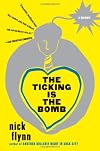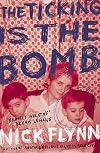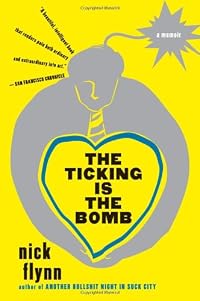
The Ticking Is the Bomb: A Memoir
by Nick Flynn
On This Page
Description
Best-selling author Nick Flynn delivers a dazzling, searing, and inventive memoir about becoming a father in the age of terror. In 2007, as Flynn awaits his daughter's birth, the release of the Abu Ghraib photographs exacerbates his already growing outrage and obsession with torture, leading him on a journey to Istanbul to meet some of the Iraqi men depicted in the photos. A memoir of profound self-discovery, Flynn's book artfully interweaves passages from his childhood, his relationships show more with women, and his history of addiction into his dark questioning of terror, torture, and the political crimes we can neither see nor understand in post-9/11 American life. The time bomb of the title becomes an unlikely metaphor and vehicle for exploring the fears and joys of becoming a father as Flynn examines the need to run from love and the need to embrace it again.. show less
Tags
Recommendations
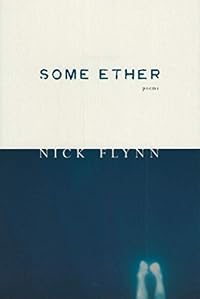




Member Recommendations
Member Reviews
This is Flynn's second memoir, after Another Bullshit Night in Suck City, and my second 5-star review for a Nick Flynn memoir. Flynn's books are stunningly smart, complicated in the best way, achingly sad, and somehow manifestly necessary.
Though similar themes pervade both books the books are very different from one another. This book, a series of essays, is far less linear than Suck City, and it covers more ground. For those who have not read Suck City (and you should get on that), or who have only seen the very mediocre film adaptation called Being Flynn, that book covers a time when he is reunited with his father, who had walked out on the family years earlier. One night Flynn's father shows up by coincidence at the homeless shelter show more at which Nick is working as he struggles with addiction issues of his own. A fair chunk of this book takes place during the time Flynn was writing Suck City. Nick is rambling about, bouncing from one country to another. Though housed and in a relationship with a woman (there is always a woman) in many ways Nick is no different from his rootless father. After some years of this wandering Flynn finds himself bouncing between two US cities and in love with two women. In a blaze of toxic masculinity Nick decides he will marry whichever one gets pregnant. (He was roughly 50 at the time so it was not the hubris of youth.) As it happens fecundity does not end up being the deciding factor, though in fact one of the women does become pregnant and it is the woman he ends up with. (He calls her Inez in the book, but it is Lili Taylor, unless he also had a baby girl with someone else actually named Inez at the same time.) The book juxtaposes Flynn's lived experiences with research he is doing at that time on Abu Ghraib. He mentions he had been planning to write a book about Abu Ghraib. and he shares some sickening stories from men who endured torture under the leadership of George W. Bush, but I expect he found there was not a book there. The lessons of of Abu Ghraib can be simply stated, and piling on the stories of the Abu Ghraib victims without furthering understanding or awareness would eventually become some sort of sick entertainment. Instead Flynn blended the prison stories with the process of getting the stories and with other events that. The interwoven stories lean to big questions about the value of life, the building of empathy, what it means to be a good person and more. I can't say these things are always woven seamlessly, but I certainly understood why he chose the life events he did as foils to the Abu Ghraib stories. To some extent all comes together with the birth of his daughter and the absolute rightness of fatherhood and the decision to be with and stay with one partner, In a way this is a coming of age story, if one comes of age at 50.
Flynn is a poet, IMO a very good one, though I am no expert (If I read 10 hours of poetry a year it is a banner year and my school days provided me little beyond the basics -- the Lake Poets and godawful stuff like Trees.) Trained by the rigor of poetry Flynn shows a facility with words that is breathtaking regardless of form. His prose sings, and there is not a wasted word. He draws connections that are profound and sound like nothing I have ever before heard. The man is brilliant, though cursed with the need to keep himself unhappy, as if grief and pain (whether some else's that he feeds on or his own) are the only things that will keep him rooted to the earth. He is a good man, despite the issue with the two women whom he loves but pits against one another to be his incubator. There are other things that might make you question his goodness, but so many more that make it manifest. And that goodness, that kindness, that truly radical empathy, is even more surprising when you read about his childhood and realize how little it was modeled to him. Any more than this will lead me to spoilers. With all my heart and all my brain I recommend this book. (But read Another Bullshit Night in Suck City First.) show less
Though similar themes pervade both books the books are very different from one another. This book, a series of essays, is far less linear than Suck City, and it covers more ground. For those who have not read Suck City (and you should get on that), or who have only seen the very mediocre film adaptation called Being Flynn, that book covers a time when he is reunited with his father, who had walked out on the family years earlier. One night Flynn's father shows up by coincidence at the homeless shelter show more at which Nick is working as he struggles with addiction issues of his own. A fair chunk of this book takes place during the time Flynn was writing Suck City. Nick is rambling about, bouncing from one country to another. Though housed and in a relationship with a woman (there is always a woman) in many ways Nick is no different from his rootless father. After some years of this wandering Flynn finds himself bouncing between two US cities and in love with two women. In a blaze of toxic masculinity Nick decides he will marry whichever one gets pregnant. (He was roughly 50 at the time so it was not the hubris of youth.) As it happens fecundity does not end up being the deciding factor, though in fact one of the women does become pregnant and it is the woman he ends up with. (He calls her Inez in the book, but it is Lili Taylor, unless he also had a baby girl with someone else actually named Inez at the same time.) The book juxtaposes Flynn's lived experiences with research he is doing at that time on Abu Ghraib. He mentions he had been planning to write a book about Abu Ghraib. and he shares some sickening stories from men who endured torture under the leadership of George W. Bush, but I expect he found there was not a book there. The lessons of of Abu Ghraib can be simply stated, and piling on the stories of the Abu Ghraib victims without furthering understanding or awareness would eventually become some sort of sick entertainment. Instead Flynn blended the prison stories with the process of getting the stories and with other events that. The interwoven stories lean to big questions about the value of life, the building of empathy, what it means to be a good person and more. I can't say these things are always woven seamlessly, but I certainly understood why he chose the life events he did as foils to the Abu Ghraib stories. To some extent all comes together with the birth of his daughter and the absolute rightness of fatherhood and the decision to be with and stay with one partner, In a way this is a coming of age story, if one comes of age at 50.
Flynn is a poet, IMO a very good one, though I am no expert (If I read 10 hours of poetry a year it is a banner year and my school days provided me little beyond the basics -- the Lake Poets and godawful stuff like Trees.) Trained by the rigor of poetry Flynn shows a facility with words that is breathtaking regardless of form. His prose sings, and there is not a wasted word. He draws connections that are profound and sound like nothing I have ever before heard. The man is brilliant, though cursed with the need to keep himself unhappy, as if grief and pain (whether some else's that he feeds on or his own) are the only things that will keep him rooted to the earth. He is a good man, despite the issue with the two women whom he loves but pits against one another to be his incubator. There are other things that might make you question his goodness, but so many more that make it manifest. And that goodness, that kindness, that truly radical empathy, is even more surprising when you read about his childhood and realize how little it was modeled to him. Any more than this will lead me to spoilers. With all my heart and all my brain I recommend this book. (But read Another Bullshit Night in Suck City First.) show less
Nick Flynn’s unconventional memoir doesn’t begin at the beginning and end at some arbitrary date, but rather jumps forward and backwards in time over and over again. By not organizing his thoughts chronologically, Flynn draws the reader to make connections that are not otherwise obvious or are not spontaneously made because the ideas/events/etc. are not otherwise in the reader’s mind at the same time. The book’s focus is on two seemingly unconnected themes – Flynn’s obsession with torture (more accurately, his attempt to grasp how humans can inflict such cruelty on one another), particularly with reference to the infamous photographs released from Abu Ghraib, and Flynn’s anticipation and doubts about becoming a father. show more Interspersed with these two major events are puzzle piece glimpses of Flynn’s past. He mostly grapples with his parents’ substance abuses, his mother’s suicide, and his father’s homelessness. Somehow Flynn manages to tie all these disparate thoughts together in a narrative that, while not strictly coherent, manages to hang together in some sort of logic (albeit perhaps somewhat twisted logic). Flynn, a poet by trade, writes with poetic flair at times, making his words quite pleasant to read on occasion (which is difficult to do when dealing with such weighty manners). The book is a quick read, especially considering how much of it consists of short snippets of narrative. show less
 This review was written for LibraryThing Early Reviewers.
The Ticking Is the Bomb, by Nick Flynn says, on the back cover, that it is "a dazzling, searing, and inventive memoir about becoming a father in the age of terror". To me, it was like reading David Sedaris, but without the humor. Or the engaging insight. It felt like a disjointed, stream-of-conciousness, collection of scattered blog entries by someone who thinks their internal conflict is unique and compelling, and that anything they have to say is something others will want to read.
It is full of repetition and self-reference, but without any depth or insight into the topics that are touched on. The book talks about his mother, and her suicide. He talks about his father, and his homelessness and time in prison. He talks about meeting show more detainees from Abu Ghraib and their experiences with torture, but at no point does he develop any depth in his examination of these subjects. Even the purported focus of the book, torture, never seems to develop beyond "We have used torture, it's ineffective, and it's bad."
All of the subjects touched on in The Ticking Is the Bomb, are covered in other people's work with more depth and less self-absorption, so I can't think of anyone to whom I'd recommend this book. show less
It is full of repetition and self-reference, but without any depth or insight into the topics that are touched on. The book talks about his mother, and her suicide. He talks about his father, and his homelessness and time in prison. He talks about meeting show more detainees from Abu Ghraib and their experiences with torture, but at no point does he develop any depth in his examination of these subjects. Even the purported focus of the book, torture, never seems to develop beyond "We have used torture, it's ineffective, and it's bad."
All of the subjects touched on in The Ticking Is the Bomb, are covered in other people's work with more depth and less self-absorption, so I can't think of anyone to whom I'd recommend this book. show less
This review was written for LibraryThing Early Reviewers.Nick Flynn's memoir is unconventional in form, and explicitly evokes some of the possible metaphors for what he is doing: building a mountain of shards, examining snapshots, wrestling with Proteus. The memoir is composed of 15 chapters, and each chapter of sections usually no more than a couple of pages long, and sometimes shorter. (Or perhaps it is composed of 15 sections, and each section is composed of several short chapters.) Flynn jumps around in time and theme from small section to small section, and the book runs the risk, I suppose, of seeming not to cohere, and of being not enough of any one thing.
Whether it coheres or not, I found it interesting. I think it would be a mistake to approach this book thinking it is an exploration show more of any one of its constituent themes: impending fatherhood; the meaning of American torture for an American citizen; the persistance of childhood lessons, mostly negative, in the mind of the adult; the way out when you find yourself in a dark wood, in a shiftless unrooted life, and unable to commit to any single other person. Thinking of it that way (for instance, of an examination of the meaning of torture) one might think the treatment insufficiently thorough and too haphazard or quirky in what is explored. Instead, when I read it as a memoir -- as Flynn's specific story of his problems and obsessions and how he got there and what he did -- I find it interesting and moving. The book is an essay, in Montaigne's sense: a wandering through the ideas of Flynn's life. (And consequently it doesn't strike me as hectoring or didactic.)
I recommend reading the endnotes about each chapter -- they provide extra and useful context. I also appreciate Flynn's willingness to pick a few fights and say why: with Sam Harris, with Errol Morris.
A reader of this book may wonder if the sections about torture have any relation to the rest of the book. I write this on a week in which a serious article has been printed in the US citing reasons to believe that US interrogators killed three Guantanamo prisoner, and then covered up the crime by claiming the prisoners (none of whom were then belived to be Al Qaeda or terrorists) committed suicide as an act of war against the US. I commend Flynn for taking this seriously as a question for his own life. Maybe it has little to do with the impending birth of his daughter. And maybe neither does Flynn's mother's suicide and his Father's homelessness and prison stretch. But the book is more interesting for Flynn's not quite articulated belief that it does, and Flynn himself the more admirable. show less
Whether it coheres or not, I found it interesting. I think it would be a mistake to approach this book thinking it is an exploration show more of any one of its constituent themes: impending fatherhood; the meaning of American torture for an American citizen; the persistance of childhood lessons, mostly negative, in the mind of the adult; the way out when you find yourself in a dark wood, in a shiftless unrooted life, and unable to commit to any single other person. Thinking of it that way (for instance, of an examination of the meaning of torture) one might think the treatment insufficiently thorough and too haphazard or quirky in what is explored. Instead, when I read it as a memoir -- as Flynn's specific story of his problems and obsessions and how he got there and what he did -- I find it interesting and moving. The book is an essay, in Montaigne's sense: a wandering through the ideas of Flynn's life. (And consequently it doesn't strike me as hectoring or didactic.)
I recommend reading the endnotes about each chapter -- they provide extra and useful context. I also appreciate Flynn's willingness to pick a few fights and say why: with Sam Harris, with Errol Morris.
A reader of this book may wonder if the sections about torture have any relation to the rest of the book. I write this on a week in which a serious article has been printed in the US citing reasons to believe that US interrogators killed three Guantanamo prisoner, and then covered up the crime by claiming the prisoners (none of whom were then belived to be Al Qaeda or terrorists) committed suicide as an act of war against the US. I commend Flynn for taking this seriously as a question for his own life. Maybe it has little to do with the impending birth of his daughter. And maybe neither does Flynn's mother's suicide and his Father's homelessness and prison stretch. But the book is more interesting for Flynn's not quite articulated belief that it does, and Flynn himself the more admirable. show less
This review was written for LibraryThing Early Reviewers.There are a few books I'd like to mail to President Obama, not because I hope he'll read them and talk about them, and therefore get everyone else to read them (though that'd be nice) but because I think they say something about an important issue in a way that I simply can't. I could write Obama a letter about torture, about how I feel about it being used in my name, but it wouldn't achieve half of what Flynn does in this bizarre, floating memoir.Somehow, despite enormous odds, Flynn manages to tie together several disparate threads here -- his relationship to his parents (his mother committed suicide when he was in his teens while his father is an alcoholic ex-con who lived on the streets for years), his partner's impending pregnancy show more and the tangled route they took to being lovers, and the Abu Ghraib prison scandal. In the hands of another writer, I might have found myself craving more of the personal and less the political (or vice versa), but Flynn does the balancing act, in part because he refuses to commit to the strictures of time, weaving together all the different pieces into a whole that is much larger than the sum of its already considerable parts.As one might expect from a poet, Flynn writes beautiful sentences and heartbreaking paragraphs. This is maybe the ideal book to read in tiny pieces, a bit here and there, as the mood strikes. Without a doubt, my favorite piece is "All living things have shoulders," about a scrap of paper he once found on the floor of a public school in Harlem. There are some incredible revelations in this book that Flynn delivers almost as asides (that his father may have been involved in the CIA's notorious MK Ultra program while serving time in federal prisons), and the notes at the end of the book are worth reading, particularly for their sense of humor, a welcome reprieve at the end of a very heavy, very emotional book. show less
The Ticking Is the Bomb by Nick Flynn
I have recently gotten into the habit of reading books while riding an exercise bike in the basement gym of the building I live in. I always have my IPod with me and sometimes, like serendipity, I come across just the right soundtrack to what I am reading. The soundtrack for Nick Flynn’s latest book, The Ticking Is The Bomb, has to be Tom Wait’s Orphans, Brawlers and Bawlers, with a secondary nod to Jackson Browne’s Lives in the Balance.
Having read excerpts of his earlier book (Another Bullshit Night in Suck City) recounting the tale of his father’s homelessness that appeared in The New Yorker I had some familiarity with his writing but never really appreciated how unique his voice, vision, show more honesty and rhythms were. Yes, rhythm, for his tale intermingles his dysfunctional life experiences: his mother who committed suicide at an early age, his father a convicted felon who abandoned him at an early age and ended up a homeless man shacking at the homeless shelter Flynn worked at, his drinking life, his numerous girlfriends and jobs within the backdrop of the war on terror visualized through the haunting torture photos of AbuGhraib. Like a jazz soloist he moves from theme to theme, rifting his thoughts, memories and feelings while keeping a steady backbeat that holds the work together as a unified act of creative meaning. He indeed has a unique voice and métier.
Interspersed are references from Plato’s Allegory of the Cave with its shadows of reality, E.L. Doctorow’s The Book of Daniel with an anecdote on the almost obsessive need to share/instill one’s pain on those we are closest to, The Story of O a sado-masochistic tale of sexual sublimation and torture, and The Wizard of Oz; his scope and breadth is wide and deep.
There are meaningful sections relating his participation in a project the gathering evidence for a lawsuit on behalf of the torture victims at AbuGhraib. In Istanbul he interviews the hooded prisoner documented, photographed that we are all too familiar with, and in 2007 he participates in a film about Vietnam Vets and their sons revisiting the site of battle. Accompanying one of his mother’s lover’s they stop at My Lai where his step-father asks for forgiveness from a peasant woman whose relatives died there.
Indeed this repatriation of a country’s guilt (the USA) is another strong theme; how does a country or its individual citizens repatriate/resolve their sense of guilt and shame for the part they played in the torture and misfortune of others.
Flynn’s journey as he reaches into his mid-40’s, on the cusp of becoming a father is a journey he shares with the reader. He has come to a point in his life where he seems more reflective, ready to molt the layers of his past and move into a new day, a new chapter of life. A child, making a deeper commitment to others, putting down roots, “I couldn’t simply visit now and then” Flynn acknowledges. Like Dorothy in The Wizard of Oz he is trying to find his way home, having travelled the long winding road, fraught with devilish flying monkeys and other dangers he now is ready to settle down.
I suggest that for the appreciative reader you give thought to passing this book along to another whose own journey would be supplemented and informed by Flynn’s tale. For me I chose a colleague, a US Army veteran of the Iraqi War engaged in his own recovery process, hoping that Flynn’s words will resonate with reason and hope. show less
I have recently gotten into the habit of reading books while riding an exercise bike in the basement gym of the building I live in. I always have my IPod with me and sometimes, like serendipity, I come across just the right soundtrack to what I am reading. The soundtrack for Nick Flynn’s latest book, The Ticking Is The Bomb, has to be Tom Wait’s Orphans, Brawlers and Bawlers, with a secondary nod to Jackson Browne’s Lives in the Balance.
Having read excerpts of his earlier book (Another Bullshit Night in Suck City) recounting the tale of his father’s homelessness that appeared in The New Yorker I had some familiarity with his writing but never really appreciated how unique his voice, vision, show more honesty and rhythms were. Yes, rhythm, for his tale intermingles his dysfunctional life experiences: his mother who committed suicide at an early age, his father a convicted felon who abandoned him at an early age and ended up a homeless man shacking at the homeless shelter Flynn worked at, his drinking life, his numerous girlfriends and jobs within the backdrop of the war on terror visualized through the haunting torture photos of AbuGhraib. Like a jazz soloist he moves from theme to theme, rifting his thoughts, memories and feelings while keeping a steady backbeat that holds the work together as a unified act of creative meaning. He indeed has a unique voice and métier.
Interspersed are references from Plato’s Allegory of the Cave with its shadows of reality, E.L. Doctorow’s The Book of Daniel with an anecdote on the almost obsessive need to share/instill one’s pain on those we are closest to, The Story of O a sado-masochistic tale of sexual sublimation and torture, and The Wizard of Oz; his scope and breadth is wide and deep.
There are meaningful sections relating his participation in a project the gathering evidence for a lawsuit on behalf of the torture victims at AbuGhraib. In Istanbul he interviews the hooded prisoner documented, photographed that we are all too familiar with, and in 2007 he participates in a film about Vietnam Vets and their sons revisiting the site of battle. Accompanying one of his mother’s lover’s they stop at My Lai where his step-father asks for forgiveness from a peasant woman whose relatives died there.
Indeed this repatriation of a country’s guilt (the USA) is another strong theme; how does a country or its individual citizens repatriate/resolve their sense of guilt and shame for the part they played in the torture and misfortune of others.
Flynn’s journey as he reaches into his mid-40’s, on the cusp of becoming a father is a journey he shares with the reader. He has come to a point in his life where he seems more reflective, ready to molt the layers of his past and move into a new day, a new chapter of life. A child, making a deeper commitment to others, putting down roots, “I couldn’t simply visit now and then” Flynn acknowledges. Like Dorothy in The Wizard of Oz he is trying to find his way home, having travelled the long winding road, fraught with devilish flying monkeys and other dangers he now is ready to settle down.
I suggest that for the appreciative reader you give thought to passing this book along to another whose own journey would be supplemented and informed by Flynn’s tale. For me I chose a colleague, a US Army veteran of the Iraqi War engaged in his own recovery process, hoping that Flynn’s words will resonate with reason and hope. show less
This review was written for LibraryThing Early Reviewers.I'll join the crowd of people who found this memoir self-indulgent and creepily lacking in self-awareness. The author seems to believe he is the only person in America who disapproves of torture, and that he should be handed a medal for this accomplishment. But since that is apparently not a rich enough topic, he blathers on about trying to choose between two women as if this trauma is in any way comparable to the torture experienced by the prisoners in Abu Ghraib.
Flynn seems a lot better at pointing fingers than examining the morally ambiguous elements of his own behavior.
Flynn seems a lot better at pointing fingers than examining the morally ambiguous elements of his own behavior.
Members
- Recently Added By
Author Information

28+ Works 2,101 Members
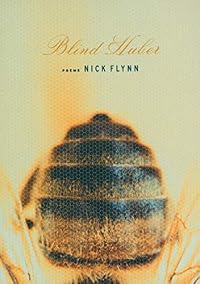
Nick Flynn is the author of three memoirs, including Another Bullshit Night in Suck City, which won the PEN/Martha Albrand Award and was adapted to film as Being Flynn. He is also the author of two previous books of poetry, Blind Huber and Some Ether, which won the PEN/Joyce Osterweil Award. He teaches at the University of Houston and lives in New show more York. show less
Some Editions
Awards and Honors
Distinctions
Common Knowledge
- Last words
- (Click to show. Warning: May contain spoilers.)Soon she will have her Wizard of Oz moment, the rods and cones in here eyes already developing, soon the world will transform from black and white to color, like the moment Dorothy first steps into Oz.
Classifications
Statistics
- Members
- 173
- Popularity
- 188,663
- Reviews
- 20
- Rating
- (3.53)
- Languages
- English, Spanish
- Media
- Paper, Audiobook, Ebook
- ISBNs
- 11
- ASINs
- 3