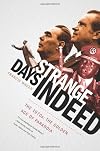
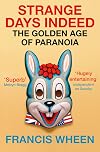
Strange Days Indeed: The Golden Age of Paranoia
by Francis Wheen
On This Page
Description
The 1970s is the most deranged of decades in this rollicking, lurid retrospective. Taking Richard Nixons paranoid persecution complex as the periods zeitgeist, Wheen finds it everywhere. Along with an amusing rehash of Watergate, his panorama of 70s nuttiness encompasses conspiracy theories, Hollywood thrillers, the Baader-Meinhof gang, sci-fi novelist Philip K. Dicks letters to the FBI denouncing his literary agent as a Communist, and tawdry political intrigues in a Britain beset by show more strikes, power outages, IRA bombings, Trotskyist dramaturgy, and coup whisperings. show lessTags
Recommendations




















Member Recommendations
gordsellar Dick is mentioned in the book, and this is one of his best novels.
Member Reviews
I was eight years old when the 1970s started and my abiding memories of the decade revolve around Raleigh Chopper bikes, glam rock and Monty Python. There are plenty of books which indulge such fluffy nostalgia but this isn’t one of them. Francis Wheen uses the theme of paranoia as the departure point for a walk around the dark side of the seventies.
Wheen is an amiable tour guide to a wide range of sinister scenarios and characters: Richard Nixon - a president so paranoid he bugged his own conversations; the FBI and CIA operating as secret police forces against their citizens in order to safeguard the land of the free; terrorist groups determined to liberate people from their ‘false consciousness’ by blowing them up; Britain show more having a collective nervous breakdown and, of course, the curious case of Rupert Bear’s penis (otherwise known as the Oz trial).
Wheen’s contention that the 1970s was the decade in which paranoia became generalised throughout society is debatable. What were the thousands of people persecuted by the McCarthy witch-hunts of the late forties and 1950s if not the victims of a paranoia run rampant through the body politic? Nonetheless, this is a compulsively readable book that is simultaneously unsettling and entertaining. It certainly proves that the old countercultural adage ‘just because you’re paranoid it doesn’t mean the government isn’t out to get you’ was nothing more than the plain truth.
Most disturbing is the thought the reader (this reader, anyway) is left with that the nightmarish, dangerously unstable, crisis-ridden and deranged world portrayed in this book looks less like the last century than a parallel present. show less
Wheen is an amiable tour guide to a wide range of sinister scenarios and characters: Richard Nixon - a president so paranoid he bugged his own conversations; the FBI and CIA operating as secret police forces against their citizens in order to safeguard the land of the free; terrorist groups determined to liberate people from their ‘false consciousness’ by blowing them up; Britain show more having a collective nervous breakdown and, of course, the curious case of Rupert Bear’s penis (otherwise known as the Oz trial).
Wheen’s contention that the 1970s was the decade in which paranoia became generalised throughout society is debatable. What were the thousands of people persecuted by the McCarthy witch-hunts of the late forties and 1950s if not the victims of a paranoia run rampant through the body politic? Nonetheless, this is a compulsively readable book that is simultaneously unsettling and entertaining. It certainly proves that the old countercultural adage ‘just because you’re paranoid it doesn’t mean the government isn’t out to get you’ was nothing more than the plain truth.
Most disturbing is the thought the reader (this reader, anyway) is left with that the nightmarish, dangerously unstable, crisis-ridden and deranged world portrayed in this book looks less like the last century than a parallel present. show less
I'm a huge fan of How Mumbo Jumbo Conquered the World, and Strange Days Indeed is a sort of prequel, detailing the seventies and portraying it as a decade full of small groups drawing up elaborate conspiracy theories and assertions that their leaders ruthlessly efficient and evil ... while missing every single one of the actual conspiracies, and the fact that their leaders were completely hopeless and they were nutty as squirrel shit.
Like Mumbo Jumbo, each chapter is a non stop collection of themed anecdotes, rather than a coherent argument per se. It leaps around from Idi Amin to Uri Geller to Nixon to the IRA, but there is a unifying theme of paranoia, panic and very poor planning. This is immensely readable, extremely funny, scary show more and informative. Definitely recommend this one. show less
Like Mumbo Jumbo, each chapter is a non stop collection of themed anecdotes, rather than a coherent argument per se. It leaps around from Idi Amin to Uri Geller to Nixon to the IRA, but there is a unifying theme of paranoia, panic and very poor planning. This is immensely readable, extremely funny, scary show more and informative. Definitely recommend this one. show less
 This review was written for LibraryThing Early Reviewers.
Since I was born in 1960, I can honestly say I was there for the golden age of paranoia. Growing up in an era with only a couple TV channels, the only thing to watch when I was exiled to my grandparents house in the summer of 1973 were the Watergate hearings. The evening television news (no 24-hour news cycle then) recapped the Nixon administration shenanigans, the number of dead and wounded in Vietnam, anti-war protests in U.S.streets, the labor strife in the UK, the continual temperature-drop of relations with the Soviet Union, slaughter, torture, dictatorships, and famine in Africa, and often a nasty tidbit or two out of Latin America. Wheen's book puts a hilarious and sobering perspective on this age that is surely destined to show more repeat itself, as history always does. show less
There's a saying a number of people my age share: "If you remember the '70s, it means you didn't live through them." British journalist and author Francis Wheen, though, has me thinking that maybe that lack of memory was not chemically induced but, rather, the result of trying to forget.
With Strange Days Indeed: The 1970s: The Golden Days of Paranoia, Wheen proposes exactly what the subtitle suggests: that the Seventies were "a pungent mélange of apocalyptic dread and conspiratorial fever." Paranoia may be a psychiatric term, but given that it is defined as a "pervasive distrust and suspiciousness of others," there's plenty of reason the Seventies could be described as the days of paranoia.
First published in Britain last year and show more released in the U.S. this month, Strange Days Indeed kicks off its discussion of the 1970s and paranoia with the poster child, Richard Nixon. Depending on perspective, Nixon can be seen as both cause and effect, with his "enemies list" and taping his own conversations while at the same time burglarizing and bugging those perceived enemies. Wheen, though, doesn't suggest this was solely an American affliction. He points to how the British government struggled to keep on the lights, declared five states of emergency between June 1970 and February 1974 and actually went to three-day workweeks. Then there was Uganda's Idi Amin and China in the midst of its Cultural Revolution.
Governments weren't the only entities displaying the symptoms. There seemed to be a worldwide bloom of so-called revolutionary movements, from Italy's Red Brigades to Germany's Baader-Meinhof Gang to America's Symbionese Liberation Army. Yet many of these groups offered no alternatives to what they opposed. Instead, their terrorism seemed an end rather than a means. "Nihilist hyperbole and exaggerated fury filled the analytical void," Wheen writes. "It wouldn't do to admit that they were suffering from little more than existential angst, bourgeois guilt and a nagging discontent at the soullessness and shallowness of consumerist society."
But politics weren't the only part of society that seemed to be caught up in a collective derangement. Among those reflecting the tenor of the times was science fiction author Phillip K. Dick. His noted break with reality left him, Wheen says, "trapped in one of his own novels." For example, Dick wrote numerous letters to the FBI but didn't mail them. Instead, he put each in an outside trash can, figuring the FBI would get them through its spy operations.
Wheen sometimes tends to overreach a bit in his premise. Certainly, nits could be picked as to whether many of the items he cites are paranoid behavior or symptoms of a widespread anxiety. Additionally, American readers may find a number of British public figures and issues with which they are unfamiliar. And while Wheen's tour through the Seventies is always tinged with a touch of humor, some readers may want a dictionary handy as they encounter phrases like "corybantic orgy." Still, Strange Days Indeed has a value not only as history but as a prism on today's cultural and political psyche.
Wheen's last book, How Mumbo-Jumbo Conquered the World, used 1979 as a starting point for examining the growth of conspiracy theory, superstition and the supernatural in so-called modern thinking. Looking back on the decade that preceded that survey, he suggests those familiar with the Seventies may see "flickering glimpses of déjà vu" in this century.
He may be right. Plenty of news stories at the end of 2009 suggested the 2000s were the worst decade ever. Time even ran a cover story last December calling it "the Decade from Hell." This week Newsweek not only suggested America may truly be in decline, it refers to this as "America's Age of Angst." Is that angst merely part of a bad flashback or did the golden days of paranoia produce an irreversible effect? Although that question probably can't be answered for a few decades and is beyond the scope of Strange Days Indeed, Wheen's look at the Seventies certainly leaves us more to ponder than just that decade. show less
With Strange Days Indeed: The 1970s: The Golden Days of Paranoia, Wheen proposes exactly what the subtitle suggests: that the Seventies were "a pungent mélange of apocalyptic dread and conspiratorial fever." Paranoia may be a psychiatric term, but given that it is defined as a "pervasive distrust and suspiciousness of others," there's plenty of reason the Seventies could be described as the days of paranoia.
First published in Britain last year and show more released in the U.S. this month, Strange Days Indeed kicks off its discussion of the 1970s and paranoia with the poster child, Richard Nixon. Depending on perspective, Nixon can be seen as both cause and effect, with his "enemies list" and taping his own conversations while at the same time burglarizing and bugging those perceived enemies. Wheen, though, doesn't suggest this was solely an American affliction. He points to how the British government struggled to keep on the lights, declared five states of emergency between June 1970 and February 1974 and actually went to three-day workweeks. Then there was Uganda's Idi Amin and China in the midst of its Cultural Revolution.
Governments weren't the only entities displaying the symptoms. There seemed to be a worldwide bloom of so-called revolutionary movements, from Italy's Red Brigades to Germany's Baader-Meinhof Gang to America's Symbionese Liberation Army. Yet many of these groups offered no alternatives to what they opposed. Instead, their terrorism seemed an end rather than a means. "Nihilist hyperbole and exaggerated fury filled the analytical void," Wheen writes. "It wouldn't do to admit that they were suffering from little more than existential angst, bourgeois guilt and a nagging discontent at the soullessness and shallowness of consumerist society."
But politics weren't the only part of society that seemed to be caught up in a collective derangement. Among those reflecting the tenor of the times was science fiction author Phillip K. Dick. His noted break with reality left him, Wheen says, "trapped in one of his own novels." For example, Dick wrote numerous letters to the FBI but didn't mail them. Instead, he put each in an outside trash can, figuring the FBI would get them through its spy operations.
Wheen sometimes tends to overreach a bit in his premise. Certainly, nits could be picked as to whether many of the items he cites are paranoid behavior or symptoms of a widespread anxiety. Additionally, American readers may find a number of British public figures and issues with which they are unfamiliar. And while Wheen's tour through the Seventies is always tinged with a touch of humor, some readers may want a dictionary handy as they encounter phrases like "corybantic orgy." Still, Strange Days Indeed has a value not only as history but as a prism on today's cultural and political psyche.
Wheen's last book, How Mumbo-Jumbo Conquered the World, used 1979 as a starting point for examining the growth of conspiracy theory, superstition and the supernatural in so-called modern thinking. Looking back on the decade that preceded that survey, he suggests those familiar with the Seventies may see "flickering glimpses of déjà vu" in this century.
He may be right. Plenty of news stories at the end of 2009 suggested the 2000s were the worst decade ever. Time even ran a cover story last December calling it "the Decade from Hell." This week Newsweek not only suggested America may truly be in decline, it refers to this as "America's Age of Angst." Is that angst merely part of a bad flashback or did the golden days of paranoia produce an irreversible effect? Although that question probably can't be answered for a few decades and is beyond the scope of Strange Days Indeed, Wheen's look at the Seventies certainly leaves us more to ponder than just that decade. show less
This review was written for LibraryThing Early Reviewers.Thank you, Francis Wheen, for reminding me of the lunacy of the 1970s. I was 6 when the decade started, so its peculiarities were truly the basis of how I viewed, and continue to view, such societal elements as the Presidency, diplomacy, Russia, and the ways of Washington.
Wheen's wit is combined with a great storytelling ability, and he lays the underpinnings of these peculiar times in a style that calls to mind a decade that began with Nixon in The White House and ended with Reagan poised to move in.
It's difficult for young people to understand these times, for indeed every decade seems to have its oddness. What I appreciated most about this book was Wheen's style in exposing some of the sheer lunacy that powered the way our leaders show more came to power, connected (or didn't) with one another, and tried so hard to make us believe that up was down and vice versa. He reminded me of the great number of things that so deeply mattered to people then, that are of course of only passing consequence now.
I've occasionally wondered what it would be like to have been in a White House in which everyone appeared to be secretly taping everyone else. Or where everyone in the Kremlin looked at Watergate as a matter of little consequence -- at least until Tricky Dick gave his V signs before boarding Marine One for the last times.
The decade wasn't about mini skirts, dashikis, and gas lines. It was about the paranoia that led to these and so many other cultural peculiarities. Wheen gave me a strong reminder of the oddness and comical juxtapositions of 1970s leaders, and for this I am very thankful show less
Wheen's wit is combined with a great storytelling ability, and he lays the underpinnings of these peculiar times in a style that calls to mind a decade that began with Nixon in The White House and ended with Reagan poised to move in.
It's difficult for young people to understand these times, for indeed every decade seems to have its oddness. What I appreciated most about this book was Wheen's style in exposing some of the sheer lunacy that powered the way our leaders show more came to power, connected (or didn't) with one another, and tried so hard to make us believe that up was down and vice versa. He reminded me of the great number of things that so deeply mattered to people then, that are of course of only passing consequence now.
I've occasionally wondered what it would be like to have been in a White House in which everyone appeared to be secretly taping everyone else. Or where everyone in the Kremlin looked at Watergate as a matter of little consequence -- at least until Tricky Dick gave his V signs before boarding Marine One for the last times.
The decade wasn't about mini skirts, dashikis, and gas lines. It was about the paranoia that led to these and so many other cultural peculiarities. Wheen gave me a strong reminder of the oddness and comical juxtapositions of 1970s leaders, and for this I am very thankful show less
This review was written for LibraryThing Early Reviewers.Strange Days Indeed: The Golden Age of Paranoia, by Francis Wheen, is one of those rare well-written non-fiction books in the history and politics genre that is also a page-turner that never loses its grip upon the reader.
The main title, culled from a trenchant lyric in the John Lennon tune Nobody Told Me, was so instantly and viscerally recognized by me that upon holding the book in my hand I immediately spoke aloud the penultimate line to the song’s refrain: “most peculiar mama!” Of course, this right away identifies me as a child of 1970’s, the province of Wheen’s delightful, episodic study of global madness that ranged from the inane – an obscenity trial in the UK where the editors of an alternative skin magazine are show more shorn of their hair in a psychiatric hospital – to the brutal and horrific killing machine of Idi Amin’s Uganda.
I spent my teens and my early twenties in the 1970’s, and what struck me most remarkable as I read Strange Days Indeed was how much I took all of this craziness for granted when I lived through it. And there are lots of crazy people behind the global lunacy – not only in the multiple various revolutionary groups and mercenaries that proliferate in the developed and third worlds – but most prominently to be found among the cast of characters that comprise the political leadership of several nations. Mao, and his unhinged wife Jiang Qing, along with the Soviet leadership of the day, make perfect bookends to the excesses of “King of Scotland” Amin; yet perhaps less sanguinary but arguably equally mad is Richard Nixon and his inner circle, as well as the key figures of two consecutive British governments. (As an American, I was exposed to British politics that I had formerly encountered only in Monty Python parodies.)
According to the thesis of Wheen’s book, the glue that holds it all together is a kind of global paranoia that has gripped just about everyone in this troubled decade. The author takes us on a disturbing yet delightful romp from politics to popular culture to demonstrate this and succeeds better than I would have anticipated at the outset, although he sometimes fails to concede that the ‘70’s in itself has no monopoly on the paranoid style of politics or culture. He often uses notable films of the day – such as “Chinatown” & “The Parallax View”– to make his point that these movies are reflecting a reality that is often reflecting the movies, as well. But I wanted to remind him that two of the greatest celebration of paranoia in film – “The Truman Show” & “The Matrix” – were produced long after the ‘70’s have been laid to rest.
Where I would fault the book is that Wheen fails to take his thesis to the next level. What caused this global paranoia to take hold? And what forces conspired to bring it to a kind of ebb at the start of the ‘80’s? Yet, I would still urge anyone who lived through the era or who wants to imagine what it was like from the vantage point of the millennium to read this book – you will be vastly entertained and you will not be disappointed. show less
The main title, culled from a trenchant lyric in the John Lennon tune Nobody Told Me, was so instantly and viscerally recognized by me that upon holding the book in my hand I immediately spoke aloud the penultimate line to the song’s refrain: “most peculiar mama!” Of course, this right away identifies me as a child of 1970’s, the province of Wheen’s delightful, episodic study of global madness that ranged from the inane – an obscenity trial in the UK where the editors of an alternative skin magazine are show more shorn of their hair in a psychiatric hospital – to the brutal and horrific killing machine of Idi Amin’s Uganda.
I spent my teens and my early twenties in the 1970’s, and what struck me most remarkable as I read Strange Days Indeed was how much I took all of this craziness for granted when I lived through it. And there are lots of crazy people behind the global lunacy – not only in the multiple various revolutionary groups and mercenaries that proliferate in the developed and third worlds – but most prominently to be found among the cast of characters that comprise the political leadership of several nations. Mao, and his unhinged wife Jiang Qing, along with the Soviet leadership of the day, make perfect bookends to the excesses of “King of Scotland” Amin; yet perhaps less sanguinary but arguably equally mad is Richard Nixon and his inner circle, as well as the key figures of two consecutive British governments. (As an American, I was exposed to British politics that I had formerly encountered only in Monty Python parodies.)
According to the thesis of Wheen’s book, the glue that holds it all together is a kind of global paranoia that has gripped just about everyone in this troubled decade. The author takes us on a disturbing yet delightful romp from politics to popular culture to demonstrate this and succeeds better than I would have anticipated at the outset, although he sometimes fails to concede that the ‘70’s in itself has no monopoly on the paranoid style of politics or culture. He often uses notable films of the day – such as “Chinatown” & “The Parallax View”– to make his point that these movies are reflecting a reality that is often reflecting the movies, as well. But I wanted to remind him that two of the greatest celebration of paranoia in film – “The Truman Show” & “The Matrix” – were produced long after the ‘70’s have been laid to rest.
Where I would fault the book is that Wheen fails to take his thesis to the next level. What caused this global paranoia to take hold? And what forces conspired to bring it to a kind of ebb at the start of the ‘80’s? Yet, I would still urge anyone who lived through the era or who wants to imagine what it was like from the vantage point of the millennium to read this book – you will be vastly entertained and you will not be disappointed. show less
This review was written for LibraryThing Early Reviewers.Until the conclusion of Strange Days Indeed, which reminds us that the Era of Paranoia experienced a comeback starting after September 11, 2001, I was able to appreciate the book in much the same way as I would any other humourous nonfiction (like, say, the essays of Mark Twain)--with the lunacy of the era safely 30-40 years in the past, it's easy enough to read its history as simply dark comedy, an attitude Wheen deftly encourages.
For the most part, I found the book thoroughly amusing and often hilarious (even the index has its moments--one entry reads, "Manners, Elizabeth: deplores masturbation, 124; admits trying it, 125"). Wheen provides an overview of many of the absurdities of the Seventies--White House correspondents' (justified) show more concern that President Nixon 'might go bats in front of them at any time'; the worry among top US and UK intelligence officials that Harold Wilson, the British Prime Minister, was a KGB operative; Idi Amin's psychotic mistreatment of foreigners, including diplomatic officials, in his Uganda; the rise of Uri Geller, Raël and other psychic lunacy; to name a few examples--with snippets of memoir interspersed and providing a more personal connection to events.
Overall, this is a fun and worthwhile read, but be forewarned--it's dense and really appreciating it requires some degree of background knowledge or willingness to look up a few of Wheen's references, especially to British history and politics. show less
For the most part, I found the book thoroughly amusing and often hilarious (even the index has its moments--one entry reads, "Manners, Elizabeth: deplores masturbation, 124; admits trying it, 125"). Wheen provides an overview of many of the absurdities of the Seventies--White House correspondents' (justified) show more concern that President Nixon 'might go bats in front of them at any time'; the worry among top US and UK intelligence officials that Harold Wilson, the British Prime Minister, was a KGB operative; Idi Amin's psychotic mistreatment of foreigners, including diplomatic officials, in his Uganda; the rise of Uri Geller, Raël and other psychic lunacy; to name a few examples--with snippets of memoir interspersed and providing a more personal connection to events.
Overall, this is a fun and worthwhile read, but be forewarned--it's dense and really appreciating it requires some degree of background knowledge or willingness to look up a few of Wheen's references, especially to British history and politics. show less
This review was written for LibraryThing Early Reviewers.Members
- Recently Added By
Author Information

18+ Works 3,073 Members
Francis Wheen is an award-winning columnist for "The Guardian" in London, & the deputy editor of "Private Eye". (Bowker Author Biography)
Common Knowledge
- Original publication date
- 2010
- Dedication
- For Pat Kavanagh
- First words
- This is a book about that most distant of times, the day before yesterday.
- Last words
- (Click to show. Warning: May contain spoilers.)Reading about the Seventies, you may sometimes have a similar hallucinatory sensation; but when you look up and gaze out at the twenty-first century you may experience something even more unsettling --- flickering glimpses of deja vu.
Classifications
Statistics
- Members
- 254
- Popularity
- 127,562
- Reviews
- 23
- Rating
- (3.73)
- Languages
- English
- Media
- Paper, Ebook
- ISBNs
- 5
- ASINs
- 2