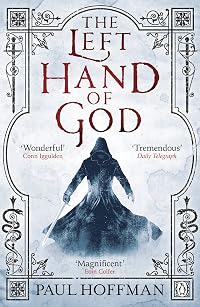
On This Page
Description
"Writers like Hoffman are too rare. This wonderful book gripped me from the first chapter and dropped me days later, dazed and grinning to myself." -Conn Iggulden, New York Times bestselling author of The Dangerous Book for BoysRaised from early childhood in the Redeemer Sanctuary, the stronghold of a secretive sect of warrior monks, Thomas Cale has known only deprivation, punishment, and grueling training. When he escsapes to the outside world, Cale learns that his embittered heart is show more still capable of loving- and breaking.
But the Redeemers won't accept the defection of their prized pupil without a fight...
. show less
Tags
Recommendations




Member Recommendations
Member Reviews
It was on the strength of the cover art alone that I picked this book up, and I'm really glad I did.
The Left Hand of God is set in a medieval-type setting some unspecified place which has many references to our world. In this world, a fanatical religious group has established a fortress, The Sanctuary, from which it wages a war against the sinful and depraved world at large. A fortress in the sense that it a stronghold, but stronghold to keep its adherents in rather than keep invaders out, for no one would willing want to go there. Within The Sanctuary, the Lord Redeemers exact a harsh and brutal control over their thousands of young male acolytes, taken under the age of ten to be trained ready for war.
One of the boys held in The show more Sanctuary is the teenage Thomas Cale, singled out for special treatment by Lord Redeemer Bosco who recognises in Cale unique qualities; although this special treatment does not necessarily mean it works in Cale's favour. But shortly after we meet Cale circumstances force him to make an early escape from The Sanctuary, along with two other boys. We follow them as they try to make their way to freedom and Memphis, a city that is as corrupt as The Sanctuary is supposedly righteous.
Cale is a fascinating character, a ruthless killing machine yet with a compassion even he himself does not quite understand. He is loyal, sharp and witty; he can be stubborn and yet charming; he is also not surprisingly incredibly naïve as regards the outside world. He also has the almost unfailing ability to land on his feet whatever happens.
After the terrors of The Sanctuary and tense drama of the escape attempt, which takes up the first hundred or so pages, and with the arrival on the scene of IdrisPukke (one of several delightfully named characters), the tale enters a different phase, one of a lighter humour as we discover the outside world and its perverse ways. But there is yet more horror and drama to come, and Cale's continued freedom is never assured.
From the very first pages one is drawn into this fascinating, if initially horrific, world that Cale inhabits. The writing is sharp and assured and the reads with consummate ease; and the image of the austere existence and torturous punishments of The Sanctuary is effectively created without resort to unnecessary graphic detail.
The end of the story came abruptly. To see the end of the book looming with so much was still up in the air was disappointing.
But according to the last page, the sequel should already have been released - so I'm off to get my copy. show less
The Left Hand of God is set in a medieval-type setting some unspecified place which has many references to our world. In this world, a fanatical religious group has established a fortress, The Sanctuary, from which it wages a war against the sinful and depraved world at large. A fortress in the sense that it a stronghold, but stronghold to keep its adherents in rather than keep invaders out, for no one would willing want to go there. Within The Sanctuary, the Lord Redeemers exact a harsh and brutal control over their thousands of young male acolytes, taken under the age of ten to be trained ready for war.
One of the boys held in The show more Sanctuary is the teenage Thomas Cale, singled out for special treatment by Lord Redeemer Bosco who recognises in Cale unique qualities; although this special treatment does not necessarily mean it works in Cale's favour. But shortly after we meet Cale circumstances force him to make an early escape from The Sanctuary, along with two other boys. We follow them as they try to make their way to freedom and Memphis, a city that is as corrupt as The Sanctuary is supposedly righteous.
Cale is a fascinating character, a ruthless killing machine yet with a compassion even he himself does not quite understand. He is loyal, sharp and witty; he can be stubborn and yet charming; he is also not surprisingly incredibly naïve as regards the outside world. He also has the almost unfailing ability to land on his feet whatever happens.
After the terrors of The Sanctuary and tense drama of the escape attempt, which takes up the first hundred or so pages, and with the arrival on the scene of IdrisPukke (one of several delightfully named characters), the tale enters a different phase, one of a lighter humour as we discover the outside world and its perverse ways. But there is yet more horror and drama to come, and Cale's continued freedom is never assured.
From the very first pages one is drawn into this fascinating, if initially horrific, world that Cale inhabits. The writing is sharp and assured and the reads with consummate ease; and the image of the austere existence and torturous punishments of The Sanctuary is effectively created without resort to unnecessary graphic detail.
The end of the story came abruptly. To see the end of the book looming with so much was still up in the air was disappointing.
But according to the last page, the sequel should already have been released - so I'm off to get my copy. show less
Note: This book was received through the early reviewer program and this review contains a spoiler.
Finishing this novel left me in a foul mood. Let me tell you why: this is not a good book. It could have been, but it isn't. It is a book that explores some interesting ideas, but in a lackluster, sloppy, bitter way. It is a book that presents some intriguing characters, but inconsistently and casually changes their nature so that they are sometimes relatable and sometimes repugnant. It is a book that has just enough power to its story that I want to know what happens next -- and that is the most frustrating part, because it is the beginning of a series and I wish it had been a stand alone, seriously -- but is so irritating and frustrating show more a reading experience that I have no real desire to endure such a thing again.
Basically, I want to read a synopsis of the sequel to this book, not the sequel itself.
In case you need more than just a rant, allow me to support my opinions for a moment. The novel begins at a place called the Sanctuary, a training center for young boys that takes all the most disturbing accusations leveled at the Catholic church throughout history and pushes them to their most violent extremes (of course, the novel doesn't use the word "Catholic" at any point, but, well, duh). The Sanctuary is run by the Redeemers, a fanatical religious sect that echoes the Catholic Jesuit order, but taken to extremes of violence and cruelty. (Really, the details of the book deliberately make the reader squirm, but not to any real, satisfying purpose -- gratuitous violence is the norm here.) Our central character is Thomas Cale, a not-very-likable young acolyte who has been trained, in the most brutal ways, to be an exceptionally efficient killer. When certain events occur toward the middle of the book (again, disturbing events) and Thomas Cale escapes from the control of the Redeemers, the action really begins. The Redeemers struggle to get him back, again using the most brutal and violent means, and Cale himself struggles (sort of -- though the people around him suffer the brunt of the struggle) with his own nature.
These struggles are set within a world that is frustratingly inconsistent. Hoffman has written a book that reads somewhat like a YA fantasy novel, but uses real-world references (Jesus of Nazareth, familiar geography) interspersed with made-up locations and figures, like the Hanged Redeemer, who is the divine icon of the fanatical religious sect. At first, one looks for meaning in the way that Hoffman stitches together real historical/geographical references and invented icons and place-names, but eventually it seems more like the author simply ran out of ideas for his own names and decided to pull random places together instead of working on it a bit more. The result is a constant nagging sensation, as one reads, that one should know where the story is taking place... except one can't quite place it.
Other irritations that pull you away from what story there is here include the trite phrasing -- Hoffman at one point even uses the tired out "words were no longer necessary" cliche to make it clear that his characters had started having sex -- the sloppy editing (which, to be fair, could simply be a consequence of reading an ARC) and the habit of over-hiding the characters with hoods and cloaks and anything else shadowy and secretive. Honestly, from Hoffman's descriptions, you would think that we are never supposed to know anything about anyone in this book. While secrecy is essential to the development of a suspenseful novel, there comes a point where the reader is no longer intrigued, but genuinely confused about what the hell is going on in the text. We reach that point pretty quickly in Hoffman's novel.
The climactic battle is so stupid and so graphic that at times I felt an irrational urge to shout at the text. After all of this irritation, by the time the reader gets to the reveal at the end of the novel (***SPOILER ALERT -- SKIP THIS PART IF YOU DON'T WANT TO KNOW) and realizes that the whole book has been a character study of the Anti-Christ, essentially (END SPOILERIFIC SECTION***) there is nothing here left to care about. The big reveal falls flat and at least this reader was simply ready to be done with the whole messy business. In the end, I felt like Paul Hoffman was more concerned with expressing and exaggerating his not-very-well-concealed bitterness against the Catholic church than with writing a decent novel.
Bottom line: The novel has just enough story to keep one reading, but the flawed character development, trite writing, and inconsistent contextualization make the reading experience itself frustrating. Not recommended. show less
Finishing this novel left me in a foul mood. Let me tell you why: this is not a good book. It could have been, but it isn't. It is a book that explores some interesting ideas, but in a lackluster, sloppy, bitter way. It is a book that presents some intriguing characters, but inconsistently and casually changes their nature so that they are sometimes relatable and sometimes repugnant. It is a book that has just enough power to its story that I want to know what happens next -- and that is the most frustrating part, because it is the beginning of a series and I wish it had been a stand alone, seriously -- but is so irritating and frustrating show more a reading experience that I have no real desire to endure such a thing again.
Basically, I want to read a synopsis of the sequel to this book, not the sequel itself.
In case you need more than just a rant, allow me to support my opinions for a moment. The novel begins at a place called the Sanctuary, a training center for young boys that takes all the most disturbing accusations leveled at the Catholic church throughout history and pushes them to their most violent extremes (of course, the novel doesn't use the word "Catholic" at any point, but, well, duh). The Sanctuary is run by the Redeemers, a fanatical religious sect that echoes the Catholic Jesuit order, but taken to extremes of violence and cruelty. (Really, the details of the book deliberately make the reader squirm, but not to any real, satisfying purpose -- gratuitous violence is the norm here.) Our central character is Thomas Cale, a not-very-likable young acolyte who has been trained, in the most brutal ways, to be an exceptionally efficient killer. When certain events occur toward the middle of the book (again, disturbing events) and Thomas Cale escapes from the control of the Redeemers, the action really begins. The Redeemers struggle to get him back, again using the most brutal and violent means, and Cale himself struggles (sort of -- though the people around him suffer the brunt of the struggle) with his own nature.
These struggles are set within a world that is frustratingly inconsistent. Hoffman has written a book that reads somewhat like a YA fantasy novel, but uses real-world references (Jesus of Nazareth, familiar geography) interspersed with made-up locations and figures, like the Hanged Redeemer, who is the divine icon of the fanatical religious sect. At first, one looks for meaning in the way that Hoffman stitches together real historical/geographical references and invented icons and place-names, but eventually it seems more like the author simply ran out of ideas for his own names and decided to pull random places together instead of working on it a bit more. The result is a constant nagging sensation, as one reads, that one should know where the story is taking place... except one can't quite place it.
Other irritations that pull you away from what story there is here include the trite phrasing -- Hoffman at one point even uses the tired out "words were no longer necessary" cliche to make it clear that his characters had started having sex -- the sloppy editing (which, to be fair, could simply be a consequence of reading an ARC) and the habit of over-hiding the characters with hoods and cloaks and anything else shadowy and secretive. Honestly, from Hoffman's descriptions, you would think that we are never supposed to know anything about anyone in this book. While secrecy is essential to the development of a suspenseful novel, there comes a point where the reader is no longer intrigued, but genuinely confused about what the hell is going on in the text. We reach that point pretty quickly in Hoffman's novel.
The climactic battle is so stupid and so graphic that at times I felt an irrational urge to shout at the text. After all of this irritation, by the time the reader gets to the reveal at the end of the novel (***SPOILER ALERT -- SKIP THIS PART IF YOU DON'T WANT TO KNOW) and realizes that the whole book has been a character study of the Anti-Christ, essentially (END SPOILERIFIC SECTION***) there is nothing here left to care about. The big reveal falls flat and at least this reader was simply ready to be done with the whole messy business. In the end, I felt like Paul Hoffman was more concerned with expressing and exaggerating his not-very-well-concealed bitterness against the Catholic church than with writing a decent novel.
Bottom line: The novel has just enough story to keep one reading, but the flawed character development, trite writing, and inconsistent contextualization make the reading experience itself frustrating. Not recommended. show less
 This review was written for LibraryThing Early Reviewers.
This book is a bit of a literary hot-potato; it does not sit comfortably in any hand I try to grasp it with to hold it up and talk about it.
Let me come at it circuitously by means of reference: I feel like this sits somewhere halfway between Lies of Locke Lamora and Five Wounds. It has the big-fantasy leanings and bantering, cynical characters of the former, paired with the simplicity, omniscient-narrator and brutality of the latter. And yet, while both of those books were outstanding, jaw-dropping articles of elevated art, this is not quite so sublime. Let me be clear: it's very good. But it's just not magnificent, and it was aiming, I think, for that.
Throughout the book, I felt like the book was walking a tightrope of writing style. show more It did tricks, and they were consistently delightful tricks. Again and again, the prose was clever, entertaining, wry and engaging. And that's not even counting the fact that it pulled off an impeccable omniscent narrator, something that I am generally against and of which I am always keenly on the lookout for fuck-ups. However, the style never (for me) rose to the level of true literary grace. It never sparkled. It lacked that Lamora-esque lustre.
Here's another thing: the world sent me constantly slightly on edge. It's compiled - in geography and sociology and history - of a piled-up melange of just-left-of-centre real-world references (Memphis is near the Scablands, so initially I thought this was a sort of post-apocalyptic America [awesome!] but then it became obvious that Memphis was extremely Venetian [...still awesome?] and then they mentioned Norwegians and Arnhemland [er?] and then York was just to the north [...okaaay] and there were completely traditional medieval Jews [I give up]). Because of that, I kept trying to make sense of it and place it in real-world context. I don't think it fits, I'm not sure it's supposed to fit. I think perhaps the real-world references are supposed to make it feel "less fantastical" and therefore more comfortable (possibly to a teenage audience, but another way that this hot-potatoes is in the fact that it should be YA, except for how dark and gritty it is in places), but it had precisely the opposite effect on me: never knowing where I stood, I could never get comfortable.
The characters are strong and, even when they do stupid things, they do them for reasons that are very strongly sensible for who they are and what has previously shaped them. On the other hand, they're also allegedly fourteen, and then there's all that sex. It's not that I'm prudish, it's just that I'd like the hero to be at least sixteen before he has the destiny-shaping love of his life. You're a teenager. You'll get over it. Jeez.
Despite all that, it's an engaging, page-turning read (except, for me, the part where he clinically recounts a battlefield probably recognisable as Agincourt even if I hadn't cheated and read his endnotes) with excellent writing style and intriguing characters. I'm not sure it was as exciting as the blurb suggested it could be. And while I see the resemblance to all the authors it's been compared to (as well as the two I used, I've seen Umberto Eco and KJ Parker) I don't think it shines as brightly as any of them, possibly because it's trying to be everything at once. show less
Let me come at it circuitously by means of reference: I feel like this sits somewhere halfway between Lies of Locke Lamora and Five Wounds. It has the big-fantasy leanings and bantering, cynical characters of the former, paired with the simplicity, omniscient-narrator and brutality of the latter. And yet, while both of those books were outstanding, jaw-dropping articles of elevated art, this is not quite so sublime. Let me be clear: it's very good. But it's just not magnificent, and it was aiming, I think, for that.
Throughout the book, I felt like the book was walking a tightrope of writing style. show more It did tricks, and they were consistently delightful tricks. Again and again, the prose was clever, entertaining, wry and engaging. And that's not even counting the fact that it pulled off an impeccable omniscent narrator, something that I am generally against and of which I am always keenly on the lookout for fuck-ups. However, the style never (for me) rose to the level of true literary grace. It never sparkled. It lacked that Lamora-esque lustre.
Here's another thing: the world sent me constantly slightly on edge. It's compiled - in geography and sociology and history - of a piled-up melange of just-left-of-centre real-world references (Memphis is near the Scablands, so initially I thought this was a sort of post-apocalyptic America [awesome!] but then it became obvious that Memphis was extremely Venetian [...still awesome?] and then they mentioned Norwegians and Arnhemland [er?] and then York was just to the north [...okaaay] and there were completely traditional medieval Jews [I give up]). Because of that, I kept trying to make sense of it and place it in real-world context. I don't think it fits, I'm not sure it's supposed to fit. I think perhaps the real-world references are supposed to make it feel "less fantastical" and therefore more comfortable (possibly to a teenage audience, but another way that this hot-potatoes is in the fact that it should be YA, except for how dark and gritty it is in places), but it had precisely the opposite effect on me: never knowing where I stood, I could never get comfortable.
The characters are strong and, even when they do stupid things, they do them for reasons that are very strongly sensible for who they are and what has previously shaped them. On the other hand, they're also allegedly fourteen, and then there's all that sex. It's not that I'm prudish, it's just that I'd like the hero to be at least sixteen before he has the destiny-shaping love of his life. You're a teenager. You'll get over it. Jeez.
Despite all that, it's an engaging, page-turning read (except, for me, the part where he clinically recounts a battlefield probably recognisable as Agincourt even if I hadn't cheated and read his endnotes) with excellent writing style and intriguing characters. I'm not sure it was as exciting as the blurb suggested it could be. And while I see the resemblance to all the authors it's been compared to (as well as the two I used, I've seen Umberto Eco and KJ Parker) I don't think it shines as brightly as any of them, possibly because it's trying to be everything at once. show less
The phrase 'rollicking adventure' strikes me as the most apt description of this book. I found it to be a page-turner. The story follows Cale, an acolyte being trained for war in a monastery run by a fanatical religious sect called the Redeemers engaged in a long running holy war. Cale has certain peculiar talents that set him apart from the norm, a fact not lost on the priest in charge of training. However a chance encounter (or perhaps not a chance encounter - its never explained) see Cale and two of his friends fleeing the monastery for their lives and getting embroiled in plots, duels, affairs, assassinations and the fate of kingdoms.
There's nothing particularly new in the plot, but where the book is distinctive is firstly in the show more odd, chatty omniscient narrator style that the author adopts, which, judging by some of the other reviews here, seems not to work for everyone, but helped to hook me in, and secondly, in the strange almost-familiar world that the author constructs, where places like Norway, Jerusalem, Memphis and York exist, but the political set up is different to what existed in our history. At the same time, while there are throw-away references to Judaism, the Redeemer of the major religion is categorically not Christ (who is famous apparently for having lived in a whale) and he was hung in a gibbet and not a cross. Some readers did not appreciate these tantalizing hints of a parallel-world setting, but I felt it added to the atmosphere and fit well with the oft-times familiar idiom of the way people spoke.
If there is one aspect of the novel I didn't like, it was the somewhat Robert Jordan-esque approach to writing about the female characters. Other than this drawback, I thought this was a grandly entertaining novel. show less
There's nothing particularly new in the plot, but where the book is distinctive is firstly in the show more odd, chatty omniscient narrator style that the author adopts, which, judging by some of the other reviews here, seems not to work for everyone, but helped to hook me in, and secondly, in the strange almost-familiar world that the author constructs, where places like Norway, Jerusalem, Memphis and York exist, but the political set up is different to what existed in our history. At the same time, while there are throw-away references to Judaism, the Redeemer of the major religion is categorically not Christ (who is famous apparently for having lived in a whale) and he was hung in a gibbet and not a cross. Some readers did not appreciate these tantalizing hints of a parallel-world setting, but I felt it added to the atmosphere and fit well with the oft-times familiar idiom of the way people spoke.
If there is one aspect of the novel I didn't like, it was the somewhat Robert Jordan-esque approach to writing about the female characters. Other than this drawback, I thought this was a grandly entertaining novel. show less
Believe me, I am not a big fan of fantasy fiction. When I was a lot younger I read science fiction, but the fantasy genre never really appealed to me. I came across Paul Hoffman’s ‘The Left Hand of God’ almost by mistake and did not really understand it is a fantasy novel until I had it home and started reading it.
Hoffman certainly knows how to write. The narrative marches along with plenty of incident to develop the characters and the story. Plenty of wit too, both from the characters themselves and from the authorial voice describing the action.
Thomas Cale is brought up an orphan by a fanatical Christian-like sect, the Redeemers, who make Dotheboys Hall sound like Disneyland.He and his friends escape and travel to Memphis where show more Cale’s remarkable fighting skills are recognised and feared. A climactic battle between Memphis and the Redeemers reveals many twists in the story. A sequel is already in the works...
Hoffman’s use of our-world place names in incongruous ways in his-world help keep us off balance and emphasise the strangeness rather than the familiarity of this universe. A sprinkling of words we can guess at the meaning of, but are completely made up just add to the mystery.
I recommend this book as much as a medieval historical actioner as mch as a book of fantasy. Fast moving, punchy and with plenty of loose ends to make the sequel more than just a re-hash of this plot. show less
Hoffman certainly knows how to write. The narrative marches along with plenty of incident to develop the characters and the story. Plenty of wit too, both from the characters themselves and from the authorial voice describing the action.
Thomas Cale is brought up an orphan by a fanatical Christian-like sect, the Redeemers, who make Dotheboys Hall sound like Disneyland.He and his friends escape and travel to Memphis where show more Cale’s remarkable fighting skills are recognised and feared. A climactic battle between Memphis and the Redeemers reveals many twists in the story. A sequel is already in the works...
Hoffman’s use of our-world place names in incongruous ways in his-world help keep us off balance and emphasise the strangeness rather than the familiarity of this universe. A sprinkling of words we can guess at the meaning of, but are completely made up just add to the mystery.
I recommend this book as much as a medieval historical actioner as mch as a book of fantasy. Fast moving, punchy and with plenty of loose ends to make the sequel more than just a re-hash of this plot. show less
Let's get one thing out of the way before I review this book. It's a confession. I was immediately attracted to The Left Hand of God because I grew up in Memphis and loved that Memphis was the place name used for the seat of debauchery. I'm not saying it's that way in real life, but it's got an interesting history so it's kind of cool to think it might have been or might still be.
This book is utterly compelling in an unusual way. It's unusual because, quite honestly, there really isn't a likeable character to be found in the entire book. There are reasons to despise just about everyone. Often books about unlikeable characters are difficult to read because it's hard to connect. Not so in this case. In this case, my connection was to the show more storyteller (the author) in an interesting metafictional kind of way. It's hard to say whether this is intentional because it's not terribly overt.
I love The French Lieutenant's Woman precisely because the metafiction is so very intentional and obvious. John Fowles spends most of the book telling you a story and talking to you about telling you a story and I find that wonderful. The Left Hand of God does this, but in a more subtle way. I fell in love with the storyteller's voice and through that the author and I was willing to follow him anywhere.
Aside from an interesting story, Mr. Hoffman does wonderful things with language and tone. Both change as location and circumstance change becoming more gray or more bright and always wryly humorous. This one of the best fantasy debuts I've ever read and I was excited to read this one along with the second installment. show less
This book is utterly compelling in an unusual way. It's unusual because, quite honestly, there really isn't a likeable character to be found in the entire book. There are reasons to despise just about everyone. Often books about unlikeable characters are difficult to read because it's hard to connect. Not so in this case. In this case, my connection was to the show more storyteller (the author) in an interesting metafictional kind of way. It's hard to say whether this is intentional because it's not terribly overt.
I love The French Lieutenant's Woman precisely because the metafiction is so very intentional and obvious. John Fowles spends most of the book telling you a story and talking to you about telling you a story and I find that wonderful. The Left Hand of God does this, but in a more subtle way. I fell in love with the storyteller's voice and through that the author and I was willing to follow him anywhere.
Aside from an interesting story, Mr. Hoffman does wonderful things with language and tone. Both change as location and circumstance change becoming more gray or more bright and always wryly humorous. This one of the best fantasy debuts I've ever read and I was excited to read this one along with the second installment. show less
E questo sarebbe il caso letterario dell'anno? Di questo libro mezzo mondo starebbe tessendo lodi e elogi? Ma per favore, siamo seri.
Personalmente già parte male in quanto primo capitolo di una trilogia (le trilogie, bieche operazioni di marketing, devono bruciare).
Due punti a favore: la trama non prevede la solita compagnia di elfi e nani sciroccati e l'idea del santuario dei frati masochisti mi è piaciuta. L'inizio in effetti è la parte scritta meglio. Per il resto però siamo messi male, molto male:
1) punto di vista che cambia repentinamente da un paragrafo all'altro;
2) ambientazione incomprensibile (dove siamo? La moneta doveva proprio chiamarsi dollaro?? E' ambientato nel medioevo? Ci sono i norvegesi, è un'ucronia? Checcefrega show more tutto è mischiato nel calderone);
3) l'autore che fa il simpatico rivolgendosi ai lettori come bambini dell'asilo (su Mademoiselle Jane: "Era un'umiliazione inconcepibile: non solo stavano ingannando la donna più bella e desiderata di Memphis - il che non era proprio vero, perché era la numero quindici a dir tanto, ma dobbiamo comprendere la sua indignazione -, ma lo facevano addirittura con una creatura più larga che alta, che a ogni passo ballonzolava come un budino." ahahah divertente come una cisti; notare anche il cambio repentino del punto di vista);
4) Jennifer Plunkett (il personaggio più inutile della storia della narrativa fantasy e pensare che ha lo stesso nome del mio adorato Lord Dunsany);
5) descrizioni insulse. Qui ne citerei tre
- su Arbell: "Descrivere la sua bellezza? Basta immaginare una donna simile a un cigno". Grazie eh, bella descrizione avrà avuto il becco;
- su Cale, nello stesso incontro: "Era di altezza media e coi capelli neri, quindi diverso da qualsiasi ragazzo o uomo che avesse mai visto". Ma se era di altezza media come faceva a essere diverso da chiunque avesse mai visto? Media presuppone né troppo alto né troppo basso, quindi dimensioni facili da ritrovare nella popolazione. Allora altezza media per chi? Per l'autore? O si riferisce solo ai capelli neri? Bah.
- sulla cerimonia del conferimento della Lama a Conn: "La cerimonia di conferimento e la parata di ammissione nell'esercito furono ovviamente splendide: una grande folla, cappelli sventolati, acclamazioni, musica, fasti discorsi, eccetera" Eccetera?? Descrizione scandalosa & Tristezza infinita.
6) personaggi poco credibili (IdrisPukke che ha passato una vita sui campi di battaglia e si mette a tremare dopo aver ucciso una persona perché "è passato tanto tempo" pora stella).
Ora, il libro di Hoffman è mediocre. Di per sè non è un delitto, in particolare se i soldi con cui viene acquistato non sono i miei come in questo caso. Quello che mi fa alterare è il presentarlo come il fenomeno dell'anno, con tanto di lodi e elogi dagli Appennini alle Ande, commenti degli editori spagnoli, tedeschi, cinesi.
Non compratelo. show less
Personalmente già parte male in quanto primo capitolo di una trilogia (le trilogie, bieche operazioni di marketing, devono bruciare).
Due punti a favore: la trama non prevede la solita compagnia di elfi e nani sciroccati e l'idea del santuario dei frati masochisti mi è piaciuta. L'inizio in effetti è la parte scritta meglio. Per il resto però siamo messi male, molto male:
1) punto di vista che cambia repentinamente da un paragrafo all'altro;
2) ambientazione incomprensibile (dove siamo? La moneta doveva proprio chiamarsi dollaro?? E' ambientato nel medioevo? Ci sono i norvegesi, è un'ucronia? Checcefrega show more tutto è mischiato nel calderone);
3) l'autore che fa il simpatico rivolgendosi ai lettori come bambini dell'asilo (su Mademoiselle Jane: "Era un'umiliazione inconcepibile: non solo stavano ingannando la donna più bella e desiderata di Memphis - il che non era proprio vero, perché era la numero quindici a dir tanto, ma dobbiamo comprendere la sua indignazione -, ma lo facevano addirittura con una creatura più larga che alta, che a ogni passo ballonzolava come un budino." ahahah divertente come una cisti; notare anche il cambio repentino del punto di vista);
4) Jennifer Plunkett (il personaggio più inutile della storia della narrativa fantasy e pensare che ha lo stesso nome del mio adorato Lord Dunsany);
5) descrizioni insulse. Qui ne citerei tre
- su Arbell: "Descrivere la sua bellezza? Basta immaginare una donna simile a un cigno". Grazie eh, bella descrizione avrà avuto il becco;
- su Cale, nello stesso incontro: "Era di altezza media e coi capelli neri, quindi diverso da qualsiasi ragazzo o uomo che avesse mai visto". Ma se era di altezza media come faceva a essere diverso da chiunque avesse mai visto? Media presuppone né troppo alto né troppo basso, quindi dimensioni facili da ritrovare nella popolazione. Allora altezza media per chi? Per l'autore? O si riferisce solo ai capelli neri? Bah.
- sulla cerimonia del conferimento della Lama a Conn: "La cerimonia di conferimento e la parata di ammissione nell'esercito furono ovviamente splendide: una grande folla, cappelli sventolati, acclamazioni, musica, fasti discorsi, eccetera" Eccetera?? Descrizione scandalosa & Tristezza infinita.
6) personaggi poco credibili (IdrisPukke che ha passato una vita sui campi di battaglia e si mette a tremare dopo aver ucciso una persona perché "è passato tanto tempo" pora stella).
Ora, il libro di Hoffman è mediocre. Di per sè non è un delitto, in particolare se i soldi con cui viene acquistato non sono i miei come in questo caso. Quello che mi fa alterare è il presentarlo come il fenomeno dell'anno, con tanto di lodi e elogi dagli Appennini alle Ande, commenti degli editori spagnoli, tedeschi, cinesi.
Non compratelo. show less
Members
- Recently Added By
Lists

Books Read in 2023
5,547 works; 145 members

Dishonourable Mentions of 2013
189 works; 62 members

Religious Science Fiction
70 works; 20 members
Author Information

Series

Common Knowledge
- Canonical title
- The Left Hand of God
- Original title
- The Left Hand of God
- Original publication date
- 2010-01-07
- People/Characters
- Thomas Cale; Vague Henri; Kleist; Bosco, Lord Militant; Riba; IdrisPukke (show all 9); Leopold Vipond; Kitty the Hare; Arbell Swan-Neck
- Important places
- The Sanctuary of the Redeemers; Memphis
- Dedication
- For Victoria and Thomas Hoffman
- First words
- Listen. The Sanctuary of the Redeemers on Shotover Scarp is named after a damned lie for there is no redemption that goes on there and less sanctuary.
- Quotations
- He is the left hand of god, also called the Angel of Death and he will bring about all these things.
- Last words
- (Click to show. Warning: May contain spoilers.)Then they began to follow.
- Blurbers
- Iggulden, Conn; Sidebottom, Harry; Colfer, Eoin; Higson, Charlie
Classifications
Statistics
- Members
- 1,463
- Popularity
- 15,966
- Reviews
- 70
- Rating
- (3.46)
- Languages
- 11 — Czech, Dutch, English, Estonian, German, Hungarian, Italian, Norwegian (Bokmål), Polish, Portuguese, Spanish
- Media
- Paper, Audiobook, Ebook
- ISBNs
- 37
- ASINs
- 14
