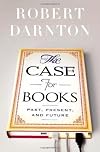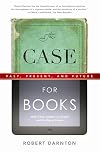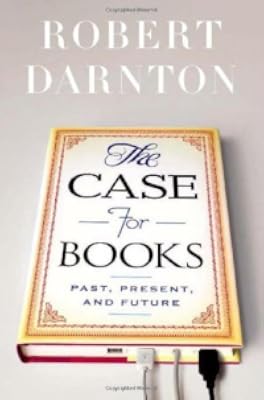
The Case for Books: Past, Present, and Future
by Robert Darnton
On This Page
Description
"The era of the printed book is at a crossroad. E-readers are flooding the market, books are available to read on cell phones, and companies such as Google, Amazon, and Apple are competing to command near monopolistic positions as sellers and dispensers of digital information. Is the printed book resilient enough to survive the digital revolution, or will it become obsolete? In this lasting collection of essays, Robert Darnton--an intellectual pioneer in the field of this history of the show more book--lends unique authority to the life, role, and legacy of the book in society."--P. 4 of cover. show lessTags
Recommendations



















Member Reviews
The author has collected and revised several of his essays that were originally published between 1982 and 2009. In his career, Darnton has been a student of the history of books, served on the boards of academic presses, served as a trustee of the New York Public Library, and is the current director of the Harvard University Library. His writings on the past, present, and future of books are worthy of note. He writes from an insider's perspective about Google Book Search, open access, and the history of books and reading.
Darnton's discussion of the future of books in the digital era doesn't break any new ground, but he does clearly present the potential gains and losses from the digital shift. He writes as well as anyone I've read on show more this topic. I was most intrigued by his essay, "The Mysteries of Reading", which first appeared as "Extraordinary Commonplaces" in The New York Review of Books in 2000. In this essay, Darnton describes the early modern era practice of keeping a commonplace book:
Unlike modern readers, who follow the flow of a narrative from beginning to end (unless they are digital natives and click through texts on machines), early modern Englishmen read in fits and starts and jumped from book to book. They broke texts into fragments and assembled them into new patterns by transcribing them in different sections of their notebooks. Then they reread the copies and rearranged the patterns while adding more excerpts. Reading and writing were therefore inseparable activities.
It sure sounds a lot like hypertext, and brings to mind a verse from Ecclesiastes:
What has been will be again, what has been done will be done again; there is nothing new under the sun. show less
Darnton's discussion of the future of books in the digital era doesn't break any new ground, but he does clearly present the potential gains and losses from the digital shift. He writes as well as anyone I've read on show more this topic. I was most intrigued by his essay, "The Mysteries of Reading", which first appeared as "Extraordinary Commonplaces" in The New York Review of Books in 2000. In this essay, Darnton describes the early modern era practice of keeping a commonplace book:
Unlike modern readers, who follow the flow of a narrative from beginning to end (unless they are digital natives and click through texts on machines), early modern Englishmen read in fits and starts and jumped from book to book. They broke texts into fragments and assembled them into new patterns by transcribing them in different sections of their notebooks. Then they reread the copies and rearranged the patterns while adding more excerpts. Reading and writing were therefore inseparable activities.
It sure sounds a lot like hypertext, and brings to mind a verse from Ecclesiastes:
What has been will be again, what has been done will be done again; there is nothing new under the sun. show less
I'm having a hard time deciding what this book is more guilty of: false advertising or unreadable dryness.
If you think this is a book about the history of books and how books fit into people's lives differently in the new "eBook age", you would be wrong. As was I.
What Darnton has done here is slap together ten or so essays he had written in the past (like from 30 years ago up to 7 years ago) that sort of, kind of, have to do with the way book publishing has changed as the world moved into the Internet age, but mostly they just go off-topic to long diatribes about his favorite 18th century works or endless thoughts about Google Book Search. (Honestly, in the first half of the book I was convinced this was just a book about Google Book show more Search and the lawsuits attached to it.)
This book was originally published in 2009, when this mountain of information about GBS would have been up-to-date and possibly engaging. In 2015 it is already incredibly dated and uninteresting. When you throw in other articles written in the 1990s about the idea of books turning digital, it becomes a disjointed, and oftentimes discusses newspapers more than it does books themselves.
The major problem with throwing together all of these out-of-date articles, despite the fact that they sort of touch on the same subject, is that they become nothing but a repository about how one man saw the transformation of printed works move into the digital age as it happened. It creates no linear history and does not call into account a broader discussion of how these changes affected society on the whole.
I was intensely disappointed by the book and I feel almost shocked at how happy I am to be finished with it. show less
If you think this is a book about the history of books and how books fit into people's lives differently in the new "eBook age", you would be wrong. As was I.
What Darnton has done here is slap together ten or so essays he had written in the past (like from 30 years ago up to 7 years ago) that sort of, kind of, have to do with the way book publishing has changed as the world moved into the Internet age, but mostly they just go off-topic to long diatribes about his favorite 18th century works or endless thoughts about Google Book Search. (Honestly, in the first half of the book I was convinced this was just a book about Google Book show more Search and the lawsuits attached to it.)
This book was originally published in 2009, when this mountain of information about GBS would have been up-to-date and possibly engaging. In 2015 it is already incredibly dated and uninteresting. When you throw in other articles written in the 1990s about the idea of books turning digital, it becomes a disjointed, and oftentimes discusses newspapers more than it does books themselves.
The major problem with throwing together all of these out-of-date articles, despite the fact that they sort of touch on the same subject, is that they become nothing but a repository about how one man saw the transformation of printed works move into the digital age as it happened. It creates no linear history and does not call into account a broader discussion of how these changes affected society on the whole.
I was intensely disappointed by the book and I feel almost shocked at how happy I am to be finished with it. show less
The Case for Books is a collection of essays Robert Darnton wrote on the subject of books. Thus, though they're all about the same thing, more or less, the themes for each part vary, and the overall feeling I had while reading was that it was rather disjointed. It's a book to read in chunks, not all at once, so that each section has time to settle before going into the next - this not only helps the disjointedness, it helps the essays from getting muddled together (as they were written at different times and not intended to be part of a whole, they sometimes repeat themselves).
Despite the less than satisfying reading experience I had before I realized that I needed to not rush through the book, I found it enjoyable, interesting, and show more enlightening.
If there is one thing Darnton has to say about books and newspapers, it is that they are important. He is a historian, so this view probably isn't surprising, but I doubt anyone on LibraryThing would disagree with him.
The first two sections of the book contains essays about e-books, Google Books, copyright, and libraries. Like many people, Darnton is hopeful about the uses of digital media but isn't entirely willing to embrace them. He brings up microfilm and how it has not lasted very well, and how so many books and newspapers were destroyed or discarded in the process of converting them to microfilm/digital in the first waves of fear that the paper objects wouldn't stand the test of time. He also seems to have mixed feelings about Google Books. While he lauds the effort of making more books available to more people, he doesn't like that it is one company doing it (an effective monopoly), nor that libraries could have started first, but didn't. He also laments (like many of us) the loss of physicalness when books are scanned for the project - a lot can be learned from a physical book, but not from the digitized version.
The last section is about books in a historical sense, thus supporting the arguments made in the first two about the book objects. These essays cover bibliography, the act of reading, and the book trade. I found the essay about commonplace notes/reading interesting in light of arguments that the nature of reading is changing because of the way we engage with the Internet - it seems that the fractured attention without deep reading from beginning to end isn't new at all, since that is one way people read books and created their own commonplace books in the past. I also found the discussion of the bookseller Rigaud from Montpellier in the last essay interesting in light of the current economy for bookstores - I'm not sure I can make any definite links at the moment, but I think more reading about the book trade in France in the 1770s and 1780s could solidify the vague ideas I have now.
I borrowed this book from the library, but I'm very inclined to buy a copy for myself. I feel that it deserves a second or third read to fully assimilate Darnton's arguments, and many of the things he writes about are highly pertinent to the library school classes I will be taking in the next few semesters.
I recommend this book for anyone interested in the state of ebooks or in the history and future of books. It might not be something to sit down and read front to back all at once, but it's definitely worth a read. show less
Despite the less than satisfying reading experience I had before I realized that I needed to not rush through the book, I found it enjoyable, interesting, and show more enlightening.
If there is one thing Darnton has to say about books and newspapers, it is that they are important. He is a historian, so this view probably isn't surprising, but I doubt anyone on LibraryThing would disagree with him.
The first two sections of the book contains essays about e-books, Google Books, copyright, and libraries. Like many people, Darnton is hopeful about the uses of digital media but isn't entirely willing to embrace them. He brings up microfilm and how it has not lasted very well, and how so many books and newspapers were destroyed or discarded in the process of converting them to microfilm/digital in the first waves of fear that the paper objects wouldn't stand the test of time. He also seems to have mixed feelings about Google Books. While he lauds the effort of making more books available to more people, he doesn't like that it is one company doing it (an effective monopoly), nor that libraries could have started first, but didn't. He also laments (like many of us) the loss of physicalness when books are scanned for the project - a lot can be learned from a physical book, but not from the digitized version.
The last section is about books in a historical sense, thus supporting the arguments made in the first two about the book objects. These essays cover bibliography, the act of reading, and the book trade. I found the essay about commonplace notes/reading interesting in light of arguments that the nature of reading is changing because of the way we engage with the Internet - it seems that the fractured attention without deep reading from beginning to end isn't new at all, since that is one way people read books and created their own commonplace books in the past. I also found the discussion of the bookseller Rigaud from Montpellier in the last essay interesting in light of the current economy for bookstores - I'm not sure I can make any definite links at the moment, but I think more reading about the book trade in France in the 1770s and 1780s could solidify the vague ideas I have now.
I borrowed this book from the library, but I'm very inclined to buy a copy for myself. I feel that it deserves a second or third read to fully assimilate Darnton's arguments, and many of the things he writes about are highly pertinent to the library school classes I will be taking in the next few semesters.
I recommend this book for anyone interested in the state of ebooks or in the history and future of books. It might not be something to sit down and read front to back all at once, but it's definitely worth a read. show less
Ultimately outdated, as work on the Digital Public Library of America moves forward by leaps and bounds. But Darnton's first essays on the topic, in the New York Review of Books, were part of what inspired me to go back to school for my MLS, and I love following his train of thought through the book. Plus his musings on scholarship are just plain good.
I thought this was a pretty good read for those who would like to know about the recent history of books and how Google books is affecting the written word.
It is a bit repetitive as the book is a collection of scholarly articles, but an interesting read nonetheless. However I might suggest not reading it all the way through in one go like I did, but rather use it more as reference.
I am looking forward to starting a commonplace book! :)
It is a bit repetitive as the book is a collection of scholarly articles, but an interesting read nonetheless. However I might suggest not reading it all the way through in one go like I did, but rather use it more as reference.
I am looking forward to starting a commonplace book! :)
While certain principles were broadly applicable from the essays that make up this book, and there were interesting tidbits within the surveys of and allusions to the history of books and reading, this was ultimately much more heavily focused on the world of academia than I had expected. The author is a historian, and he is predominantly interested in the impacts of things like book history as a discipline, the digitization of books as it relates to scholarly writings, etc.; it's not as general a look at how books function (and have functioned) across "common" society as I had been looking for.
Still interesting, especially in some areas, and the initial sections covering Google Book Search and the legal kerfuffle that surrounded its show more launch definitely contain useful information that I want to look into further.
Overall, not a bad book, just not really what I was looking for. show less
Still interesting, especially in some areas, and the initial sections covering Google Book Search and the legal kerfuffle that surrounded its show more launch definitely contain useful information that I want to look into further.
Overall, not a bad book, just not really what I was looking for. show less
The title here is a bit misleading, this isn't a straightforward monograph on the debate over the future of the book, but a series of previously published essays by the head librarian of Harvard University. Still, it's clear Darnton believes there is a future for the printed word, and his is a leading voice for public dissemination of knowledge rather than proprietary ownership. His first chapter on Google Books alone is worth the price of the book.
Members
- Recently Added By
Published Reviews
Darnton's thoughts are provocative, but his assemblage of essays, reviews and scholarly articles, many previously published in the New York Review of Books, doesn't quite measure up to the task. Some of the material is very recent, some was first published in the 1980s. As Darnton confesses, these pieces were "fired off, scattershot". The same concerns emerge over and over, with an insistence show more that comes to seem obsessive. In the final part of the book, essays on subjects such as the history of the commonplace book or the complex origins of Shakespearean bibliography unexpectedly appear. They are intriguing and accomplished, but the investigation of such matters is unlikely to interest readers eager to learn about the pressing consequences of Google's imperialism or the changing prospects for e-texts. Darnton is not clear about who should read this book and why. The result is a muddle. show less
added by simaqian
Lists

Best books about books
209 works; 106 members

Books referenced in David Weinberger's Too Big to Know
65 works; 2 members
Author Information

46+ Works 4,386 Members
Robert Darnton is Carl H. Pforzheimer University Professor and University Librarian, Emeritus, at Harvard University. His honors include a MacArthur Prize, the National Humanities Medal, the Los Angeles Times Book Prize, and the National Book Critics Circle Award.
Some Editions
Series
Belongs to Publisher Series
Common Knowledge
- Canonical title*
- Apologie du livre. Demain, aujourd'hui, hier
- Original title
- The case for books: past, present, and future
- Original publication date
- 2009
- First words
- This is a book about books, an unashamed apology for the printed word, past, present, and future.
- Last words
- (Click to show. Warning: May contain spoilers.)By unearthing those circuits, historians can show that books do not merely recount history; they make it.
- Original language*
- Anglais (Etats-Unis) (Etats-Unis)
*Some information comes from Common Knowledge in other languages. Click "Edit" for more information.
Classifications
- Genres
- Nonfiction, General Nonfiction, History
- DDC/MDS
- 002.09 — Computer science, information & general works Computer science, knowledge & systems Books (Science and history of the book) Standard subdivisions Biography and History
- LCC
- Z116 .A2 .D37 — Bibliography, Library Science and Information Resources Book industries and trade Printing
- BISAC
Statistics
- Members
- 777
- Popularity
- 36,081
- Reviews
- 35
- Rating
- (3.37)
- Languages
- 6 — Arabic, English, French, Italian, Portuguese, Spanish
- Media
- Paper, Audiobook, Ebook
- ISBNs
- 11
- ASINs
- 5