On This Page
Description
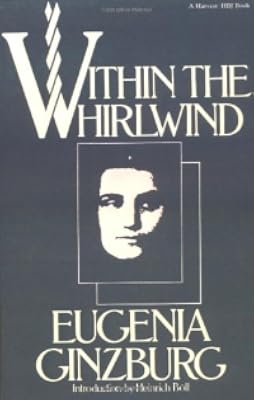
This book continues the narrative of Ginzburg's nightmarish eighteen-year survival of Soviet prisons and labor camps, following the Stalinist purges of 1937. Introduction by Heinrich Böll. A Helen and Kurt Wolff BookTags
Recommendations


























Member Recommendations



Member Reviews
A solid sequel to Ginzburg's first book, Journey into the Whirlwind. I had been unaware of this book when I read the first and wondered why the first book had ended so abruptly; now I realize these books are really meant to be two volumes of the same work. I suppose they need not necessarily be read together; there is a three-page section at the beginning of this second book that summarizes the events of the first. But I think reading them together, and in order, certainly enriches the experience.
Here Ginzburg recounts the last few years of her sentence at a series of brutal labor camps in the farthest, remotest corner of northeast Russia. They only called off work if it was -50 degrees Celsius, and the guard claimed the temperature show more never dropped past -49. Ginzburg was more fortunate than most in that she had some friends with influence and often got better jobs, including at the camp infirmaries and on farms. After her release she was required to remain in Magadan, a remote city on Russia's eastern coast, populated by ex-prisoners and a few free workers who got paid extra for being there. Life gradually improved: she was able to send for her son, whom she hadn't seen since he was a toddler; she married a fellow prisoner; they adopted a little girl; she got a job first in a kindergarten and then as a teacher at a night school for adults. Gradually in the years following Stalin's death, things got much easier for the prisoners and ex-prisoners, and Ginzburg was eventually rehabilitated (that is, exonerated, her record cleared).
Ginzburg is, as in the first volume, scrupulously honest and fair, evaluating all the events she witnesses and characters she encounters in a matter-of-fact way. She was a literature professor and in the book she frequently quotes poetry and refers to obscure Russian writers (luckily there are footnotes to explain these references). She also managed to keep her sense of humor. Some of her stories are downright funny, particularly her experiences on the chicken farm.
I would recommend this to people interested in political prisoners' memoirs and Stalinist Russians in particular. It is a wealth of information. show less
Here Ginzburg recounts the last few years of her sentence at a series of brutal labor camps in the farthest, remotest corner of northeast Russia. They only called off work if it was -50 degrees Celsius, and the guard claimed the temperature show more never dropped past -49. Ginzburg was more fortunate than most in that she had some friends with influence and often got better jobs, including at the camp infirmaries and on farms. After her release she was required to remain in Magadan, a remote city on Russia's eastern coast, populated by ex-prisoners and a few free workers who got paid extra for being there. Life gradually improved: she was able to send for her son, whom she hadn't seen since he was a toddler; she married a fellow prisoner; they adopted a little girl; she got a job first in a kindergarten and then as a teacher at a night school for adults. Gradually in the years following Stalin's death, things got much easier for the prisoners and ex-prisoners, and Ginzburg was eventually rehabilitated (that is, exonerated, her record cleared).
Ginzburg is, as in the first volume, scrupulously honest and fair, evaluating all the events she witnesses and characters she encounters in a matter-of-fact way. She was a literature professor and in the book she frequently quotes poetry and refers to obscure Russian writers (luckily there are footnotes to explain these references). She also managed to keep her sense of humor. Some of her stories are downright funny, particularly her experiences on the chicken farm.
I would recommend this to people interested in political prisoners' memoirs and Stalinist Russians in particular. It is a wealth of information. show less
I found the first volume of Eugenia Ginzburg's work "Journey into the Whirlwhind," which is about Ginzburg's experience in Stalinist Russia as she was captured, tortured, and sentenced to a decade in a Siberian labor camp to be stunning and heartbreaking. I looked forward to reading "Within the Whirlwind," the second installment of her memoir.
I struggled a bit reading this book -- mostly because Ginzburg (probably due to necessity from the horrors she witnessed -- seems a much "flatter" writer in this volume. The story and the horrors of life in Siberian camps is just as striking, but it's told in a more matter-of-fact type style that made it a harder read.
Still, Ginzburg's observations are a solid (and heartbreaking) look at a show more terrible time in history. show less
I struggled a bit reading this book -- mostly because Ginzburg (probably due to necessity from the horrors she witnessed -- seems a much "flatter" writer in this volume. The story and the horrors of life in Siberian camps is just as striking, but it's told in a more matter-of-fact type style that made it a harder read.
Still, Ginzburg's observations are a solid (and heartbreaking) look at a show more terrible time in history. show less
Les hasards de la diffusion clandestine ont coupé en deux ce récit, qui fut un des grands succès du samizdat. Le premier tome parvenu en Occident fut publié sous le titre le Vertige en 1967. Il provoqua immédiatement une émotion d'autant plus profonde que l'auteur, qui persistait à se dire communiste, énonçait des faits vécus sans aucune intention polémique. Elle racontait son arrestation, son procès et sa déportation. Epuisée par le travail et le froid, elle allait mourir lorsqu'elle fut sauvée par l'intervention d'un médecin... Dans ce second tome, nous la retrouvons, en juin 1940, travaillant au centre qui recueille les petits enfants du Goulag, ceux qu'on a enlevés à leurs mères bagnardes. Car la sexualité existe show more aussi dans les camps et parfois même le grand amour. Evguénia Guinzbourg le rencontrera en la personne d'un médecin déporté et, désormais, une nouvelle espérance l'aidera à gravir ce ' chemin escarpé ' (c'est le titre russe du livre) qui, à travers des alternances de misère et de soulagement, la conduira vers la liberté, le bonheur, la sérénité. show less
Atmodas laika grāvējs, kas pārlasīts neskaitāmas reizes. Tomēr ar laiku tā vien gribas apšaubīt memuāru autores absolūto šķīstību un tiklību vispārējas nešķīstības vidū
Feb 6, 2019Latvian
Ratings
Members
- Recently Added By
Author Information

7+ Works 1,080 Members
Some Editions
Series

Belongs to Publisher Series
Harvill (23)
Work Relationships
Has the adaptation
Common Knowledge
- Original title
- Krutoĭ marshrut
- Original language
- Russian
- Disambiguation notice
- "Journey/Into the Whirlwind" is a different work from "Within the Whirlwind" - they are the first and second parts of a memoir, respectively. Do not combine.
Classifications
- Genres
- Biography & Memoir, Nonfiction
- DDC/MDS
- 365.60924 — Society, government, & culture Social problems and social services Punishment Inmates History, geographic treatment, biography Biography
- LCC
- DK268 .G47 .A3413 — History of Europe, Asia, Africa and Oceania Russia. Soviet Union. Former Soviet Republics – Poland History of Russia. Soviet Union. Former Soviet Republics History Soviet regime, 1918-1991
- BISAC
Statistics
- Members
- 155
- Popularity
- 211,486
- Reviews
- 4
- Rating
- (3.96)
- Languages
- 5 — Dutch, English, French, Italian, Spanish
- Media
- Paper, Ebook
- ISBNs
- 8
- ASINs
- 1