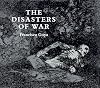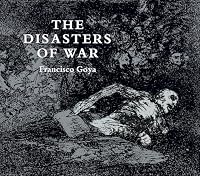
Francisco de Goya: The Disasters of War
by Francisco Goya (Artist), Francisco de Goya
On This Page
Description
Visual indictment of war's horrors, modeled after Spanish insurrection (1808), the resultant Peninsular War and following famine. Miseries of war graphically demonstrated in 83 prints; includes veiled attacks on various people, the Church, and the State. Captions reprinted with new English translations plus the original title page and preface.Tags
Recommendations

























Member Reviews
I've always enjoyed Goya's style of painting (somewhat morbid) and when I was traveling in Buenos Aires, Argentina, I found this gem in a bookstore. I had know of Goys's depiction of the attrocities comitted by the French on the Spanish from art history. The drawings are extremely graphic, with comments by Goys under each drawing.
Think cut up bodies tied to trees, women being raped, people being shot, etc. Man's inhumaity to man is graphically portrayed.
Think cut up bodies tied to trees, women being raped, people being shot, etc. Man's inhumaity to man is graphically portrayed.
fabulous and moving and terrifying
Immagini riguardanti i disastri della guerra causati dall'invasione della Spagna da parte delle truppe napoleoniche, riproposti tramite i dipinti del famoso pittore.
Oct 31, 2011 (Edited)Italian
TG-4
Dec 20, 2024Catalan
Ratings
Members
- Recently Added By
Author Information

Francisco Jose de Goya y Lucientes was the great Spanish painter and graphic artist whose fame rests not only on his superb painterly abilities, but also on the darkness and drama of the subject matter he recorded. Rembrandt's powerful influence is easily observed. Born in Saragossa, he settled in Madrid in 1774. His early paintings are lively, show more cheerful, and almost rococo in feeling (e.g., his tapestry cartoons in the Prado). In 1789 Goya was appointed official court painter---a position once held by Diego Velazquez, whom he admired and emulated. In 1794 Goya became deaf, and his mood changed profoundly. He began to draw and etch. The Caprichos (1796--98), aquatinted etchings which date from that period, present satirical, grotesque, and nightmarish scenes. His famous, unsparingly realistic, Family of King Charles IV (critics still wonder how he got away with it) was painted in 1800. When Spain was taken over by Napoleon in 1808, a terrible civil war ensued. Goya, torn between his Francophile liberalism and his Spanish patriotism, more than all else hated the cruelties of war. The 65 etchings that comprise Los Desastres de la Guerra are among the most moving antiwar documents in all art. Fourteen large mysterious murals, the so-called Black Paintings, were painted toward the end of Goya's life. He spent his last years in Bordeaux, in voluntary exile from the Spanish Bourbon regime. (Bowker Author Biography) show less
9 Works 309 Members
Some Editions
Series
Belongs to Publisher Series
Common Knowledge
- Canonical title
- The Disasters of War; Francisco de Goya: The Disasters of War
- Original title
- Desastres de la guerra
- Original publication date
- 1863
- People/Characters
- Napoleon Bonaparte; Joseph Bonaparte, King of Spain
- Important places
- Spain
- Important events
- Napoleonic Wars; Peninsular War
- Original language*
- Spagnolo
*Some information comes from Common Knowledge in other languages. Click "Edit" for more information.
Classifications
Statistics
- Members
- 301
- Popularity
- 106,092
- Reviews
- 4
- Rating
- (4.36)
- Languages
- 6 — English, German, Italian, Slovak, Spanish, Swedish
- Media
- Paper, Ebook
- ISBNs
- 16
- UPCs
- 1
- ASINs
- 6