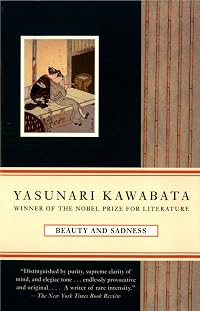
Beauty and Sadness
by Yasunari Kawabata
On This Page
Description
The successful writer Oki has reached middle age and is filled with regrets. He returns to Kyoto to find Otoko, a young woman with whom he had a terrible affair many years before, and discovers that she is now a painter, living with a younger woman as her lover. Otoko has continued to love Oki and has never forgotten him, but his return unsettles not only her but also her young lover. This is a work of strange beauty, with a tender touch of nostalgia and a heartbreaking sensitivity to those show more things lost forever. show lessTags
Recommendations




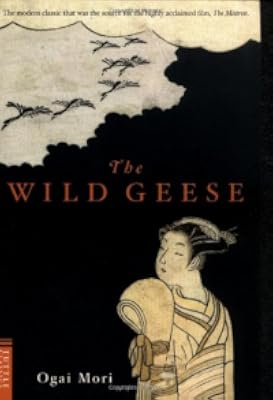
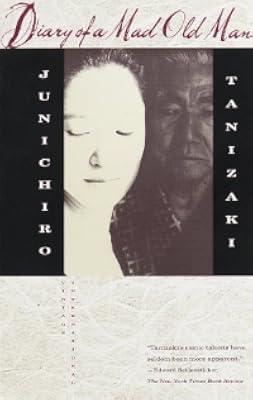
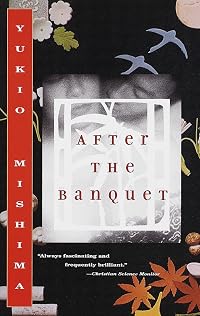
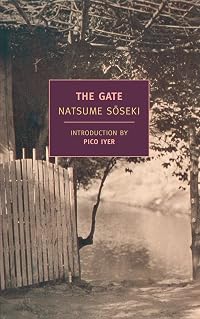

Member Recommendations
by anonymous user
Member Reviews
Oki Toshio is a 54 year old, successful novelist who leaves his wife and children at home and embarks on a visit to Kyoto, presumably for the purpose of hearing the temple bells ring in the New Year. His real intentions are to reconnect with Otoko Ueno, his mistress of twenty-four years prior, with whom he had fathered a stillborn child while Otoko was only fifteen. After Otoko’s mother moved her to Kyoto, ending the relationship, Oki openly incorporated their love affair in a novel. Now a well-known painter, Otoko lives with Keiko, her young, female protégée and lover.
The storyline is hardly unique and although framed as psychological suspense, is written in a quiet, dispassionate manner. The setting and characters are deftly show more drawn, although much is left unexplained, adding to the sense of apprehension. Oki is predictable as the immoral man who seems to lack any genuine regret for his illicit affairs and the pain they have caused his family. It is Kawabata’s female protagonists that are considerably more interesting. The reactions of Oki’s wife to his philandering behavior are far from typical, as her initial jealousy gives way to a disturbing acceptance. Otoko imparts a quiet sense of inscrutability. Haunted by the loss of her child and her lingering feelings for Oki, she strives to express the entangled beauty and sadness of these feelings through her paintings. The unbalanced Keiko who embodies the recklessness and fervor of youth, both carries and confuses the storyline, as her disparate feelings of love, pathological jealousy and hatred converge.
Kawabata is known for exploring themes of love and this novel focuses on its potential as an aggressive and ruinous force. This is a tragic story of self-absorbed love and pointless vengeance, but its ending is strangely ambiguous. Although the awful events that have transpired are clear, the characters’ reactions to them seem inappropriately shallow. I did find this short novel absorbing, but mostly for the sedate and simple elegance of Kawabata’s writing, and the depth and complexity of his female characters. show less
The storyline is hardly unique and although framed as psychological suspense, is written in a quiet, dispassionate manner. The setting and characters are deftly show more drawn, although much is left unexplained, adding to the sense of apprehension. Oki is predictable as the immoral man who seems to lack any genuine regret for his illicit affairs and the pain they have caused his family. It is Kawabata’s female protagonists that are considerably more interesting. The reactions of Oki’s wife to his philandering behavior are far from typical, as her initial jealousy gives way to a disturbing acceptance. Otoko imparts a quiet sense of inscrutability. Haunted by the loss of her child and her lingering feelings for Oki, she strives to express the entangled beauty and sadness of these feelings through her paintings. The unbalanced Keiko who embodies the recklessness and fervor of youth, both carries and confuses the storyline, as her disparate feelings of love, pathological jealousy and hatred converge.
Kawabata is known for exploring themes of love and this novel focuses on its potential as an aggressive and ruinous force. This is a tragic story of self-absorbed love and pointless vengeance, but its ending is strangely ambiguous. Although the awful events that have transpired are clear, the characters’ reactions to them seem inappropriately shallow. I did find this short novel absorbing, but mostly for the sedate and simple elegance of Kawabata’s writing, and the depth and complexity of his female characters. show less
Kawabata's last novel. The situation is a little bit like a Japanese version of Lotte in Weimar in reverse - twenty years ago, Oki published what has become his best loved and most famous novel, telling the story of a tragic, destructive love-affair between a married man and a sixteen-year-old girl. In the meantime, it's become an open secret that the girl in the story was based on Otoko, who is now a well-known painter living in Kyoto. Otoko is in a relationship with her pupil, a younger woman called Keiko. Oki spontaneously decides to visit Kyoto and look up his former lover for the first time since they broke up, and of course stirs up a lot of old and new passions in the process.
There's a lot of beautifully serene evocation of show more Japanese tradition and history, unexpectedly - but very effectively - set against a story of boiling passions and the unhealed harm people do to each other. And some very interesting glimpses at the complex ways that art and life intersect, both for writers and for visual artists. I particularly liked the little digressions into the physicality of the writing process, and the differences between the effect of manuscript, typescript, woodblock and movable type. And the well where the 12th century writer Fujiwara Teika is said to have drawn water for his inkstone.
There is - probably inevitably - an element of male voyeurism in the way Kawabata writes about the relationship between the two women, with rather more discussion of breasts than we really need, but there's also an intriguingly offbeat fascination with body odour (male as well as female) that you probably wouldn't find in a western novel. And - just like The sound of the mountain - we shouldn't allow all the obi-tying and bath-running to distract us from the way the story is driven by strong female characters. Another superb miniature. show less
There's a lot of beautifully serene evocation of show more Japanese tradition and history, unexpectedly - but very effectively - set against a story of boiling passions and the unhealed harm people do to each other. And some very interesting glimpses at the complex ways that art and life intersect, both for writers and for visual artists. I particularly liked the little digressions into the physicality of the writing process, and the differences between the effect of manuscript, typescript, woodblock and movable type. And the well where the 12th century writer Fujiwara Teika is said to have drawn water for his inkstone.
There is - probably inevitably - an element of male voyeurism in the way Kawabata writes about the relationship between the two women, with rather more discussion of breasts than we really need, but there's also an intriguingly offbeat fascination with body odour (male as well as female) that you probably wouldn't find in a western novel. And - just like The sound of the mountain - we shouldn't allow all the obi-tying and bath-running to distract us from the way the story is driven by strong female characters. Another superb miniature. show less
A book that starts off strong, combining a wistful remembrance of the past with clean, simple writing. I loved the references to Japanese history and art, e.g. the painter Nakamura Tsune, and the viewpoint of a lover from the past from years later. “Events of over twenty years ago were more alive to him than those of yesterday,” he writes, and “The Otoko of his memories was the most passionate woman he had ever known. And did not the vividness even now of those memories mean that she was not separated from him?” Indeed.
Where the book fell short for me was in its dated, masculine view of women and the sexual dynamic. Kawabata was over 60 when he began writing this, and it shows. While it may be true to the period and the show more characters, it took away from my enjoyment.
For starters, the protagonist is a pretty icky guy. He’s a writer who’s married and has an adult son of his own, and in the opening chapter is travelling down to Kyoto to hear the New Year’s Eve bells with his lover from 24 years prior. Now a middle-aged man, he was 30 when he had an affair with a young girl of 15 and got her pregnant. The baby died, possibly because it was in a poor hospital, she attempted suicide, and with her mother was forced to move away. He then wrote a book about it, with his wife enduring the humiliation of having to type it out for him, and then everyone knew that the young girl was the main character, which humiliated her too.
So, there’s that as the basis, and yet Kawabata writes, “It was the tragic love story of a very young girl and a man himself still young but with a wife and child: only the beauty of it had been heightened, to the point that it was unmarred by any moral questioning.” Hmm.
In the present she’s now an artist, and living with a female student who’s also her lover. Unbidden by her, the student vows revenge for her, and sets about seducing both the writer and his son. It’s interesting as a concept, but how the story is told from there loses its clean precision and occasionally gets repetitive. Worse yet, it also seems to be a morality tale of sorts.
How I wish it had contained more explorations like this passage:
“As time passed, the memory of their embrace was gradually becoming purified within Otoko, changing from physical to spiritual. She herself was not now pure; nor was Oki, in all likelihood. Yet their long-ago embrace, as she now saw it, seemed pure. That memory – herself and not herself, unreal and yet real – was a sacred vision sublimated from the memory of their mutual embrace.”
Instead, Kawabata seems preoccupied with women’s boobies. For example, I chuckled over his comments on nipples, and how those of one character “still retained their rich color” because she had never nursed a baby, while those of another “had no ugly little wrinkles or granular texture, and was just the right modest size to suckle on lovingly.” Meanwhile one of the women has an odd complex about one of her two breasts, which is mentioned several times. There’s this: “Any man would be tempted by the thought of woman deriving a different level of pleasure from her two breasts, and would want to try to equalize them.” Good grief. “Probably the difference had been created by someone inexperienced with women.”
The various bits of sex play sprinkled in are all pretty subdued and I assume they were daring in their time, but they seem more dated than erotic, and it’s unfortunate that the lesbian character has to also be so unhinged. Every so often we get old-fashioned statements like this, about an artist: “A nude painted by a woman never turns out very well,” or her mother advising her “Otoko, the best medicine for a woman is getting married.” Again, these are true to the characters and to the time period, but I also got the impression they were Kawabata’s views. When you think about the arc of the story and the morality aspect (women – ya gotta be careful with ‘em, especially those lesbian women, amirite?), it became less a window into the past and an enjoyment of a talented, cultural writer, and more of a turn-off, unfortunately. show less
Where the book fell short for me was in its dated, masculine view of women and the sexual dynamic. Kawabata was over 60 when he began writing this, and it shows. While it may be true to the period and the show more characters, it took away from my enjoyment.
For starters, the protagonist is a pretty icky guy. He’s a writer who’s married and has an adult son of his own, and in the opening chapter is travelling down to Kyoto to hear the New Year’s Eve bells with his lover from 24 years prior. Now a middle-aged man, he was 30 when he had an affair with a young girl of 15 and got her pregnant. The baby died, possibly because it was in a poor hospital, she attempted suicide, and with her mother was forced to move away. He then wrote a book about it, with his wife enduring the humiliation of having to type it out for him, and then everyone knew that the young girl was the main character, which humiliated her too.
So, there’s that as the basis, and yet Kawabata writes, “It was the tragic love story of a very young girl and a man himself still young but with a wife and child: only the beauty of it had been heightened, to the point that it was unmarred by any moral questioning.” Hmm.
In the present she’s now an artist, and living with a female student who’s also her lover. Unbidden by her, the student vows revenge for her, and sets about seducing both the writer and his son. It’s interesting as a concept, but how the story is told from there loses its clean precision and occasionally gets repetitive. Worse yet, it also seems to be a morality tale of sorts.
How I wish it had contained more explorations like this passage:
“As time passed, the memory of their embrace was gradually becoming purified within Otoko, changing from physical to spiritual. She herself was not now pure; nor was Oki, in all likelihood. Yet their long-ago embrace, as she now saw it, seemed pure. That memory – herself and not herself, unreal and yet real – was a sacred vision sublimated from the memory of their mutual embrace.”
Instead, Kawabata seems preoccupied with women’s boobies. For example, I chuckled over his comments on nipples, and how those of one character “still retained their rich color” because she had never nursed a baby, while those of another “had no ugly little wrinkles or granular texture, and was just the right modest size to suckle on lovingly.” Meanwhile one of the women has an odd complex about one of her two breasts, which is mentioned several times. There’s this: “Any man would be tempted by the thought of woman deriving a different level of pleasure from her two breasts, and would want to try to equalize them.” Good grief. “Probably the difference had been created by someone inexperienced with women.”
The various bits of sex play sprinkled in are all pretty subdued and I assume they were daring in their time, but they seem more dated than erotic, and it’s unfortunate that the lesbian character has to also be so unhinged. Every so often we get old-fashioned statements like this, about an artist: “A nude painted by a woman never turns out very well,” or her mother advising her “Otoko, the best medicine for a woman is getting married.” Again, these are true to the characters and to the time period, but I also got the impression they were Kawabata’s views. When you think about the arc of the story and the morality aspect (women – ya gotta be careful with ‘em, especially those lesbian women, amirite?), it became less a window into the past and an enjoyment of a talented, cultural writer, and more of a turn-off, unfortunately. show less
I have mixed feelings about this book. On the one hand, Kawabata is very weird about women, particularly women's bodies, and a few times it becomes rather off-putting. On the other hand, this is such a beautiful naturalistic novel that explores jealousy, infidelity, aging... and revenge. Of all the novels that I have read in the past year, this is the one that sits most with me that I find my mind drifting back to. I am haunted by it.
“A book must be the axe for the frozen sea within us.” Frank Kafka.
Beauty and Sadness is much more than a mere contrivance to attract potential readers, this magic narration, shrouded in magnificent contradiction, has the power to shock right from the beginning with the indwelling lyricism emanating from its title.
Beauty and Sadness. Opposing concepts fused and confused in a blur of balmy ocher and passionate red, in the inevitable passage of time and the timelessness of the frozen moment, in the unconditional love and the implacable revenge, in the required brushstroke of fiction to capture a perpetual reality in a canvas.
This is not a journey for everyone, only for those who willfully choose the forking path of love, for those show more who struggle against treacherous jealousy with an obstinacy that does not yield to continuum disillusionment, for those who can find in themselves enough insight to bask in that strange scent of mixed roses and cinder, for those daring enough to dance to the rhythm of the beat and the beating heart of the beauty and sadness.
Otoko and Oki’s affair, whose love set fire to their existence and changed not only their lives but also the ones of the yet unborn, becomes the center of the story. Theirs was a brief but intense relationship, Otoko was only fifteen, Oki was a married man in his mid thirties with a newborn son. When Otoko’s illicit baby dies in childbirth and Oki abandons her, she tries to commit suicide but Oki’s brief return brings her back to life.
Twenty years pass and Oki has become a celebrity thanks to his most famous novel based on his affair with Otoko, a book that immortalized their love forever, a moving work of art that made of Otoko an eternal young girl of fifteen.
Otoko has arisen as a battered survivor. She is now a recognized painter in the Japanese tradition who has finally found peace in the company of her female pupil and whimsical lover Keiko. But Otoko’s love for Oki has never run dry.
A fateful encounter between Otoko and Oki reopens unhealed wounds from the past and triggers a chain of events which none of them could have ever predicted, blurring the thin line between love and hate, compassion and revenge.
How do we chop through the frozen sea of others? How can we prevent the past coming forward, how can we avoid the past reviving again and meeting us in its complete strangeness?
A building sense of doom contracts and expands fluidly attuned to the poetic melancholy of the Japanese landscapes, where ancient temples, traditional ceremonies and snow covered and eerie mounts serve as a nest for the development of this classic tragedy of memorable love, loss, madness and revenge wrapped up in the stillness and delicate contemplation that such profound feelings require. Lyric passages about the anthem of human connectedness and their mismatched selves are brought up to life with Kawabata’s careful choice of words.
Beauty and Sadness is one of those rare but not impossible love stories which can’t be erased like one does with discarded tea leaves at the bottom of a cup or like a forgotten picture buried deep at the back of a neglected drawer. This is a hymn to beauty which will remain embedded in the most recondite part of any sensitive, pulsating soul. The essence of existence becomes a feeble and restrained throb accompanying those who allow themselves to be dragged by the flowing stream of this perturbing story.
In an exotic Japan, where tradition and the disturbing presence of unfulfilled desire, meditation and yearning, colorful art and greyish death are inexorably melted, the tearing loss and the stand-still moment will reincarnate into scarred flesh, invoking cold Beauty and piercing Sadness as a chant for passionate love, regardless of the powerful inner currents which presage the insurmountable tragedy.
Someone, somewhere once asked: "Is love worth it"? I would answer that yes, it is. show less
Beauty and Sadness is much more than a mere contrivance to attract potential readers, this magic narration, shrouded in magnificent contradiction, has the power to shock right from the beginning with the indwelling lyricism emanating from its title.
Beauty and Sadness. Opposing concepts fused and confused in a blur of balmy ocher and passionate red, in the inevitable passage of time and the timelessness of the frozen moment, in the unconditional love and the implacable revenge, in the required brushstroke of fiction to capture a perpetual reality in a canvas.
This is not a journey for everyone, only for those who willfully choose the forking path of love, for those show more who struggle against treacherous jealousy with an obstinacy that does not yield to continuum disillusionment, for those who can find in themselves enough insight to bask in that strange scent of mixed roses and cinder, for those daring enough to dance to the rhythm of the beat and the beating heart of the beauty and sadness.
Otoko and Oki’s affair, whose love set fire to their existence and changed not only their lives but also the ones of the yet unborn, becomes the center of the story. Theirs was a brief but intense relationship, Otoko was only fifteen, Oki was a married man in his mid thirties with a newborn son. When Otoko’s illicit baby dies in childbirth and Oki abandons her, she tries to commit suicide but Oki’s brief return brings her back to life.
Twenty years pass and Oki has become a celebrity thanks to his most famous novel based on his affair with Otoko, a book that immortalized their love forever, a moving work of art that made of Otoko an eternal young girl of fifteen.
Otoko has arisen as a battered survivor. She is now a recognized painter in the Japanese tradition who has finally found peace in the company of her female pupil and whimsical lover Keiko. But Otoko’s love for Oki has never run dry.
A fateful encounter between Otoko and Oki reopens unhealed wounds from the past and triggers a chain of events which none of them could have ever predicted, blurring the thin line between love and hate, compassion and revenge.
How do we chop through the frozen sea of others? How can we prevent the past coming forward, how can we avoid the past reviving again and meeting us in its complete strangeness?
A building sense of doom contracts and expands fluidly attuned to the poetic melancholy of the Japanese landscapes, where ancient temples, traditional ceremonies and snow covered and eerie mounts serve as a nest for the development of this classic tragedy of memorable love, loss, madness and revenge wrapped up in the stillness and delicate contemplation that such profound feelings require. Lyric passages about the anthem of human connectedness and their mismatched selves are brought up to life with Kawabata’s careful choice of words.
Beauty and Sadness is one of those rare but not impossible love stories which can’t be erased like one does with discarded tea leaves at the bottom of a cup or like a forgotten picture buried deep at the back of a neglected drawer. This is a hymn to beauty which will remain embedded in the most recondite part of any sensitive, pulsating soul. The essence of existence becomes a feeble and restrained throb accompanying those who allow themselves to be dragged by the flowing stream of this perturbing story.
In an exotic Japan, where tradition and the disturbing presence of unfulfilled desire, meditation and yearning, colorful art and greyish death are inexorably melted, the tearing loss and the stand-still moment will reincarnate into scarred flesh, invoking cold Beauty and piercing Sadness as a chant for passionate love, regardless of the powerful inner currents which presage the insurmountable tragedy.
Someone, somewhere once asked: "Is love worth it"? I would answer that yes, it is. show less
The acrylics are laid on a wooden table with monochromatic perfection. A blank canvass waits to be explored. Water droplets glisten as they leave the auburn bristles of the brush. A flurry of horizontal strokes awakens the sordid paleness. A dash of vertical Prussian blue collides with wavy ochre. Vermillion over emerald. Sienna peeping through the cobalt notes. The brushes fall and fingers reign the dyed paper. The fingers run wild, flooding the whiteness like an angry rainbow across the empty sky. The sanctity of the easel lost to the festering colours. The tinted viscosity blurs the didactic depiction normalizing irrationality between the artist and the portrait. Consuming art. Consuming love.
Basho writes :-
The temple bell stops.
show more But the sound keeps coming
out of the flowers.
Isn't the consciousness of love like these temple bells? Long after its physicality ends, the essence lingers through budding emotions within the delicate sounds of the past. How is it to experience a love so abstract that death seems a friendly stranger? Ueno Otoko, loving a man who stole her childhood, delineates the purity of an overwhelming emotion –love and not clemency. Otoko lost her baby during a painful childbirth; a tearful goodbye with only the memory of her child’s pristine black hair. Otoko was 16, when she overdosed on sleeping pills after her baby’s death; a bid to escape the encumbering deficient love. As a solitary blossom among the sea of stones, Otoko bloomed amid the darkness of a distorted love perplexed at her long survival. The colours in her portraits were tales of Otoko’s poignant heart ; the brush strokes searched her child’s face.
"She had no idea of the face and form of her baby, only a vision in her heart. She knew very well that the child in her. Ascension of an Infant would not look like her dead baby, and she had no wish to paint a realistic portrait. What she wanted was to express her sense of loss, her grief and affection for someone she had never seen. She had cherished that desire so long that the image of the dead infant had become a symbol of yearning to her. She thought of it whenever she felt sad. Also the picture was to symbolize herself surviving all these years, as well as the beauty and sadness of her love for Oki."
In a Girl of Sixteen, Oki immortalized the woman he considered his only passionate love. A woman who at a tender age of 15 lost her virginity to a much married man in his 30s. Kawabata delineates Oki as a man lost in egocentric love; even though ridden by guilt of blemishing Otoko’s youth, Oki pursued the forbidden tenderness as though the inherent madness of it all kept him alive.
"It was the tragic love story of a very young girl and a man himself still young but with a wife and child: only the beauty of it had been heightened, to the point that it was unmarred by any moral questioning."
The stillness of his memories kept Otoko alive through his writings and the ringing of New Year’s bells in Kyoto with each passing year.
"What were memories? What was the past that he remembered so clearly?..............he could not escape the pain of having spoiled her life, possible of having robbed her of every chance for happiness.......the vividness of the memories mean that she was separated separated from him...."
From flaunting his affairs to Fumiko to consciously leaving his wife out of the memoirs for an untainted tale of intricate passionate love and earning his generous royalties from the book; Oki is an outright amoral man. Kawabata gives a picture of a reckless man imparting ugliness through beautiful sentiments. In the autumn of his life how could he hope for forgiveness from a woman who lived his aberrant repercussions?
Keiko on the other hand is a misguided passionate lover. One could say her love for Otoko was mere teenage infatuation, but her determination in seeking revenge from Oki throws a different light on Keiko’s commitment to Otoko. Kawabata underplays homosexuality limiting Keiko’s relationship with her teacher (Otoko) only to the idea of revenge. It may be due to Otoko resisting of letting go her past ghosts spinning a web of jealousy for Keiko. Or Kawabata hesitated in exploring a lesbian love due to cultural restraints.
"Otoko still loved Oki, her baby, and her mother, but could these loves have gone unchanged from the time when they were a tangible reality to her? Could not something of these very loves have been subtly transformed into self-love?Of course she would not be aware of it. She had been parted from her baby and her mother by death, and from Oki by a final separation, and these three still lived within her. Yet Otoko alone gave them this life. Her image of Oki flowed along with her through time, and perhaps her memories of their love affair had been dyed by the color of her love for herself, had even been transformed. It had never occurred to her that bygone memories are merely phantoms and apparitions. Perhaps it was to be expected that a woman who had lived alone for two decades without love or marriage should indulge herself in memories of a sad love, and that her indulgence should take on the color of self-love."
Keiko- Otoko’s protégée and a jealous lover avenged Otoko’s melancholy through the malicious play of her physical splendor consuming Taichiro in her seduction. Fumiko whose love was loyal and simple towards Oki, yet appallingly as she prospered in Otoko’s printed exhibition. Otoko who still loved Oki, her mother and her baby and never let go of her 16 yr old from her soul, the very reason of her being hesitant in sketching Keiko somehow seem to be her teenage apparition. And, Oki who could never distinguish nostalgic remorse from factual remorse. Akin to the moss covered roof at the restaurant that never had the chance to dry out because being weighed down by the huge tree, all of Kawabata’s characters were stuck in time buried under the obscurity of memories and prejudices
"Time passed. But time flows in many streams. Like a river, an inner stream of time will flow rapidly at some place and sluggishly at others or perhaps even strand hopelessly stagnant. Cosmic time is the same for everyone, but human time differs with each person. Time flows in the same was for all human beings, every human being flows through time in a different way."
Issa writes:-
Cherry blossoms in evening.
Ah well, today also
belongs to the past.
Love is narcissistic, deviant, vengeful, powerful and yet somehow beautiful. It breathes life into one’s solitude only to revel in the silence of emptiness,. Happiness is transient and it is in sadness that tranquil loveliness bloom like a white lotus on fire. Beauty encompasses sadness through a spate of sorrows and death; the fleeting exquisiteness of cherry blossom that eventually meets the earthly grave. show less
Basho writes :-
The temple bell stops.
show more But the sound keeps coming
out of the flowers.
Isn't the consciousness of love like these temple bells? Long after its physicality ends, the essence lingers through budding emotions within the delicate sounds of the past. How is it to experience a love so abstract that death seems a friendly stranger? Ueno Otoko, loving a man who stole her childhood, delineates the purity of an overwhelming emotion –love and not clemency. Otoko lost her baby during a painful childbirth; a tearful goodbye with only the memory of her child’s pristine black hair. Otoko was 16, when she overdosed on sleeping pills after her baby’s death; a bid to escape the encumbering deficient love. As a solitary blossom among the sea of stones, Otoko bloomed amid the darkness of a distorted love perplexed at her long survival. The colours in her portraits were tales of Otoko’s poignant heart ; the brush strokes searched her child’s face.
"She had no idea of the face and form of her baby, only a vision in her heart. She knew very well that the child in her. Ascension of an Infant would not look like her dead baby, and she had no wish to paint a realistic portrait. What she wanted was to express her sense of loss, her grief and affection for someone she had never seen. She had cherished that desire so long that the image of the dead infant had become a symbol of yearning to her. She thought of it whenever she felt sad. Also the picture was to symbolize herself surviving all these years, as well as the beauty and sadness of her love for Oki."
In a Girl of Sixteen, Oki immortalized the woman he considered his only passionate love. A woman who at a tender age of 15 lost her virginity to a much married man in his 30s. Kawabata delineates Oki as a man lost in egocentric love; even though ridden by guilt of blemishing Otoko’s youth, Oki pursued the forbidden tenderness as though the inherent madness of it all kept him alive.
"It was the tragic love story of a very young girl and a man himself still young but with a wife and child: only the beauty of it had been heightened, to the point that it was unmarred by any moral questioning."
The stillness of his memories kept Otoko alive through his writings and the ringing of New Year’s bells in Kyoto with each passing year.
"What were memories? What was the past that he remembered so clearly?..............he could not escape the pain of having spoiled her life, possible of having robbed her of every chance for happiness.......the vividness of the memories mean that she was separated separated from him...."
From flaunting his affairs to Fumiko to consciously leaving his wife out of the memoirs for an untainted tale of intricate passionate love and earning his generous royalties from the book; Oki is an outright amoral man. Kawabata gives a picture of a reckless man imparting ugliness through beautiful sentiments. In the autumn of his life how could he hope for forgiveness from a woman who lived his aberrant repercussions?
Keiko on the other hand is a misguided passionate lover. One could say her love for Otoko was mere teenage infatuation, but her determination in seeking revenge from Oki throws a different light on Keiko’s commitment to Otoko. Kawabata underplays homosexuality limiting Keiko’s relationship with her teacher (Otoko) only to the idea of revenge. It may be due to Otoko resisting of letting go her past ghosts spinning a web of jealousy for Keiko. Or Kawabata hesitated in exploring a lesbian love due to cultural restraints.
"Otoko still loved Oki, her baby, and her mother, but could these loves have gone unchanged from the time when they were a tangible reality to her? Could not something of these very loves have been subtly transformed into self-love?Of course she would not be aware of it. She had been parted from her baby and her mother by death, and from Oki by a final separation, and these three still lived within her. Yet Otoko alone gave them this life. Her image of Oki flowed along with her through time, and perhaps her memories of their love affair had been dyed by the color of her love for herself, had even been transformed. It had never occurred to her that bygone memories are merely phantoms and apparitions. Perhaps it was to be expected that a woman who had lived alone for two decades without love or marriage should indulge herself in memories of a sad love, and that her indulgence should take on the color of self-love."
Keiko- Otoko’s protégée and a jealous lover avenged Otoko’s melancholy through the malicious play of her physical splendor consuming Taichiro in her seduction. Fumiko whose love was loyal and simple towards Oki, yet appallingly as she prospered in Otoko’s printed exhibition. Otoko who still loved Oki, her mother and her baby and never let go of her 16 yr old from her soul, the very reason of her being hesitant in sketching Keiko somehow seem to be her teenage apparition. And, Oki who could never distinguish nostalgic remorse from factual remorse. Akin to the moss covered roof at the restaurant that never had the chance to dry out because being weighed down by the huge tree, all of Kawabata’s characters were stuck in time buried under the obscurity of memories and prejudices
"Time passed. But time flows in many streams. Like a river, an inner stream of time will flow rapidly at some place and sluggishly at others or perhaps even strand hopelessly stagnant. Cosmic time is the same for everyone, but human time differs with each person. Time flows in the same was for all human beings, every human being flows through time in a different way."
Issa writes:-
Cherry blossoms in evening.
Ah well, today also
belongs to the past.
Love is narcissistic, deviant, vengeful, powerful and yet somehow beautiful. It breathes life into one’s solitude only to revel in the silence of emptiness,. Happiness is transient and it is in sadness that tranquil loveliness bloom like a white lotus on fire. Beauty encompasses sadness through a spate of sorrows and death; the fleeting exquisiteness of cherry blossom that eventually meets the earthly grave. show less
If we rid ourselves of every cultural artifact that blended love and hate together in equal measure, we would be be left with very little that is worth remembering. Love without hate is optimistic and hate without love is depressing but to have both! That is an accurate portrayal of ourselves, and after countless millennia we still crave the tales that delve unflinchingly into that bright and terrible line between the two.
But is it really a line? What causes one to cross it, and for how long? And do we really travel from one realm to another, the euphoric uplift and the bitter agony, via clean and complete transitions? Is it all that simple?
By those rules, this book should have never existed, one detailing the relationship between a show more young girl and a man twice her age. The repercussions stretch on for more than twenty years, as the man and his family live off the fruit of that story of illicit love, and the girl grows into a woman who wins the love of a girl hellbent on revenge for these past wrongs. And through the man's dangerously blind romanticism, and the woman's traumatized solitude, they still believe in their love for each other.
Blindness and trauma. The poison is bubbling to the surface everywhere the characters look, and yet they carry on as if there is nothing to be worried about. The man sees only his reflection in the women around him, and the girl twists this image into a hook to drag him down. The woman unconsciously builds a shrine to the pain and sorrow of the past, and the son ignores the warning signs at every turn.
And for what. Love? The love in this story is a wound, easily made and nigh impossible to heal, and the pleasure of it writhes in bed with the agony. Is it really worth it?
Look around you. I'd say the world thinks so. show less
But is it really a line? What causes one to cross it, and for how long? And do we really travel from one realm to another, the euphoric uplift and the bitter agony, via clean and complete transitions? Is it all that simple?
By those rules, this book should have never existed, one detailing the relationship between a show more young girl and a man twice her age. The repercussions stretch on for more than twenty years, as the man and his family live off the fruit of that story of illicit love, and the girl grows into a woman who wins the love of a girl hellbent on revenge for these past wrongs. And through the man's dangerously blind romanticism, and the woman's traumatized solitude, they still believe in their love for each other.
Blindness and trauma. The poison is bubbling to the surface everywhere the characters look, and yet they carry on as if there is nothing to be worried about. The man sees only his reflection in the women around him, and the girl twists this image into a hook to drag him down. The woman unconsciously builds a shrine to the pain and sorrow of the past, and the son ignores the warning signs at every turn.
And for what. Love? The love in this story is a wound, easily made and nigh impossible to heal, and the pleasure of it writhes in bed with the agony. Is it really worth it?
Look around you. I'd say the world thinks so. show less
Members
- Recently Added By
Lists

The Guardian's 1000 Novels Everyone Must Read
1,004 works; 552 members

Japanese Literature
230 works; 40 members

Canon de la narrativa universal del siglo XX
254 works; 6 members

1960s, Best books published therein
254 works; 22 members

New Lifetime Reading Plan by Fadiman and Major
225 works; 5 members

Canon de la narrativa universal del s. XX (cicutadry)
499 works; 3 members
Author Information

214+ Works 16,215 Members
Author Yasunari Kawabata was born in Osaka, Japan on June 14, 1899. He experienced numerous family deaths during his childhood including his parents, a sister, and his grandparents. He graduated from the Tokyo Imperial University in March 1924. He wrote both short stories including The Dancing Girl of Izu and novels including The Sound of the show more Mountains, Snow Country, Thousand Cranes, and The Old Capital. In 1959, he received the Goethe Medal in Frankfurt and in 1968 he won the Nobel Prize for Literature. He committed suicide on April 16, 1972. (Bowker Author Biography) show less
Some Editions
Awards and Honors
Series
Belongs to Publisher Series
dtv (13216)
Work Relationships
Is contained in
Common Knowledge
- Canonical title
- Beauty and Sadness
- Original title
- Utsukushisa to kanashimi to
- Original publication date
- 1964
- People/Characters
- Otoko; Oki Toshio; Keiko
- Important places
- Honshū, Japan; Japan; Kyoto, Japan
- First words*
- Im Aussichtswagen des Expresszuges "Hato" der Tokaido-Linie standen an der einen Fensterseite fünf Drehsessel in einer Reihe.
- Last words*
- (Click to show. Warning: May contain spoilers.)Langsam füllten sie sich mit Tränen, als sie zu Otoko aufblickte.
- Original language*
- Japanisch
*Some information comes from Common Knowledge in other languages. Click "Edit" for more information.
Classifications
- Genres
- Fiction and Literature, General Fiction
- DDC/MDS
- 895.6344 — Literature & rhetoric Literatures of other languages Literatures of East and Southeast Asia Japanese Japanese fiction Meiji/Taishō periods 1868–1945 1912–1945
- LCC
- PL832 .A9 .U813 — Language and Literature Languages and literatures of Eastern Asia, Africa, Oceania Languages of Eastern Asia, Africa, Oceania Japanese language and literature Japanese literature Individual authors and works
- BISAC
Statistics
- Members
- 1,448
- Popularity
- 16,321
- Reviews
- 36
- Rating
- (3.75)
- Languages
- 10 — Chinese, Dutch, English, French, German, Italian, Japanese, Portuguese, Serbian, Spanish
- Media
- Paper, Audiobook, Ebook
- ISBNs
- 49
- ASINs
- 15