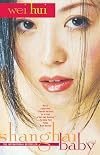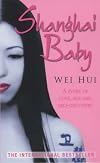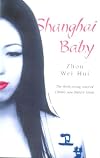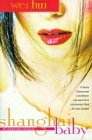
Shanghai Baby
by Wei Hui
On This Page
Description
The gap that divides those of us born in the 1970s and the older generation has never been so wide. Dark and edgy, deliciously naughty, an intoxicating cocktail of sex and the search for love, Shanghai Baby has already risen to cult status in mainland China. The risque contents of the breakthrough novel by hip new author Wei Hui have so alarmed Beijing authorities that thousands of copies have been confiscated and burned. As explicit as Henry Miller's Tropic of Cancer, as shocking as show more Trainspotting, this story of a beautiful writer and her erotically charged affairs jumps, howls, and hits the ground running as it depicts the new generation rising in the East. Set in the centuries-old port city of Shanghai, the novel follows the days, and nights, of the irrepressibly carnal Coco, who waits tables in a café when she meets her first lover, a sensitive Chinese artist. Defying her parents, Coco moves in with her boyfriend and enters a frenzied, orgasmic world of drugs and hedonism. But, helpless to stop her gentle lover's descent into addiction, Coco becomes attracted to a boisterous Westerner, a rich German businessman with a penchant for S/M and seduction. Now, with an entourage of friends ranging from a streetwise madame to a rebellious filmmaker, Coco's forays into in the territory of love and lust cross the borders between two cultures -- awakening her guilt and fears of discovery, yet stimulating her emerging sexual self. Searing a blistering image into the reader's imagination, Shanghai Baby provides an alternative travelogue into the back streets of a city and the hard-core escapades of today's liberated youth. Wei Hui's provocative portrayal of men, women, and cultural transition is an astonishing and brave exposure of the unacknowledged new China, breaking through official rhetoric to show the inroads of the West and a people determined to burst free. show lessTags
Recommendations



Member Reviews
Shanghai Baby (上海寳貝) by Zhou Weihui is the quintessential novel of the modern, middle-class Chinese woman living in the heady days of the early 90s as China underwent massive socio-economic changes.
Semi-autobiographical in nature and with the link between fact and fiction blurred for marketing purposes, Shanghai Baby is replete with brand names, sexualised themes and empty dialogue. Commercialisation and materialism are glamorised to an obscene extent, with the protagonist at every opportunity announcing to all the brand name make-up, cars, drinks, music, places etc. she uses and visits. This vapid materialism is compounded by the sexual element of Coco's story - at every opportunity she discusses the superiority of western show more penises and bemoans the fact her Chinese lover is impotent.
All of this comes together in a heavily commercialised novel that reeks of self-promotion and exhibitionism; sex and material wealth are constantly exploited for commercial profit. Shanghai Baby is merely the culmination of the trend of "Babe Writers", common in the early 90s, whose novels focused on the lives of modern independent women in modern China. However, whatever sociological or literary worth this phenomenon might have had is lost in vapid, empty dialogue, obnoxious and one-dimensional characters, and exploitative writings. Unlike earlier novels by Chinese women, Shanghai Baby has nothing to do with protest, personal growth, or rebellion against social convention; rather it is testimony to the mantra "sex sells".
The only thing modern about this novel is its alternative Shanghai setting populated by artists, writers, and disaffected Generation Y members but ultimately that as well is nothing more than stereotypical hedonism and materialism. show less
Semi-autobiographical in nature and with the link between fact and fiction blurred for marketing purposes, Shanghai Baby is replete with brand names, sexualised themes and empty dialogue. Commercialisation and materialism are glamorised to an obscene extent, with the protagonist at every opportunity announcing to all the brand name make-up, cars, drinks, music, places etc. she uses and visits. This vapid materialism is compounded by the sexual element of Coco's story - at every opportunity she discusses the superiority of western show more penises and bemoans the fact her Chinese lover is impotent.
All of this comes together in a heavily commercialised novel that reeks of self-promotion and exhibitionism; sex and material wealth are constantly exploited for commercial profit. Shanghai Baby is merely the culmination of the trend of "Babe Writers", common in the early 90s, whose novels focused on the lives of modern independent women in modern China. However, whatever sociological or literary worth this phenomenon might have had is lost in vapid, empty dialogue, obnoxious and one-dimensional characters, and exploitative writings. Unlike earlier novels by Chinese women, Shanghai Baby has nothing to do with protest, personal growth, or rebellion against social convention; rather it is testimony to the mantra "sex sells".
The only thing modern about this novel is its alternative Shanghai setting populated by artists, writers, and disaffected Generation Y members but ultimately that as well is nothing more than stereotypical hedonism and materialism. show less
Quería creer que el cuerpo y el corazón de una mujer se pueden separar. Si los hombres podían lograrlo, ¿por qué las mujeres no?» Esta es la historia de Cocó, una joven china aspirante a escritora, atrapada en un triángulo amoroso. Vive con su novio, Tiantian, un joven de una sensibilidad extraordinaria que tiene un grave problema de impotencia y que, a pesar de amar intensamente a Cocó, no puede satisfacerla sexualmente. En una fiesta, Cocó conoce a Mark, un alemán casado, con quien iniciará una aventura centrada en la mutua atracción sexual pero que, inevitablemente, se irá desplazando hacia el centro mismo de su ser. En medio del caos emocional, la voz de Cocó nos muestra cómo el amor y el deseo tienen a menudo show more caminos separados y transmite una inesperada y conmovedora sensación de verdad. Shanghai Baby es también el retrato de la fascinante ciudad de Shanghai en la actualidad. Después de varios libros de éxito que nos han transportado al Oriente de las geishas y sus tradiciones, esta novela nos habla de la vida en la China de hoy. Lírica, inocente, narcisista, apasionada, leal, hedonista, sensible, auténtica, vital, compleja, sincera, sensual, irreverente, frívola y profunda a la vez, Shanghai Baby se ha convertido en un auténtico fenómeno sociocultural y en la referencia de toda una generación de jóvenes chinos, en una novela de culto que afronta con excepcional naturalidad los temas que todavía son tremendos tabús en ese difícil país. Su espectacular acogida de crítica y lectores en Francia, Inglaterra, Italia, Alemana y Japón demuestra una vez más que no hay fronteras para una novela valiente, sincera y rabiosamente contemporánea. show less
Madonna invited us to a retro theme party called Return to Avenue Joffre on the top floor of the high-rise at the corner of Huaihai and Yandang Roads. Avenue Joffre in the 1930s, Huaihai Road today, has long symbolised Shanghai's old dreams. In today's fin-de-siècle, post-colonial mindset, this boulevard - and the bygone era of the revealing traditional dress, the qipao, calendar-girl posters, rickshaws and jazz bands - is fashionable again, like a bow knotted over Shanghai's nostalgic heart.
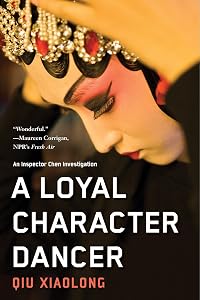
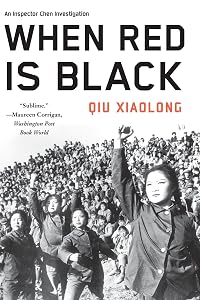
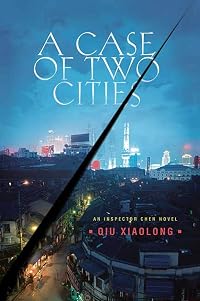
Last year, I read "Red Mandarin Dress" by Qiu Xiaolong, a detective story set in Shanghai in the 1980s, at a time when the whole city seemed to be one vast building building project as China underwent massive social and political changes. "Shanghai show more Baby" is set in the late 1990s and things couldn't be more different. There are only three or four places in the whole book where I noticed someone saying or doing something that reminded me that they were living in a communist country. Coco and her friends can choose their own careers and change their jobs when they want (unlike the reluctant policeman in "Red Mandarin Dress", who would rather have been a poet), can travel abroad freely, have Western friends and lovers and are most definitely part of a consumer society. Of course China hasn't changed completely, and "Shanghai Baby" was banned in China for its decadent subject matter and being corrupted by Western values.
I found the book interesting from that point of view and I liked the apt quotations that the author had chosen for each chapter, but I didn't really like Coco or care about her tangled love life. show less
Last year, I read "Red Mandarin Dress" by Qiu Xiaolong, a detective story set in Shanghai in the 1980s, at a time when the whole city seemed to be one vast building building project as China underwent massive social and political changes. "Shanghai show more Baby" is set in the late 1990s and things couldn't be more different. There are only three or four places in the whole book where I noticed someone saying or doing something that reminded me that they were living in a communist country. Coco and her friends can choose their own careers and change their jobs when they want (unlike the reluctant policeman in "Red Mandarin Dress", who would rather have been a poet), can travel abroad freely, have Western friends and lovers and are most definitely part of a consumer society. Of course China hasn't changed completely, and "Shanghai Baby" was banned in China for its decadent subject matter and being corrupted by Western values.
I found the book interesting from that point of view and I liked the apt quotations that the author had chosen for each chapter, but I didn't really like Coco or care about her tangled love life. show less
She writes like a disembodied spirit – atmospheric, intimate, sometimes hollow. In this novel, we follow Coco around Shanghai, and into and out of the arms of her two lovers. She maintains a firefly lightness of language and even manages a little tangle of a plot. She does remind me a lot of Anais Nin, darting from observation to sensation, always just slightly surprised.
I saw this on my shelf and thought I should pick it up, it has been there a while! I spent a few weeks in Shanghai back in 2004, so this really caught my eye.
Nikki, or Coco, is working as a waitress following the publication of a collection of short stories. She is trying to work on a new book, but is blocked. She meets and moves in with with Tian Tian, a young, fragile man, whose emotional problems cause him to be impotent. After meeting a German expat, Mark, Coco is attracted to him, and seems unable to resist his sexual advances. She is left with the dilemma of two men, one who she loves deeply but cannot satisfy her and the other who inspires passion but not trust.
This is a side of Shanghai that you don't often see in literature, in show more fact if the locations had been changed, you would have believed it had taken place in New York or London. In the end, it wasn't what I hoped it would be, it seemed as if the writer was trying too hard to be shocking. show less
Nikki, or Coco, is working as a waitress following the publication of a collection of short stories. She is trying to work on a new book, but is blocked. She meets and moves in with with Tian Tian, a young, fragile man, whose emotional problems cause him to be impotent. After meeting a German expat, Mark, Coco is attracted to him, and seems unable to resist his sexual advances. She is left with the dilemma of two men, one who she loves deeply but cannot satisfy her and the other who inspires passion but not trust.
This is a side of Shanghai that you don't often see in literature, in show more fact if the locations had been changed, you would have believed it had taken place in New York or London. In the end, it wasn't what I hoped it would be, it seemed as if the writer was trying too hard to be shocking. show less
I would say 2.5 but meh, I don't care. The book and storyline was intriguing at first but then it got more and more dull. I guess what I hated the most is the fact that Coco kept going back to Mark, even though she claimed she loved Tian Tian so much. She's indeed a foolish character in my opinion in all confused about her own self. I guess that's what made me rating pretty low, I really didn't like the main character so much as to the fact that she would betray her lover like that. Hm, I just think it's a pet peeve of mine and to read about it is a turn off. In all, it was alright I guess. I had quite high expectations for this book but they weren't met.
over-written drek. got about half-way through and then just could not be bothered finishing. yawn. tries to be shocking, only manages boring.
Members
- Recently Added By
Lists

Best Fiction Set in China
43 works; 27 members

Llibres que he llegit el 2021
54 works; 1 member

The China Project Book List
100 works; 2 members
Author Information

10+ Works 1,061 Members
Wei Hui is twenty-seven years old, lives in Shanghai and is at work on her next novel. "Shanghai Baby" is Wei Hui's fourth book, and her first to be published in English. (Bowker Author Biography)
Some Editions
Awards and Honors
Notable Lists
Common Knowledge
- Original title
- Shanghai baby
- Original publication date
- 1993
- Important places
- Shanghai, China
- Dedication
- For my parents, my love,
and Fudan University - First words
- My name is Nikki but my friends all call me Coco after Coco Chanel, a French lady who lived to be almost ninety.
Classifications
- Genres
- Fiction and Literature, General Fiction
- DDC/MDS
- 813 — Literature & rhetoric American literature in English American fiction in English
- LCC
- PL2920 .E512445 .S464 — Language and Literature Languages and literatures of Eastern Asia, Africa, Oceania Languages of Eastern Asia, Africa, Oceania Chinese language and literature Chinese literature Individual authors and works
- BISAC
Statistics
- Members
- 912
- Popularity
- 29,580
- Reviews
- 21
- Rating
- (3.02)
- Languages
- 17 — Catalan, Chinese, Czech, Danish, Dutch, English, Estonian, French, German, Hungarian, Italian, Polish, Portuguese, Croatian, Slovenian, Spanish, Swedish
- Media
- Paper, Audiobook, Ebook
- ISBNs
- 48
- ASINs
- 5