On This Page
Description
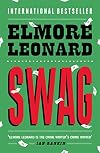
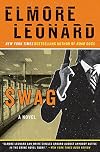
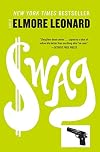
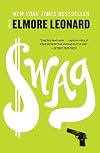
The smallest of small-time criminals, Ernest Stickley Jr. figures his luck's about to change when Detroit used-car salesman Frank Ryan catches him trying to boost a ride from Ryan's lot. Frank's got some surefire schemes for getting rich quick-all of them involving guns-and all Stickley has to do is follow "Ryan's Rules" to share the wealth. But sometimes rules need to be bent, maybe even broken, if one is to succeed in the world of crime, especially if the "brains" of the operation knows show more less than nothing. show lessTags
Recommendations









Member Reviews
I picked this up because, well, Elmore Leonard died recently and I'd never read anything of his. Holy god, could that man write. I've never seen such fantastic, economical writing. I almost don't care about the story - although it was also fun, as predictable as the story of "incompetent criminals do crime" always is, it's usually pretty entertaining too - just because I want to roll around in the way he can establish character with two well-placed words. (Fortunately this is not the kind of writing that gives me an inferiority complex, mostly because it's impossible to write sf this way.)
Leonard, Elmore. Swag. 1976. Phoenix, 2005.
A friend of mine, who typically reads fiction short-listed for the Booker-Mann prize, once asked me what I could possibly see in a writer like Elmore Leonard. The answer is efficiency. If a typical Booker-Mann novel is a Rolls sedan with all the trimmings, a Leonard novel, of which Swag is one, is a stripped-down open-cockpit hot-rod. Leonard reduces the elements of fiction—character, plot, and setting—to their essentials and makes them all hum around the track with their own kind of unpretentious grace. In Swag, his two main characters are easily visualizable and consistently drawn: Stick is an acerbic ex-con with a talent for hotwiring cars, and Frank is a fast-talking car salesman with a show more surefire plan for getting away with armed robbery. The suspense in the novel is not whether things will go wrong but in waiting for it to happen. Leonard is remarkably spare in his descriptions, conveying most of the characterization and action through dialog, but we understand all we need to about Detroit in the mid-seventies, with its racial tension and working-class culture. Leonard uses what Tom Wolfe would later call status detail to tell us where we are. He gives us street names, Detroit landmarks, and, always, the makes and models of the cars, pistols, and beer his holdup men use. As folks in Hollywood have often discovered, he gives you everything you need to write a screenplay based on his work. show less
A friend of mine, who typically reads fiction short-listed for the Booker-Mann prize, once asked me what I could possibly see in a writer like Elmore Leonard. The answer is efficiency. If a typical Booker-Mann novel is a Rolls sedan with all the trimmings, a Leonard novel, of which Swag is one, is a stripped-down open-cockpit hot-rod. Leonard reduces the elements of fiction—character, plot, and setting—to their essentials and makes them all hum around the track with their own kind of unpretentious grace. In Swag, his two main characters are easily visualizable and consistently drawn: Stick is an acerbic ex-con with a talent for hotwiring cars, and Frank is a fast-talking car salesman with a show more surefire plan for getting away with armed robbery. The suspense in the novel is not whether things will go wrong but in waiting for it to happen. Leonard is remarkably spare in his descriptions, conveying most of the characterization and action through dialog, but we understand all we need to about Detroit in the mid-seventies, with its racial tension and working-class culture. Leonard uses what Tom Wolfe would later call status detail to tell us where we are. He gives us street names, Detroit landmarks, and, always, the makes and models of the cars, pistols, and beer his holdup men use. As folks in Hollywood have often discovered, he gives you everything you need to write a screenplay based on his work. show less
Elmore Leonard's crime stories occupy some rarified air between hardboiled noir and straight comedy. His ability to hit on criminals and their underworld being stupid is pure gold, so too in this yarn, which has stood up to time in all but technical detail (the proliferation of cameras would be a bigger problem adapting this to the present). It's kind of a buddy movie scenario if not for the natural distrust between the two antihero protagonists - fast paced and doesn't overstay its welcome (though there are a couple of sequels).
Sharp, taut and deceptive describe Elmore Leonard’s SWAG. The story follows a pair of seemingly mismatched hold up men who convince themselves that a cool hand and a businesslike approach to robbing liquor stores and supermarkets, complete with idiot proof guidelines, can lead to a steady influx of cash and the good life. And throughout much of the book, life makes nice and their strategy pays off handsomely. Leonard follows the characters but does not really reveal them. They settle into their new lifestyle without much reflection. Along with the characters, the reader is lulled into that same comfort zone. At one point I realized that I too had stopped looking beyond the next robbery. Then the opportunity for something bigger comes show more along. This is when the business façade falls away and Leonard pumps blood into his characters. The main characters break from their relative safe path stepping up among people they only think they know. The supporting characters stop floating about the periphery and land with heavy feet. Everyone becomes more alive. More threatening. And certainly a whole lot more interesting. The last third of the book, after Leonard deftly shifts gears, leaps almost out of the readers hands. show less
Elmore Leonard established a reputation as a writer of so-called ‘hard-bitten’ crime novels (although I believe that earlier in his career he specialised in Westerns), and this is one of his better-known works. It introduces the character of Ernest Stickley Jr, generally known as ‘Stick’, who would appear in some of Leonard’s later works.
Swag was published in 1976 and would probably now be prefaced with warnings that it contains expressions and views that reflected that time. It is also heavily sprinkled with references to clothing atrocities that might trigger alarm among sensitive fashion-conscious current readers (and sparked the odd moment of embarrassment in me when I realised I had also been guilty of such crimes against show more common decency myself).
The plot concerns two minor criminals, ‘Stick’ and Frank Ryan (which allows for occasional puns about frank and earnest discussions) who come together in rather unusual circumstances, and agree to form a partnership to commit a series of armed robberies around Detroit. The story is very much plot driven, although while Leonard doesn’t enter into lengthy descriptions of the protagonists’ characters, it becomes clear that Stick and Frank have different approaches to their work, and also different ultimate objectives.
Leonard keeps up the fast pace, and he held my attention closely throughout. I felt that the book ended rather suddenly, but found reading it an enjoyable experience. show less
Swag was published in 1976 and would probably now be prefaced with warnings that it contains expressions and views that reflected that time. It is also heavily sprinkled with references to clothing atrocities that might trigger alarm among sensitive fashion-conscious current readers (and sparked the odd moment of embarrassment in me when I realised I had also been guilty of such crimes against show more common decency myself).
The plot concerns two minor criminals, ‘Stick’ and Frank Ryan (which allows for occasional puns about frank and earnest discussions) who come together in rather unusual circumstances, and agree to form a partnership to commit a series of armed robberies around Detroit. The story is very much plot driven, although while Leonard doesn’t enter into lengthy descriptions of the protagonists’ characters, it becomes clear that Stick and Frank have different approaches to their work, and also different ultimate objectives.
Leonard keeps up the fast pace, and he held my attention closely throughout. I felt that the book ended rather suddenly, but found reading it an enjoyable experience. show less
Some idiot recommended this as a book that combines humor with crime. It isn't very funny, except for a few passing asides, but it is a solid book about Frank and Ernest (better known as Stick), who team up for a series of armed robberies before ambition gets the better of them. The book, written in 1976, is a bit of a time capsule as it presents the two guys sharing an apartment in a complex featuring a large number of single women, so the story isn't all about crime. It's all more than a bit contrived, but it is good fun and the audiobook is very well read by Frank Muller. The Detroit setting is good also.
This is the second book I've read by this author. I enjoy how his shady, criminal characters are fleshed out as real people, while still being scumbags who deserve whatever unpleasantness comes to them. This book is about two idiot novice criminals who decide to go into armed robbery essentially full-time. It was a fast, entertaining read, with a realistically diverse cast of characters.
Members
- Recently Added By
Lists

Reading LIst
648 works; 1 member
Author Information

181+ Works 40,579 Members
Elmore John Leonard, Jr. 10/11/25 -- 8/20/13 Elmore John Leonard, Jr., popularly known as mystery and western writer Elmore Leonard, was born in New Orleans, Louisiana on October 11, 1925. He served in the United States Naval Reserve from 1943 to 1946. He received a Ph.D. in English from the University of Detroit in 1950. After graduating, he show more wrote short stories and western novels as well as advertising and education film scripts. In 1967, he began to write full-time and received several awards including the 1977 Western Writers of America award and the 1984 Writers of America Edgar Allan Poe award. His other works include Get Shorty, Out of Sight, Hombre, Mr. Majestyk, 3:10 to Yuma, and Rum Punch. Many of his works were adapted into movies. Library of America recently announced plans to publish the first of a three-volume collection of his books beginning in the Fall of 2014. Leonard died on August 20, 2013 from complications of a stroke he had earlier. He was 87 years old. (Bowker Author Biography) show less
Series

Work Relationships
Common Knowledge
- Canonical title
- Swag
- Original title
- Ryan's Rules
- Original publication date
- 1976
- People/Characters
- Ernest "Stick" Stickley, Jr.; Frank Ryan
- Important places
- Detroit, Michigan, USA; Michigan, USA
- Dedication
- For Jane
- First words
- There was a photograph of Frank in an ad that ran in the Detroit Free Press and showed all the friendly salesmen at Red Bowers Chevrolet.
- Last words
- (Click to show. Warning: May contain spoilers.)Stick said, "Frank, why don't you shut the fuck up?"
Classifications
Statistics
- Members
- 648
- Popularity
- 44,408
- Reviews
- 25
- Rating
- (3.81)
- Languages
- English, French, German, Swedish
- Media
- Paper, Audiobook, Ebook
- ISBNs
- 25
- ASINs
- 10