On This Page
Description
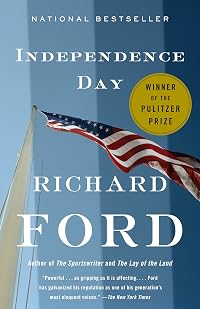
In this visionary sequel to The Sportswriter, Ford deepens his portrait of one of the most indelible characters in recent American fiction. In the aftermath of his divorce and the ruin of his career, Frank Bascombe now sells real estate, as he masters the high-wire act of "normalcy". But during the Fourth of July weekend, Frank is called into sudden, bewildering engagement with life.Tags
Recommendations







Member Reviews
A marvellous book - offering a particularly intriguing insight into the details of an American life for those who only see it on the news and in the movies. Through his protagonist Frank Bascombe, Ford digs deep into the psyche of a very individual middle town American, reaching resolution after some messy and difficult years, in an unexpected and challenging way. In the interim he takes us through estate agency and the nuances of location; root beer; bed and breakfasts; halls of fame and hotdog sales, via murder, serious injury, love and lust, parenthood and adolescence. As with life, nothing and everything happens at the same time...
Beginning with Lay of the Land, I'm reading the trilogy backwards. (Don't ask why.) I can't wait to see how it all started. Yes, as per other reviewers, Ford is excruciatingly, obsessively self-reflexive and I love it. I luxuriate in all the particulars; in his harrowingly accurate insights into middle age.The man can take four pages to decide to ring a doorbell. He writes the way we'd think if we allowed ourselves the time. Independence Day is so chock full of mundane wonders, I couldn't care less if nothing much transpires. When so many are "showing, not telling," Ford -- perhaps as well as anyone since Bellow -- is telling you everything you could possibly never want to know. Highly recommended, but only if you can relax with it, show more slurp up all the details and go back at it with a bit of bread to wipe up the last drops. show less
Independence Day is the second of Richard Ford’s Frank Bascombe novels, set several years after The Sportswriter. Frank is now working in real estate and has come to terms with his status as a divorced man, although he finds it difficult to accept his wife Ann’s remarriage, and worries about how to develop and sustain relationships with his children. As the Independence Day holiday approaches, Frank is trying very hard to close a real estate deal with difficult (but amusing) clients so he can get away for a long weekend with his teenage son Paul, who has been showing worrying signs of behavioral and emotional issues. The road trip includes visits to the basketball and baseball halls of fame, and Frank hopes their time together will show more be an opportunity to work through some of Paul’s issues. And it is, but not in the way he expects.
Ford’s writing is quiet, contemplative and absolutely wonderful. The plot unfolds over just a few days, but the narrative is also filled with back story and digression that delivers rich characterizations and emotional depth. Ford gradually teases out Frank’s complex character, largely through internal monologue. There were times -- particularly in his relationships with women -- that I wanted to smack Frank. At other times, Frank showed himself to be both astute and caring, and I wanted to give him a big hug. And I think that’s exactly what Ford intended. It’s easy to see why this book won the Pulitzer Prize. show less
Ford’s writing is quiet, contemplative and absolutely wonderful. The plot unfolds over just a few days, but the narrative is also filled with back story and digression that delivers rich characterizations and emotional depth. Ford gradually teases out Frank’s complex character, largely through internal monologue. There were times -- particularly in his relationships with women -- that I wanted to smack Frank. At other times, Frank showed himself to be both astute and caring, and I wanted to give him a big hug. And I think that’s exactly what Ford intended. It’s easy to see why this book won the Pulitzer Prize. show less
[Independence Day] is the second of four Frank Bascombe novels written by Richard Ford. This one garnered the Pulitzer Prize for 1996.
The story takes place over the Fourth of July weekend, with flashbacks stretching that three-day time frame. In the seven-year interval since [The Sportswriter], when their son Ralph died of Reye's and Frank and his wife Ann divorced, Ann has remarried. With the two surviving Bascombe children, she's moved from Haddam, New Jersey to Deep River, Connecticut where her new husband, Charley O'Dell, is a successsful architect. Frank's gone into residential real estate sales. When his wife put her house on the market, Frank bought it and at the same time sold his to the Haddam Theological Seminary. In addition show more to his residence, he owns two rental houses, side-by-side, in a predominantly black neighborhood of Haddam, and an interest in a roadside root beer stand. He's got a girl-friend, Sally, who lives at the Jersey shore, but he seems ambivalent about her.
Frank begins his narrative:
Frank's relationship with his 15-year-old son, Paul, drives the plot. Paul's mother is concerned by his antipathy toward Charley, his menu of tics, and his behavior. Paul was caught shoplifting.
In response, Ann set up several sessions for Paul with a psychiatrist in New Haven. She sent him to a "an expensive health camp" where therapists and camp counselors observed him closely but discretely and wrote reports about him. Among their other observations, Frank writes, is that Paul is
Frank chews this and other observations and opinions passed along by Ann. He mulls thoughts and opinions culled from daily telephone conversations with Paul.
The "Existence Period," by the bye, is Bascombe's term for, as he says, letting "matters go as they go." Throughout his narrative, Bascombe exposes his caution, his indecision, his reluctance to commit, to engage, yet also his need to be in control. He is, for now, he thinks, going through the motions, remaining aloof and disconnected. He's "existing."
To deal with Paul's teen-year crisis, Frank uses the holiday weekend to take a father-son road trip, from Connecticut to Springfield, MA to visit the Basketball Hall of Fame, then to Cooperstown, NY to see the Baseball Hall of Fame. The trip starts off well enough, but starts to unravel, then runs into catastrophe in Cooperstown.
When the novel was published two decades ago, Michiko Kakutani, then the New York Times's regular reviewer commented: "Although Frank's existential gloom and talent for self-pity can sometimes make him an irritating (not to mention long-winded) narrator, Mr. Ford expertly opens out his story to create a portrait of middle age and middle-class life that's every bit as resonant and evocative of America in the 1980's as John Updike's last Harry Angstrom novel, [Rabbit at Rest]."
Did I like [Independence Day]? Of course. Why go on at length if it stinks? show less
The story takes place over the Fourth of July weekend, with flashbacks stretching that three-day time frame. In the seven-year interval since [The Sportswriter], when their son Ralph died of Reye's and Frank and his wife Ann divorced, Ann has remarried. With the two surviving Bascombe children, she's moved from Haddam, New Jersey to Deep River, Connecticut where her new husband, Charley O'Dell, is a successsful architect. Frank's gone into residential real estate sales. When his wife put her house on the market, Frank bought it and at the same time sold his to the Haddam Theological Seminary. In addition show more to his residence, he owns two rental houses, side-by-side, in a predominantly black neighborhood of Haddam, and an interest in a roadside root beer stand. He's got a girl-friend, Sally, who lives at the Jersey shore, but he seems ambivalent about her.
Frank begins his narrative:
{T}o anyone reasonable, my life will seem more or less normal-under-the-microscope, full of contingencies and incongruities none of us escapes and which do little harm in an existence that otherwise goes unnoticed.
This morning, however, I'm setting off on a weekend trip with my only son, which promises, unlike most of my seekings, to be starred by weighty life events. There is, in fact, an odd feeling of lasts to this excursion, as if some signal period in life—mine and his—is coming, if not to a full close, then at least toward some tight¬ening, transforming twist in the kaleidoscope, a change I'd be fool¬ish to take lightly and don't. (The impulse to read Self-Reliance is significant here, as is the holiday itself—my favorite secular one for being public and for its implicit goal of leaving us only as it found us: free.) All of this comes—in surfeit—near the anniversary of my divorce, a time when I routinely feel broody and insubstantial, and spend days puzzling over that summer seven years ago, when life swerved badly and I, somehow at a loss, failed to right its course.
Frank's relationship with his 15-year-old son, Paul, drives the plot. Paul's mother is concerned by his antipathy toward Charley, his menu of tics, and his behavior. Paul was caught shoplifting.
Two and a half months ago, just after tax time and six weeks before his school year ended in Deep River, he was arrested for shoplifting three boxes of 4X condoms ("Magnums") from a display-dispenser in the Finast down in Essex. His acts were surveilled by an "eye in the sky" camera hidden above the male hygiene products. And when a tiny though uniformed Vietnamese security person (a female) approached him just beyond the checkout, where as a diversionary tactic he'd bought a bottle of Grecian Formula, he bolted but was wrestled to the ground, whereupon he screamed that the woman was "a goddamned spick asshole," kicked her in the thigh, hit her in the mouth (conceivably by accident) and pulled out a fair amount of hair before she could apply a police stranglehold and with the help of a pharmacist and another customer get the cuffs on him. (His mother had him out in an hour.)
In response, Ann set up several sessions for Paul with a psychiatrist in New Haven. She sent him to a "an expensive health camp" where therapists and camp counselors observed him closely but discretely and wrote reports about him. Among their other observations, Frank writes, is that Paul is
intellectually beyond his years (language and reasoning skills off the Stanford charts) but was emotionally underdeveloped (closer to age twelve), which in their view posed "a problem." So that even though he acts and talks like a shrewd sophomore in the honors program at Beloit, full of sly jokes and double entendres (he has also recently shot up to 5' 8", with a new layer of quaky pudge all over), his feelings still get hurt in the manner of a child who knows much less about the world than a Girl Scout.
Frank chews this and other observations and opinions passed along by Ann. He mulls thoughts and opinions culled from daily telephone conversations with Paul.
In a way his "problem" is simple: he has become compelled to figure out life and how to live it far too early, long before he's seen a sufficient number of unfixable crises cruise past him like damaged boats and realized that fixing one in six is a damn good average and the rest you have to let go—a useful coping skill of the Existence Period.
The "Existence Period," by the bye, is Bascombe's term for, as he says, letting "matters go as they go." Throughout his narrative, Bascombe exposes his caution, his indecision, his reluctance to commit, to engage, yet also his need to be in control. He is, for now, he thinks, going through the motions, remaining aloof and disconnected. He's "existing."
To deal with Paul's teen-year crisis, Frank uses the holiday weekend to take a father-son road trip, from Connecticut to Springfield, MA to visit the Basketball Hall of Fame, then to Cooperstown, NY to see the Baseball Hall of Fame. The trip starts off well enough, but starts to unravel, then runs into catastrophe in Cooperstown.
When the novel was published two decades ago, Michiko Kakutani, then the New York Times's regular reviewer commented: "Although Frank's existential gloom and talent for self-pity can sometimes make him an irritating (not to mention long-winded) narrator, Mr. Ford expertly opens out his story to create a portrait of middle age and middle-class life that's every bit as resonant and evocative of America in the 1980's as John Updike's last Harry Angstrom novel, [Rabbit at Rest]."
Did I like [Independence Day]? Of course. Why go on at length if it stinks? show less
Frank Bascombe has entered his Existence Period. It’s that time in his life when he is unconnected to those around him, cut off from his ex-wife and two children who have decamped to Deep River, uncommitted to the current woman he is seeing, and fundamentally distant from himself. He tools around Haddam, New Jersey, in his large automobile, encased in a kind of protective shell, observing, noting, scoping out the particulars of properties he may be in line to shift in his new career as a realtor, idling at the curb and in his own life. But the Existence Period is unstable, bound to collapse at the first sign of real emotion, whether that be despair or hope in the face of tragedy. And tragedy is definitely lurking. Everywhere.
A show more momentous Fourth of July weekend descends into a nightmarish world of crazed house purchasers, senseless murder, self harm and mutilation, and the constant threat of violence meted out by others or oneself (if one’s impulses are given free rein), which is met by vigilance in the form of patrolling police, private security, metal bars on domestic windows, handguns, or mace. Or it is allowed to overwhelm one, washing through one’s life like a purging torrent. And there is little doubt that Frank, loquaciously professing platitudes and realtor buzz to stoke up the confidence of himself and his clients, is not up to the challenges that he is about to face. Little wonder that it seems highly likely that his Existence Period is about to come crashing to a close.
Once again Richard Ford’s writing is a marvel of density and light. He effortlessly draws the reader into claustrophobic inducing proximity to Frank’s mutable conscience and visceral encounter with his environment. Much of what we encounter here is remembered experience—a lot of ground has been covered between the end of The Sportswriter and the time of Independence Day. But how much of that reported experience is dependable? Frank is such a cocktail of conflicted emotions and aspirations overlaid with jaw-dropping rationalizations. A reader can’t help but begin to feel sorry for him (even if he isn’t especially likeable). You begin rooting for him to break the surface of his supposedly placid Existence Period even if doing so may destroy him.
And break through he does, though not in any way he would have planned or wished. And change does look set to come to Deep River and to Haddam. Crazed homebuyers transform into peaceable renters. The literally barking mad are rendered merely speechless. And Frank looks hopefully toward his next period, which may, he tells himself, be his Permanent Period.
Riveting reading. Highly recommended. show less
A show more momentous Fourth of July weekend descends into a nightmarish world of crazed house purchasers, senseless murder, self harm and mutilation, and the constant threat of violence meted out by others or oneself (if one’s impulses are given free rein), which is met by vigilance in the form of patrolling police, private security, metal bars on domestic windows, handguns, or mace. Or it is allowed to overwhelm one, washing through one’s life like a purging torrent. And there is little doubt that Frank, loquaciously professing platitudes and realtor buzz to stoke up the confidence of himself and his clients, is not up to the challenges that he is about to face. Little wonder that it seems highly likely that his Existence Period is about to come crashing to a close.
Once again Richard Ford’s writing is a marvel of density and light. He effortlessly draws the reader into claustrophobic inducing proximity to Frank’s mutable conscience and visceral encounter with his environment. Much of what we encounter here is remembered experience—a lot of ground has been covered between the end of The Sportswriter and the time of Independence Day. But how much of that reported experience is dependable? Frank is such a cocktail of conflicted emotions and aspirations overlaid with jaw-dropping rationalizations. A reader can’t help but begin to feel sorry for him (even if he isn’t especially likeable). You begin rooting for him to break the surface of his supposedly placid Existence Period even if doing so may destroy him.
And break through he does, though not in any way he would have planned or wished. And change does look set to come to Deep River and to Haddam. Crazed homebuyers transform into peaceable renters. The literally barking mad are rendered merely speechless. And Frank looks hopefully toward his next period, which may, he tells himself, be his Permanent Period.
Riveting reading. Highly recommended. show less
Frank Bascombe is a palooka writer out of Haddam, New Jersey who takes his son on a trip to the baseball hall of fame for the Fourth Of July. Although hyper observant he is wrong about his situation about as often as Jake Gittes from Chinatown is. He's also a first rate loser, but none of these issues really comes up in the guileless English prose that sets out this tale. He may not be special. He may not even be likable (I don't know if I'd want him as a friend), but he is a celebration of the average and the everyday. In that sense he stands for something.
This novel, as opposed to its prequel, The Sportswriter, is about the Existence Period for Mr. Bascombe. He has moved on from sportswriting to realty with a little landlordship and show more proprietorship. I'm glad to see he's moved forward in some oblique fashion and he's willing to refer to his ex-wife by her proper name now. Her name is Ann, by the way. She's remarried now and Frank predictably doesn't like her new spouse. He also doesn't like his son much, Paul, who is tackling the "unbearable bastard" phase of his teen years.
Frank Bascombe appropriately surrounds himself with unlikable people, though they're unlikable in different ways. There's the hotheads McLeods, pussyfooting Joe Markham, and shotgun toting fool Karl Bemish. Ann's new husband, Charley O'Dell, is likable and actually appropriately disliked by Frank. Don't think Frank doesn't have a squeeze of his own, either. Sally Caldwell is his girlfriend and he, of course, starts to wonder if he wants her or wants his wife. He leans toward her but he's too indecisive to move forward. Hence Existence Period. I wouldn't trade places with Frank for a million bucks.
But the novel is well written. Frank's voice is so real you can actually hear him talk as you read, or at least I can. Having a character like that means you as a writer are definitely doing something right. Frank Bascombe may be a loser, this book may be arguably boring, but Richard Ford writes with incredible empathy and not quitting on this man deserves an award in itself. show less
This novel, as opposed to its prequel, The Sportswriter, is about the Existence Period for Mr. Bascombe. He has moved on from sportswriting to realty with a little landlordship and show more proprietorship. I'm glad to see he's moved forward in some oblique fashion and he's willing to refer to his ex-wife by her proper name now. Her name is Ann, by the way. She's remarried now and Frank predictably doesn't like her new spouse. He also doesn't like his son much, Paul, who is tackling the "unbearable bastard" phase of his teen years.
Frank Bascombe appropriately surrounds himself with unlikable people, though they're unlikable in different ways. There's the hotheads McLeods, pussyfooting Joe Markham, and shotgun toting fool Karl Bemish. Ann's new husband, Charley O'Dell, is likable and actually appropriately disliked by Frank. Don't think Frank doesn't have a squeeze of his own, either. Sally Caldwell is his girlfriend and he, of course, starts to wonder if he wants her or wants his wife. He leans toward her but he's too indecisive to move forward. Hence Existence Period. I wouldn't trade places with Frank for a million bucks.
But the novel is well written. Frank's voice is so real you can actually hear him talk as you read, or at least I can. Having a character like that means you as a writer are definitely doing something right. Frank Bascombe may be a loser, this book may be arguably boring, but Richard Ford writes with incredible empathy and not quitting on this man deserves an award in itself. show less
"Independence Day" is the second book of Richard Ford’s trilogy which won him the coveted Pulitzer Prize and sent many surprised readers out to purchase the by-passed book 1- "The Sportswriter".
As "The Sportswriter" ends, protagonist Frank Bascombe is a divorced bachelor, struggling in a job he really doesn’t like, drifting from one short term relationship to another with women he barely knows… yet he wastes no time to declare his love. The reader, along with those women, quickly realizes Frank may not even know the meaning of the word. His primary goal is instant gratification… in other words- sex, sex, sex.
"Independence Day" picks up 6 years later when Frank Bascombe is 44 years old and still a bachelor drifting from show more relationship to relationship. He justifies his behavior by claiming to be in the “existence period” of his life... life after crisis- just being- going nowhere because his past is holding him back. He is still whiny, small-minded, immature, hostile, resentful, sarcastic, and abrasive… pretty clearly a jerk.
Frank’s opinion about marriage; “Marriage means a relationship you have with the one person in the world you can’t get rid of except by dying,”
His reaction when calling Cathy- an old girlfriend he hasn’t spoken with in 4 years- and upon receiving a recorded greeting, “This is Cathy and Steve’s” residence... Frank leaves a brief message ending with, “By the way, you can tell Steve for me that he can kiss my ass, and I’d be happy to beat the shit out of him any day he can find the time. Bye.” I think the publisher got it all wrong when referring to Frank in the back page blurb as “a decent man”.
Bascombe has neither learned from his mistakes nor shown any improvement since life in "The Sportswriter". Richard Ford has, however, shown tremendous improvement in his writing skills. His descriptions of small town rural America are wonderful and he follows John Updike’s lead in pointing out the social and political issues of the time, bringing a sense of reality to the story. It is amusing that he uses quirky contemporary slang words like “faflooey” (meaning up-in-smoke... like most of his relationships), “shittaree” (like eatery- but a poor establishment), and “jeez Louise”.
On the negative side there are several issues. The plot moves along slowly and Frank lives a pretty dull life. The dialogue is just awful: pretentious, vague, cryptic, and so obviously scripted. And Ford’s liberal preachy commentary (sometimes presented as Frank’s thoughts, other times verbal) comes across as philosophical babble and intellectual preaching. Some news for you Richard Ford. Just because Frank is a Democrat and rents apartments to black people does not make him a decent guy! If Frank Bascombe was a good guy, Richard Ford certainly didn’t convince this reader. He barely persuaded me to finish the trilogy... but then again, why not give it a try. The final book is "The Lay of the Land". show less
As "The Sportswriter" ends, protagonist Frank Bascombe is a divorced bachelor, struggling in a job he really doesn’t like, drifting from one short term relationship to another with women he barely knows… yet he wastes no time to declare his love. The reader, along with those women, quickly realizes Frank may not even know the meaning of the word. His primary goal is instant gratification… in other words- sex, sex, sex.
"Independence Day" picks up 6 years later when Frank Bascombe is 44 years old and still a bachelor drifting from show more relationship to relationship. He justifies his behavior by claiming to be in the “existence period” of his life... life after crisis- just being- going nowhere because his past is holding him back. He is still whiny, small-minded, immature, hostile, resentful, sarcastic, and abrasive… pretty clearly a jerk.
Frank’s opinion about marriage; “Marriage means a relationship you have with the one person in the world you can’t get rid of except by dying,”
His reaction when calling Cathy- an old girlfriend he hasn’t spoken with in 4 years- and upon receiving a recorded greeting, “This is Cathy and Steve’s” residence... Frank leaves a brief message ending with, “By the way, you can tell Steve for me that he can kiss my ass, and I’d be happy to beat the shit out of him any day he can find the time. Bye.” I think the publisher got it all wrong when referring to Frank in the back page blurb as “a decent man”.
Bascombe has neither learned from his mistakes nor shown any improvement since life in "The Sportswriter". Richard Ford has, however, shown tremendous improvement in his writing skills. His descriptions of small town rural America are wonderful and he follows John Updike’s lead in pointing out the social and political issues of the time, bringing a sense of reality to the story. It is amusing that he uses quirky contemporary slang words like “faflooey” (meaning up-in-smoke... like most of his relationships), “shittaree” (like eatery- but a poor establishment), and “jeez Louise”.
On the negative side there are several issues. The plot moves along slowly and Frank lives a pretty dull life. The dialogue is just awful: pretentious, vague, cryptic, and so obviously scripted. And Ford’s liberal preachy commentary (sometimes presented as Frank’s thoughts, other times verbal) comes across as philosophical babble and intellectual preaching. Some news for you Richard Ford. Just because Frank is a Democrat and rents apartments to black people does not make him a decent guy! If Frank Bascombe was a good guy, Richard Ford certainly didn’t convince this reader. He barely persuaded me to finish the trilogy... but then again, why not give it a try. The final book is "The Lay of the Land". show less
Members
- Recently Added By
Published Reviews
ThingScore 50
In fact, if it were possible to write a Great American Novel of this time in our lives, this is what it would look like. Ford achieves astonishing effects on almost every page: atmospheric moments that recall James Agee, a sense of community as strong as those of the great Victorians and an almost Thurberesque grasp of the inanities and silent cruelties between people who are close. Even as a show more travel writer, evoking journeys through summertime Connecticut and New York, Ford makes his work glow. show less
added by Richardrobert
Bascombe is part angry white male, and part new sensitive guy, but mostly just a smug fool, who lingers over every detail of his life with Harold Brodkey-style obsession. Humorless and full of sham insight ("We're all free agents"), though fans of the first installment will not be disappointed.
added by Richardrobert
Lists

The Guardian's 1000 Novels Everyone Must Read
1,005 works; 547 members

1001 Books You Must Read Before You Die
1,448 works; 1,132 members

Pulitzer Prize Winners for Fiction
102 works; 54 members

Novels from The Guardian's Great American Novelist Tournament
148 works; 24 members

Unread books
1,063 works; 87 members

Pen/Faulkner Winners and Finalists
178 works; 9 members

BBC Radio 4 Bookclub
340 works; 13 members

Books Read in 2023
5,547 works; 145 members

Five star books
1,755 works; 108 members

Llibres que he llegit el 2020
50 works; 1 member

Books Set in New Jersey
22 works; 4 members

Books Read in 2020
4,379 works; 123 members
Canon de la narrativa universal del s. XX (cicutadry)
499 works; 3 members
Page Turners
185 works; 11 members

Mustich's 1000 Books to Read Before You Die: A Life Changing List
1,001 works; 19 members
Literary Travelogue of the United States Challenge
133 works; 6 members

Library List - Pulitzer
18 works; 1 member
Author Information

64+ Works 17,860 Members
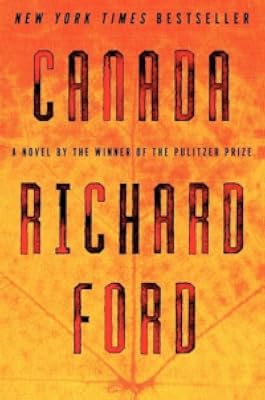
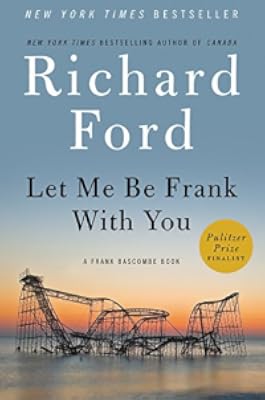
He was born in Jackson, Mississippi, in 1944 & grew up there & in Little Rock, Arkansas. He graduated from Michigan State University & received an M. F. A. in 1970 from the University of California at Irvine. He has received a Guggenheim Fellowship and grants from the National Endowment for the Arts & American Academy of Arts & Letters Award for show more Literature. He was also given the 1994 Rea Award. In 2001 he was awarded the PEN/Malamud prize. He made The New York Times Best Seller List for his title's Canada and Let Me Be Frank with You. He was also a finalist for the Pulitzer Prize for Fiction with his title, Let Me Be Frank With You. (Publisher Provided) show less
Some Editions
Awards and Honors
Awards
Distinctions
Notable Lists
Series

Belongs to Publisher Series
Keltainen kirjasto (294)
Work Relationships
Is contained in
Has as a student's study guide
Common Knowledge
- Canonical title*
- Itsenäisyyspäivä
- Original title
- Independence Day
- Original publication date
- 1995
- Important places
- Haddam, New Jersey, USA; New Jersey, USA; Connecticut, USA; Deep River, Connecticut, USA; Springfield, Massachusetts, USA; Massachusetts, USA (show all 7); Ridgefield, Connecticut, USA
- Dedication
- Kristana
- First words
- In Haddam, summer floats over tree-softened streets like a sweet lotion balm from a careless, langorous god, and the world falls in tune with its own mysterious anthems.
- Quotations
- It's not true that you can get used to anything, but you can get used to much more than you think and even learn to like it.
- Last words
- (Click to show. Warning: May contain spoilers.)I feel the push, pull, the weave and sway of others.
- Original language*
- englanti
*Some information comes from Common Knowledge in other languages. Click "Edit" for more information.
Classifications
Statistics
- Members
- 3,314
- Popularity
- 5,120
- Reviews
- 49
- Rating
- (3.85)
- Languages
- 14 — Danish, Dutch, English, Finnish, French, German, Greek, Italian, Norwegian (Bokmål), Norwegian, Portuguese, Spanish, Swedish, Turkish
- Media
- Paper, Audiobook, Ebook
- ISBNs
- 63
- UPCs
- 1
- ASINs
- 23