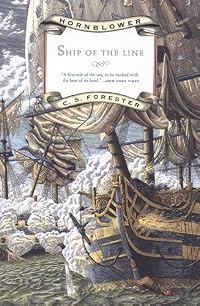
A Ship of the Line
by C. S. Forester
Horatio Hornblower (7), Horatio Hornblower: Chronological Order (7)
On This Page
Description
May, 1810 and thirty-nine-year-old Captain Horatio Hornblower has been handed his first ship of the line. Though the seventy-four-gun HMS Sutherland is 'the ugliest and least desirable two-decker in the Navy' and a crew shortage means he must recruit two hundred and fifty landlubbers, Hornblower knows that by the time Sutherland and her squadron reach the blockaded Catalonian coast every seaman will do his duty. But with daring raids against the French army and navy to be made, it will take show more all Hornblower's seamanship and stewardship to steer a steady course to victory and home. show lessTags
Recommendations












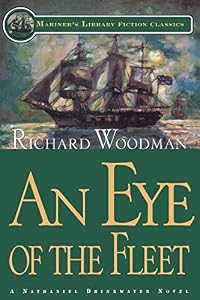
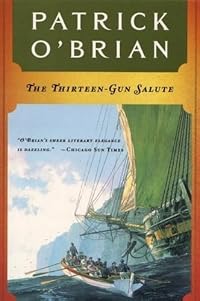
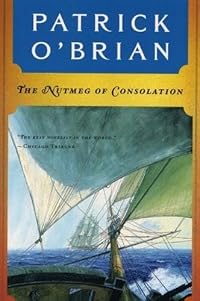
Member Reviews
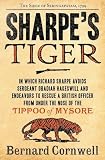
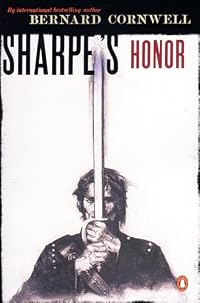
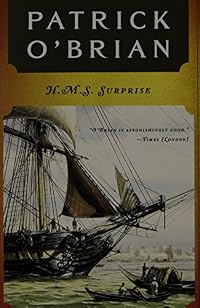
Hornblower was the inspiration for Star Trek's Captain James Kirk, as well as Cornwell's Sharpe. Hornblower is more cerebral and socially awkward than Kirk (or O'Brien's Aubrey), more educated and refined than Sharpe. In his own right, Hornblower is certainly an engaging and complex character and the series is an interesting study in leadership, and a fascinating portrait of life at sea in the Age of Sail during the Napoleonic wars.
I think the best books in the series run from Hornblower and the Hotspur to Flying Colours when he captained ships of his own. Hornblower has his faults, his moments of self doubt, and his dealings with women... well. But especially in the course of reading several books he begins to feel real in a way few show more fictional characters do. I'd say he's easily as indelible and remarkable a literary creation as Sherlock Holmes--and just as brilliant in his field as Holmes was as a detective. This isn't my favorite in the series, but it is considered one of the best by many, the middle of an arch between The Happy Return and Flying Colours. Few books, in and out of the series, gift us with such rousing adventures at sea. show less
I think the best books in the series run from Hornblower and the Hotspur to Flying Colours when he captained ships of his own. Hornblower has his faults, his moments of self doubt, and his dealings with women... well. But especially in the course of reading several books he begins to feel real in a way few show more fictional characters do. I'd say he's easily as indelible and remarkable a literary creation as Sherlock Holmes--and just as brilliant in his field as Holmes was as a detective. This isn't my favorite in the series, but it is considered one of the best by many, the middle of an arch between The Happy Return and Flying Colours. Few books, in and out of the series, gift us with such rousing adventures at sea. show less
This reads like the sophomore effort it is: while some of Hornblower's trademark brilliance makes an appearance, most of the book is a slog through the horrors and stupidities of war. Forester is clearly trying not to duplicate his first book but is just as clearly unsure how to tell a different sort of story and still entertain.
Because this is only rarely entertaining. Hornblower is awake to the psychological toll of war, but reading as he destroys the livelihoods of French civilians or accomplishes the Napoleonic war equivalent of shooting fish in a barrel is painful at best. Add in the constant hum of Hornblower's romantic angst, his admiral's incompetence, and the last ten pages of death, death, and more death—capped by a morose show more cliffhanger ending—and it's no wonder this is my least favorite of the series so far. show less
Because this is only rarely entertaining. Hornblower is awake to the psychological toll of war, but reading as he destroys the livelihoods of French civilians or accomplishes the Napoleonic war equivalent of shooting fish in a barrel is painful at best. Add in the constant hum of Hornblower's romantic angst, his admiral's incompetence, and the last ten pages of death, death, and more death—capped by a morose show more cliffhanger ending—and it's no wonder this is my least favorite of the series so far. show less
My journey through the life of Horatio Hornblower continues. Honestly, I think I find Horatio a bit less interesting to read about as an accomplished captain than when he's younger. I don't know if it's due to something intrinsic to the more unsure (and less insane) character of the earlier books or just because of the fact that the earlier books were written later on and Forester sharpened his skills as he went. Certainly it does help that young Hornblower didn't spend all his time mooning over Lady Barbara, though. This book feels less like a novel and, like Hornblower and the Atropos before it, more like a series on incidents that just happen to occur in order on the same ship. It's a little harder to get into as a result, and it show more might be my least favorite novel in the series yet, but there's still some to enjoy, particularly Hornblower's sneaky impressment of the crews of the East India Company and his ability to be always brilliant, such as when he takes out three forts single-handedly.
added March 2019:
This time, reading it second in publication order, I enjoyed it much more. It's a rousing return for a character one wanted to see come back, like, say, the opening of Superman II. Hornblower is on the top of his form in this book, sailing from triumph to triumph to triumph. Last time that kind of irritated me, because it seemed like he faced no real challenges, but this time I enjoyed it, partially because I hadn't read as much Hornblower recently, and partially because I knew what was coming. Ship of the Line follows one of the classic trilogy structures, the one where the second installment ends in devastating defeat for the hero. Ship of the Line is filled with successes, then, to highlight the devastation of the failure at the end, and I think foreknowledge of that-- knowing that Hornblower is going to face a reckoning-- makes reading a novel about success after success after success a lot more enjoyable. (The bit about impressing the East India sailors I had totally forgotten about, and it was once again my favorite part. Impressment is such a bizarre practice, and one of the highlights of Ship of the Line is how much it delves into it.)
I do still struggle with Hornblower's relationship with Lady Barbara. One wants Hornblower to be pure and heroic, but he's not, and I guess that's good from the standpoint of complexity. Perhaps I'm too influenced by Ioan Gruffudd's performance on screen, but's hard for me to imagine him being unfaithful. In this novel, I did kind of reach an understanding of it, though. In Russell T Davies's The Writer's Tale, he talks about how a character's strengths and flaws should really be the same thing. I saw that here. Hornblower's sense of duty makes him into a superb commander and fighting machine, but it also makes him into a man who feels obligated to stay in a loveless marriage, and also refuses to act for his own pleasure outside that marriage. But as I read deeper into the series this interpretation of Hornblower's character didn't quite hold up... show less
added March 2019:
This time, reading it second in publication order, I enjoyed it much more. It's a rousing return for a character one wanted to see come back, like, say, the opening of Superman II. Hornblower is on the top of his form in this book, sailing from triumph to triumph to triumph. Last time that kind of irritated me, because it seemed like he faced no real challenges, but this time I enjoyed it, partially because I hadn't read as much Hornblower recently, and partially because I knew what was coming. Ship of the Line follows one of the classic trilogy structures, the one where the second installment ends in devastating defeat for the hero. Ship of the Line is filled with successes, then, to highlight the devastation of the failure at the end, and I think foreknowledge of that-- knowing that Hornblower is going to face a reckoning-- makes reading a novel about success after success after success a lot more enjoyable. (The bit about impressing the East India sailors I had totally forgotten about, and it was once again my favorite part. Impressment is such a bizarre practice, and one of the highlights of Ship of the Line is how much it delves into it.)
I do still struggle with Hornblower's relationship with Lady Barbara. One wants Hornblower to be pure and heroic, but he's not, and I guess that's good from the standpoint of complexity. Perhaps I'm too influenced by Ioan Gruffudd's performance on screen, but's hard for me to imagine him being unfaithful. In this novel, I did kind of reach an understanding of it, though. In Russell T Davies's The Writer's Tale, he talks about how a character's strengths and flaws should really be the same thing. I saw that here. Hornblower's sense of duty makes him into a superb commander and fighting machine, but it also makes him into a man who feels obligated to stay in a loveless marriage, and also refuses to act for his own pleasure outside that marriage. But as I read deeper into the series this interpretation of Hornblower's character didn't quite hold up... show less
Hornblower has just been given a ship of the line and must serve under the inexperienced command of Lady Barbara's husband, who became an admiral through connections rather than experience.
Hornblower with the remnants of his former crew and whomever else he can drum up is sent to the Mediterranean to harass the French along the coast of Spain. After several intrepid forays, Hornblower, against his better judgment, ends up at the head of an ill-fated landing party in Spain and facing down four French ships all alone.
A rousing sea-faring story full of adventure with little time for Hornblower to obsess about his supposed lack of courage. This story is full of old and new endearing characters and a huge naval battle described in all its show more confusion. The ending is a terrible cliff-hanger. Make sure you have the next one on hand before starting this one. show less
Hornblower with the remnants of his former crew and whomever else he can drum up is sent to the Mediterranean to harass the French along the coast of Spain. After several intrepid forays, Hornblower, against his better judgment, ends up at the head of an ill-fated landing party in Spain and facing down four French ships all alone.
A rousing sea-faring story full of adventure with little time for Hornblower to obsess about his supposed lack of courage. This story is full of old and new endearing characters and a huge naval battle described in all its show more confusion. The ending is a terrible cliff-hanger. Make sure you have the next one on hand before starting this one. show less
Very good as far as Hornblower books go—but that's not saying much. Lots of action; in one three-day period Hornblower launches about a dozen different attacks. The glorification of war, usually one-sided slaughters (e.g., 500 enemy men versus two pigs) is rather disturbing. Hornblower is a superhero (to whom Forester tries to give some humanity with extremely clumsy writing), but still. It is like Grand Theft Auto in a book, made worse by the historical fiction setting, and Forester's pretense of gravity.
> The toast was drunk with a murmur of approval while Hornblower blushed and stammered. The admiration of men whose approval he valued was overwhelming; more especially as now he was beginning to realize that he had won it under show more false pretenses. Only now was the memory returning to him of the sick fear with which he had waited the Natividad's broadsides, the horror of mutilation which had haunted him during the battle. He was one of the contemptible few, not like Leighton and Elliott and Bolton, who had never known fear in their lives. If he had told the whole truth, told of his emotions as well as of the mere maneuvers and incidents of the fight, they would be sorry for him, as for a cripple, and the glory of the Lydia's victory would evaporate. show less
> The toast was drunk with a murmur of approval while Hornblower blushed and stammered. The admiration of men whose approval he valued was overwhelming; more especially as now he was beginning to realize that he had won it under show more false pretenses. Only now was the memory returning to him of the sick fear with which he had waited the Natividad's broadsides, the horror of mutilation which had haunted him during the battle. He was one of the contemptible few, not like Leighton and Elliott and Bolton, who had never known fear in their lives. If he had told the whole truth, told of his emotions as well as of the mere maneuvers and incidents of the fight, they would be sorry for him, as for a cripple, and the glory of the Lydia's victory would evaporate. show less
The second novel written in C.S. Forester's magnificent Horatio Hornblower series (though it's the 8th in chronology -- how in the world did Forester write 11 Hornblower books in non-chronological order? Wow.) This one, like all of the others, is a joyous, adventuresome read. It hasn't so much plot as some, being mainly the recounting of events in the course of one sailing mission, but that doesn't keep it from being a terrific reading experience. Its surprising ending has me scrambling to find the next volume in the series. If you've never read a Hornblower book, grab "Mr. Midshipman Hornblower" and start there. If you like (or even if you don't like) seafaring adventure, you will fall in love with these books. Forester (who also wrote show more "The African Queen," among many other books) writes with great clarity and dry wit. This is one of the best of the series. show less
Somewhat of a step down from Beat to Quarters/The Happy Return, but still a solid offering.
The focus is more on the adventure and excitement of naval life than in the previous novel as Hornblower has many adventures and successes. Also, there is less time given to Hornblower’s internal conflict, which was disappointing for me.
The main knock I’d give this book is that there is a “shooting fish in a barrel scene” that is excessive and could easily have taken up less of the page count.
The highlight of the book is the final battle which is reminiscent of the suspenseful battle from the previous novel and shows that Forester hasn’t lost his teeth.
The focus is more on the adventure and excitement of naval life than in the previous novel as Hornblower has many adventures and successes. Also, there is less time given to Hornblower’s internal conflict, which was disappointing for me.
The main knock I’d give this book is that there is a “shooting fish in a barrel scene” that is excessive and could easily have taken up less of the page count.
The highlight of the book is the final battle which is reminiscent of the suspenseful battle from the previous novel and shows that Forester hasn’t lost his teeth.
Members
- Recently Added By
Lists

Best Historical Fiction
620 works; 261 members

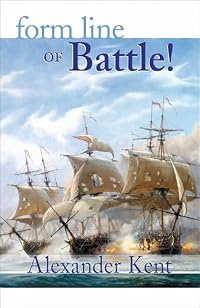
Form line of battle - Best historical naval fiction
15 works; 2 members

Huxley's Reading Log 2020
24 works; 1 member

Unshelved Book Clubs
579 works; 5 members

Armed Services Editions
150 works; 1 member

Art Bourgeau's Favorites [Mystery Lovers Companion, 1986]
124 works; 2 members
Author Information

Born Cecil Louis Troughton Smith on August 27, 1899, in Cairo, Egypt, where his father was a government official, C. S. Forester grew up mainly in England. He was educated at Dulwich College, studying medicine briefly before decidint to become a writer. Forester moved to the United States before the start of World War II, and lived in Berkeley, show more California, until his death in 1966. Although Forester was a journalist, a novelist and a Hollywood scriptwriter, he is probably best known for his historical fiction, particularly the series of novels that feature Horatio Hornblower. The eleven-book series begins with Mr. Midshipmen Hornblower, in which the seventeen-year old Hornblower joins the British navy in 1793, just as the Napoleonic Wars are about to begin. Hornblower's continuing adventures, as well as his advancement to the highest ranks of the navy, are chronicled in further books, including Beat to Quarters, Flying Colours, Commodore Hornblower, Lord Hornblower, The Happy Return, and A Ship of the Line, for which Forester recived the James Tait Black Memorial Prize in 1939. Several of Forester's novels were made into films, most notably Payment Deferred (his first novel published in 1926), Eagle Squadron, The Commandos (the movie title was The Commandos Strike at Dawn), Captain Horatio Hornblower, Sink the Bismarck!, and The African Queen, starring Katharine Hepburn and Humphrey Bogart. Forester's nonfiction includes The Age of Fighting Sail: The Story of the Naval War of 1812, as well as biographies of Lord Nelson, Napoleon, Josephine, and King Louis XIV. He also wrote an autobiography, Long Before Forty. (Bowker Author Biography) show less
Some Editions
Awards and Honors
Awards
Notable Lists
Series


Belongs to Publisher Series
Work Relationships
Is contained in
Captain Hornblower R. N.: Hornblower and the Atropos / The Happy Return / A Ship of the Line by C. S. Forester
Captain Horatio Hornblower (Hornblower and the Atropos; The Happy Return; A Ship of the Line; Flying Colors) by C. S. Forester
A Ship of the Line / Flying Colours / The Commodore / Lord Hornblower / Admiral Hornblower in the West Indies by Cecil Scott Forester
Is abridged in
Has as a student's study guide
Common Knowledge
- Canonical title
- A Ship of the Line
- Original title
- A Ship of the Line
- Alternate titles
- An Spaniens Küsten; Ship of the Line
- Original publication date
- 1938
- People/Characters
- Horatio Hornblower (Captain); William Bush (Lieutenant); Maria Hornblower; Barbara Wellesley (Barbara Leighton); Percy Leighton; Polwheal (show all 8); Bolton; José Gonzales de Villena y Danvila
- Important places
- Mediterranean Sea; Spain; France; Cape Creux, Spain; Cap de Creus; Cape Cerbera, France (show all 9); Port Vendres, France; Cette, France; Rosas, Catalonia, Spain
- Important events
- Age of Sail; Napoleonic Wars
- Related movies
- Captain Horatio Hornblower (1951 | IMDb)
- First words
- Captain Horatio Hornblower was reading a smudgy proof which the printers had just sent round to his lodgings.
- Last words
- (Click to show. Warning: May contain spoilers.)But the sun was hot on his head, and he was very weary.
- Original language
- English
Classifications
Statistics
- Members
- 1,951
- Popularity
- 10,796
- Reviews
- 32
- Rating
- (4.13)
- Languages
- 11 — Czech, Dutch, English, French, German, Norwegian (Bokmål), Norwegian, Polish, Russian, Spanish, Swedish
- Media
- Paper, Audiobook, Ebook
- ISBNs
- 46
- ASINs
- 50