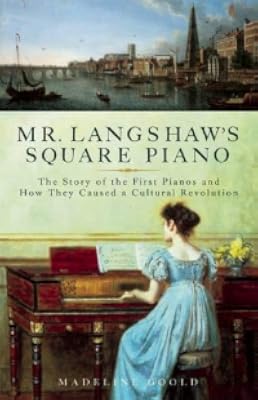
Mr. Langshaw's square piano : the story of the first pianos and how they caused a cultural revolution
by Madeline Goold
On This Page
Description
Both an investigative story and genealogical study that highlights a key period in music history, this chronicle closely examines the roles of John Broadwood--the most successful piano maker in late-Georgian London--and of one of his professional customers, Mr. John Langshaw, an organist and music master.Tags
Recommendations









Member Reviews
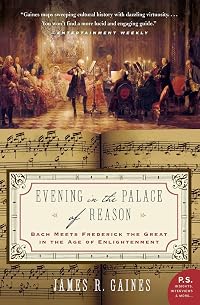
I had just finished reading a book about Bach ("Evening in the Palace of Reason") when I picked this up, and it was an excellent segue into the world of "modern" music, as it deals with the shift from the harpsichord to the piano in the late 18th and early 19th century. The starting point is a square piano, made by Broadwood's in 1807, that the author acquires for only 100 British pounds at an auction, and rather than being a straightforward retracing of the object's history, she chooses to inquire into the lives of its makers and its purchaser and their families and social and musical circles.
That's the level at which this book works best -- as a social/cultural history of the time, one of incredible change throughout society. When Mr. show more Langshaw takes up a post as an organist in Lancaster, it takes 4 1/2 days to get to London by the new stagecoach; not that much later, it would take only 30 hours. The industrial revolution was shaking things up -- and even the piano played a role, by bringing music to the general population so that it was no longer an elite pastime. Mr. Langshaw's square piano, Goold makes clear, was a real architect of change. She explores the world of the canals (along which the piano was transported); the conservative musical fans who preferred the "ancient" sounds of Handel to newfangled Beethoven; the role of the Wesley family (brother and nephews of the founder of Methodism) in the world of music. The book is chock-full of fascinating tidbits and insights, and Goold does a great job of creating a picture of the world as it was then.
But... there are flaws. Few of them are major, but collectively they ended up annoying me disproportionately. Least seriously, there are lots of little repetitions (for instance, I think I read four separate mentions of the shift in design of the legs of the piano). Then there are the points in the narrative where I had to put the book down and go off in search of more information. For instance, I happen to know that the Gordon riots were bloody and nightmarish, I know when they occurred, and I knew that the issue involved Catholic rights. But when Goold mentions the catalyst being the repeal of a specific act -- and fails to mention why people objected to its repeal or what it said -- that was just annoying. It would have taken a single sentence to prevent that. That's just one example. More serious yet is that her descriptions of the technical evolution of the piano are written from the perspective of someone who knows music, tuning, the instrument, very well, and she doesn't have the knack of conveying that knowledge in a way that's easily understood to the lay reader -- which is a gaping omission in this case. I remain puzzled by much of the technical detail, and her attempt at a drawing -- toward the end of the book -- didn't help at all. Finally, there are the flights of fancy: she imagines scenes as if in a work of fiction, scattered throughout what otherwise is a smooth and well-written work of narrative non-fiction. Let's just say that I don't think Goold has a future as a novelist. That was simply not necessary. Those flights of fancy reached their apogee late in the book, when she wonders -- for a couple of pages -- whether her piano might not have been purchased for Langshaw's daughter, Elizabeth. Her evidence? Well, the piano had evidently been played by someone with a powerful left hand, and a drawing of Elizabeth showed her with her hair arranged in a manner that would have been done by someone left-handed. In other words, 2 plus 2 equals 27.
Those flaws didn't spoil my enjoyment of much of the book, but definitely limit the rating I can give it. I suspect it will appeal most to people who can actually play the piano, who will find it easier to follow the technical discussions about the instrument that periodically occur (especially early on) without having to stop and go off and do some research. Still, large parts of the book will be fascinating to anyone with an interest in social history at periods of tremendous social upheaval. Mildly recommended. James Gaines, author of the Bach book I mentioned above, does a far better job with the technicalities of counterpoint, etc., in his book on Bach, if a general reader is looking for a book on musical history more generally rather than the piano specifically. show less
That's the level at which this book works best -- as a social/cultural history of the time, one of incredible change throughout society. When Mr. show more Langshaw takes up a post as an organist in Lancaster, it takes 4 1/2 days to get to London by the new stagecoach; not that much later, it would take only 30 hours. The industrial revolution was shaking things up -- and even the piano played a role, by bringing music to the general population so that it was no longer an elite pastime. Mr. Langshaw's square piano, Goold makes clear, was a real architect of change. She explores the world of the canals (along which the piano was transported); the conservative musical fans who preferred the "ancient" sounds of Handel to newfangled Beethoven; the role of the Wesley family (brother and nephews of the founder of Methodism) in the world of music. The book is chock-full of fascinating tidbits and insights, and Goold does a great job of creating a picture of the world as it was then.
But... there are flaws. Few of them are major, but collectively they ended up annoying me disproportionately. Least seriously, there are lots of little repetitions (for instance, I think I read four separate mentions of the shift in design of the legs of the piano). Then there are the points in the narrative where I had to put the book down and go off in search of more information. For instance, I happen to know that the Gordon riots were bloody and nightmarish, I know when they occurred, and I knew that the issue involved Catholic rights. But when Goold mentions the catalyst being the repeal of a specific act -- and fails to mention why people objected to its repeal or what it said -- that was just annoying. It would have taken a single sentence to prevent that. That's just one example. More serious yet is that her descriptions of the technical evolution of the piano are written from the perspective of someone who knows music, tuning, the instrument, very well, and she doesn't have the knack of conveying that knowledge in a way that's easily understood to the lay reader -- which is a gaping omission in this case. I remain puzzled by much of the technical detail, and her attempt at a drawing -- toward the end of the book -- didn't help at all. Finally, there are the flights of fancy: she imagines scenes as if in a work of fiction, scattered throughout what otherwise is a smooth and well-written work of narrative non-fiction. Let's just say that I don't think Goold has a future as a novelist. That was simply not necessary. Those flights of fancy reached their apogee late in the book, when she wonders -- for a couple of pages -- whether her piano might not have been purchased for Langshaw's daughter, Elizabeth. Her evidence? Well, the piano had evidently been played by someone with a powerful left hand, and a drawing of Elizabeth showed her with her hair arranged in a manner that would have been done by someone left-handed. In other words, 2 plus 2 equals 27.
Those flaws didn't spoil my enjoyment of much of the book, but definitely limit the rating I can give it. I suspect it will appeal most to people who can actually play the piano, who will find it easier to follow the technical discussions about the instrument that periodically occur (especially early on) without having to stop and go off and do some research. Still, large parts of the book will be fascinating to anyone with an interest in social history at periods of tremendous social upheaval. Mildly recommended. James Gaines, author of the Bach book I mentioned above, does a far better job with the technicalities of counterpoint, etc., in his book on Bach, if a general reader is looking for a book on musical history more generally rather than the piano specifically. show less
Ratings
Members
- Recently Added By
Author Information
1 Work 38 Members
Common Knowledge
- Canonical title
- Mr. Langshaw's square piano : the story of the first pianos and how they caused a cultural revolution
- Original title
- Mr. Langshaw's square piano : the story of the first pianos and how they caused a cultural revolution
- Original publication date
- 2008
- People/Characters
- John Langshaw
- Epigraph
- Music, the greatest good that mortals know,
And all of Heaven we have below
Joseph Addison, 'Song for St Cecelia's Day' - Dedication
- To my parents, Frederick and Amy Freeman,
who bought me my first Broadwood piano - First words
- Early one summer morning in 1807 a horse and cart loaded with two oblong wooden boxes stood waiting at the porter's lodge in the gateway from a yard in Bridle Lane, near Golden Square in London.
- Last words
- (Click to show. Warning: May contain spoilers.)Though he can hardly see, old John Langshaw has come to hear his son's composition and judge the merit of the instrument he plays; and he leans forward, listening, as the piano plays on.
- Disambiguation notice
- First published in Great Britain in 2008 by Corvo.
Classifications
- Genres
- Music, Nonfiction, History, General Nonfiction
- DDC/MDS
- 786.2 — Arts & recreation Music Keyboard, mechanical, electrophonic, percussion instruments Pianos [formerly: keyboard string instuments]
- LCC
- ML678.3 .G66 — Music Literature on music Literature on music History and criticism Instruments and instrumental music
- BISAC
Statistics
- Members
- 38
- Popularity
- 763,001
- Reviews
- 1
- Rating
- (3.83)
- Languages
- English
- Media
- Paper
- ISBNs
- 3