On This Page
Description
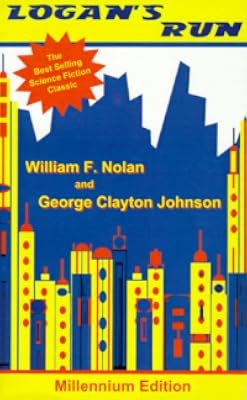
Fantasy. Fiction. Literature. Science Fiction. HTML:The bestselling dystopian novel that inspired the 1970s science-fiction classic starring Michael York, Jenny Agutter, and Richard Jordan.In 2116, it is against the law to live beyond the age of twenty-one years. When the crystal flower in the palm of your hand turns from red to black, you have reached your Lastday and you must report to a Sleepshop for processing. But the human will to survive is strong--stronger than any mere law.
Logan show more 3 is a Sandman, an enforcer who hunts down those Runners who refuse to accept Deep Sleep. The day before Logan's palmflower shifts to black, a Runner accidentally reveals that he was racing toward a goal: Sanctuary. With this information driving him forward, Logan 3 assumes the role of the hunted and becomes a Runner. show less
Tags
Recommendations



















Member Recommendations

Member Reviews
Real Rating: 2.5* of five
I remembered this book fondly. The summer the film came out, I drove my licenseless buds to the Village Multiplex in Pygge, my 1968 Bonneville. (We'd passed the book around our Scooby-group, drinking it in.) There Michael York cheekboned his way into my, um, heart shall we say, and the rest of the film...and the entirety of the book...faded into insignificance.
Netflix loses the film on January 1st. I figured I'd rewatch it, while I give the book another go; after all, they're part of my formative years, so as I enter the last laps let's look back to the track, eh what?
You would think that, by now, I'd know better.
The book is just plain bad. The prose rises to the dizzying heights of serviceability a couple show more times, all the way up the slope of passable; the bulk of the 150pp are spent on the Plains of Puerility. A pair of fortyish numpties wrote about a world in which they'd be dead twenty years. It went about as well as that makes it sound. It's sexist, of course; it was ground-breaking for its day because the hedonism of its society isn't particularly concerned about who you do since there are no children born of sexual congress. Makes the property base of marriage pretty useless, so marriage simply isn't.
But the big draw, the martial arts bits, are tame and tedious 50 years on. (It came out in 1967, the film in 1976.) The action scenes are mildly fun. The story's versions of Logan and Francis are in a whole father/son dynamic that never gets much of anywhere because, well, you did see the page count, right? The ending takes place in Space. I won't say why, but it is the trippiest piece of dumbfuckery I can imagine. These guys were tripping when they wrote the ending, there's no other excuse. End it does, however, so I shook my head and started streaming the film.
Rob was here that day. He hadn't heard of the book or the film. He flipped through the book a bit and quietly reshelved it after about ten minutes. "Ready to see the film?" I asked; "not really" was the honest reply. Luckily Michael York is there from the get-go, cheekbones a-jut and body firmly and revealingly encased in a spiffy dark costume. I heard no further nose-sighs from little spoon...until a scene where Logan/Michael dials up a sex worker and gets, on his first try, a man.
"...?!!?..."
"Hey, even *I* had older mentors," I said. "Wait for the robot butcher scene. That's when we get to see Logan and Jessica naked!"
And that is pretty much it. The naked scene isn't him naked, it's just her, and some artfully obscured extras who earned that paycheck; a bit disappointing, but obscured by the fact that the film takes a turn for the idiotic from there on out. We ended up wondering what the hell was the point of this exercise, how far breaking ground can go in keeping a creative endeavor in active circulation. I think it's time to let this one slide into the background and we should pack it away in shredded copies of the awful book it was inspired by but doesn't much resemble. show less
I remembered this book fondly. The summer the film came out, I drove my licenseless buds to the Village Multiplex in Pygge, my 1968 Bonneville. (We'd passed the book around our Scooby-group, drinking it in.) There Michael York cheekboned his way into my, um, heart shall we say, and the rest of the film...and the entirety of the book...faded into insignificance.
Netflix loses the film on January 1st. I figured I'd rewatch it, while I give the book another go; after all, they're part of my formative years, so as I enter the last laps let's look back to the track, eh what?
You would think that, by now, I'd know better.
The book is just plain bad. The prose rises to the dizzying heights of serviceability a couple show more times, all the way up the slope of passable; the bulk of the 150pp are spent on the Plains of Puerility. A pair of fortyish numpties wrote about a world in which they'd be dead twenty years. It went about as well as that makes it sound. It's sexist, of course; it was ground-breaking for its day because the hedonism of its society isn't particularly concerned about who you do since there are no children born of sexual congress. Makes the property base of marriage pretty useless, so marriage simply isn't.
But the big draw, the martial arts bits, are tame and tedious 50 years on. (It came out in 1967, the film in 1976.) The action scenes are mildly fun. The story's versions of Logan and Francis are in a whole father/son dynamic that never gets much of anywhere because, well, you did see the page count, right? The ending takes place in Space. I won't say why, but it is the trippiest piece of dumbfuckery I can imagine. These guys were tripping when they wrote the ending, there's no other excuse. End it does, however, so I shook my head and started streaming the film.
Rob was here that day. He hadn't heard of the book or the film. He flipped through the book a bit and quietly reshelved it after about ten minutes. "Ready to see the film?" I asked; "not really" was the honest reply. Luckily Michael York is there from the get-go, cheekbones a-jut and body firmly and revealingly encased in a spiffy dark costume. I heard no further nose-sighs from little spoon...until a scene where Logan/Michael dials up a sex worker and gets, on his first try, a man.
"...?!!?..."
"Hey, even *I* had older mentors," I said. "Wait for the robot butcher scene. That's when we get to see Logan and Jessica naked!"
And that is pretty much it. The naked scene isn't him naked, it's just her, and some artfully obscured extras who earned that paycheck; a bit disappointing, but obscured by the fact that the film takes a turn for the idiotic from there on out. We ended up wondering what the hell was the point of this exercise, how far breaking ground can go in keeping a creative endeavor in active circulation. I think it's time to let this one slide into the background and we should pack it away in shredded copies of the awful book it was inspired by but doesn't much resemble. show less
I have a long-running, tongue-in-cheek battle with my wife about the quality of the film version for this story - of course, it's the best sci-fi movie ever produced. Seriously, while the campy effects and stilted writing abound in the film, this is a wonderful and over-looked science fiction classic. Nihilism gone to seed in an apocalypse driven by over-population and under-resourced world. This one deserves a place in the cannon.
5 bones!!!!!
5 bones!!!!!
I read this as kind of a palate cleanser. Honestly, I didn't really connect with this novel very much. Given (at the time of this review) the ICE raids happening all over this city, these "sandmen" chasing and killing people who just happen to be close to 21, but did nothing wrong, added an extra layer to my reading. That said, this is a typical dystopian novel with two-dimensional characters. I saw the movie a few years ago and this allowed me to notice the differences between the two medium's renderings. The ideology of this book is be an individual, be free, don't follow the rules of society if you feel they are wrong. Value the older generation, the kids don't know much. Value experience. Utopias are an illusion. Has a definite show more post-sixties/pre-Reagan-era feel to it. show less
Run! The action starts and never ends in this short but breathless 1967 sci-fi fantasy. Published the same year I was born, it says more about the zeitgeist of America at the time than any prophecy of the future. Youth culture, hedonistic living, rebellion and revolution - it turns the tables instead of the old people in charge it is the youth, instead of the youth rebelling it is the old people. One can find 1960s "hippies" in the "pleasure gypsies", and the giant thinker computer which connected and rang the world is a proto-internet. Like H.G Wells, this is great classic fiction that reveals the fears and visions of another era.
Do I have this right? Having fought and won a war arising from outrage at government restrictions on the number of children people may have, the world's youth impose its solution to population explosion and famine by ending life at twenty-one? Certainly, a creative approach to keeping one's fate from the hands of an older generation. Loved this book before the age of twenty-one; still enjoy well after.
This short novel was the basis for the 1976 film, subsequent television show, and sequel novels: a dystopian action-adventure in the twenty-second century very much along lines laid down by Huxley's Brave New World. The principal addition to the scenario is the idea of dealing with population pressure by using the global technocratic state to impose a maximum lifespan of twenty-one years. The protagonist Logan is a "Sandman": a policeman/executioner assigned to eliminate "Runners" who fail to report for their scheduled euthanasia. Contrary to the jacket copy and many synopses, Logan is not a desperate Runner himself, but is in fact a thoroughly ambivalent character, attracted to a Runner whom he accompanies in order to infiltrate the show more Runner network and reach the rumored Runner destination of Sanctuary and its architect Ballard.
A sense of impending climax is structured into the novel with chapter numbers that count down from ten. There are two plot twists at the end of the book, neither of which was ever translated into the screen adaptations. One concerns the location of Sanctuary, and the other is about the identity of Ballard. The first works fine, but the second I did not find compelling after the contrary setup.
The book is very fast-moving, with plenty of sex and violence -- though not quite so much that it seems like a mere pretext for them -- and seems to have been written with the intention of inspiring screen adaptations. The film and television show actually made from it were toned down by setting it another century further into the future, and raising the age of "Lastday" from twenty-one to thirty. They also added the spectacular euthanasia ceremony of Carousel, to replace the simpler "Sleepshops" of the novel. Another film version is apparently in the works with a projected release date of 2014, and rumor has it that they've brought several points of the scenario (most notably the maximum personal age) back in line with that of the book.
This is not a philosophical work by any stretch of the imagination, and yet it includes interesting material for meditation. The idea of engineered neoteny as a response to socio-economic and political stresses is not so very far-fetched. Certainly, in the 1970s wake of the youth counterculture it must have seemed very credible. It is doubtless one of several such programs available to the Crowned and Conquering Child. show less
A sense of impending climax is structured into the novel with chapter numbers that count down from ten. There are two plot twists at the end of the book, neither of which was ever translated into the screen adaptations. One concerns the location of Sanctuary, and the other is about the identity of Ballard. The first works fine, but the second I did not find compelling after the contrary setup.
The book is very fast-moving, with plenty of sex and violence -- though not quite so much that it seems like a mere pretext for them -- and seems to have been written with the intention of inspiring screen adaptations. The film and television show actually made from it were toned down by setting it another century further into the future, and raising the age of "Lastday" from twenty-one to thirty. They also added the spectacular euthanasia ceremony of Carousel, to replace the simpler "Sleepshops" of the novel. Another film version is apparently in the works with a projected release date of 2014, and rumor has it that they've brought several points of the scenario (most notably the maximum personal age) back in line with that of the book.
This is not a philosophical work by any stretch of the imagination, and yet it includes interesting material for meditation. The idea of engineered neoteny as a response to socio-economic and political stresses is not so very far-fetched. Certainly, in the 1970s wake of the youth counterculture it must have seemed very credible. It is doubtless one of several such programs available to the Crowned and Conquering Child. show less
Though it definitely shows its age, Logan's Run is still a fun read. The last time I read this was 38 years ago, at the tender age of 14 and I can still remember being blown away by all the cool futuristic concepts and thinking I'd be on the cusp of changing from blue to red. And my life would be two-thirds over.
There's the interesting staccato narrative, the countdown chapters, the sometimes stream-of-consciousness writing...there's a lot of stuff that wouldn't be caught dead in a book published forty years later.
There's also plot holes. I mean, you have a computer that implants a crystal in your hand that blinks 21 years later to warn you to go to Sleep. Why couldn't the computer--the Thinker--simply implant a kill-switch as show more well?
Still, for all of that, coming at the story now from a guy who's old enough to be well into his third lifespan by the book's standards, I still enjoyed it, and look forward to the next couple in the series. show less
There's the interesting staccato narrative, the countdown chapters, the sometimes stream-of-consciousness writing...there's a lot of stuff that wouldn't be caught dead in a book published forty years later.
There's also plot holes. I mean, you have a computer that implants a crystal in your hand that blinks 21 years later to warn you to go to Sleep. Why couldn't the computer--the Thinker--simply implant a kill-switch as show more well?
Still, for all of that, coming at the story now from a guy who's old enough to be well into his third lifespan by the book's standards, I still enjoyed it, and look forward to the next couple in the series. show less
Members
- Recently Added By
Published Reviews
ThingScore 100
[...] even though talking about Logan’s Run elicits mostly snickers and spoofs, the source material is actually worth a serious look because it presents one of the more colorful and interesting dystopias in SF literature.
added by r.orrison
Lists

Best Dystopias
280 works; 277 members

Read the book and saw the movie
1,170 works; 195 members

Dystopian and Apocalyptic Literature
350 works; 74 members

Watched the Movie, Probably Won't Read the Book
185 works; 34 members

KayStJ's to-read list
1,616 works; 11 members

Novels that you shouldn't waste your time on
94 works; 52 members

Books Read in 2020
4,379 works; 124 members

Books Read in 2021
5,361 works; 114 members

World without adults
27 works; 2 members

um actually
76 works; 3 members

AbeBooks: 50 essential science fiction books
50 works; 6 members
Author Information

William Francis Nolan was an American author who was best known for writing stories in the science fiction, fantasy, and horror genres. He coauthored (with George Clayton Johnson) the novel Logan's Run (1967). It was his first novel. He co-wrote the screenplay for the 1976 horror film Burnt Offerings which starred Karen Black and Bette Davis. show more Nolan was born in Kansas City, Missouri on March 6, 1928. He attended the Kansas City Art Institute and worked for Hallmark Cards before becoming an author. Among his many awards, he was voted a Living Legend in Dark Fantasy by the International Horror Guild in 2002. During 2006, he was bestowed the honorary title of Author Emeritus by the Science Fiction and Fantasy Writers of America. In 2010, he received the Lifetime Achievement Stoker award from the Horror Writers Association (HWA). William F. Nolan died on 7/15/2021 in Vancouver, WA. He was 93. (Bowker Author Biography) show less

Some Editions
Awards and Honors
Notable Lists
Series

Belongs to Publisher Series
Work Relationships
Is contained in
Is retold in
Has the adaptation
Is an expanded version of
Common Knowledge
- Canonical title
- Logan's Run
- Original title
- Logan's Run
- Alternate titles*
- Quand ton cristal mourra
- Original publication date
- 1967
- People/Characters
- Logan 3; Jessica 6; Francis; Box
- Important places
- Sanctuary
- Related movies
- Logan's Run (1976 | IMDb)
- Dedication
- To all the wild friends we grew up with -- and who were with us when we wrote this book:
**48 listed** - First words
- Her hair was matted, her face streaked and swollen.
- Quotations
- Box lived in a white world. He moved in storms of dusted ice and loneliness. He did not tire; he was never cold; a part of him never slept. His world was porcelain and pale marble, alabaster and bone ivory. He made castles of... (show all) bergs and palaces of glacier cliffs. He cloud-wandered the frozen immensities. And was content.
Runners say *please*; runners say *help*; runners say *mercy*; runners say *don't*.
Doyle had said *Sanctuary*.
[M]ost of his people were under fifteen, but what they lacked in maturity they made up for in fanaticism.
Dying young is a waste and a shame and a perversion. The young don't build. They use. The wonders of Man were achieved by the mature, the wise, who lived in this world before we did. There was an *Old* Lincoln after the young... (show all) one. - Last words
- (Click to show. Warning: May contain spoilers.)The rocket was climbing on a golden flame, bound out and away for Darkside.
And SANCTUARY
*Some information comes from Common Knowledge in other languages. Click "Edit" for more information.
Classifications
Statistics
- Members
- 1,390
- Popularity
- 17,083
- Reviews
- 42
- Rating
- (3.39)
- Languages
- 7 — Dutch, English, French, German, Hungarian, Italian, Spanish
- Media
- Paper, Audiobook, Ebook
- ISBNs
- 24
- ASINs
- 24