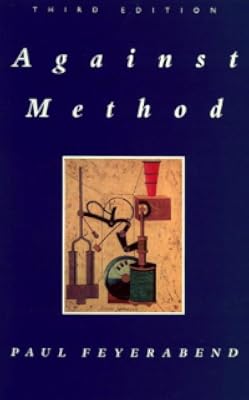
Against Method
by Paul Feyerabend
On This Page
Description
Paul Feyerabend's globally acclaimed work, which sparked and continues to stimulate fierce debate, examines the deficiencies of many widespread ideas about scientific progress and the nature of knowledge. Feyerabend argues that scientific advances can only be understood in a historical context. He looks at the way the philosophy of science has consistently overemphasized practice over method, and considers the possibility that anarchism could replace rationalism in the theory of knowledge. show more This updated edition of the classic text includes a new introduction by Ian Hacking, one of the most important contemporary philosophers of science. Hacking reflects on both Feyerabend's life and personality as well as the broader significance of the book for current discussions. show lessTags
Recommendations








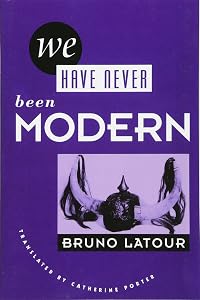

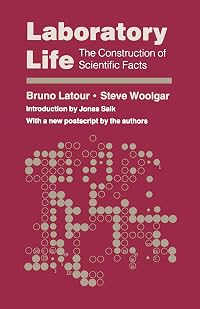




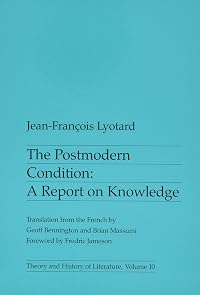
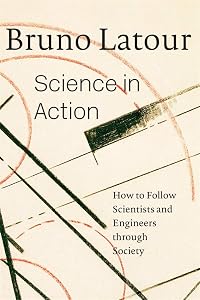













Member Recommendations

yapete If you want to put some sanity back into understanding how science works.
20
Member Reviews
I like Paul Feyeraband. I like his ideas. I want to agree with him. Wait, I do agree with him, but not because he presented a solid argument for his case. I agree with him because I like his ideas, and I want to believe them.
So I give the ideas in this book 5 stars. 5 selfish, unabashed stars.
The book itself, however, I give 3. Damn. What could have been a great, clear, exposition of his ideas, with wonderfully clear and lively examples to back them up, is not present here. I thought this book would give a lot of the history of philosophy, and easy to understand explanations of other philosophy of science ideas. I could have imagined him describing a time in science, and talking about the main characters and what their ideas were and show more what was at stake, etc. and for him to show that these great people during whatever period in time discovered something incredible in science, yet went totally against any 'scientific method'. BUT that doesn't happen here. Instead Feyeraband talks a lot about Galileo. A LOT. But Galileo is neat, and it helps to support some of Paul's ideas. But... there is way too much Galileo. I would have LOVED to hear more examples of when scientists throughout time discovered 'facts' and 'truths' through completely unscientific means.
Even his treatment of Galileo isn't that great. He skims over some details that I would have found really interesting, and which I require in order to follow his arguments. UGH, and so many asides. I stopped reading those eventually.
I love you Paul, but damnit I wish you had written a better book. show less
So I give the ideas in this book 5 stars. 5 selfish, unabashed stars.
The book itself, however, I give 3. Damn. What could have been a great, clear, exposition of his ideas, with wonderfully clear and lively examples to back them up, is not present here. I thought this book would give a lot of the history of philosophy, and easy to understand explanations of other philosophy of science ideas. I could have imagined him describing a time in science, and talking about the main characters and what their ideas were and show more what was at stake, etc. and for him to show that these great people during whatever period in time discovered something incredible in science, yet went totally against any 'scientific method'. BUT that doesn't happen here. Instead Feyeraband talks a lot about Galileo. A LOT. But Galileo is neat, and it helps to support some of Paul's ideas. But... there is way too much Galileo. I would have LOVED to hear more examples of when scientists throughout time discovered 'facts' and 'truths' through completely unscientific means.
Even his treatment of Galileo isn't that great. He skims over some details that I would have found really interesting, and which I require in order to follow his arguments. UGH, and so many asides. I stopped reading those eventually.
I love you Paul, but damnit I wish you had written a better book. show less
Contains a lot of totally excellent ideas. Validity of arguments aside, Against Method is sorely needed criticism of method and scientism. Using Galileo as an example Feyerabend talks about the arationality of scientific progress, and incommensurability of theory. I felt like I understood mmmaybe 50% of the book, but I know that what I got from it will be in the forefront of my mind. Anyway, I'm sure i'll come back and read it later after tackling Kuhn, Bhaskar, Lakatos, etc.
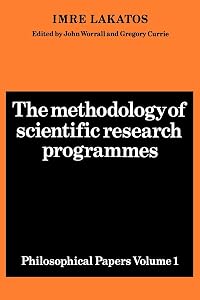
Feyerabend intended this book as the initial salvo in what he and fellow philosopher of science Imre Lakatos had hoped to be an on-going exchange, until the latter's untimely death ended that possibility. What remains in Against Method reads as exactly that: a spirited argument directed at a spirited opponent. Lacking Lakatos's counter-arguments as balance, Feyerabend here reads as more provocative and idealistic than he may otherwise intend, and I believe this is important to realize before tackling his case.
Feyerabend's notoriety originates squarely in his controversial thoughts on science, which earned him the dubious title of "science's worst enemy". These positions are made explicit here, and those who take for granted the show more objectivity and certainty of science will find little comfort. Feyerabend's argument centers on the privileged position afforded to science in largely secular, modern nations, a position he considers unfounded and, taken to logical conclusion, dehumanizing. Science often attempts to punch above its weight, he argues, and this is not only misleading -- as "the scientific method" is itself a myth -- but politically dangerous as we are meant to give priority to science over other forms of inquiry given that science is "objective".
Against Method is a sustained attack on all of these premises, and Feyerabend's own "anarchistic" anything-goes, no-method methodology of scientific discovery. He clarifies in an early footnote that he is no political anarchist; his "anything goes" mantra is meant to apply to rational acquisition of knowledge, a position which he credits more to the surrealists of the Dada movement than to the Black Block.
I'm not entirely persuaded by his argument, at least certain facets of it, but I do largely agree with his position against any universal methodology of science. It seems clear to me that all attempts to "explain science" have, to date, been unsuccessful (usefulness of these accounts is up for debate of course but none are without problems). I also share his skepticism about the creep of science into public policy -- not because policy should not be guided by objectively-grounded facts, but exactly because there is no clear definition of "science". The messy range of fields we call "science" can achieve a degree of corroboration and acceptance that we can venture a tenuous claim of "certainty", but to claim that this applies to anything baring resemblance to this hazy ideal is, at best, rosy-eyed optimism. I believe Feyerabend is right to point out these limitations, and that we should all take a longer pause before we jump on board with ideas that are "established" by scientific research.
There are problems with Feyerabend's account, to be sure. As with so many works of philosophy the point is not to climb aboard with starry eyes, but to consider the arguments made and realize that perhaps there is something of use to take away and that perhaps your own certainties could stand further examination. In that respect, Against Method succeeds. show less
Feyerabend's notoriety originates squarely in his controversial thoughts on science, which earned him the dubious title of "science's worst enemy". These positions are made explicit here, and those who take for granted the show more objectivity and certainty of science will find little comfort. Feyerabend's argument centers on the privileged position afforded to science in largely secular, modern nations, a position he considers unfounded and, taken to logical conclusion, dehumanizing. Science often attempts to punch above its weight, he argues, and this is not only misleading -- as "the scientific method" is itself a myth -- but politically dangerous as we are meant to give priority to science over other forms of inquiry given that science is "objective".
Against Method is a sustained attack on all of these premises, and Feyerabend's own "anarchistic" anything-goes, no-method methodology of scientific discovery. He clarifies in an early footnote that he is no political anarchist; his "anything goes" mantra is meant to apply to rational acquisition of knowledge, a position which he credits more to the surrealists of the Dada movement than to the Black Block.
I'm not entirely persuaded by his argument, at least certain facets of it, but I do largely agree with his position against any universal methodology of science. It seems clear to me that all attempts to "explain science" have, to date, been unsuccessful (usefulness of these accounts is up for debate of course but none are without problems). I also share his skepticism about the creep of science into public policy -- not because policy should not be guided by objectively-grounded facts, but exactly because there is no clear definition of "science". The messy range of fields we call "science" can achieve a degree of corroboration and acceptance that we can venture a tenuous claim of "certainty", but to claim that this applies to anything baring resemblance to this hazy ideal is, at best, rosy-eyed optimism. I believe Feyerabend is right to point out these limitations, and that we should all take a longer pause before we jump on board with ideas that are "established" by scientific research.
There are problems with Feyerabend's account, to be sure. As with so many works of philosophy the point is not to climb aboard with starry eyes, but to consider the arguments made and realize that perhaps there is something of use to take away and that perhaps your own certainties could stand further examination. In that respect, Against Method succeeds. show less
Feyerabend likes to play provocateur, he likes to make big, brash, surprising statements, but his arguments are more subtle than they seem. The Method that he is against is the scientific method, or rather, the enthronement of the scientific method as dogma. With a brilliant case study on Galileo he shows that real scientific progress is dirtier, messier, and far more chaotic than the idealization that the method prescribes, and that this chaos is not only beneficial, but essential to the practice of scientific research. Anybody working as a scientist surely knows this, though many choose to ignore it.
Some of his other ideas, especially his call for a formal separation of science and state, have not aged gracefully. Judging by the show more overall thrust of his arguments I'm fairly certain that, were he still around, he'd revise these ideas in response to recent and powerful attacks on science (as with environmentalism, evolution, social policy, and medical research, to name some examples). show less
Some of his other ideas, especially his call for a formal separation of science and state, have not aged gracefully. Judging by the show more overall thrust of his arguments I'm fairly certain that, were he still around, he'd revise these ideas in response to recent and powerful attacks on science (as with environmentalism, evolution, social policy, and medical research, to name some examples). show less
A classic of the Philosophy of Science which challenges the idea that scientific progress and discovery are based on methodical investigation and unbroken chains of logic - the setting up of an hypothesis and systematic attempts at knocking it down with evidence. Rather, he shows that many breakthroughs are made often as much by chance or accident, counter-logical leaps, trial and error, the creative subconscious, together with a whole assortment of other non-methodical forces (though for all that, often underpinned nonetheless variously by genius, insight, persistence, ambition, and verification).
A number of examples and arguments from the work of Gallileo, as well as other scientists support the claims of this "Anarchistic Theory of show more Knowledge" over the work of Popper and those who give a more staid account of the scientific enterprise.
Originally written to be a dialogue with another piece proposing counter-arguments from his sparring-partner Imre Lakatos, which was not produced due to his untimely death (Letters between them have however been published elsewhere). It is difficult to read in places, but worth the effort.
Recommended for anyone with an interest in the philosophy of science, or who works in science. Anything Goes. show less
A number of examples and arguments from the work of Gallileo, as well as other scientists support the claims of this "Anarchistic Theory of show more Knowledge" over the work of Popper and those who give a more staid account of the scientific enterprise.
Originally written to be a dialogue with another piece proposing counter-arguments from his sparring-partner Imre Lakatos, which was not produced due to his untimely death (Letters between them have however been published elsewhere). It is difficult to read in places, but worth the effort.
Recommended for anyone with an interest in the philosophy of science, or who works in science. Anything Goes. show less
In many ways, this is quite a magnificent book. It is not an easy read, and in the next few days I will write a more detailed review.
It is not an easy book to read, and there were times when I wondered if he would ever move beyond Aristotle and Galileo.
However, once you get into the second half of the book, Paul Feyerabend started to pull all the threads together. While he did not examine how the process has worked in the 20th century, and this is a shame, he demonstrated how scientific progress is not always as methodical as it seems to be!
At the end, he spelled out some of his own beliefs, and this raised the book to a higher dimension than I had initially thought possible. It is not a book for the faint of heart but stay with it and show more you will be rewarded. show less
It is not an easy book to read, and there were times when I wondered if he would ever move beyond Aristotle and Galileo.
However, once you get into the second half of the book, Paul Feyerabend started to pull all the threads together. While he did not examine how the process has worked in the 20th century, and this is a shame, he demonstrated how scientific progress is not always as methodical as it seems to be!
At the end, he spelled out some of his own beliefs, and this raised the book to a higher dimension than I had initially thought possible. It is not a book for the faint of heart but stay with it and show more you will be rewarded. show less
One reason for scientist’s distrust of rhetoric is Paul Feyerabend's “Epistemological Anarchism”. Feyerabend, reportedly developed this view after discovering that his acting skills honed in his earlier life enabled him to win philosophical arguments regardless of which side he was arguing for.
The trouble with that is not just that scientists aren't good at rhetoric, or aren't trained in it, but that we are actively encultured to believe that good rhetoric is actively immoral.
When an argument is won or lost of the basis of who is the best rhetorician, then the truth is immaterial to which way the argument goes - and we couldn't have that - the wrong argument must always loose, whoever presents it and the correct one win. Of course show more the implicit (but false) belief here is that if the facts are presented, unadorned by any form of persuasion, the truth will always win out.
To be fair, this belief is also often shared by the public - just look at the distrust of lawyers - the best lawyers can win an argument for which side they are assigned to, and the public distrust this.
Of course, these are all fair points. But yet lawyers continue to 'nefariously' win the arguments they're assigned to, and politicians continue to garner votes on their abilities to "win hearts and minds". Science communicators, of necessity, need to get in on this.
I don't think it's a false belief "that if facts are presented, unadorned by any form of persuasion, the truth will always win out." I believe in both a universal standard of truth and 'the ideal speech situation'. The trouble is precisely that it is an ideal. No one has perfect powers of reasoning and it is impossible for facts to be presented unadorned by any form of persuasion. Unfortunately, power is present in all argument. It can even be present in the assigning of 'facts'.
Science communicators need to acknowledge this unavoidably imperfect state of affairs and use rhetoric for the right reason. show less
The trouble with that is not just that scientists aren't good at rhetoric, or aren't trained in it, but that we are actively encultured to believe that good rhetoric is actively immoral.
When an argument is won or lost of the basis of who is the best rhetorician, then the truth is immaterial to which way the argument goes - and we couldn't have that - the wrong argument must always loose, whoever presents it and the correct one win. Of course show more the implicit (but false) belief here is that if the facts are presented, unadorned by any form of persuasion, the truth will always win out.
To be fair, this belief is also often shared by the public - just look at the distrust of lawyers - the best lawyers can win an argument for which side they are assigned to, and the public distrust this.
Of course, these are all fair points. But yet lawyers continue to 'nefariously' win the arguments they're assigned to, and politicians continue to garner votes on their abilities to "win hearts and minds". Science communicators, of necessity, need to get in on this.
I don't think it's a false belief "that if facts are presented, unadorned by any form of persuasion, the truth will always win out." I believe in both a universal standard of truth and 'the ideal speech situation'. The trouble is precisely that it is an ideal. No one has perfect powers of reasoning and it is impossible for facts to be presented unadorned by any form of persuasion. Unfortunately, power is present in all argument. It can even be present in the assigning of 'facts'.
Science communicators need to acknowledge this unavoidably imperfect state of affairs and use rhetoric for the right reason. show less
Members
- Recently Added By
Lists

Filosofía - Clásicos
217 works; 1 member

Book Recommendations Masterlist
28 works; 1 member
Author Information

65+ Works 3,314 Members
A controversial and influential voice in the philosophy of science, Paul K. Feyerabend was born and educated in Vienna. After military service during World War II and further study at the University of London, he returned to Vienna as a lecturer at the university. In 1959, having taught for several years at Bristol University in England, he came show more to the United States to join the faculty of the University of California at Berkeley, from which, after numerous visiting appointments elsewhere, he retired in 1990. Since the 1970s, Feyerabend has devoted much of his career to arguing that science as practiced cannot be described, let alone regulated, by any coherent methodology, whether understood historically, as in Thomas Kuhn's use of paradigms, or epistemologically, as in classical positivism and its offspring. He illustrates this stance on the dust jacket of one of his books, Against Method (1975), by publishing his horoscope in the place usually reserved for a biographical sketch of the author. In his entry in the Supplement to Who's Who in America, he is quoted as saying, "Leading intellectuals with their zeal for objectivity are criminals, not the liberators of mankind." (Bowker Author Biography) show less
Some Editions
Awards and Honors
Series
Belongs to Publisher Series
Common Knowledge
- Canonical title
- Against Method
- Original title
- Against Method: Outline of an Anarchistic Theory of Knowledge
- Original publication date
- 1975
- First words
- Introduction: Science is an essentially anarchic enterprise: theoretical anarchism is more humanitarian and more likely to encourage progress than its law-and-order alternatives.
- Last words
- (Click to show. Warning: May contain spoilers.)Examining this function of the arts and trying to establish a mode of research that unites their power with that of science and religion seems to be a fascinating enterprise and one to which I might devote a year (or two, or three...).
- Original language*
- Inglés
*Some information comes from Common Knowledge in other languages. Click "Edit" for more information.
Classifications
Statistics
- Members
- 1,646
- Popularity
- 13,706
- Reviews
- 20
- Rating
- (3.97)
- Languages
- 13 — Dutch, English, French, German, Greek, Hungarian, Italian, Polish, Croatian, Spanish, Swedish, Turkish, Portuguese (Brazil)
- Media
- Paper, Ebook
- ISBNs
- 46
- ASINs
- 9