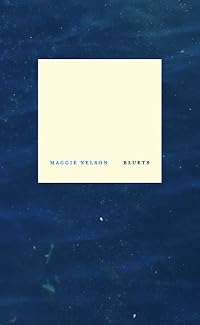
Bluets
by Maggie Nelson
On This Page
Description
Suppose I were to begin by saying that I had fallen in love with a color ... Since 2009, when it first published, to today, Bluets has drawn scores of readers with its surprising insights into the emotional depths that make us most human-via 240 short pieces, at once lyrical and philosophical, on the color blue. This new edition celebrates Maggie Nelson's uncompromising vision, inviting longtime fans and newcomers alike to experience and share in an indispensable work that continues to show more disrupt the literary landscape. show lessTags
Recommendations








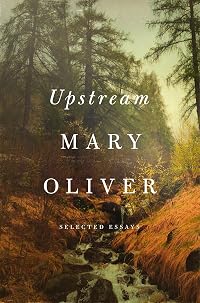
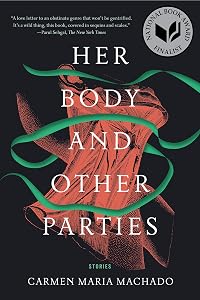
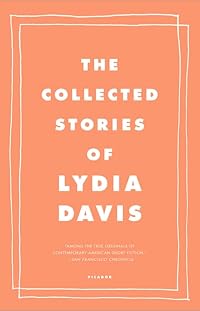

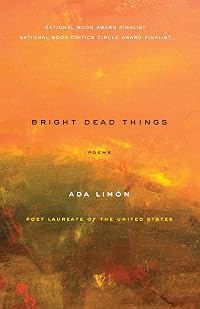


Member Reviews
"Mostly I have felt myself becoming a servant of sadness. I am still looking for the beauty in that."
It feels like a beloved antique glass that slips from your hand accidentally, however gently, then you stare at its shards partly trying to let it all sink in, partly hoping it will glue itself back together and become whole again. Quite a metaphor for love and loss, loneliness and lust at a palpable distance; and such is Maggie Nelson's eulogy for its kept fragments.
"How often I've imagined the bubble of body and breath you and I made, even though by now I can hardly remember what you look like, I can hardly see your face."
In Bluets, the enduring reputation of the colour blue appears in a number of references and parallels: films (Derek show more Jarman's poignant Blue, a little surprising she did not mention Kieślowski's Blue), music (Joni Mitchell's unforgettable Blue), and literature (Gass' On Being Blue). Its jack-of-all-trades personification and flexible contradictions are proofs of how it kindles and washes away a spectrum of emotions. A raw and moving prose-poetry — at times disjointed, other times painfully fitting — which reads like a set of persistent memories. They come and go like a thousand thoughts, your mind's a miles away, you're sitting in a bus, the bus continues to take you faraway from somewhere. Only, they all end up on the person you have lost; now unreachable, invisible. You find the person everywhere. It is blue.
"For to wish to forget how much you loved someone — and then, to actually forget — can feel, at times, like the slaughter of a beautiful bird who chose, by nothing short of grace, to make a habitat of your heart."
Black and blue. Out of the blue. Feel blue. Blue balls. Blue pill. Once in a blue moon. True-blue. Between the devil and the deep blue sea. Bolt from the blue. Blue in the face. Blue sky...
"I want you to know, if you ever read this, there was a time when I would rather have had you by my side than any one of these words; I would rather have had you by my side than all the blue in the world.
But now you are talking as if love were a consolation. Simone Weil warned otherwise. 'Love is not consolation,' she wrote. 'It is light.'" show less
It feels like a beloved antique glass that slips from your hand accidentally, however gently, then you stare at its shards partly trying to let it all sink in, partly hoping it will glue itself back together and become whole again. Quite a metaphor for love and loss, loneliness and lust at a palpable distance; and such is Maggie Nelson's eulogy for its kept fragments.
"How often I've imagined the bubble of body and breath you and I made, even though by now I can hardly remember what you look like, I can hardly see your face."
In Bluets, the enduring reputation of the colour blue appears in a number of references and parallels: films (Derek show more Jarman's poignant Blue, a little surprising she did not mention Kieślowski's Blue), music (Joni Mitchell's unforgettable Blue), and literature (Gass' On Being Blue). Its jack-of-all-trades personification and flexible contradictions are proofs of how it kindles and washes away a spectrum of emotions. A raw and moving prose-poetry — at times disjointed, other times painfully fitting — which reads like a set of persistent memories. They come and go like a thousand thoughts, your mind's a miles away, you're sitting in a bus, the bus continues to take you faraway from somewhere. Only, they all end up on the person you have lost; now unreachable, invisible. You find the person everywhere. It is blue.
"For to wish to forget how much you loved someone — and then, to actually forget — can feel, at times, like the slaughter of a beautiful bird who chose, by nothing short of grace, to make a habitat of your heart."
Black and blue. Out of the blue. Feel blue. Blue balls. Blue pill. Once in a blue moon. True-blue. Between the devil and the deep blue sea. Bolt from the blue. Blue in the face. Blue sky...
"I want you to know, if you ever read this, there was a time when I would rather have had you by my side than any one of these words; I would rather have had you by my side than all the blue in the world.
But now you are talking as if love were a consolation. Simone Weil warned otherwise. 'Love is not consolation,' she wrote. 'It is light.'" show less
“Do not, however, make the mistake of thinking that all desire is yearning. ‘We love to contemplate blue, not because it advances to us, but because it draws us after it,’ wrote Goethe, and perhaps he is right. But I am not interested in longing to live in a world in which I already live. I don’t want to yearn for blue things, and God forbid for any ‘blueness.’ Above all, I want to stop missing you.”
Bluets is a melancholic immersion into the mind of a writer obsessed with the color blue, steeped in longing for a lover that is no more. Each short section is like a separate chord, complex and beautiful on its own. As you read, you may find yourself setting the book down and closing your eyes so that you can appreciate the show more gorgeous craftsmanship at work in these short pieces. show less
Bluets is a melancholic immersion into the mind of a writer obsessed with the color blue, steeped in longing for a lover that is no more. Each short section is like a separate chord, complex and beautiful on its own. As you read, you may find yourself setting the book down and closing your eyes so that you can appreciate the show more gorgeous craftsmanship at work in these short pieces. show less
”If a colour could deliver hope, does it follow that it could also bring despair?”
Blue, blå, blauw, bleu, blau, κυανό, azzurro, azul, sinij, modra, blár….. a colour that carries powerful imagery, thoughts and memories…
Maggie Nelson is a writer I’ve always wanted to know more about and a beautiful review by my good friend Hannah convinced me that the time had finally come. It was a deeply poignant, haunting, almost transcendental reading experience.
In this book, we have the writer’s musings on the colour blue and its various aspects. It is interesting that our societies associate blue with masculinity, imposing it on the infants (even in our progressive era) and with life. The majority of the flags of our countries show more contain a shade of blue. It is everywhere, the sky, the sea…A significant percentage- myself included- considers blue eyes as being the most attractive. They can be mesmerizing but they can also appear cold, soulless, threatening. Baby blue and indigo blue are utter opposites. The more I come to think of it, the more I believe that no other colour has so many facades and identities. Here, Nelson associates blue with love, loss, suffering and despair.
”And what kind of madness is it anyway, to be in love with something constitutionally incapable of loving you back?”
These are heartfelt confessions on a deep, dark abyss of a love that has been betrayed, a hope that is lost. Blue accompanies loneliness and, at times, a feeling of surrendering fully to the pain that comes when you are unable to anything to prevent disaster. I admit that I was touched by the despair that permeated the short entries of this book and the deep sadness. It almost made me feel uncomfortable as if I were an unknown by-stander watching the moment of utter emotional collapse. However, don’t be discouraged. The writing is so rich and evocative. It is raw and powerful, giving voice to feelings that we have all experienced at least once in our lives. There is a distinctive aura of sensuality in the language and the theme of sexuality and its implications is central and communicated in a very realistic manner.
There are very interesting entries with true gems of information. To give you a tiny example, I was particularly fascinated by the habit of the bowerbird that clutters his domain with blue objects to attract the attention of the female. There are references to cultural icons from Thoreau, to Emerson, Goethe and Stein, to Leonard Cohen and Billie Holiday. There are parallels and narratives related to History, Mythology, stories of saints, sacred places and sinners…
This is a very special book, difficult to label. Is it a memoir? A re-imagined reality? A poetic confession? To me, it felt like poetry from a bleak place, heavy laden with the ache of an unfulfilled hope. I can’t see how can anyone read Bluets and not be haunted by it…And if you find yourselves fascinated with Blue and the mysteries it hides, it is only natural…
”I have been trying for some time to find dignity in my loneliness. I have been finding this hard to do.”
My reviews can also be found on https://theopinionatedreaderblog.wordpress.com show less
Blue, blå, blauw, bleu, blau, κυανό, azzurro, azul, sinij, modra, blár….. a colour that carries powerful imagery, thoughts and memories…
Maggie Nelson is a writer I’ve always wanted to know more about and a beautiful review by my good friend Hannah convinced me that the time had finally come. It was a deeply poignant, haunting, almost transcendental reading experience.
In this book, we have the writer’s musings on the colour blue and its various aspects. It is interesting that our societies associate blue with masculinity, imposing it on the infants (even in our progressive era) and with life. The majority of the flags of our countries show more contain a shade of blue. It is everywhere, the sky, the sea…A significant percentage- myself included- considers blue eyes as being the most attractive. They can be mesmerizing but they can also appear cold, soulless, threatening. Baby blue and indigo blue are utter opposites. The more I come to think of it, the more I believe that no other colour has so many facades and identities. Here, Nelson associates blue with love, loss, suffering and despair.
”And what kind of madness is it anyway, to be in love with something constitutionally incapable of loving you back?”
These are heartfelt confessions on a deep, dark abyss of a love that has been betrayed, a hope that is lost. Blue accompanies loneliness and, at times, a feeling of surrendering fully to the pain that comes when you are unable to anything to prevent disaster. I admit that I was touched by the despair that permeated the short entries of this book and the deep sadness. It almost made me feel uncomfortable as if I were an unknown by-stander watching the moment of utter emotional collapse. However, don’t be discouraged. The writing is so rich and evocative. It is raw and powerful, giving voice to feelings that we have all experienced at least once in our lives. There is a distinctive aura of sensuality in the language and the theme of sexuality and its implications is central and communicated in a very realistic manner.
There are very interesting entries with true gems of information. To give you a tiny example, I was particularly fascinated by the habit of the bowerbird that clutters his domain with blue objects to attract the attention of the female. There are references to cultural icons from Thoreau, to Emerson, Goethe and Stein, to Leonard Cohen and Billie Holiday. There are parallels and narratives related to History, Mythology, stories of saints, sacred places and sinners…
This is a very special book, difficult to label. Is it a memoir? A re-imagined reality? A poetic confession? To me, it felt like poetry from a bleak place, heavy laden with the ache of an unfulfilled hope. I can’t see how can anyone read Bluets and not be haunted by it…And if you find yourselves fascinated with Blue and the mysteries it hides, it is only natural…
”I have been trying for some time to find dignity in my loneliness. I have been finding this hard to do.”
My reviews can also be found on https://theopinionatedreaderblog.wordpress.com show less
Meditative, lyrical, sometimes bitter, sometimes inconsolable and quite often full of transcendence. I wanted to push aside the world when I was reading this, if only because the threads connecting each of her "propositions" felt like they had to be held tenuously and tenderly. I loved how it moved from topic to topic, from the empirical to the poetic, so smoothly, almost without need for thought.
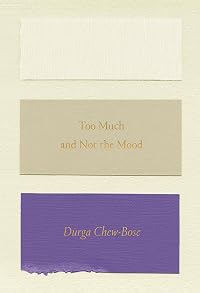
It seems to be a book about the colour blue, which it is and also isn't. But how freeing that someone allows themselves to write like this. To start with a proposition and run with it as far as her mind wants to go. I've been wanting to read this a while, but I went to actually order it because Durga Chew-Bose cited her as one of her show more inspirations for "Too Much and Not The Mood," which exemplifies that utter freedom in writing even further, I feel.
My favourite bits:
"Once I travelled to the Tate in London to see the blue paintings of Yves Klein, who invented and patented his own shade of ultramarine, International Klein Blue (IKB), then painted canvases and objects with it throughout a period of his life he dubbed “l’epoque bleu.” Standing in front of these blue paintings, or propositions, at the Tate, feeling their blue radiate out so hotly that it seemed to be touching, perhaps even hurting, my eyeballs, I wrote but one phrase in my notebook: too much. I had come all this way, and I could barely look. Perhaps I had inadvertently brushed up against the Buddhist axiom, that enlightenment is the ultimate disappointment."
"We cannot read the darkness. We cannot read it. It is a form of madness, albeit a common one, that we try." show less
It seems to be a book about the colour blue, which it is and also isn't. But how freeing that someone allows themselves to write like this. To start with a proposition and run with it as far as her mind wants to go. I've been wanting to read this a while, but I went to actually order it because Durga Chew-Bose cited her as one of her show more inspirations for "Too Much and Not The Mood," which exemplifies that utter freedom in writing even further, I feel.
My favourite bits:
"Once I travelled to the Tate in London to see the blue paintings of Yves Klein, who invented and patented his own shade of ultramarine, International Klein Blue (IKB), then painted canvases and objects with it throughout a period of his life he dubbed “l’epoque bleu.” Standing in front of these blue paintings, or propositions, at the Tate, feeling their blue radiate out so hotly that it seemed to be touching, perhaps even hurting, my eyeballs, I wrote but one phrase in my notebook: too much. I had come all this way, and I could barely look. Perhaps I had inadvertently brushed up against the Buddhist axiom, that enlightenment is the ultimate disappointment."
"We cannot read the darkness. We cannot read it. It is a form of madness, albeit a common one, that we try." show less
"199. For to wish to forget how much you loved someone - and then, to actually forget - can feel, at times, like the slaughter of a beautiful bird who chose, by nothing short of grace, to make a habitat of your heart."
I hardly know how to categorise this book, I say non fiction, but there are flights of fancy. I say memoir, but its hardly a rounded life story. I say essays, but most sections are only a few lines long. It is philosophical musings on and around the colour blue, a lost relationship, an injured friend. It's strangely addictive and thought-provoking and I love the way Maggie Nelson writes.
This book terrifies me, because it's so nicely written and interestingly formed and also so completely vapid. My fear comes from my absolute certainty that over the next 20 years I'm going to have to put up with dozens of books just like this, insofar as they'll be all 'experimental' (i.e., about fucking) and 'experimental' (i.e., self-obsessed), and 'experimental' (i.e., full of literary existentialism), and 'experimental' (i.e., quasi-educated), but not at all 'experimental' (i.e., interestingly formed and nicely written). Because the history of literature teaches me that authors are very quick to pick up on the content of well-formed books, without really taking the time to worry about, you know, art. It happened with Richardson and show more Fielding, it happened with Austen, it happened, dear f-ing God did it happen, with the modernists and their absurd/lonely/sad thing.
And now, I'm deeply afraid, it will happen with Bluets. Those in the know tell me Nelson's Argonauts is dreadful tripe, so maybe it's already happened to Nelson herself. I can only hope the virus can be contained.
Second thought: In case this isn't clear, this is a kind of fore-handed criticism review: there's nothing even remotely 'interesting' about what Nelson says about the world, or herself, but it's all said almost perfectly, leaving aside the already influential stupidity of numbering paragraphs, because, you know, Wittgenstein and shit.
Third thought: Any time you see a novelist or poet using Wittgenstein, please know, whatever they think he meant is precisely not what Wittgenstein meant. show less
And now, I'm deeply afraid, it will happen with Bluets. Those in the know tell me Nelson's Argonauts is dreadful tripe, so maybe it's already happened to Nelson herself. I can only hope the virus can be contained.
Second thought: In case this isn't clear, this is a kind of fore-handed criticism review: there's nothing even remotely 'interesting' about what Nelson says about the world, or herself, but it's all said almost perfectly, leaving aside the already influential stupidity of numbering paragraphs, because, you know, Wittgenstein and shit.
Third thought: Any time you see a novelist or poet using Wittgenstein, please know, whatever they think he meant is precisely not what Wittgenstein meant. show less
Members
- Recently Added By
Lists

sad girl books
41 works; 2 members

Books Read in 2024
4,727 works; 128 members
Author Information

17+ Works 5,777 Members
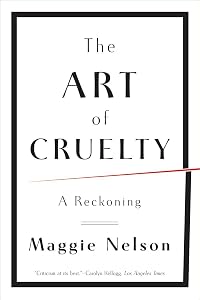
Maggie Nelson is a poet, critic, and nonfiction author of several books including The Argonauts, The Art of Cruelty: A Reckoning, Bluets, and Jane: A Murder: She teaches in the School of Critical Studies at CalArts and lives in Los Angeles, California.
Some Editions
Awards and Honors
Awards
Work Relationships
Has as a supplement
Common Knowledge
- Canonical title*
- Blått
- Original title
- Bluets
- Original publication date
- 2009
- Epigraph
- And were it true, we do not think all philosophy is worth one hour of pain. PASCAL, Pensées
- Dedication
- For Lily Mazzarella
first and forever
princess of blue. - First words
- 1. Suppose I were to begin by saying that I had fallen in love with a color.
- Last words
- (Click to show. Warning: May contain spoilers.)When I was alive, I aimed to be a student not of longing but of light.
- Original language
- English
- Disambiguation notice
- 1094071501 2020 MP3 CD Blackstone
1473548039 2017 eBook
1911214527 2017 hardback Cape
*Some information comes from Common Knowledge in other languages. Click "Edit" for more information.
Classifications
Statistics
- Members
- 1,615
- Popularity
- 14,043
- Reviews
- 43
- Rating
- (4.04)
- Languages
- 9 — Catalan, Dutch, English, Finnish, French, German, Italian, Spanish, Swedish
- Media
- Paper, Audiobook, Ebook
- ISBNs
- 24
- ASINs
- 7